Home EV Charging Station Installation: What Every Salt Lake Homeowner Needs to Know
Charging station installation at home is simpler than most people think — but getting it wrong can mean tripped breakers, melted wires, or a failed inspection. Here's a quick overview before we dig in:
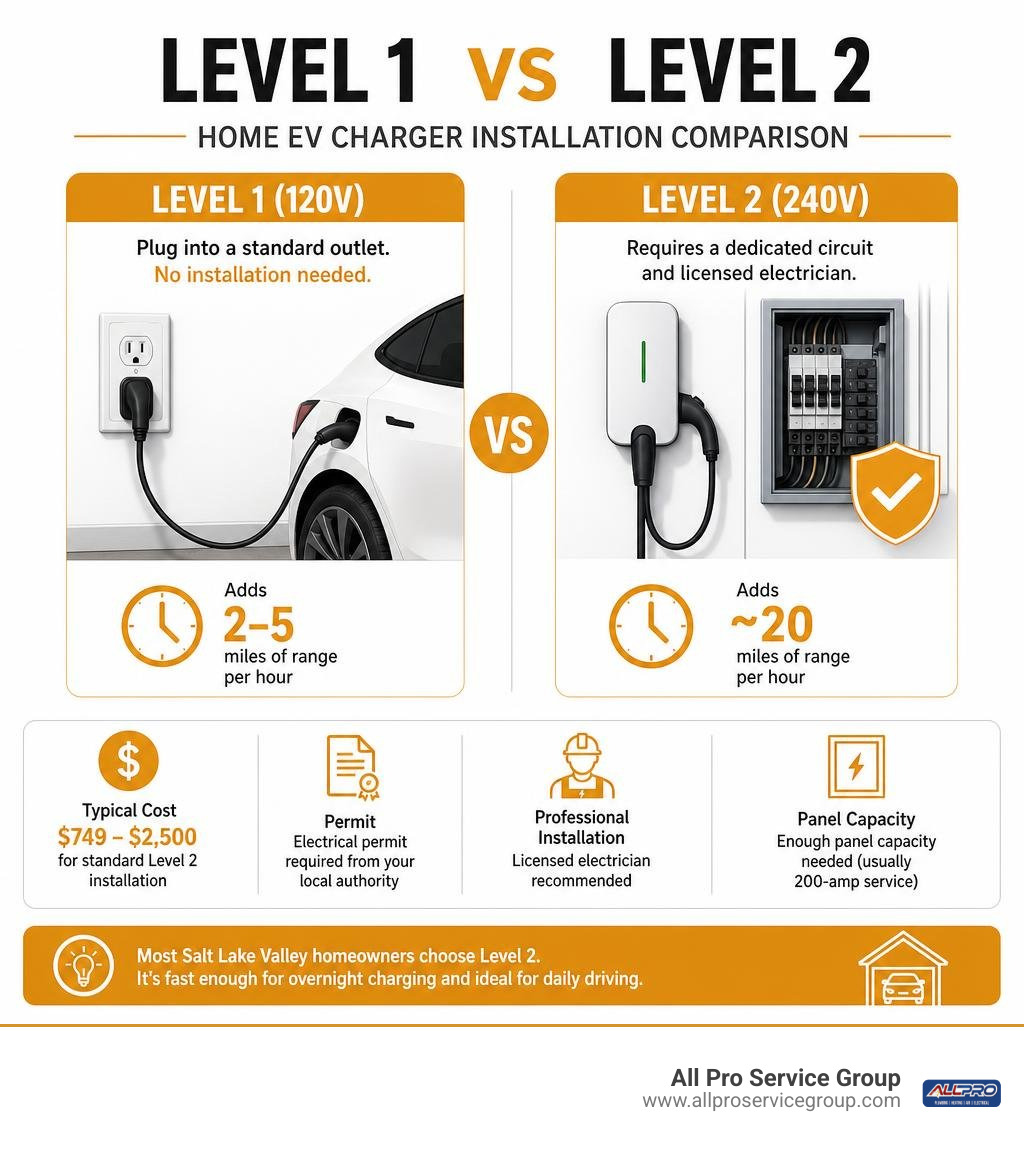
- Level 1 (120V): Plug into a standard outlet. No installation needed. Adds only 2–5 miles of range per hour.
- Level 2 (240V): Requires a dedicated circuit and licensed electrician. Adds roughly 20 miles of range per hour — the right choice for most homeowners.
- Typical cost:$749 to $2,500 for a standard Level 2 home installation, including labor and materials.
- What's needed: A licensed electrician, an electrical permit from your local authority, and enough panel capacity (usually 200-amp service).
Most Salt Lake Valley homeowners choose Level 2. It's fast enough for overnight charging, and the installation is straightforward when your panel has room to spare.
The bigger risks aren't the installation itself — they're skipping the permit, underestimating your panel's load, or hiring someone without the right experience. This guide walks you through every step so none of that catches you off guard.
At All Pro Service Group, our team has handled electrical work across the Greater Salt Lake Valley since 2008 — including charging station installation for homeowners making the switch to EVs. If anything in this guide raises a question about your specific setup, we're here to help.
Understanding Home Charging Station Installation Costs and Requirements
When planning a home charging station installation, understanding where your budget goes helps prevent unpleasant surprises. Setting up a dedicated home charging station involves three primary financial components: hardware purchasing, electrical labor and materials, and local municipal permitting.
For a standard residential Level 2 equipment setup, hardware prices generally fall between $300 and $900 for a high-quality, safety-certified unit. The professional installation labor and electrical wiring materials typically range from $749 to $2,500. When factoring in permit fees, which average between $50 and $800 depending on your municipal building department in Utah (averaging around $310 across jurisdictions), most complete home projects settle between $1,200 and $3,500 total.
The key factors influencing your overall budget include:
- Distance from Panel to Charger: Short runs through an attached garage require less heavy-gauge wire and conduit than long runs crossing to a detached structure.
- Electrical Infrastructure Upgrades: Homes needing panel expansion or utility service increases face higher baseline preparation costs.
- Hardwired vs. Plug-In Outlet: Installing a heavy-duty receptacle requires specialized GFCI protection, whereas hardwiring directly into the junction box streamlines hardware security. To learn more about outlet pricing variations, review our guide on 240 Volt Outlet For Electric Car Cost.
- Trenching Requirements: Outdoor or detached garage setups requiring underground conduit work add excavation labor and physical piping expenses.
Level 1 vs Level 2 Charging Station Installation Speeds
Choosing between Level 1 and Level 2 charging comes down to how quickly you need your vehicle replenished for daily driving around the Salt Lake Valley.
Level 1 charging relies on standard 120-volt household AC electrical outlets. Because standard 120V circuits deliver approximately 1.4 to 1.9 kW of power, they only add about 2 to 5 miles of driving range per hour of plug-in time. While this works adequately for low-mileage plugin hybrid drivers, a fully electric vehicle with a 60 kWh to 100 kWh battery pack can take 30 to 50 hours to reach full capacity.
By contrast, Level 2 charging operates on a dedicated 208-volt to 240-volt AC circuit, delivering anywhere from 3.8 kW up to 19.2 kW depending on amperage settings. A standard 40-amp or 50-amp Level 2 setup adds roughly 25 to 35 miles of range per charging hour, allowing standard electric vehicles to charge completely overnight in 4 to 8 hours.
To explore dedicated equipment options designed for residential garages, check out our resource on Car Charging Port For Home.
Evaluating Panel Capacity and Service Upgrades
Before mounting hardware or pulling wire, an electrician must complete a formal panel load calculation. Electric vehicle chargers are categorized under the National Electrical Code (NEC) as continuous electrical loads, meaning they pull their maximum current continuously for three hours or longer.
Many older homes in Salt Lake City, Ogden, or Provo feature 100-amp or 125-amp main breaker panels. When you layer a continuous 32-amp or 48-amp EV charger draw on top of central air conditioning, electric clothes dryers, ovens, and water heaters, an older panel can quickly reach maximum threshold.
If your total calculated household load exceeds 80% of your service rating, you may need a panel upgrade. Upgrading to a modern 200 Amp Power Panel provides necessary head room, busbar safety, and extra breaker slots for present and future high-draw electrical appliances. For a comprehensive walkthrough on panel modernizations, read our Electrical Panel Upgrade Complete Guide.
Step-by-Step Guide to Installing Your EV Charger
Installing a dedicated Level 2 EV charging station requires strict adherence to physical positioning rules, wire caliber sizing, and structural mounting guidelines.
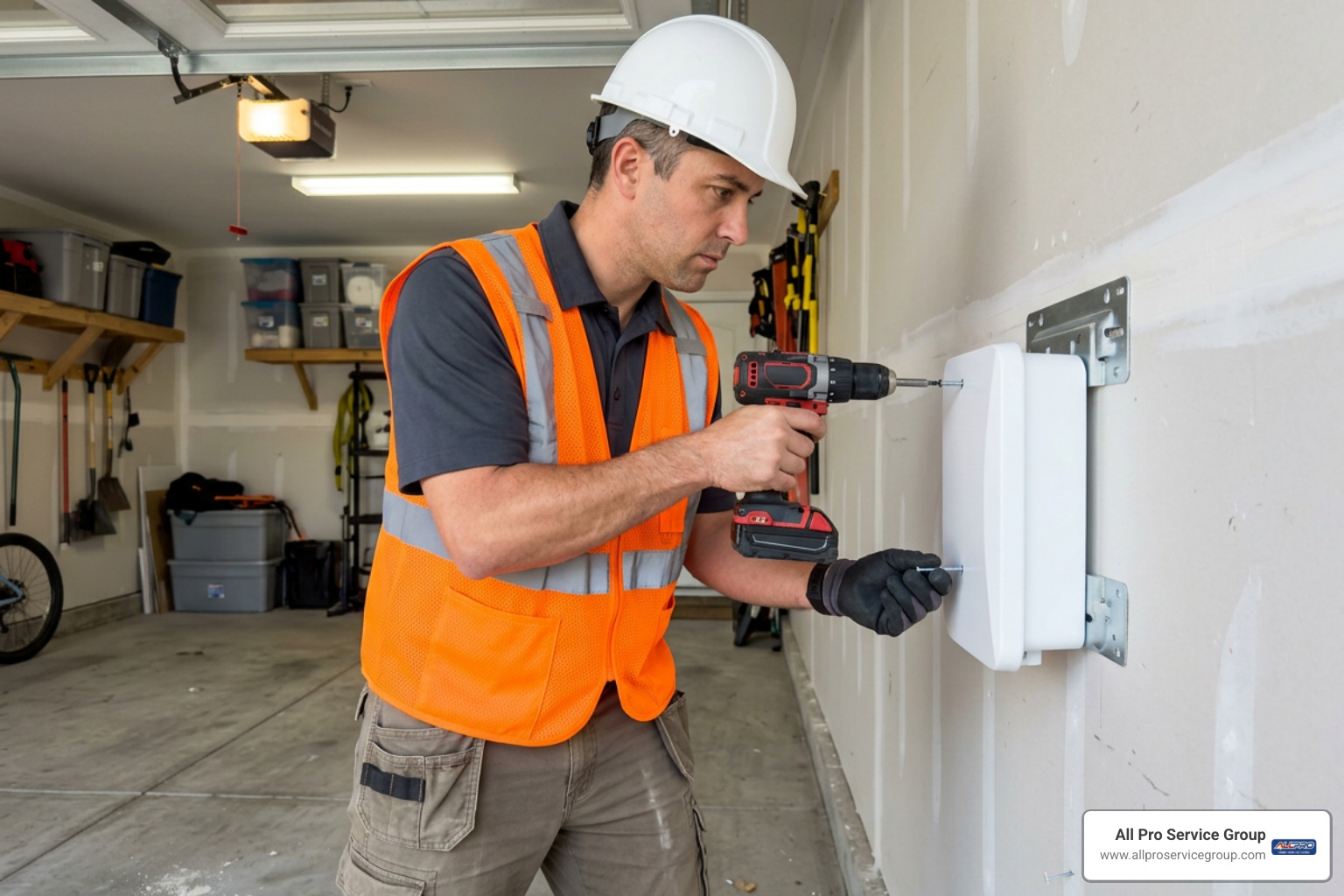
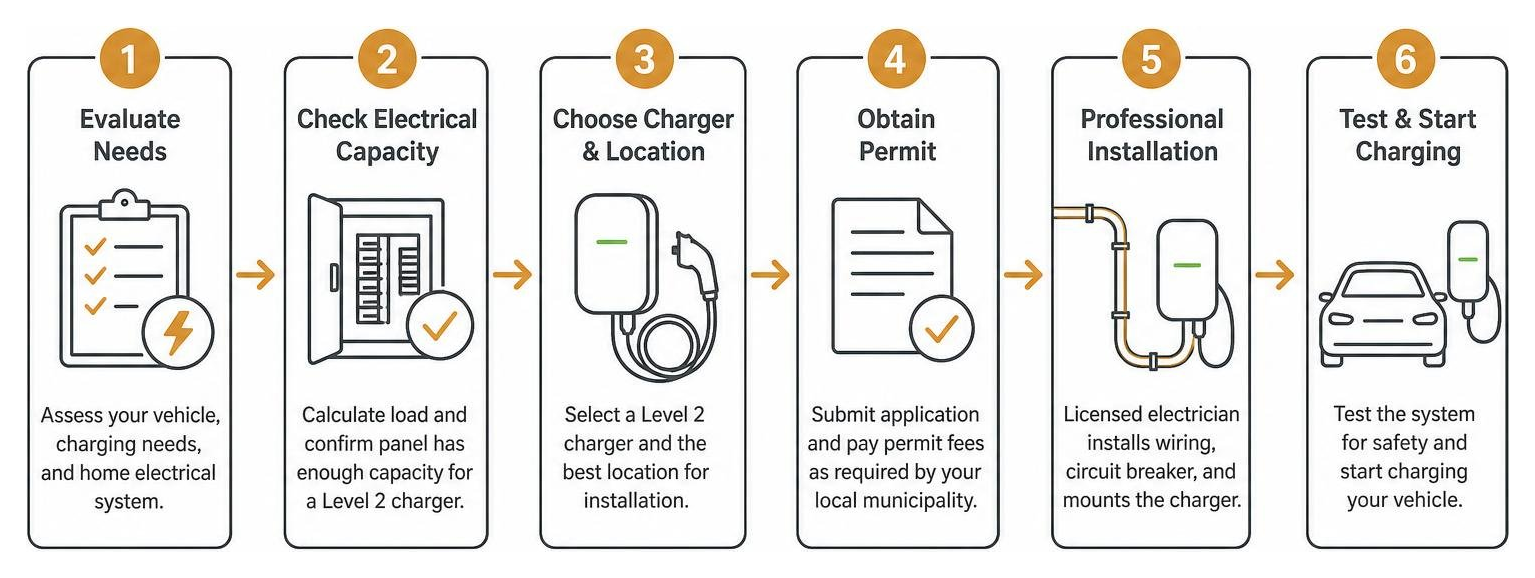
Here is a look at the physical and electrical execution phases carried out during professional charging station installation:
- Site Assessment & Panel Inspection: Evaluating existing busbar capacity, calculating continuous electrical load, and selecting an optimal wall location.
- Conduit Run & Cable Routing: Securing rigid conduit or metal-clad cable from the main breaker box across framing studs to the charging site.
- Hardware Mounting: Mechanically anchoring the backplate to structural framing members or concrete masonry using heavy-duty hardware.
- Sub-Panel or Breaker Wiring: Torquing dedicated two-pole double breakers, pulling 90°C copper conductors, and establishing clean equipment grounding.
- Voltage Verification & Commissioning: Testing line-to-line voltage (240V nominal) and line-to-ground status before completing digital commissioning.
For additional insight on physical layout planning, consult our detailed Ev Charger Install Guide or reference commercial equipment standards in the official ChargePoint Installation Guide.
Preparing the Siting and Mounting Location
Selecting the right physical placement within your garage or driveway keeps installation costs down while providing maximum convenience.
- Port Proximity: Position the charging unit within 15 to 20 feet of where your vehicle's charge port rests when parked. Charge cable lengths typically range from 18 to 25 feet, and using unapproved extension cords is strictly prohibited by safety standards.
- Structural Anchoring: Wall-mounted charging pedestals and backplates must anchor securely into solid wood framing studs or masonry walls. Standard drywall anchors cannot handle the mechanical stress of pulling and coiling heavy charging cables. Masonry installations require anchors rated for substantial pull-out forces (often exceeding 700 lbs).
- Clearances and Weatherproofing: Mount outdoor units at least 24 to 36 inches above ground level to clear winter snow accumulations common in Park City and Salt Lake Valley bench locations. Outdoor stations must carry a NEMA 3R or NEMA 4X weather-resistance rating.
Wiring, Circuit Protection, and Final Testing
Once the housing is mounted, electrical conductors are pulled from the main breaker panel.
EV charging installations require pure copper conductors rated for at least 90°C (194°F) thermal endurance, such as THHN/THWN-2 wires inside conduit. Aluminum wiring is not recommended for EV circuits due to thermal expansion risks under continuous high-amperage draw.
For standard 40-amp continuous output charging stations, an electrician feeds 6 AWG or 8 AWG copper conductors connected to a dedicated 50-amp two-pole circuit breaker.
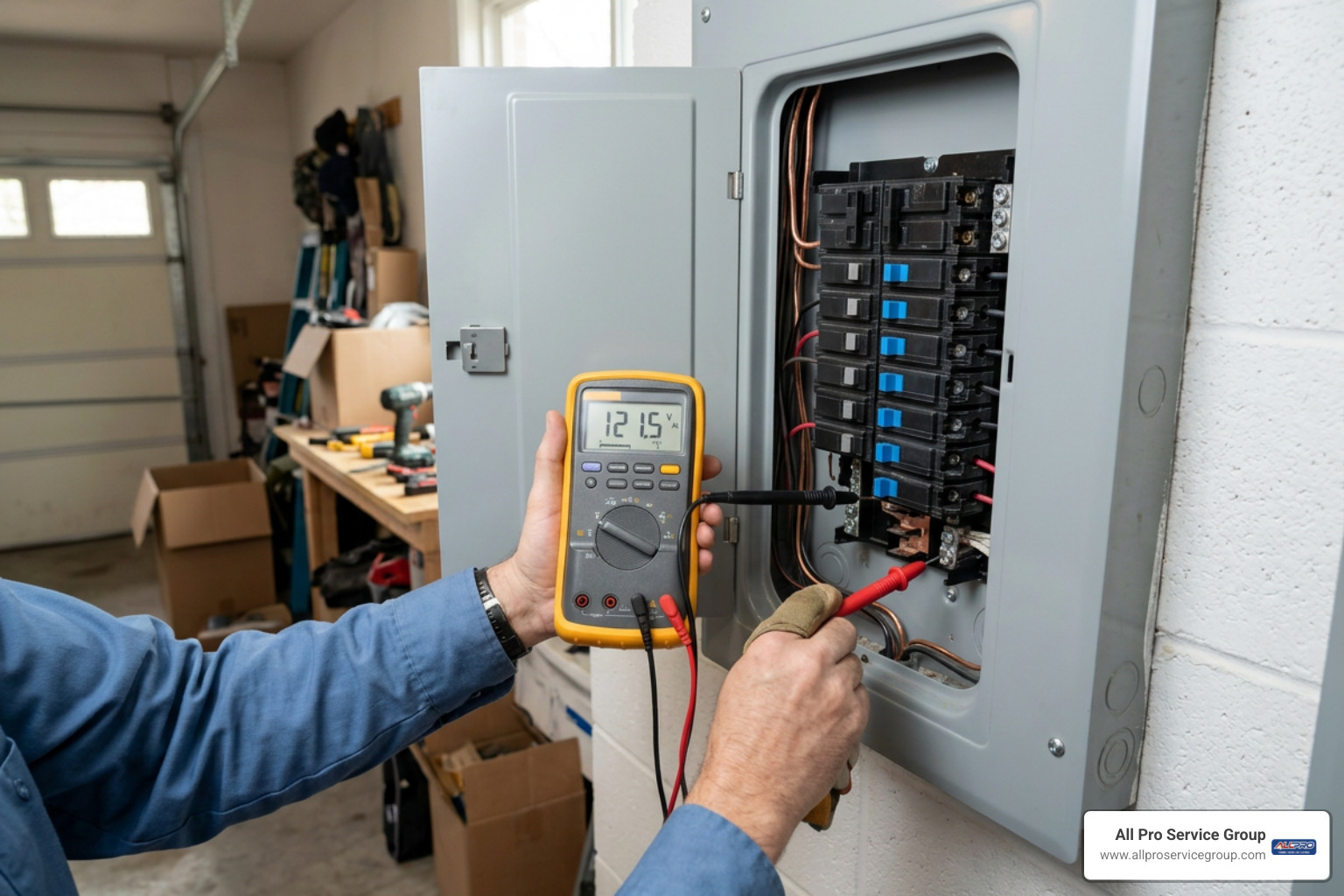
Before energizing the station, the electrician uses a digital multimeter or solenoid tester to confirm exact input parameters:
- Line 1 to Line 2: 208 VAC to 240 VAC nominal.
- Line 1/Line 2 to Ground: 120 VAC nominal.
- Ground Continuity: Zero-resistance solid earth ground connection.
Avoid applying caulking or silicone around the bottom base of outdoor pedestal chargers. Commercial units like Leviton's evr-green units are engineered to shed condensation from underneath; sealing the base traps moisture inside the metal housing and risks component corrosion.
Safety Codes, Permits, and Load Management
Installing high-power electrical infrastructure requires strict compliance with national safety codes and local municipal building rules.
Under National Electrical Code (NEC) Article 625, all equipment, wiring, and protection devices supplying electric vehicles must meet explicit continuous load definitions and grounding parameters. Failing to comply with local Authority Having Jurisdiction (AHJ) rules can jeopardize homeowner insurance coverage and create serious fire hazards.
NEC Section 625.41 Rules and Overcurrent Protection
NEC Section 625.41 dictates that branch circuits feeding electric vehicle supply equipment (EVSE) must be sized for continuous duty. Overcurrent protection devices (circuit breakers) and supply conductors must be rated at no less than 125% of the charger's maximum load.
| Charger Output Current | Required Continuous Rating (125%) | Minimum Circuit Breaker Size | Recommended Copper Wire Gauge (90°C) |
|---|---|---|---|
| 16 Amps | 20 Amps | 20 Amp Double-Pole | 12 AWG Copper |
| 24 Amps | 30 Amps | 30 Amp Double-Pole | 10 AWG Copper |
| 32 Amps | 40 Amps | 40 Amp Double-Pole | 8 AWG Copper |
| 40 Amps | 50 Amps | 50 Amp Double-Pole | 6 AWG Copper |
| 48 Amps | 60 Amps | 60 Amp Double-Pole | 6 AWG Copper (Conduit) |
Additionally, if installing a plug-in Level 2 charger utilizing a NEMA 14-50 or NEMA 6-50 receptacle, current building codes mandate a specialized GFCI circuit breaker at the main electrical panel. However, if you opt for a hardwired station, the station's built-in CCID (charge circuit interrupting device) provides continuous ground-fault protection without needing an external GFCI breaker that could trigger nuisance trips.
To protect sensitive charger electronics from lightning strikes and grid spikes across the Salt Lake electrical grid, pairing your installation with Whole Home Surge Protection adds an essential layer of defence.
Hiring a Licensed Electrician for Charging Station Installation
While DIY home improvement is popular, high-voltage continuous-load electrical work is not a candidate for amateur experimentation. Incorrect torque settings on terminal blocks, undersized neutral or ground wires, or improper panel balance can cause thermal buildup and electrical fires over time.
When selecting an electrical contractor across West Jordan, South Jordan, or West Valley City, ensure they possess:
- Active Utah Master or Journeyman Electrical Licensing.
- Full commercial and residential liability insurance.
- Experience with EVSE network provisioning and load calculation submittals.
- Familiarity with local AHJ permit processing in your municipality.
For fast, code-compliant assistance, work directly with our certified Same Day Electricians to schedule a professional evaluation.
Frequently Asked Questions About EV Charging
How much does it cost to install a Level 2 home EV charger?
A standard residential Level 2 EV charger installation typically costs between $749 and $2,500 for installation labor and wiring materials, plus $300 to $900 for the charging hardware itself. Total project costs vary based on your panel capacity, distance to the vehicle port, local permitting fees, and whether structural trenching or electrical service upgrades are required.
Do I need to upgrade my electrical panel for an EV charger?
Not always. If your home already features a modern 200-amp main breaker panel with open physical breaker slots and sufficient spare calculated amperage, an upgrade is usually unnecessary. However, if your home operates on a 100-amp or 125-amp service that is near capacity, you may need a 200-amp panel upgrade or a dynamic smart load management device to prevent overloading your main service breaker.
What permits and inspections are required for home charger installation?
Most cities and counties in Utah require an electrical permit issued by the local Authority Having Jurisdiction (AHJ) before adding a dedicated 240V circuit. Once installation is complete, a city electrical inspector evaluates the wire gauge, breaker sizing, conduit support, and grounding connections to ensure compliance with NEC Article 625 before signing off on final approval.
Conclusion: Ready to Charge at Home?
Setting up a home charging station is one of the best upgrades you can make for your electric vehicle. It eliminates range anxiety, saves you money compared to public fast-charging stations, and ensures your car is fully charged every morning. By understanding your electrical panel capacity, selecting the right mounting location, and adhering to NEC rules, you can enjoy fast, reliable overnight charging right in your garage.
Cutting corners on high-voltage continuous circuits can cause electrical hazards, void warranties, or fail municipal building inspections. Working with a licensed, local electrical contractor ensures your charging station installation is completed safely, cleanly, and fully permitted.
At All Pro Service Group, we've provided trusted electrical, heating, cooling, and plumbing services across Salt Lake City, Sandy, Draper, Ogden, Park City, and surrounding communities since 2008. As a Gephardt Approved business, our licensed electricians ensure your EV setup is safe, efficient, and built to last.
Ready to power up your commute? Visit our Electrical/Ev Charger Installation page or contact All Pro Service Group today to schedule your home charging consultation!