Main Line vs. Interior Plumbing: Understanding the Difference
Main line repiping is the process of replacing the underground pipe that carries water from the municipal meter at the street to your home — and it's one of the most important plumbing upgrades an older home can get.
Quick answer: What is main line repiping?
| Question | Answer |
|---|---|
| What is it? | Replacing the main water supply pipe from the street meter to your home |
| Who needs it? | Homes with galvanized steel pipes, recurring leaks, low pressure, or discolored water |
| Best materials | Copper (50+ year lifespan) or PEX (flexible, freeze-resistant) |
| How long does it take? | Typically 1 to 3 days |
| Do you need a permit? | Yes, in most municipalities |
| Can it be done without digging? | Yes — trenchless methods are often available |
Most homeowners don't think about the pipe buried between their water meter and their front door — until something goes wrong. By then, the signs are hard to ignore: water pressure that has slowly died, a rust-colored tint coming out of every tap, or a soggy patch of lawn that never quite dries out.
The problem is that this single pipe supplies everything. Every fixture, every appliance, every faucet in your home depends on it. When it starts to fail, no amount of interior plumbing work will fix the underlying issue.
At All Pro Service Group, we've been helping Greater Salt Lake Valley homeowners diagnose and complete main line repiping projects since 2008 — from aging galvanized lines in older Wasatch Front homes to modern trenchless replacements that protect mature landscaping. In the sections below, we'll walk you through everything you need to know to make a confident, informed decision.
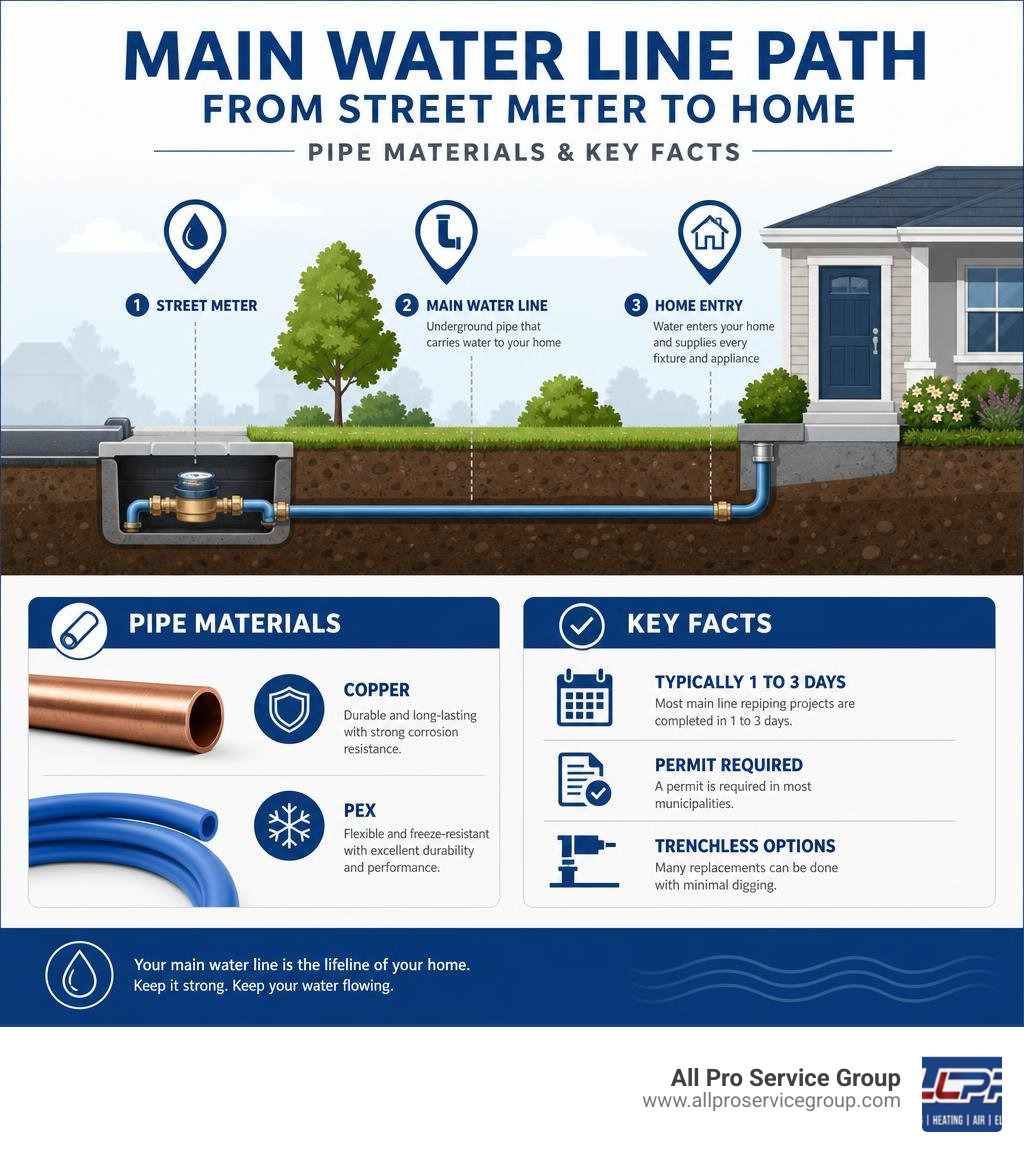
To understand why main line repiping is so critical, it helps to look at your home’s plumbing as two distinct systems: the supply side (the main line) and the distribution side (the interior plumbing).
The main water line is the high-pressure pipeline buried underground. It begins at the municipal water meter—usually located near the curb or sidewalk—and runs straight to your home's main shut-off valve. This pipe is built to handle the highest pressure in your system and is responsible for delivering every single gallon of water you use.
Once that water passes through your main shut-off valve and enters your home, it transitions into the interior plumbing system. This consists of the distributing lines—the smaller branches of pipes running through your walls, floors, ceilings, crawlspaces, and attics to supply your sinks, showers, toilets, and water heaters.
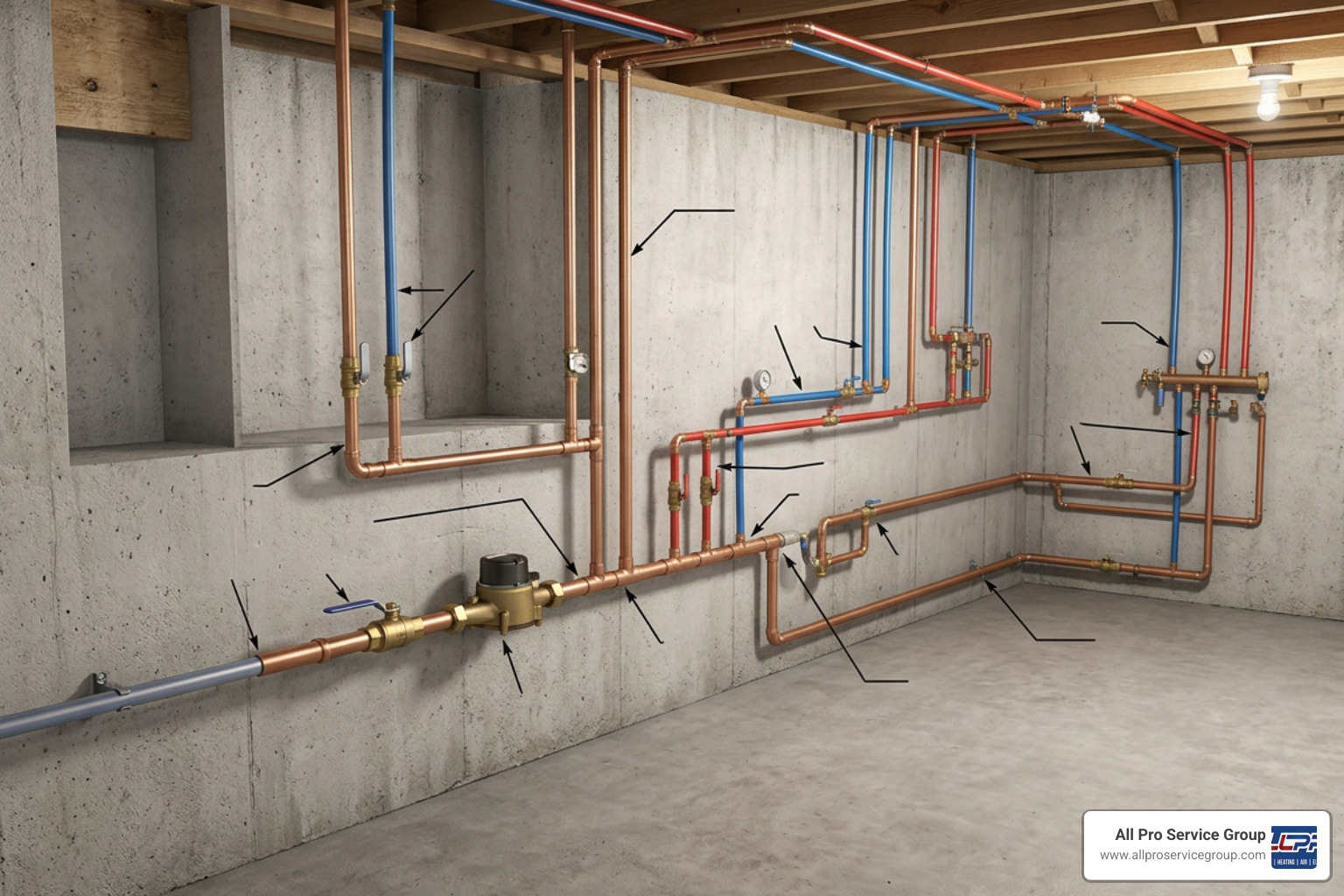
While they work together, they are exposed to entirely different environments. Interior pipes are protected from the elements but face friction and mineral buildup from constant daily use. The main line, on the other hand, is buried deep in the earth, where it must withstand soil expansion, shifting ground, freezing temperatures, and invasive tree roots.
If you are experiencing systemic water flow issues, it is essential to determine which side of the system is failing. To learn more about diagnosing underground pipe issues, check out our More info about water line repair. For a broader look at home plumbing maintenance, you can also read our Plumbing Repair Complete Guide 2026.
Should You Replace the Main Line During a Whole-House Repipe?
If you are already planning a whole-house interior repiping project, you will inevitably face a crucial question: Should we replace the main water line from the street at the same time?
Many homeowners receive conflicting bids. Some contractors only quote the work from the side of the house inward to keep their initial estimate lower. However, leaving an old, deteriorating main line active while updating the rest of the house is a major risk.
If your main supply line is made of an older material like galvanized steel, leaving it in place defeats the purpose of an interior repipe. Galvanized pipes degrade, thin out, and rust from the inside out. When you connect brand-new, clean interior pipes to a corroded, flaking galvanized main line, you leave your entire system vulnerable to pressure drops and rust flaking off into your new fixtures.
Updating the main line at the source ensures that your entire plumbing system starts fresh. For a deeper breakdown of how to coordinate these projects, read our Water Line Repair Complete Guide.
Benefits of Integrating Main Line and Interior Repiping
Combining your main line and interior repiping into a single, cohesive project offers several major advantages:
- Restored Water Pressure: Older main lines often suffer from internal mineral scale and rust buildup, which narrows the pipe's diameter and chokes water flow. Replacing the main line along with interior plumbing restores full, consistent pressure across all fixtures.
- Pristine Water Quality: Replacing corroded main lines eliminates the source of metallic tastes, odors, and reddish-brown rust discoloration in your water.
- Long-Term Cost Savings: Mobilizing a plumbing crew, pulling permits, and preparing a home for repiping involves fixed setup costs. Doing the main line and the interior together is significantly cheaper than hiring a team for two separate projects years apart.
- Resetting the Lifespan Clock: Modern pipes are engineered to provide 50+ years of reliable service. By replacing the entire line from the street meter to the furthest faucet, you ensure your home is worry-free for decades to come.
Key Indicators That You Need Main Line Repiping
Because your main water supply line is buried underground, you can’t easily inspect it for wear and tear. Instead, you have to watch for the warning signs that indicate the pipe is failing beneath your feet.
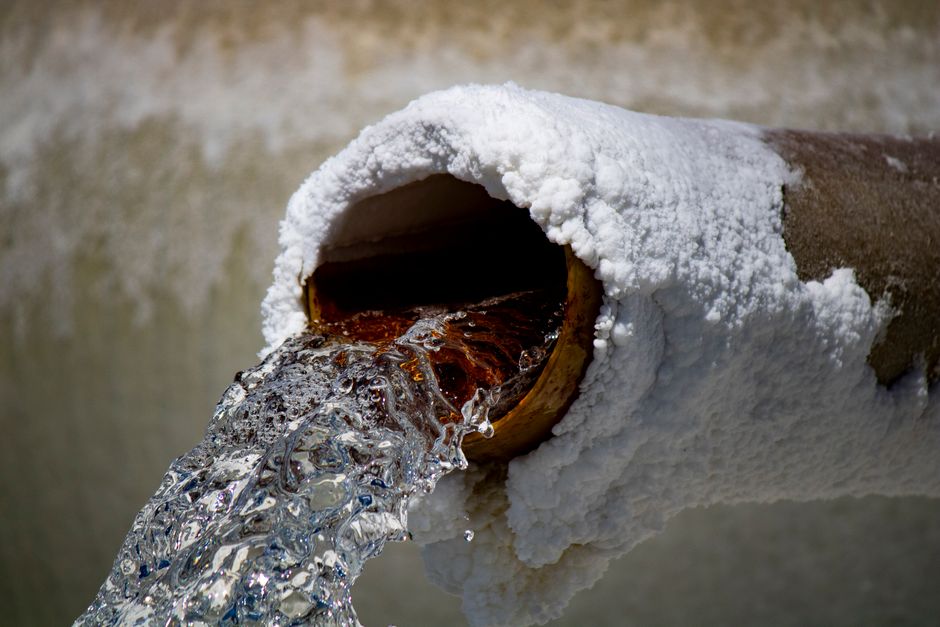
Keep an eye out for these common red flags:
- Persistent Low Water Pressure: If your showers feel more like a weak drizzle and your washing machine takes forever to fill, mineral scale or a hidden leak may be restricting flow in the main line.
- Discolored or Metallic-Tasting Water: If your tap water regularly runs yellow, red, or brown, or has a distinct metallic taste, it is a classic sign of rusting galvanized steel pipes.
- Unexplained Soggy Patches in Your Yard: If a section of your lawn is constantly wet, muddy, or has unusually lush, vibrant green grass even during dry summer months, water is likely escaping from a cracked main line.
- Spikes in Your Water Bill: A sudden, unexplained increase in water usage on your utility bill is a strong indicator of a continuous underground leak.
- Frequent Pinhole Leaks: If your main line has already required spot repairs for pinhole leaks, the pipe material is likely thinned out and failing systemically.
If you suspect a leak but aren't sure where it is, professional leak detection is the best way to pinpoint the issue without invasive digging. You can read more about how we locate these hidden issues in our guide on Detecting Leaks In Pipes.
When to Replace the Main Water Line
While minor pipe issues can sometimes be resolved with localized spot repairs, certain factors make a full replacement the only sensible long-term choice:
- The Age of Your Home: If your home was built more than 50 years ago and still has its original plumbing, it almost certainly relies on galvanized steel or lead service lines. These materials have far exceeded their reliable lifespans and are highly prone to sudden bursts.
- Recurring Pipe Failures: If you have already paid for multiple spot repairs on your main line over the last few years, you are trapped in a cycle of temporary fixes. Investing in a full repipe is much more cost-effective.
- Harsh Soil Conditions: The soil along the Wasatch Front can be highly demanding. Expansive clay soils shift with seasonal moisture changes, putting immense physical stress on rigid, aging pipes. Rocky terrain can also cause friction wear on underground lines over time.
Copper vs. PEX: Choosing the Best Materials for Your Main Line
When it comes to main line repiping, choosing the right material is the most important decision you will make. Today, the two industry standards for high-performance main line installations are copper and PEX (cross-linked polyethylene).
Both are excellent choices, but they perform differently depending on your budget, soil chemistry, and local climate.
| Feature | Copper (Type L) | PEX (PEX-A) |
|---|---|---|
| Average Lifespan | 50+ Years | 50+ Years |
| Material Cost | High | Moderate to Low |
| Freeze Resilience | Low (Rigid) | High (Expands & contracts) |
| Installation Speed | Moderate (Requires soldering/fittings) | Fast (Flexible, fewer joints) |
| Corrosion Resistance | Moderate (Vulnerable to highly acidic soil/water) | High (Immune to corrosion & scale) |
| UV Resistance | High (Completely UV-stable) | Low (Must not be exposed to sunlight) |
Copper Piping for Main Line Repiping
Copper has been the gold standard of plumbing for decades, and for good reason. It is incredibly durable, naturally biostatic (resisting bacterial growth), and completely UV-stable.
For underground main lines, we use thick-walled Type L copper. It is highly resistant to hard water scale and provides a rigid, reliable run from the meter to the house. Because copper is a traditional, premium material, it also holds strong appeal for home inspectors and future buyers, boosting your home’s resale value.
However, copper is expensive, and its rigidity makes it vulnerable to cracking if the surrounding soil freezes deeply or shifts significantly. Additionally, highly acidic soil chemistry can cause copper to corrode prematurely if it is not properly protected.
PEX Piping for Main Line Repiping
PEX—specifically high-quality PEX-A—has rapidly become the preferred choice for modern main line installations. Because PEX is flexible, it can be snaked through the ground with minimal joints, greatly reducing the potential points of future leaks.
One of PEX’s greatest advantages in Utah’s cold winters is its outstanding freeze resilience. If water freezes inside a PEX pipe, the material can expand up to three times its original diameter and contract back to its normal shape without splitting. PEX is also completely immune to corrosion, rust, and acidic soil conditions.
It is highly cost-effective and supports "home-run" manifold layouts, but it must be kept entirely out of direct sunlight, as UV rays will degrade the material.
To see how PEX is used in local homes across the Wasatch Front, you can explore our regional services, such as Pipe Repair in South Jordan UT | Slab Leak & Burst Pipe Experts.
The Cost of Replacing a Main Water Line and Key Price Factors
The cost of a main line repiping project can vary widely depending on the specific characteristics of your property. On average, a standard residential main line replacement from the meter to the house ranges from $2,500 to $8,000.
Several key factors influence where your project will fall within this range:
- Length of the Run: The distance from your municipal water meter at the street to your home's entry point is the primary cost driver. Longer runs require more material and labor.
- Pipe Depth: In Utah, water lines must be buried below the local frost line—typically 3 to 4 feet deep—to prevent freezing. Digging to this depth requires heavy equipment and careful excavation.
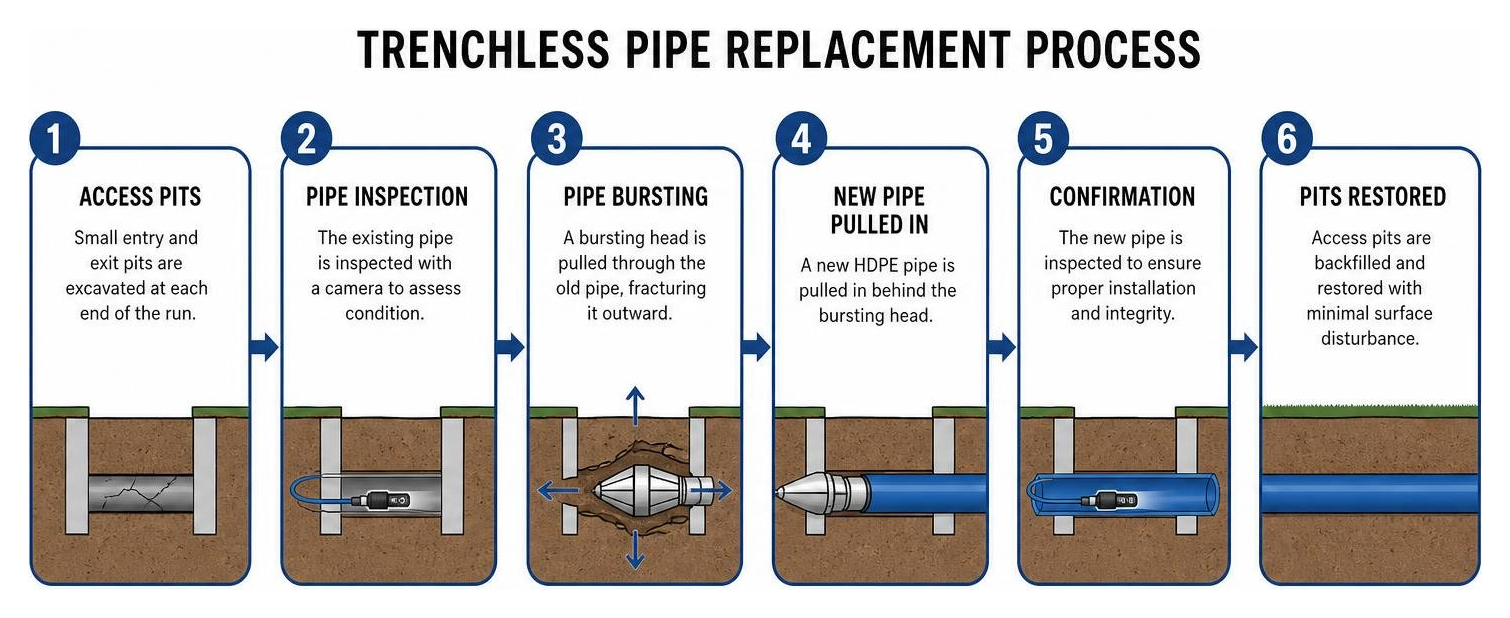
- Installation Method (Trenchless vs. Traditional): Traditional open-trench excavation requires digging up your entire yard. While the plumbing work itself may be cheaper, the cost to repair ruined lawns, driveways, and landscaping can be substantial. Trenchless methods, such as pipe bursting or directional boring, require only small access pits, preserving your landscaping but utilizing specialized, high-tech equipment.
- Obstacles and Surface Cover: If your main line runs beneath a concrete driveway, a paved walkway, or mature trees, navigating these obstacles adds complexity and labor costs to the project.
If you are also considering sewer line work while your yard is prepped, you can compare these costs in our guide on the Cost To Repipe The Main Sewer Line To The Street.
The Process of Main Line Repiping from Meter to House
A professional main line replacement follows a precise, structured sequence to ensure safety, efficiency, and code compliance:
- Utility Locating (Blue Stakes): Before any digging begins, we coordinate with local utility locators to mark all underground gas, electric, and fiber-optic lines to prevent accidental damage.
- Excavation or Access Pit Creation: Depending on the chosen method, we either dig a continuous trench or create small, strategic access pits at the water meter and the home’s entry point.
- Pipe Installation:
- Traditional: The new pipe is laid in the open trench and bedded in sand to protect it from sharp rocks.
- Trenchless Pipe Bursting: A steel splitting head is pulled through the old pipe, fracturing it outward while simultaneously pulling the new, highly durable PEX or HDPE pipe into place behind it.
- Connection and Pressure Testing: We connect the new pipe to the municipal meter and the home's shut-off valve, then perform a rigorous pressure test to verify that every connection is completely watertight.
- Backfilling and Cleanup: The trench or access pits are backfilled, compacted to prevent settling, and the work area is meticulously cleaned.
For more information on underground pipe replacement and advanced trenchless technology, check out our Ultimate Sewer Services Guide 2026.
Permitting and Code Requirements for Main Line Repiping
Because the main water line connects directly to the municipal water supply, main line repiping is highly regulated.
Almost all local municipalities along the Wasatch Front require a plumbing permit for this work. This process ensures that the materials used meet local standards, the pipe is buried at the correct depth to prevent freezing, and a backflow prevention device is installed if required.
Once the installation is complete, a city inspector must visit the site to review the work before the trench or access pits are backfilled. Working with a licensed, insured contractor like All Pro Service Group guarantees that all permits are secured, inspections are handled seamlessly, and your installation is fully code-compliant.
Frequently Asked Questions about Main Line Replacement
How long does a main water line repiping project take?
A typical main water line replacement takes between 1 to 3 days to complete. The exact timeline depends on the length of the pipe, the depth of the line, and whether we use traditional excavation or trenchless methods.
Your water service will only be shut off for a portion of this time—usually for just a few hours on the final day when we make the final connections to the meter and the house.
What is the difference between trenchless and traditional excavation?
Traditional excavation involves digging a continuous, open trench along the entire path of your water line. This method is highly effective but can cause significant disruption to your lawn, landscaping, and driveway.
Trenchless methods, such as pipe bursting or directional boring, require only two small access pits—one at the street meter and one at the house. The new pipe is pulled or guided underground through the path of the old pipe, keeping your landscaping, walkways, and driveway completely intact.
Does a main line replacement require a permit?
Yes. Because the main water line carries drinking water from the public supply into your home, local building codes require a permit and a physical inspection by a municipal official. This ensures the pipe is buried deep enough to avoid freezing and that all materials and connections meet strict safety and health standards.
Conclusion
Replacing your home’s main water line is a major project, but it is one of the most impactful investments you can make in your property's safety, comfort, and value. By upgrading your main line, you protect your home from sudden water damage, restore strong water pressure, and ensure your family has clean, rust-free water for decades to come.
At All Pro Service Group, we have been serving homeowners across the Wasatch Front—including Salt Lake City, Sandy, South Jordan, West Jordan, West Valley City, Park City, Ogden, and Provo—since 2008. As a "Gephardt Approved" company, we pride ourselves on delivering honest, dependable plumbing service with trained experts, upfront pricing, and convenient financing options to fit your budget.
If you are ready to upgrade your water supply or suspect your main line is failing, don't wait for a costly pipe burst. Contact us today to schedule a professional inspection and request your comprehensive quote for Plumbing/Repiping Main Line.