The Real Price of Installing a 240 Volt Outlet for Your EV
What Does a 240 Volt Outlet for an Electric Car Actually Cost?
The 240 volt outlet for electric car cost catches many Salt Lake Valley homeowners off guard — and the range is wide enough to cause real sticker shock if you go in unprepared.
Here's a quick answer before we dive deeper:
| Scenario | Typical Total Cost |
|---|---|
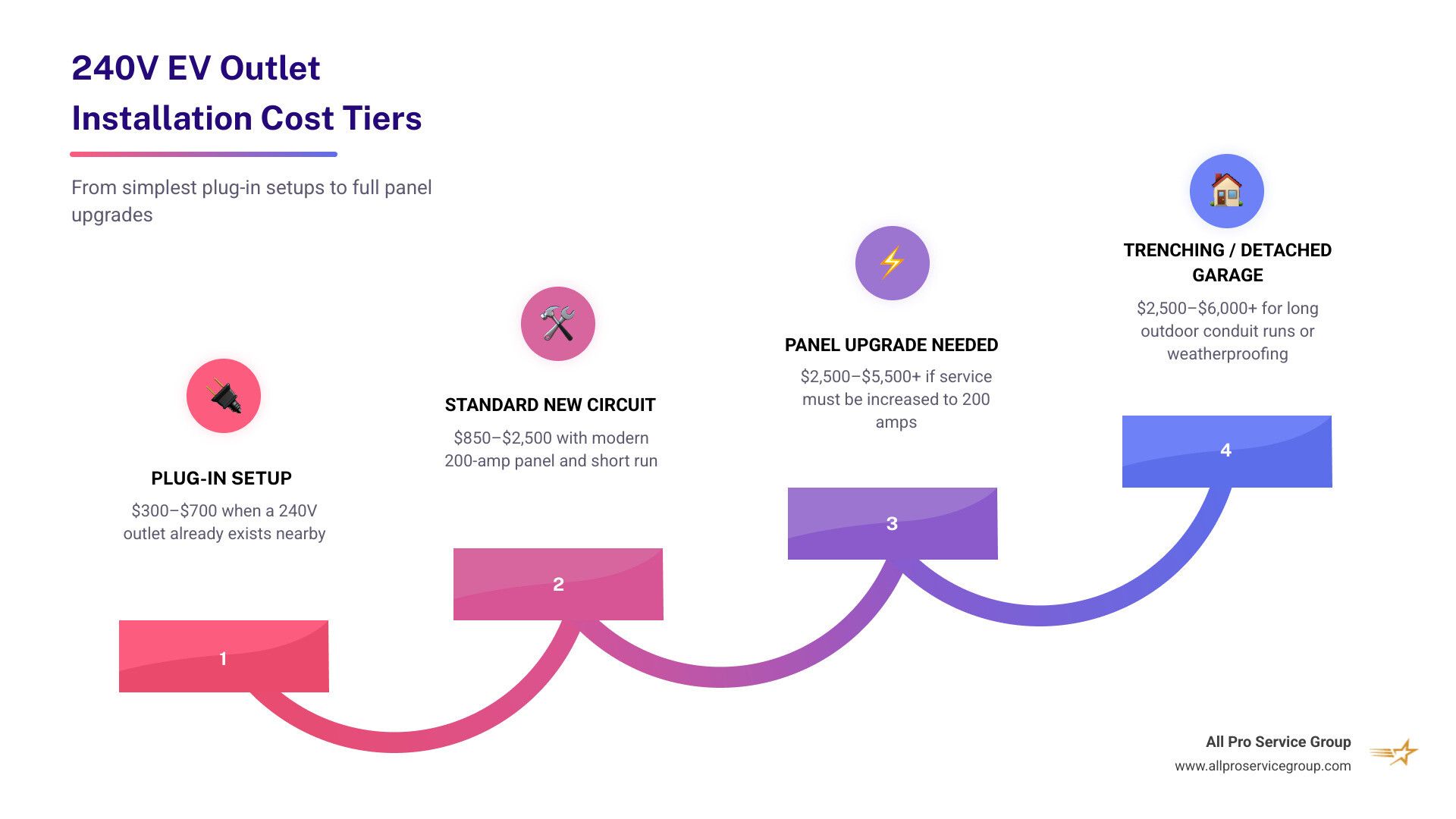
| Existing 240V outlet nearby (plug-in setup) | $300 – $700 |
| New 240V outlet, modern 200-amp panel | $850 – $1,500 |
| New circuit + standard installation | $1,200 – $2,500 |
| Outdoor or detached garage with trenching | $2,500 – $6,000+ |
These figures include the charger unit, electrical materials, labor, and permit fees — the full picture most quick-answer guides leave out.
Most homeowners in the Greater Salt Lake area land somewhere in the $1,200 to $2,500 range for a straightforward Level 2 install. But your actual cost depends on several factors: how far your panel sits from your parking spot, whether your panel has room for a new 40–50 amp circuit, and whether you're mounting indoors or outside.
This guide breaks down every cost component so you can budget accurately — and avoid surprises on installation day.
We are All Pro Service Group, and our electrical team has handled dozens of
240 volt outlet for electric car installations across the Wasatch Front — from simple garage plug-in setups to full panel upgrades in older Salt Lake homes. We'll walk you through exactly what drives the price so you can make a confident, informed decision.
Introduction
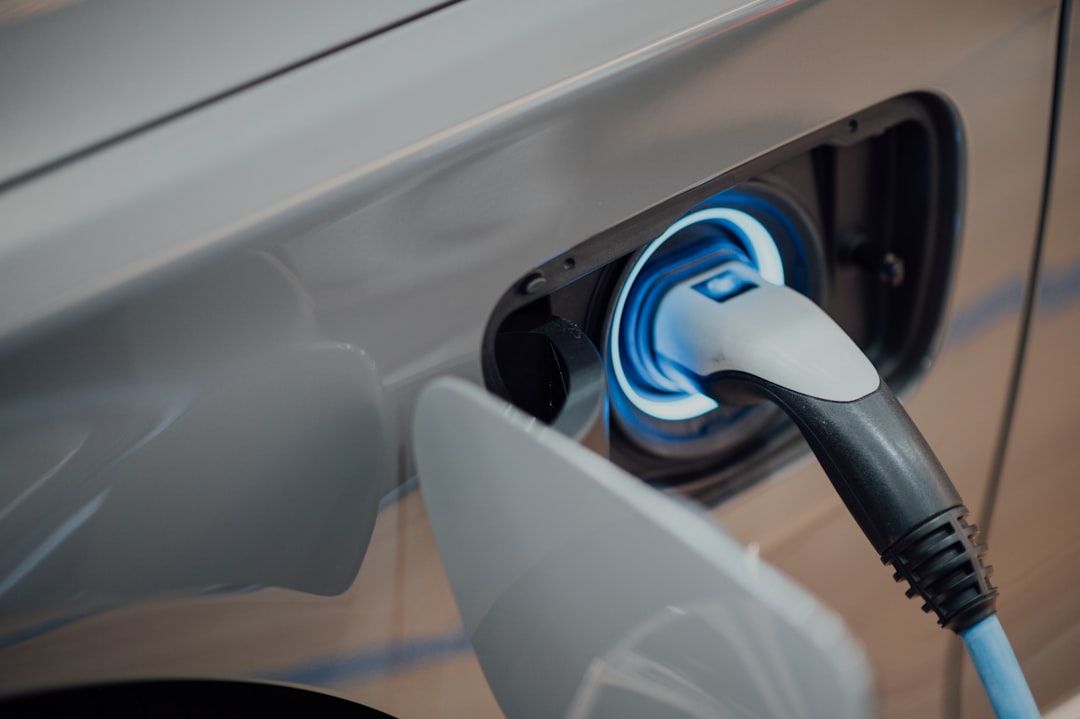
When you transition from the standard 120V Level 1 charger that came with your vehicle to a dedicated 240V Level 2 setup, you aren't just buying a faster "fill-up." You are investing in home infrastructure. A Level 2 station provides 240V power, which is the same high-voltage juice used by your clothes dryer or electric range.
The primary benefit is charging speed. While a standard wall outlet might give you 3–5 miles of range per hour, a 240V outlet can provide 25–60 miles of range per hour. This means waking up to a full battery every single morning, regardless of how much you drove the day before. Beyond convenience, a professionally installed EV Charger Installation Salt Lake can actually increase your home's value, as more buyers in the Salt Lake City area prioritize EV-ready garages.
Average 240 Volt Outlet for Electric Car Cost Breakdown
As we head into May 2026, the national average for a basic Level 2 installation typically falls between $850 and $2,700. However, "average" can be a tricky word in the electrical world. In the Greater Salt Lake area, we see a wide spectrum of project scopes.
According to EV Charger Installation Cost in 2026: What to Expect | Cost to Renovate, the total investment is usually split between hardware, labor, and permits. To give you a clearer picture, we've broken down the installation tiers we frequently see in neighborhoods from Provo to Ogden:
| Installation Tier | Estimated Cost | What's Included |
|---|---|---|
| Basic | $850 – $1,200 | Panel is in the garage; short wire run; existing capacity available. |
| Standard | $1,200 – $2,500 | Panel is in the basement; 30–50ft wire run; minor circuit adjustments. |
| Complex | $3,000 – $6,000+ | Requires panel upgrade, trenching for detached garage, or long exterior runs. |
For a more detailed look at the steps involved, check out our
EV Charger Install Guide.
Hardware and Material Expenses
The "stuff" that goes into your wall adds up quickly. A high-quality NEMA 14-50 receptacle — the standard "plug" for most portable Level 2 chargers — costs between $15 and $50, but that's just the tip of the iceberg.
The heavy-duty 6 AWG copper wire required for a 50-amp circuit currently costs between $3 and $6 per foot. If your panel is 50 feet away from your charger, you're looking at $150–$300 just for the wire. Add in a $50–$100 double-pole breaker and heavy-duty conduit to protect those wires, and your material bill can easily hit $400 to $800 before a single hour of labor is billed. You can learn more about the components we use in our Electrical Outlets Switches section.
Electrician Labor and Permit Fees
In the Salt Lake area, professional electrician labor for an EV installation typically ranges from $300 to $1,500. This depends on whether it's a simple two-hour job or a full-day project involving attic crawls or drywall cutting.
Don't forget the paperwork! Any new 240V circuit requires a municipal permit and a follow-up inspection to ensure everything is up to the National Electrical Code (NEC). Permit costs in Utah cities like West Jordan or South Jordan generally range from $50 to $300. As noted by the EV Charger Installation Cost in 2026: Full Breakdown - Electrify Guide, skipping the permit is a major risk; it can void your homeowner's insurance or cause massive headaches when you try to sell your home later. You can find more details on our local rates at Electrical Services Salt Lake.
Key Factors Influencing Your 240 Volt Outlet for Electric Car Cost
Every home is a puzzle. We've seen identical EVs in the same South Salt Lake neighborhood have installation quotes that differ by $1,000 because of how the house was built.
- Distance from Panel: This is the #1 cost driver. Copper is expensive. If we have to run wire from a basement panel, across the house, and into a garage, the cost of materials and labor for Electrical Wiring Rewiring will climb significantly.
- Indoor vs. Outdoor: Indoor garage mounts are the most affordable. Outdoor installations require weatherproof NEMA 4X enclosures and specialized conduit, which can add $200–$500 to the total.
- Trenching: If you have a detached garage and we need to dig a trench to run power underground, expect the 240 volt outlet for electric car cost to increase by $1,500 to $3,000 depending on the distance and the type of ground (dirt vs. concrete).
Electrical Panel Capacity and Upgrades
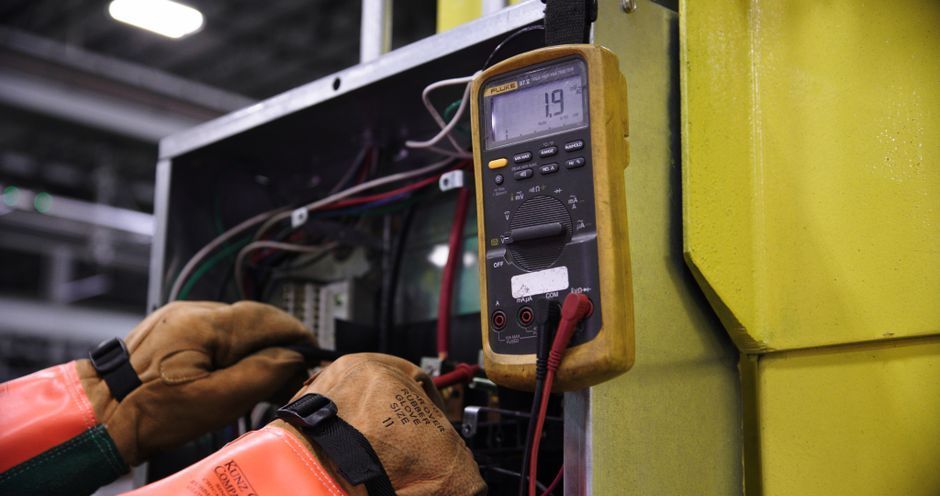
Before we can install a new 240V outlet, we have to make sure your home can actually handle the load. Most modern chargers pull 32 to 48 amps continuously. If you have an older 100-amp panel and you're already running an AC unit, an electric dryer, and a hot tub, you might be out of "room."
A licensed electrician must perform a load calculation to see if your current system is sufficient. If you need to jump from a 100-amp to a 200 Amp Power Panel, expect to add $1,500 to $4,000 to your total project cost. You can use an EV Charger Installation Cost Calculator (2026) | TradeCalc to get a rough idea of your needs, or browse our guide on Electrical Panel Upgrades.
Installation Location and Complexity
Where you park determines where we work. The most cost-effective spot is on the wall directly shared with the electrical panel. If we have to move to the opposite side of the garage, we're adding conduit and wire.
For those without a garage, exterior weatherproofing is mandatory. According to How Much Does It Cost to Install a Home EV Charging Station in ..., outdoor setups can reach $2,500 even without panel upgrades because of the ruggedized materials required to withstand Utah's snowy winters and hot summers.
Comparing Installation Methods and Alternatives
There are two main ways to get 240V power to your car: a plug-in outlet or a hardwired station. Each has its own price point and benefits.
Hardwired vs. Plug-in 240 Volt Outlet for Electric Car Cost
A plug-in setup uses a NEMA 14-50 outlet. It’s flexible — if you move, you can take your charger with you. However, current codes often require these outlets to have GFCI protection, which can lead to "nuisance tripping" with some EV chargers.
A hardwired setup connects the charger directly to your home's wiring. This is generally more reliable and allows for higher charging speeds (up to 48 or 80 amps, whereas plugs are limited to 40 amps). While the labor for hardwiring is similar, you save the cost of the $50 outlet and the $100 GFCI breaker (since hardwired units have internal protection). For a deep dive into these options, see our 240 Volt Charger Installation Complete Guide and check regional pricing via the Home EV Charger Installation Cost Calculator 2026 — by State | EVGasCompare.
Smart Splitters and Level 1 Comparisons
If you are looking to save money, you might consider a Smart Splitter. These devices plug into an existing 240V dryer outlet and allow you to share that power with your EV. This can bring your total 240 volt outlet for electric car cost down to $300–$700 because it avoids the need for a new circuit or a permit in many cases.
However, don't be tempted to stick with Level 1 (120V) charging just to save money. As Is a home EV charger worth installing? - Destination Charged points out, the "opportunity cost" of spending 24+ hours to charge your car usually outweighs the one-time installation fee of a 240V outlet.
Rebates and Incentives to Offset Costs
The "real" price is often lower than the sticker price thanks to government and utility help. In 2026, the Federal 30C Tax Credit is still a powerhouse, offering a credit of 30% of the cost of hardware and installation, up to $1,000 for residential properties.
Local utility programs in the Salt Lake City area, like those from Rocky Mountain Power, often provide additional rebates ranging from $200 to $500 for installing "smart" chargers. When you combine these, a $1,500 installation could actually cost you closer to $800 out of pocket. You can find more about these financial wins in this guide: How Much Does It Cost to Install an Electric Car Charger - Lectron EV.
Frequently Asked Questions about 240V EV Outlets
Do I need a permit to install a 240V outlet for an EV?
Yes. In every jurisdiction we service, from Park City to South Jordan, a permit is required for a new 240V circuit. This ensures the wire gauge is correct and the system is safely grounded.
Can I use an existing 240V dryer outlet for my electric car?
Technically, yes, but only if the outlet is rated for the continuous load of an EV. Most dryer outlets (NEMA 14-30) are not designed for the 8–10 hours of heavy draw an EV requires. We usually recommend a dedicated circuit to prevent overheating your home's wiring.
How much does a panel upgrade add to the total installation cost?
A panel upgrade typically adds $1,500 to $4,000. If your home still uses an old 100-amp service or an unsafe brand like Federal Pacific or Zinsco, this upgrade is a mandatory safety step. Check our Electrical Panel Upgrade Complete Guide for a full price breakdown.
Conclusion
Calculating the 240 volt outlet for electric car cost doesn't have to be a guessing game. While the average Salt Lake homeowner spends between $1,200 and $2,500, the peace of mind that comes with a safe, fast, and professionally installed charger is worth every penny.
At All Pro Service Group, we’ve been the "Gephardt Approved" choice for the Greater Salt Lake Valley since 2008. Whether you’re in West Valley City or Park City, our expert electricians are ready to help you join the electric revolution with dependable inspections and 24/7 support. Ready to power up? Check out our EV Charger Installation Salt Lake services or give us a call today!