How to Succeed at EV Charger Install, Even if You've Failed in the Past
This is paragraph text. Click it or hit the Manage Text button to change the font, color, size, format, and more. To set up site-wide paragraph and title styles, go to Site Theme.
Why Most EV Charger Installs Go Wrong — and How to Get Yours Right
EV charger install is something every new EV owner needs to tackle — and getting it right from the start saves you time, money, and serious headaches.
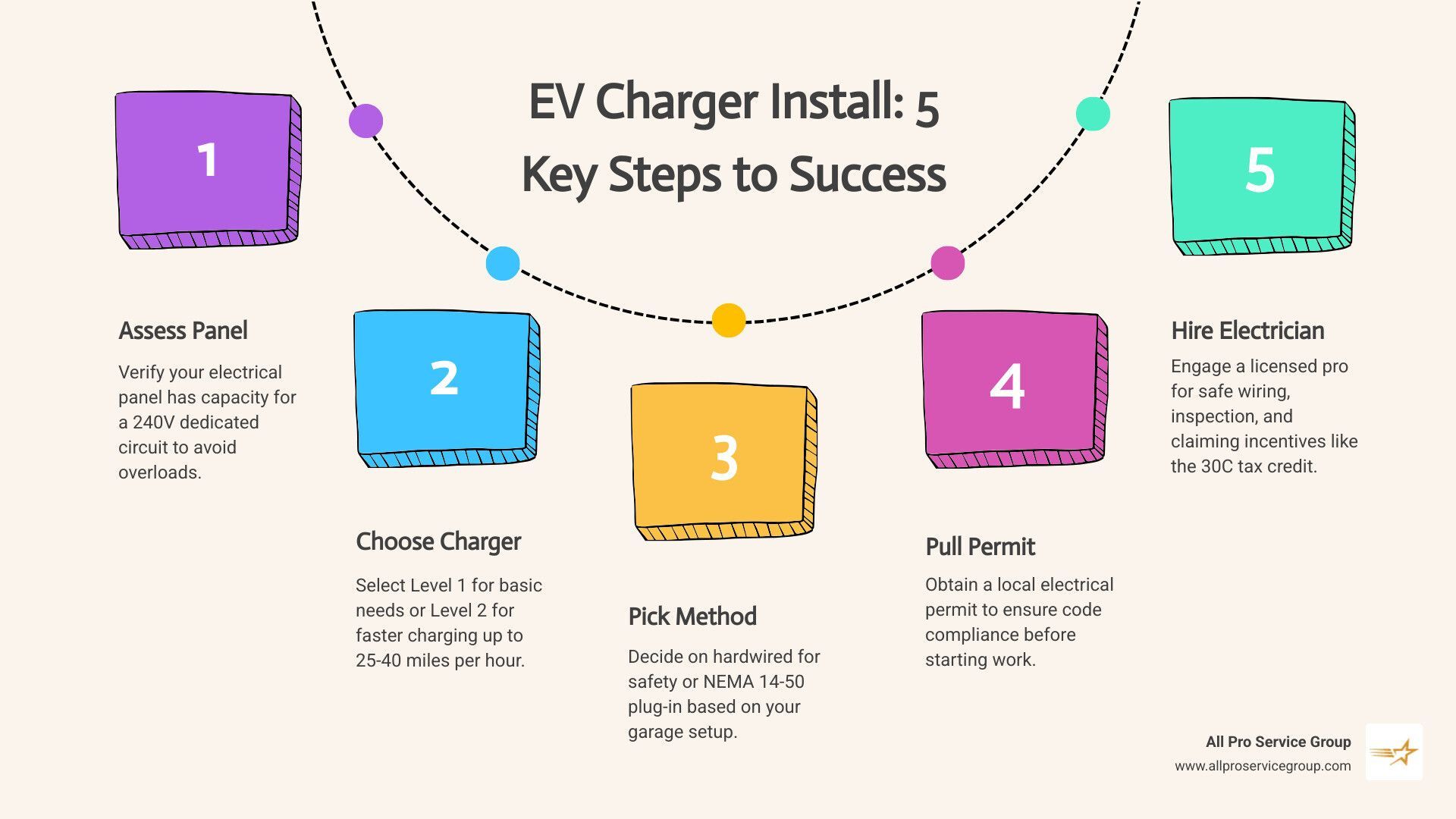
Here's a quick overview of what a successful home EV charger install looks like:
| Step | What's Involved |
|---|---|
| 1. Assess your panel | Check if your electrical panel has capacity for a 240V dedicated circuit |
| 2. Choose your charger | Pick a Level 1 or Level 2 charger based on your daily driving needs |
| 3. Pick an install method | Decide between a hardwired unit or a plug-in outlet (NEMA 14-50) |
| 4. Pull a permit | Most areas require an electrical permit before any work begins |
| 5. Hire a licensed electrician | A pro handles wiring, code compliance, and final inspection |
| 6. Claim your incentives | A federal tax credit covers 30% of costs, up to $1,000, through June 2026 |
About 80% of EV charging happens at home — not at public stations. That means your home setup isn't just a convenience, it's your primary fuel source. Done right, a home charger lets you wake up every morning with a full battery, the same way you wake up to a fully charged phone.
But "done right" is the key phrase. Many homeowners run into problems — oversized quotes, failed inspections, panel limitations, or chargers that can't deliver full power — simply because they didn't know what to expect going in.
I'm Gary, owner of All Pro Service Group, and our electrical team has helped countless homeowners in the Greater Salt Lake Valley navigate the EV charger install process safely and up to code. In the sections below, I'll walk you through everything you need to know to get this done right the first time.
Understanding the Basics: Level 1 vs. Level 2 EV Charger Install
Before you start drilling holes in your garage wall, you need to know exactly what kind of power you're dealing with. In electric vehicles, we generally talk about three "levels" of charging, but for your home in Salt Lake City or Provo, you’re likely choosing between Level 1 and Level 2.
Level 1: The "Trickle" Charge
A Level 1 charger is essentially just a fancy extension cord that plugs into a standard 120V household outlet. It's the "trickle charger" of the EV world. While it’s convenient because it requires zero electrical work, it’s painfully slow. You're looking at gaining maybe 3 to 5 miles of range per hour. If you have a 100-mile commute, it could take over 20 hours to recover that energy.
Level 2: The Gold Standard for Homeowners
A Level 2 ev charger install is what we recommend for 95% of our customers. This setup uses 240V power—the same kind of "heavy-duty" electricity your clothes dryer or electric oven uses.
With a Level 2 charger, you can add 25 to 40 miles of range per hour. This means even a completely empty battery can be fully topped off in 4 to 10 hours—perfect for sleeping while your car "refuels."
Connectors and Standards
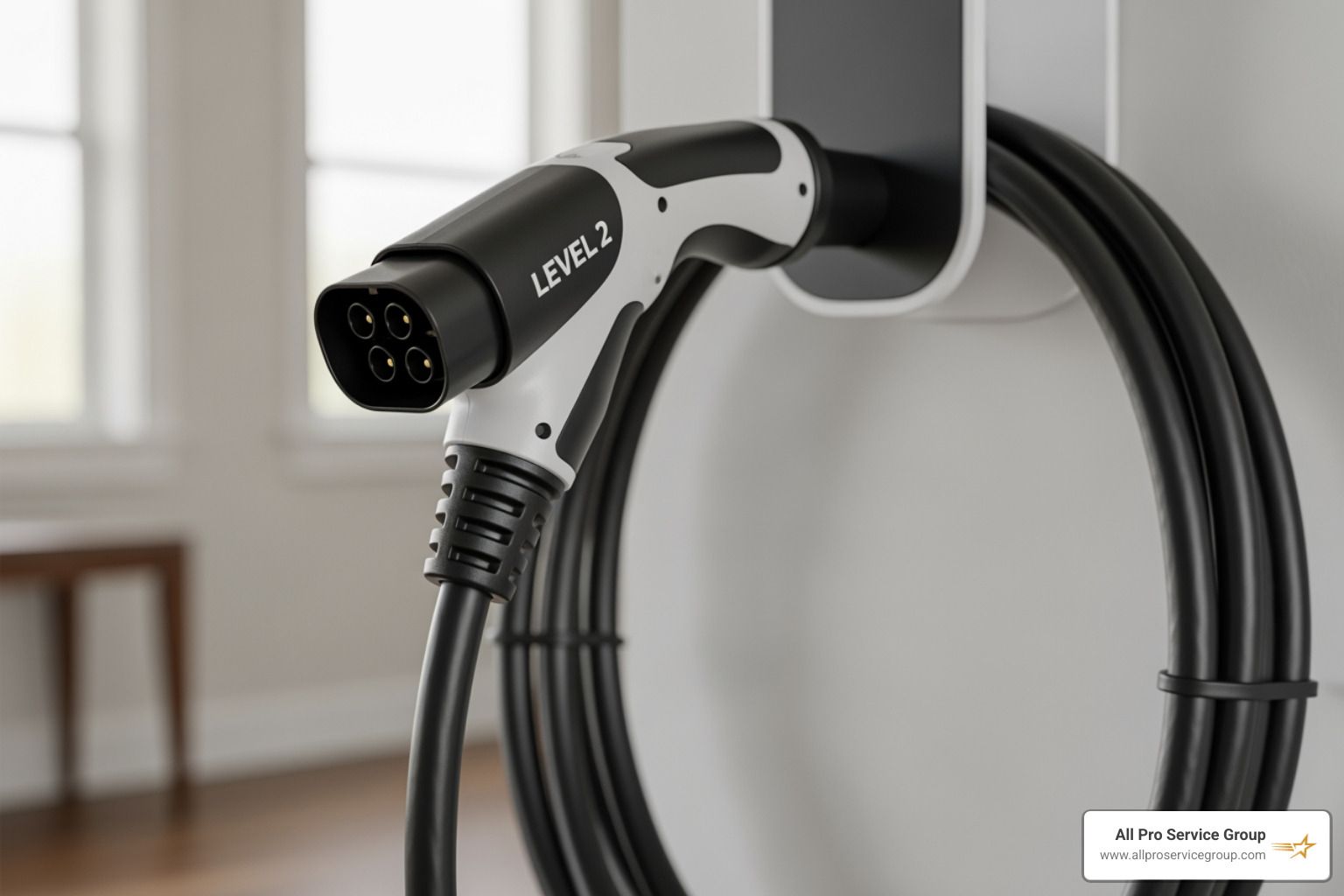
Most EVs on the road today use the J1772 connector for Level 2 charging. However, the industry is shifting toward the NACS (North American Charging Standard), which was originally Tesla’s proprietary plug. Many 2025 model year vehicles are adopting NACS. Don't sweat it too much, though—adapters are readily available to bridge the gap between different plug types.
| Feature | Level 1 Charging | Level 2 Charging |
|---|---|---|
| Voltage | 120V (Standard Outlet) | 240V (Dedicated Circuit) |
| Miles of Range per Hour | 3–5 miles | 25–40 miles |
| Typical Charge Time (Full) | 20–50 hours | 4–10 hours |
| Installation Required | None | Professional Electrician |
Assessing Your Home’s Electrical Readiness
One of the biggest hurdles to a successful ev charger install is your home’s existing electrical capacity. You can’t just "plug and play" a high-powered device without checking if your system can handle the load.
The 200-Amp Benchmark
Most modern homes in West Jordan or South Jordan built after 1975 likely have a 200-amp electrical panel. This is usually plenty of "headroom" to add an EV charger. However, if you live in an older home in Salt Lake City with a 60-amp or 100-amp panel, you might be maxed out, especially if you have electric heating or a hot tub.
The Load Calculation
Before we touch a single wire, we perform a load calculation. We look at all your major appliances—AC units, electric ranges, dryers—and determine if your panel can safely support another 32 to 50 amps. If your panel is full, you might need Electrical Panel Upgrades to ensure you don't trip the master breaker every time you try to charge your car and run the dishwasher simultaneously.
The 125% Rule
Electrical code (NEC) requires that a circuit for a continuous load—like an EV charger—be sized at 125% of the charger's output. For example, if you want a 40-amp charger, you need a 50-amp circuit breaker and appropriately sized Wiring & Rewiring. This prevents the wires from overheating during those long overnight charging sessions.
Hardwired vs. Plug-In: Choosing Your Installation Method
When you decide on a Level 2 ev charger install, you have two main physical setup options: hardwired or plug-in.
The Hardwired Advantage
Many electricians—ourselves included—prefer hardwiring. This means the charger is permanently connected to your home’s electrical system.
- Safety: It eliminates a point of failure (the outlet/plug connection).
- Speed: Hardwired units can often handle higher amperages (up to 48 or 50 amps) than plug-in units.
- Aesthetics: It provides a much cleaner, more professional look.
The Plug-In (NEMA 14-50) Option
A plug-in install involves mounting a high-voltage outlet—typically a NEMA 14-50—and then plugging your charger into it.
- Portability: If you move, you can unplug your expensive charger and take it with you.
- Ease of Replacement: If the charger breaks, you just unplug it and get a new one without calling us back out.
Regardless of the method, you should always look for an ENERGY STAR certified charger. These units have been tested for safety by independent labs like UL or ETL and often qualify for more rebates.
Location and Cable Management
Think carefully about where you park. Most chargers come with a 25-foot cable, which sounds like a lot until you realize you have to snake it around a second car or a lawnmower. If you’re installing outdoors in Park City or Ogden, make sure the unit is weatherproof (look for a NEMA 4 rating) to handle our Utah winters. Proper Outlets & Switches and mounting hardware will keep everything tidy and safe.
Navigating Costs, Permits, and Incentives
Let's talk numbers. A common reason for a "failed" ev charger install is sticker shock. Knowing the breakdown helps you budget effectively.
What Does it Cost?
On average, a standard professional installation in the Salt Lake area costs about $1,200. However, the range is wide:
- Equipment:$300 to $1,000 for the charger itself.
- Labor & Materials:$500 to $2,000+, depending on how far your panel is from the garage and if you need upgrades.
- Permits: Usually $50 to $150 depending on your local municipality (Ogden vs. Provo, for example).
Tax Credits and Rebates
The good news is that Uncle Sam wants to help. The Federal tax credit currently offers 30% back on the cost of hardware and installation, up to $1,000, through June 30, 2026.
Additionally, many local utilities offer their own ENERGY STAR Incentives. Some Utah utility programs have been known to offer rebates that cover a significant portion of the installation. It’s always worth a 10-minute search on your utility’s website before you buy.
Why Permits Matter
We've seen DIY jobs where people skip the permit to save $100. Don't do it. A permit ensures a city inspector reviews the work. This protects your home insurance—if an unpermitted electrical job causes a fire, your insurance company might deny the claim. A licensed electrician will handle the permit and the final inspection for you.
Overcoming Obstacles for Unique Living Situations
Not everyone has a private three-car garage in West Valley City. If your living situation is a bit more complex, you can still succeed at an ev charger install.
EV Charger Install for Renters and Condos
If you rent or live in a condo, you might feel stuck. However, "Right-to-Charge" laws are becoming more common, allowing tenants to install chargers at their own expense in their designated spots.
- Talk to Management: Present a plan showing that the install will be professional and could even increase the property value.
- Curbside Options: While programs like the Boston curbside program or the Seattle EV program are currently city-specific, they serve as great models for what residents can request from local Utah city councils.
- Shared Parking: Some newer apartments in the Salt Lake Valley are installing shared Level 2 stations as an amenity.
Smart Features for a Successful EV Charger Install
Modern chargers are "smart," meaning they connect to your home WiFi. This offers several perks:
- Energy Tracking: See exactly how much your "fuel" is costing you.
- Off-Peak Scheduling: Set your car to charge at 2:00 AM when electricity rates are often lowest.
- Load Shedding: Some advanced systems can "talk" to your home's electrical panel and slow down the car's charging if you turn on a heavy appliance, preventing a blown fuse.
- Smartphone Apps: Get alerts when your car is full or if the plug gets bumped. Signing up for PlugStar E-Updates can keep you informed on the latest tech changes.
Frequently Asked Questions about EV Charger Install
Do I need a licensed electrician for an ev charger install?
Yes, absolutely. While you could technically buy the parts and try to DIY, the risks are high. EV chargers pull a massive amount of current for hours at a time. A small mistake in wire gauge or a loose connection can lead to a fire.
A pro ensures compliance with the National Electrical Code and local Utah regulations. Furthermore, many manufacturer warranties are only valid if a licensed professional performed the install. Even if you're outside our immediate area, looking at standards from organizations like Technical Safety BC shows that professional oversight is the universal standard for safety.
How long does it typically take to install a home charger?
The actual physical work of an ev charger install usually takes about 2 to 4 hours. However, the "process" can take longer. Getting a permit can take a few days, and coordinating with a city inspector for the final sign-off might add a week. If you’re using a national retail program, the timeline often stretches to 3 to 6 weeks. When you work with a local team like All Pro, we can usually get you from quote to "plugged in" much faster.
Can my existing 100-amp panel handle the load?
It depends on what else you’re running. If you have gas appliances (stove, water heater, dryer), a 100-amp panel can often handle a Level 2 charger. However, if your home is all-electric, you’ll likely need an upgrade.
One "hack" is using a load management device that pauses the car charger if the house hits its limit. If you’re building a new home, we always recommend making it EV-ready construction by pre-wiring a 50-amp circuit, which is much cheaper than retrofitting later.
Conclusion: Powering Your Future with All Pro Service Group
An ev charger install shouldn't be a source of stress. It’s the final step in your journey toward cleaner, cheaper transportation. By understanding your home's electrical capacity, choosing the right Level 2 hardware, and taking advantage of federal tax credits, you can turn your garage into a high-tech fueling station.
At All Pro Service Group, we’ve been the trusted name in the Greater Salt Lake Area since 2008. Whether you're in Ogden, Provo, or Park City, our "Gephardt Approved" team is ready to help. We pride ourselves on dependable inspections and trained experts who treat your home like their own.
Ready to wake up to a full battery every morning? We offer 24/7 availability and financing options to make your transition to electric as smooth as possible. Don't risk a DIY failure—trust the local experts for your EV Charger Installation. Give us a call today, and let’s get you powered up!