Why a Car Charging Port for Home Changes Everything About EV Ownership
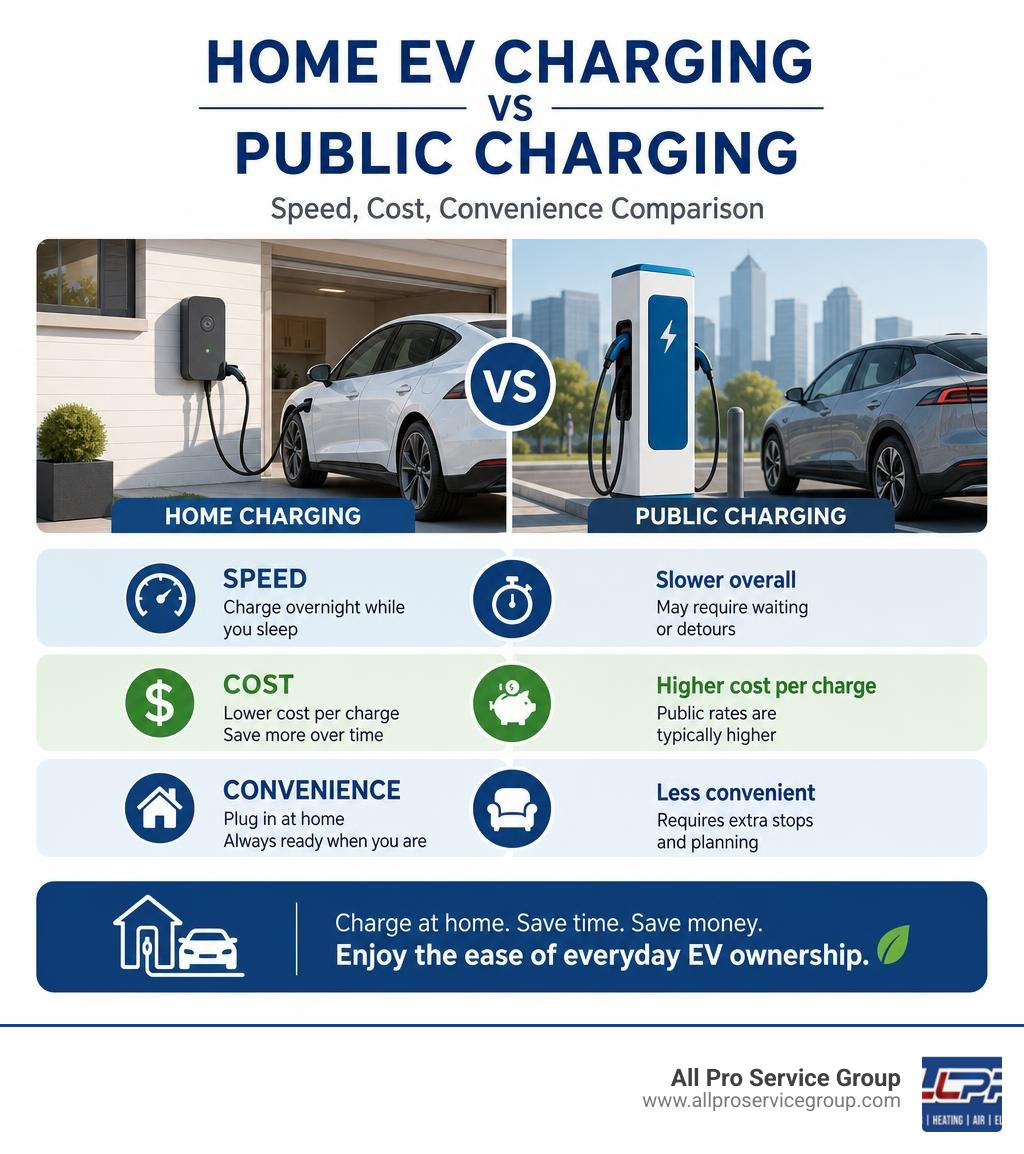
Setting up a car charging port for home is one of the smartest moves you can make after buying an electric vehicle. More than 80% of all EV charging happens at home — and for good reason. It's cheaper, more convenient, and less stressful than hunting for a public charger.
Here's a quick look at your main options:
| Option | Voltage | Range Added Per Hour | Best For |
|---|---|---|---|
| Level 1 (standard outlet) | 120V | ~8 km | Plug-in hybrids, light daily driving |
| Level 2 (dedicated charger) | 240V | 40–60 km | Most EV owners, overnight charging |
The short answer: Most homeowners should install a Level 2 charger on a dedicated 240-volt circuit. It charges 3 to 7 times faster than a standard outlet, typically costs $400–$700 for equipment, and can be installed by a licensed electrician in a single day.
Home charging also saves serious money. Compared to public DC fast charging, charging at home costs roughly one-third the price — and a typical EV driver can save up to $2,500 per year on fuel and maintenance costs.
This guide walks you through everything: charger levels, connector types, electrical requirements, smart features, installation costs, and how to find a qualified electrician in the Greater Salt Lake area.
At All Pro Service Group, a home-services company serving the Greater Salt Lake Valley since 2008, our electrical team handles car charging port for home installations regularly, from straightforward Level 2 setups to full panel assessments. Whether you're brand new to EV ownership or upgrading an existing setup, we'll help you make sense of the process before diving into the details.
Understanding EV Charging Levels and Speeds
To make the best decision for your home, you first need to understand how EV charging speeds actually work. You do not necessarily need the fastest, most expensive charger on the market to keep your car ready to roll. Instead, the goal is to match your home infrastructure with your daily driving habits.
When we talk about installing a car charging port for home, we are almost always choosing between Level 1 and Level 2 charging. Level 3 charging (also known as DC Fast Charging) is what you see at commercial highway stops. It requires specialized utility equipment and hundreds of amps of direct current, making it completely impractical and cost-prohibitive for residential properties.
| Charging Feature | Level 1 Charging | Level 2 Charging |
|---|---|---|
| Voltage Required | 120-volt AC (Standard household outlet) | 240-volt AC (Dedicated heavy-duty circuit) |
| Amperage Range | 12 to 16 Amps | 16 to 80 Amps (Commonly 30A, 40A, or 50A) |
| Power Output | 1.0 kW to 1.4 kW | 3.3 kW to 19.2 kW (Commonly 7.2 kW to 11.5 kW) |
| Range Added Per Hour | ~8 kilometers (approx. 2 to 5 miles) | 40 to 60 kilometers (approx. 10 to 60 miles) |
| Typical Full Charge Time | 20 to 40+ hours | 3 to 8 hours (Overnight easily) |
Level 1 vs. Level 2 Charging
Level 1 charging is what comes standard with almost every electric vehicle. You simply plug the manufacturer-provided cord into a standard 120-volt household wall outlet. While this option requires zero upfront electrical work, it is incredibly slow. A Level 1 setup only adds about 8 kilometers (roughly 2 to 5 miles) of range per hour of charging. If you drive a plug-in hybrid with a small battery or have an exceptionally short daily commute, Level 1 might get you by. However, for fully electric vehicles with larger batteries, trying to charge on a 120-volt outlet can take over 24 hours to reach a full state of charge.
Level 2 charging utilizes a 240-volt circuit, which is the same type of high-voltage connection used by heavy household appliances like electric clothes dryers, water heaters, and kitchen ranges. Upgrading to a 240-volt setup is a game-changer. It allows your EV to charge 3 to 7 times faster than Level 1.
With a dedicated 240-volt station, you can easily add 40 to 60 kilometers of range per hour, meaning even the most depleted EV batteries can be completely topped off while you sleep. For a deep dive into how these systems are safely integrated into your home, take a look at our 240 Volt Charger Installation Complete Guide.
The Role of the Onboard Charger
A common point of confusion for new EV owners is the difference between the wall-mounted charging station and the vehicle's onboard charger. The box you mount on your garage wall is technically called Electric Vehicle Supply Equipment (EVSE). Its primary job is to safely deliver AC electricity from your home’s electrical panel to the car.
The actual charger is built directly into your vehicle. This onboard charger takes the AC power delivered by the wall station and converts it into DC power so it can be stored in the car's high-voltage battery pack.
Every vehicle has a maximum kilowatt (kW) limit that its onboard charger can accept. For example, if your vehicle’s onboard charger is capped at 7.2 kW, plugging it into an advanced 11.5 kW or 19.2 kW wall charging station will not make it charge any faster. The car will automatically limit the power intake to its maximum threshold of 7.2 kW. Understanding this vehicle acceptance rate prevents you from spending extra money on an ultra-high-output charging station that your current vehicle cannot fully utilize.
Choosing the Right Car Charging Port for Home
Selecting the ideal car charging port for home involves matching your vehicle’s physical connection port with the right power delivery capacity and physical installation style.

Determining the Power Output of Your Car Charging Port for Home
Residential Level 2 charging stations typically operate within a power range of 7.2 kW to 12 kW, drawing anywhere from 30 to 50 amps of continuous current. When selecting the amperage for your home charger, remember the National Electrical Code (NEC) "80% rule." This safety standard dictates that a circuit breaker must be rated for 125% of the continuous load it carries.
- 30-Amp Charging: Requires a 40-amp dedicated circuit breaker. This delivers roughly 7.2 kW of power, which easily adds 40 kilometers of range per hour.
- 40-Amp Charging: Requires a 50-amp dedicated circuit breaker. This delivers about 9.6 kW of power.
- 48-Amp Charging: Requires a 60-amp dedicated circuit breaker. This delivers approximately 11.5 kW of power.
If you are looking for a highly reliable, universal J1772 option, the IQ EV Charger 2 | Smart Home EV Charger (J1772) | Enphase is an exceptional choice. It delivers up to 11.5 kW of power on a 50-amp continuous draw, ensuring your vehicle is charged rapidly and safely overnight.
Hardwired vs. Plug-In Options for Your Car Charging Port for Home
When installing a Level 2 station, you must decide between a hardwired unit or a plug-in unit that connects to a heavy-duty NEMA 14-50 outlet.
A plug-in charger offers excellent portability. If you move houses or need to take the charging unit with you on a trip, you can simply unplug it from the wall. Many homeowners choose options like the Level 2 EV charger w/Wi-Fi - UL Certified - 40A 240V - NEMA 14-50 Plug J1772 - 18 ft. cable - Electric Vehicle Charger because it provides plug-and-play simplicity alongside smart Wi-Fi controls. To learn more about the costs associated with setting up this type of outlet, read our guide on the 240 Volt Outlet for Electric Car Cost.
However, hardwired installations are generally preferred for permanent residential setups. Hardwiring eliminates a physical plug connection, which reduces the number of potential failure points and allows the charger to be safely mounted outdoors in harsh weather conditions.
Furthermore, electrical codes in many jurisdictions require Ground Fault Circuit Interrupter (GFCI) breakers for outdoor-mounted plug-in outlets, which can sometimes cause nuisance tripping when paired with the internal safety monitors built into modern EV chargers. Hardwiring bypasses this issue entirely while allowing for higher power outputs (such as 48-amp charging on a 60-amp circuit, which exceeds the 40-amp limit of standard NEMA 14-50 plugs).
For Tesla owners and drivers of newer electric vehicles adopting the North American Charging Standard (NACS), the Lectron NEXUS Level 2 NACS Tesla Charging Station Hardwire — Lectron EV is a robust, hardwired solution. It delivers up to 48 amps of continuous power and features a durable, weather-sealed IP66-rated enclosure designed to withstand extreme cold, heavy rain, and intense summer heat.
Electrical Capacity, Load Management, and Safety
Before purchasing a charging unit, you must evaluate your home's existing electrical infrastructure. Adding a heavy continuous electrical load to your home requires careful planning to ensure safety and code compliance.
Managing Electrical Load to Avoid Panel Upgrades
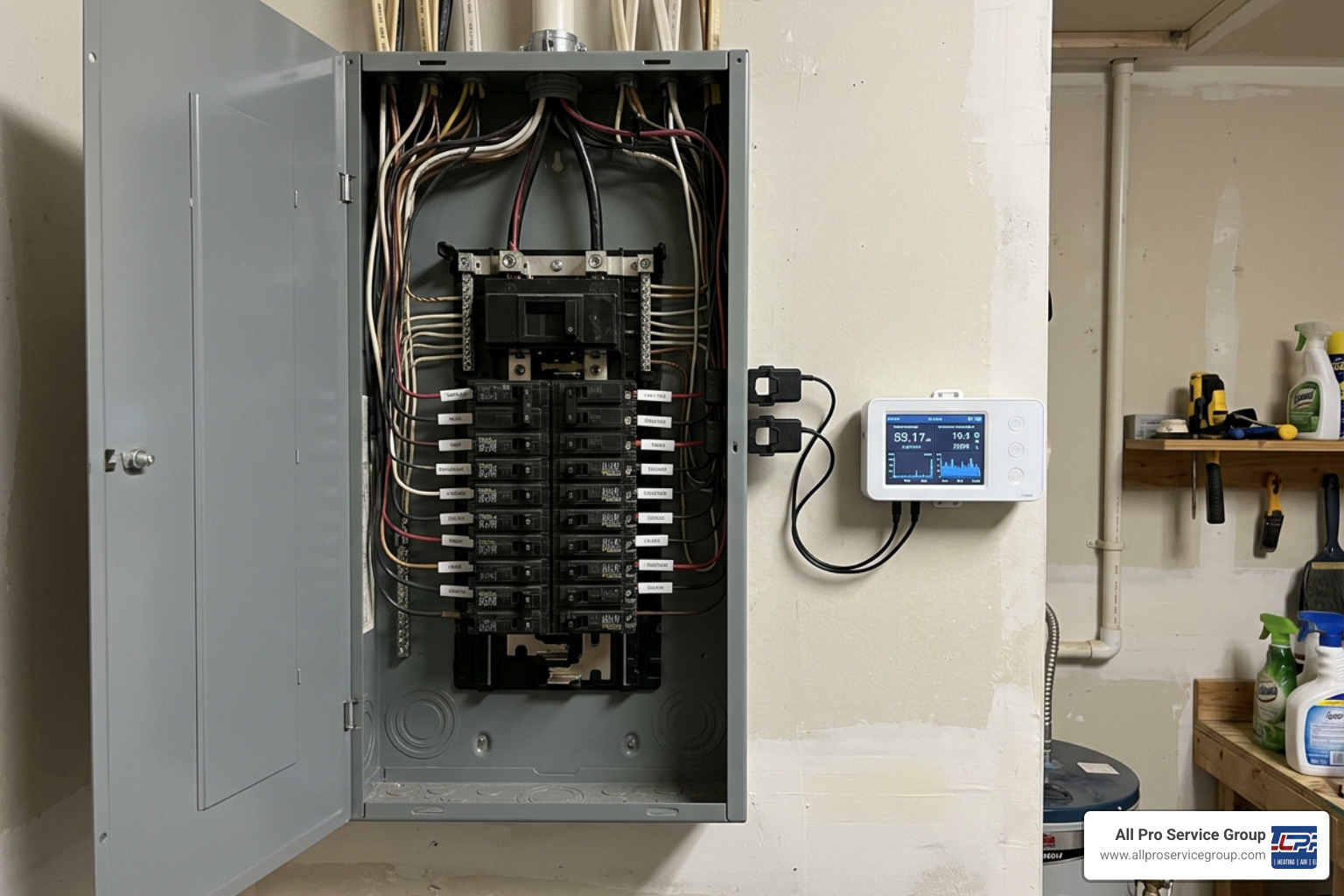
Many older homes in Utah — particularly those built before 1975 in established neighborhoods across Salt Lake City, Ogden, or Provo — may only have a 100-amp main electrical service panel. If your home has an electric range, clothes dryer, and central air conditioning, adding a standard 40-amp or 50-amp EV charger can push your total electrical demand past the safe limits of a 100-amp panel.
Traditionally, the only solution was to perform a full electrical panel upgrade to 200 amps. This upgrade is a major project that can easily cost several thousand dollars. Fortunately, modern technology offers brilliant workarounds.
Using smart power management devices and chargers equipped with dynamic load balancing allows you to avoid expensive panel upgrades. These systems monitor your home's real-time electricity usage. If you turn on your clothes dryer and air conditioner at the same time, the smart charger will temporarily dial back its power output to keep your home safely under its electrical limit. Once those heavy appliances turn off, the charger automatically ramps back up to maximum speed.
For detailed technical guidelines on configuring operating currents and managing electrical loads, you can refer to the comprehensive Lucid Connected Home Charging Station Guide - North America v2025.29.2. This resource provides step-by-step instructions on adjusting DIP switches to de-rate chargers to match smaller circuit breakers, ensuring your home remains completely safe without needing a 400-amp service panel upgrade (which is considered an uncommon and highly expensive upgrade).
Smart Features and Grid Integration
Modern home charging ports are far more than simple extension cords. They are highly connected smart devices designed to save you money and protect the local power grid. By choosing a smart charger with built-in Wi-Fi and advanced app controls, you gain access to incredible cost-saving features:
- Off-Peak Scheduling: Many utilities in Utah offer time-of-use rates where electricity is significantly cheaper late at night and early in the morning. You can program your smart charger to only draw power during these off-peak hours, dropping your charging costs to a fraction of the standard rate.
- Solar Integration: If you have solar panels installed on your roof, advanced units like the Enphase IQ EV Charger 2 | Smart, Secure Home EV Charging can communicate directly with your solar inverter. Its "Green Charging" mode allows you to route excess solar energy directly into your car's battery, essentially letting you fuel your vehicle with pure, free sunshine.
- Storm Guard Protection: High-end smart chargers can monitor local weather alerts. If a severe storm is forecasted for the Wasatch Front, the charger can automatically override your scheduled off-peak limits to ensure your vehicle is fully charged and ready before any potential power outages hit.
To explore these smart integration options further, check out the IQ EV Charger 2 (up to 13.3 kW, Wi-Fi, hardwired, NACS connector) | Enphase, which offers seamless app control, secure RFID access, and real-time energy tracking.
Professional Installation and Cost Considerations
Installing a car charging port for home involves two main financial components: purchasing the charging equipment and hiring a professional electrician to handle the physical installation.
- Equipment Costs: A high-quality, UL-certified Level 2 charging station typically costs between $400 and $700 upfront.
- Installation Costs: The cost of hiring an electrician can range from a few hundred dollars to over $1,500, depending on the distance between your electrical panel and the desired charger location, as well as whether your panel requires any safety upgrades or new circuit breakers.
To help offset these costs, the federal 30C tax credit covers 30% of the total cost of EV charging equipment and installation (capped at $1,000) for eligible properties. Additionally, local utility companies and municipal programs occasionally offer rebates for installing smart, networked Level 2 chargers.
Finding a Qualified Electrician
While it might be tempting to treat an EV charger installation as a DIY weekend project, high-voltage electrical work is incredibly dangerous if handled incorrectly. A continuous electrical draw of 40 or 50 amps over several hours generates significant heat. Any minor mistake, such as an improperly torqued wire terminal or using the wrong wire gauge, can easily result in a catastrophic electrical fire.
When looking for an installer in the Greater Salt Lake Valley, always hire a licensed electrical contractor who is thoroughly familiar with local municipal codes and permitting requirements. Our experienced team at All Pro Service Group handles the entire process from start to finish, ensuring your system is fully compliant, permitted, and safe. To learn more about what to look for, take a look at our EV Charger Install Guide.
What to Expect During Installation
When you schedule a professional installation with us, here is exactly what the process looks like:
- Load Calculation & Site Assessment: We inspect your main electrical panel, calculate your home's current load capacity, and determine the safest path to run the heavy-duty wiring to your garage or driveway.
- Conduit and Wiring Run: We install high-quality conduit and pull heavy-duty copper conductors from your panel to the charging location.
- Breaker Installation: We install a dedicated double-pole circuit breaker in your electrical panel.
- Mounting and Hardwiring: We securely mount your new charging station and hardwire the connections, ensuring all seals are completely weatherproof.
- Testing and Commissioning: We run diagnostic tests to verify the voltage, ground connection, and continuous current draw before helping you connect the station to your home Wi-Fi network.
Frequently Asked Questions
Can I install a car charging port for home myself?
No. We strongly advise against DIY installations for Level 2 charging stations. Working inside a main electrical service panel carries a severe risk of electrocution. Additionally, improper wiring can lead to localized overheating, melted outlets, or home fires. Hiring a licensed professional ensures your home remains safe, your vehicle's warranty is protected, and your installation passes all local municipal inspections.
How much does it cost to charge an EV at home compared to public stations?
Charging your electric vehicle at home is substantially cheaper than using public charging networks. On average, home charging costs roughly one-third of the price of public DC fast-charging stations. By scheduling your charging sessions overnight during off-peak utility hours, you can maximize these savings, allowing a typical Utah driver to save up to $2,500 annually on fuel and maintenance.
Do I need a 400-amp service panel upgrade for a home EV charger?
No. A 400-amp service panel is considered an extremely uncommon and unnecessary upgrade for residential properties. Most modern homes can easily support a Level 2 charging station with a standard 200-amp panel. If your home has a 100-amp panel, you can still safely install a charger by using smart power management devices or dynamic load balancing to keep your home's total electrical draw within safe limits.
Conclusion
Installing a car charging port for home is the ultimate way to unlock the true potential of electric vehicle ownership. It provides unmatched convenience, massive fuel savings, and the peace of mind that comes with waking up to a fully charged battery every single morning.
At All Pro Service Group, we have been providing dependable, high-quality electrical, heating, cooling, and plumbing services across the Greater Salt Lake Area since 2008. From Salt Lake City and West Valley City to South Jordan, West Jordan, Provo, Ogden, and Park City, our trained experts are fully Gephardt Approved and dedicated to keeping your home running safely and efficiently.
Ready to make the switch to faster, safer home charging? Schedule your professional EV charger installation today with the team at All Pro Service Group, and let us handle your home's electrical needs with the care and expertise you deserve!