
Can You Buy an 18,000 BTU Mini Split That Runs on 120V?
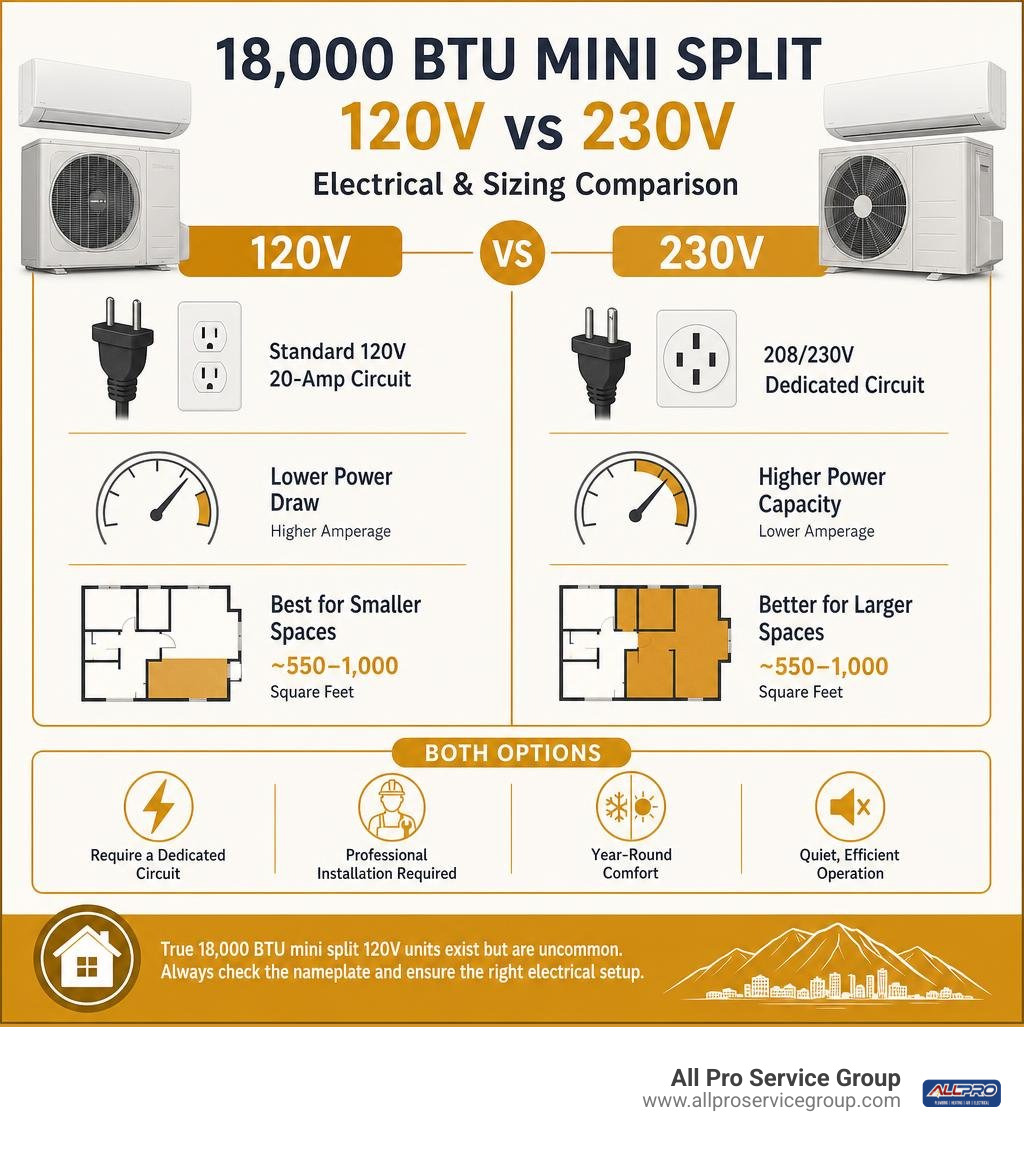
Yes, true 18,000 BTU mini split 120V options exist, but they are uncommon. Most 18,000 BTU systems, also called 1.5-ton mini splits, require a dedicated 208/230V circuit. If you find a 115V or 120V model, verify the nameplate electrical requirements before buying: it will still typically need its own 20-amp circuit and professional installation. It is not usually safe to plug one into an existing shared wall outlet.
An 18,000 BTU heat pump can generally cool and heat about 550 to 1,000 square feet, depending on insulation, ceiling height, windows, sun exposure, and Salt Lake area's changing seasons. A properly sized inverter model can provide quiet, efficient year-round comfort, but the electrical setup matters just as much as the BTU rating.
At All Pro Service Group, we have been serving Greater Salt Lake homeowners with HVAC and electrical service since 2008. We help homeowners assess whether an 18000 btu mini split 120v unit is practical or whether a 230V system and dedicated circuit is the safer, more reliable choice.
Understanding the 18000 BTU Mini Split 120V Electrical Reality
When homeowners look for an 18,000 BTU ductless heat pump, the idea of using regular 120-volt household current sounds appealing. Upgrading an electrical panel or pulling heavy-duty wires through finished drywall can feel daunting. However, basic physics governs how cooling systems turn power into chilled air.
Air conditioners and heat pumps rely on electric motors to compress refrigerant and push air. Power is calculated as Watts = Volts × Amps. An 18,000 BTU system generally consumes between 1,300 and 1,850 watts of running power, with higher surge currents when starting up. Delivering that much wattage over a standard 120V line pushes the electrical current (amperage) near the absolute limit of typical residential branch circuits.
Before committing to any system, it is vital to evaluate your main electrical service. If your home has an older breaker box or limited breaker space, dedicated electrical panel upgrades may be necessary to ensure safe, long-term operation without nuisance breaker trips.
Can You Run an 18,000 BTU Ductless System on 115V Power?
While a smaller 110v mini split in the 9,000 to 12,000 BTU range operates comfortably on a standard 15-amp or 20-amp 115V/120V line, jumping to 18,000 BTUs creates distinct engineering challenges.
A 15-amp, 120V circuit can safely supply a continuous load of only 1,440 watts (following the National Electrical Code 80% rule). If an 18,000 BTU system draws 1,400 to 1,800 watts under heavy cooling or winter heating demand, it will instantly overload a standard 15-amp line.
For the few manufacturers that design an 18k unit rated for 115V/120V, a dedicated 20-amp circuit is non-negotiable. Even then, pushing high amps over 120V wire runs creates voltage drop—wasted energy that turns into heat inside your walls and lowers the efficiency of the compressor.
120V vs 230V Mini Split Voltage Comparison
The vast majority of 1.5-ton ductless equipment is engineered specifically for 208/230V single-phase power. Supplying 230 volts cuts the amperage draw in half for the exact same amount of cooling power.
Our comprehensive 18000 BTU mini split guide 2026 outlines the performance advantages of dual-pole circuits. When voltage is doubled, the electrical stress on components drops, allowing the compressor to run cooler and last longer.
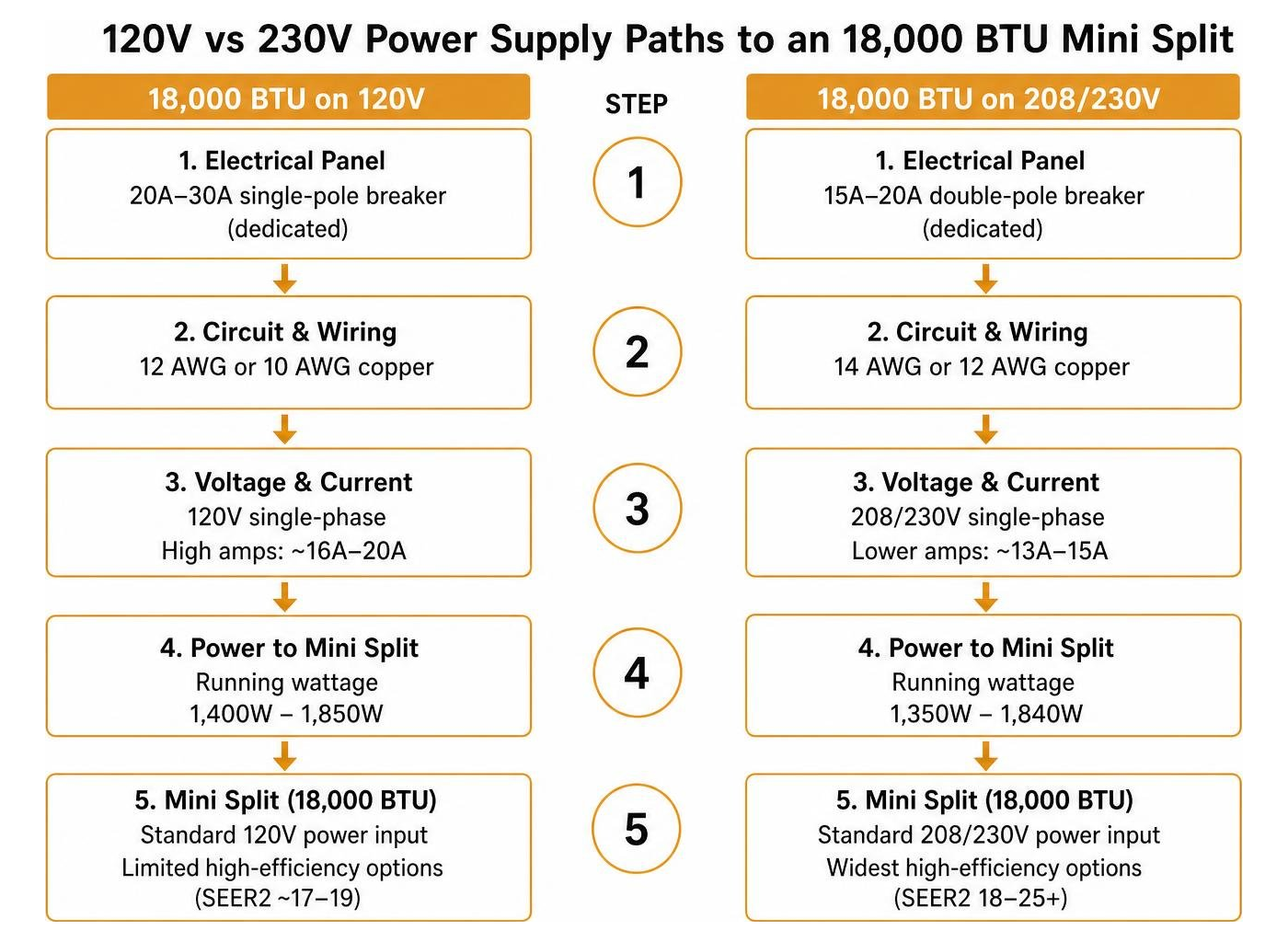
| Feature / Requirement | 18,000 BTU on 120V | 18,000 BTU on 208/230V |
|---|---|---|
| Typical Breaker Size | 20A to 30A (Single-Pole) | 15A to 20A (Double-Pole) |
| Minimum Circuit Ampacity (MCA) | 16A – 20A | 13A – 15A |
| Wire Gauge Needed | 12 AWG or 10 AWG copper | 14 AWG or 12 AWG copper |
| Running Wattage | 1,400W – 1,850W | 1,350W – 1,840W |
| SEER2 Efficiency Availability | Usually capped around 17–19 SEER2 | Ranges from 18 to 25+ SEER2 |
| Equipment Availability | Extremely limited niche models | Industry standard across all major brands |
Room Sizing and Coverage for 1.5-Ton Systems
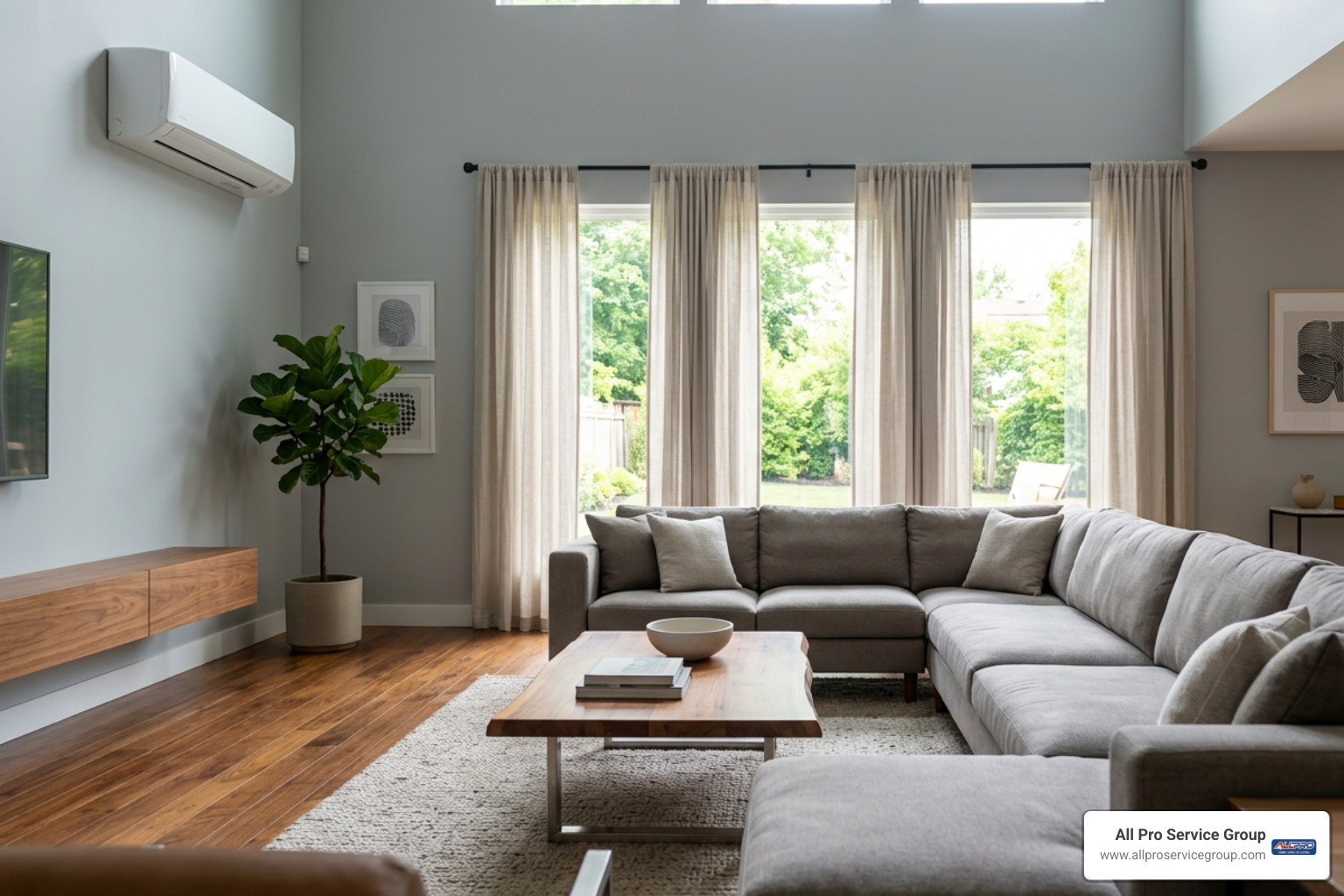
An 18,000 BTU mini split is equivalent to 1.5 tons of cooling or heating capacity. In general conditions, 18,000 BTUs will effectively condition spaces between 550 and 1,000 square feet.
If you are transitioning from smaller room systems, reviewing our guide on 1 ton mini split square footage helps clarify how capacity scales. A 1.5-ton system is not just 50% larger than a 12,000 BTU model; it provides the robust static volume airflow necessary to eliminate warm or cold pockets in open layouts.
Key factors that influence how many square feet your unit can handle include:
- Ceiling Height: Rooms with 10-foot, 12-foot, or vaulted ceilings contain significantly more cubic volume of air than standard 8-foot spaces.
- Solar Exposure & Windows: Large south- or west-facing windows dramatically increase summer heat load.
- Insulation Values: Well-sealed spaces retain conditioned air longer, while older properties or uninsulated outbuildings require higher cooling capacity per square foot.
- Internal Heat Gains: Kitchen appliances, computer equipment, and regular room occupancy add measurable thermal loads.
Is an 18000 BTU Mini Split 120V System Right for Your Space?
An 18,000 BTU system is the sweet spot for:
- Open-concept living and dining rooms
- Master bedroom suites with attached baths and walk-in closets
- Finished basements
- Two-car garages, home workshops, and accessory dwelling units (ADUs)
For detailed layout recommendations, check out our 18000 BTU mini split ultimate guide.
If you choose a 120V model, it must work closer to its absolute operational ceiling during peak summer afternoons and freezing winter nights. Ensuring your room matches the 550 to 850 square foot range prevents the compressor from overworking on a single-phase 120V circuit.
Heating Performance and Cold Climate Capabilities
Modern mini splits operate as reverse-cycle heat pumps. Instead of generating heat with glowing electric coils, they extract ambient thermal energy from outside air and deliver it indoors.
As explored in our 110-volt mini split guide 2026, standard heat pumps begin to lose capacity when outdoor temperatures drop below freezing. However, advanced inverter systems and Hyper-Heating models feature intelligent defrost cycles, crankcase heaters, and base pan heaters that maintain heating output down to -13°F or even -22°F.
If you live in cold climate zones like Utah's mountain valleys or bench areas, selecting a unit engineered for low ambient heating ensures reliable comfort through the depths of January.
Efficiency Ratings, SEER2 Standards, and Operating Costs
Energy efficiency standards for heat pumps and air conditioners are measured in SEER2(Seasonal Energy Efficiency Ratio 2) and HSPF2(Heating Seasonal Performance Factor 2). These testing standards accurately reflect real-world ductless performance against outdoor temperature swings.
Most 18,000 BTU mini splits achieve SEER2 ratings ranging between 18 and 25.1. Compared to older central air systems rated at 10 or 12 SEER, a modern 20+ SEER2 inverter heat pump can slash cooling and heating electricity costs by up to 48% annually.
Inverter Compressors and Electricity Savings
Older air conditioners operate like a light switch: full blast or completely off. Variable-speed DC inverter technology works more like a cruise control.
When you set the thermostat, the inverter compressor revs up to bring the room to temperature rapidly, then ramps down to a whisper-quiet maintenance speed. If you are comparing system capacities, our 12000 BTU mini split guide 2026 explains how inverter systems prevent continuous cycling, dramatically reducing indoor noise levels to as low as 24 to 28 dB(A)—quieter than a whisper in a library.
At an average electricity cost of $0.15 per kilowatt-hour, running an efficient 18k inverter unit for 8 hours a day typically costs between $50 and $80 per month, depending on thermal load and local weather conditions.
2026 Federal Tax Credits and Utility Rebates
Under the ongoing provisions of the federal Inflation Reduction Act, homeowners who install high-efficiency, ENERGY STAR certified heat pumps may qualify for significant financial incentives.
Qualified ductless heat pumps can earn a federal tax credit covering up to 30% of the project cost (up to $2,000). In addition, many local electric utilities offer clean energy rebates between $200 and $800 when replacing resistance baseboard heaters or inefficient window units with high-SEER2 ductless mini splits.
Installation Considerations and Professional Setup
Installing a ductless split system involves far more than mounting an indoor head on the drywall and plugging it in. It requires precise mechanical, thermodynamic, and electrical integration.
Our dedicated team at All Pro handles full system design across all heating air configurations, ensuring every installation meets manufacturer standards and local municipal building codes.
Key steps in every successful setup include:
- Line Set Flaring and Routing: Refrigerant lines must be flared and connected without leaks to handle modern refrigerants like R454B or R32.
- Deep Vacuum Evacuation: A two-stage vacuum pump must pull the line sets below 500 microns to remove moisture and non-condensibles before releasing refrigerant.
- Condensate Drainage Management: Gravity drain lines or internal condensate pumps must be routed with proper pitch to prevent indoor water leaks.
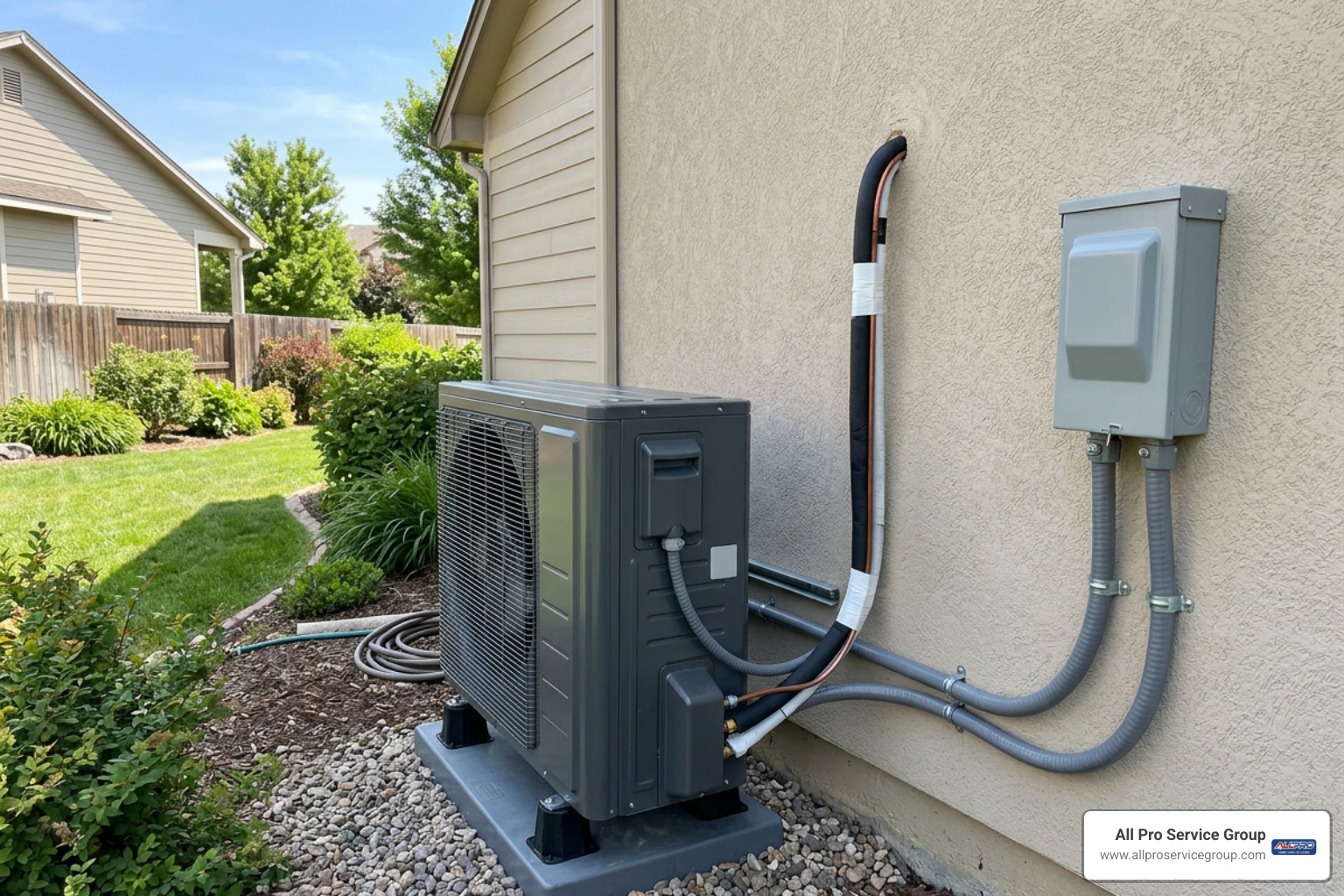
- Dedicated Electrical Disconnect: An outdoor weatherproof disconnect box must be installed within line of sight of the condenser.
Installing an 18000 BTU Mini Split 120V vs 230V Alternative
If you choose a 120V system, you cannot simply run an extension cord to the nearest outlet. Electrical safety codes mandate a dedicated single-pole circuit directly from the main breaker box to the outdoor disconnect.
Installing a 230V circuit requires a double-pole breaker instead of a single-pole breaker. The physical labor of running conduit and pulling wire is virtually identical between a 120V and a 230V setup. Because the installation effort is almost the same, upgrading to a 230V circuit gives you access to dozens of higher-efficiency, lower-amperage systems with extended warranties and superior cold-weather heating capabilities.
Installation Costs and Long-Term Value
Professional installation for an 18,000 BTU ductless heat pump system typically ranges from $4,500 to $6,500, covering the equipment, line sets, electrical wiring, outdoor pad or wall bracket, permits, and labor.
For a comprehensive breakdown of project variables, consult our ductless mini splits complete guide. When installed by licensed professionals and serviced with regular annual filter washings and coil cleanings, a quality inverter mini split delivers 12 to 15+ years of reliable, whisper-quiet performance.
Frequently Asked Questions About 18,000 BTU Systems
Can I plug an 18,000 BTU mini split into a standard wall outlet?
No. An 18,000 BTU mini split draws far too much power to share a standard 15-amp household outlet with lamps, televisions, or computers. Attempting to run a 1.5-ton system on a shared branch circuit causes continuous breaker trips and poses a serious electrical fire hazard. Even 115V/120V models require a dedicated, hardwired line with a 20-amp breaker and an outdoor disconnect switch.
What is the difference between an 18,000 BTU unit and a 1.5-ton system?
There is no difference in cooling capacity. In residential HVAC terminology, 1 ton of air conditioning capacity equals exactly 12,000 BTUs (British Thermal Units) per hour. Therefore, an 18,000 BTU system is simply another name for a 1.5-ton system. Both refer to the exact same heating and cooling output.
Does an 18,000 BTU mini split provide sufficient heat in winter?
Yes, provided you choose an inverter-driven heat pump designed for your regional climate. Standard heat pumps provide reliable warmth down to about 5°F (-15°C). If you live in an area that regularly experiences sub-zero winter cold snaps, choosing a Hyper-Heat or cold-climate model ensures the unit maintains full heating output at -13°F or below without requiring auxiliary heating strips.
Conclusion
Whether you are finishing an expansive family room, creating a climate-controlled workshop, or upgrading comfort in an older home, an 18,000 BTU mini split delivers quiet, zoned heating and cooling right where you need it. While rare 120V models exist, taking the step to install a dedicated 230V circuit unlocks better energy efficiency, wider product availability, and unmatched long-term reliability.
At All Pro Service Group, our licensed HVAC and electrical specialists have proudly served Utah homeowners across the Greater Salt Lake Valley, Park City, Provo, and Ogden since 2008. As a Gephardt Approved contractor, we provide precision load calculations, comprehensive electrical assessments, and flawless installations backed by straightforward financing options.
Schedule your in-home consultation today for expert heating air ductless mini splits installation and enjoy year-round comfort tailored to your home.