
Compare 18,000 BTU Two-Zone Mini Splits Before You Buy
An 18,000 BTU two-zone mini split uses one outdoor heat-pump condenser and two indoor air handlers to cool and heat two separate rooms. It is often a strong fit for two small bedrooms, a bedroom and office, or similar spaces totaling roughly 550 to 1,000 square feet when the home is well insulated.
Before choosing a model, compare:
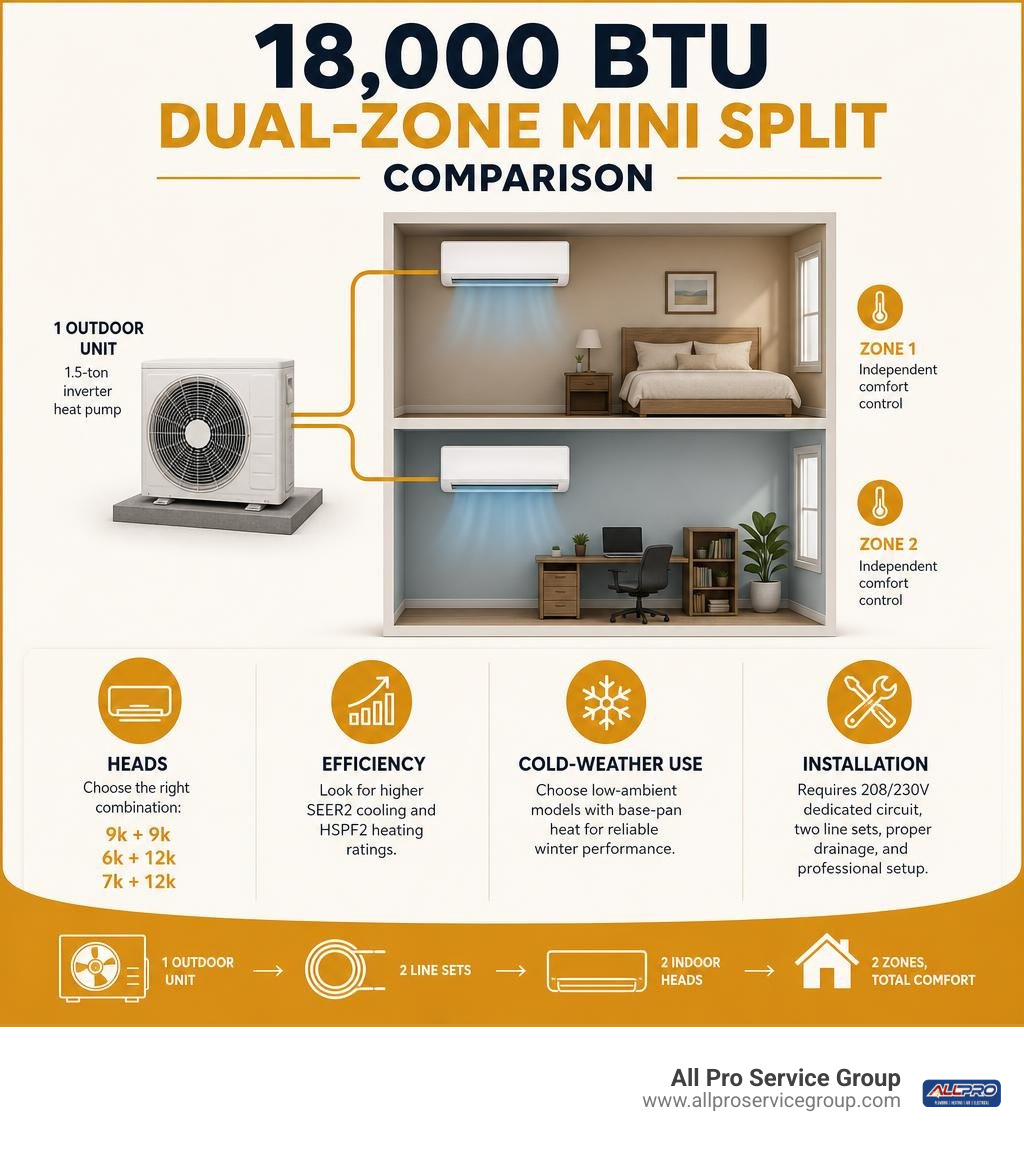
- Head sizes: A 9k + 9k setup suits similar-size rooms; a 6k + 12k or 7k + 12k mix better fits unequal spaces.
- Efficiency: Look for higher SEER2 cooling and HSPF2 heating ratings. Current systems range roughly from 20 to 24 SEER2.
- Cold-weather performance: Greater Salt Lake homeowners should consider low-ambient models with base-pan heat that can operate below 0 degrees F.
- Installation needs: Most require a dedicated 208/230V circuit, two line sets, proper drainage, and professional refrigerant setup.
I’m Gary Leany with All Pro Service Group, serving Greater Salt Lake Valley homeowners with heating, air conditioning, plumbing, and electrical service since 2008. In this 18000 btu mini split 2 zone roundup, All Pro will help you compare practical system features before selecting equipment for your home.
Understanding the 18000 BTU Mini Split 2 Zone Architecture
A dual-zone mini split operates on a simple yet highly engineered layout. Instead of relying on ductwork running through unconditioned attics or crawlspaces, this design pairs a single 1.5-ton outdoor condenser with two separate indoor air handlers. The condenser houses the variable-speed inverter compressor, fan motor, expansion valves, and main control board.
Two separate pairs of insulated copper refrigerant lines connect directly from the outdoor unit to each indoor handler. This allows the outdoor unit to distribute refrigerant independently based on the thermostat demand of each room.
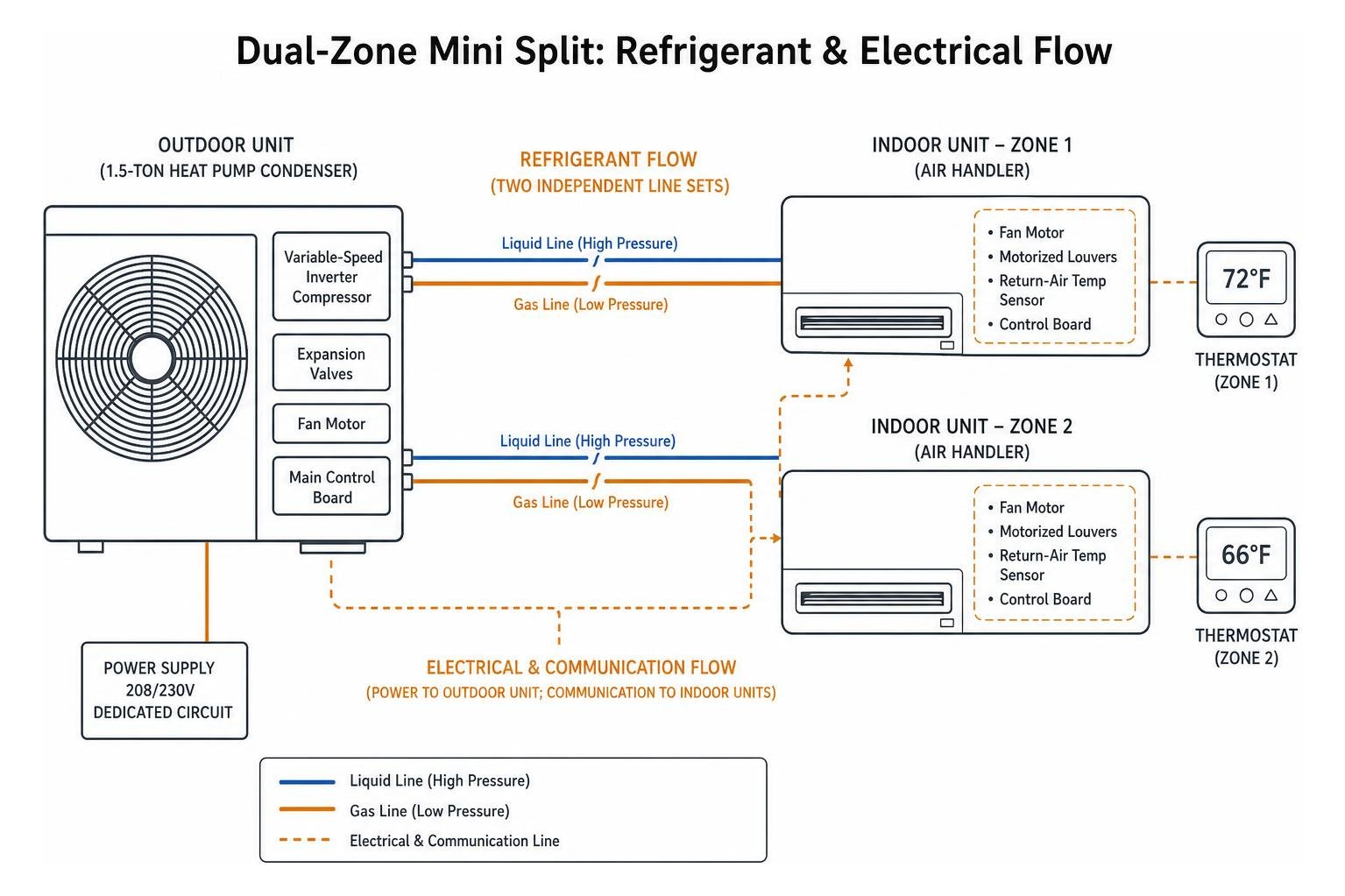
Because each indoor air handler features its own motorized louvers, fan, and return-air temperature sensor, you get completely customized climate management. If someone in the bedroom prefers sleeping at 66°F while the home office next door stays at 72°F, both units handle their respective loads simultaneously. To explore how ductless systems operate across different configurations, check out our ductless mini splits complete guide.
Sizing and Square Footage Coverage
An 18,000 BTU multi-zone system generally provides sufficient heating and cooling capacity for spaces ranging from 550 to 1,000 square feet. The industry uses a standard baseline calculation of 20 to 30 BTUs per square foot.
Several structural variables alter this calculation:
- Insulation and Age: Older homes with 2x4 framing and minimal wall insulation require capacity toward the higher end of the calculation (30 BTU/sq. ft.). Modern construction with spray foam or tight envelope sealing requires closer to 20 BTU/sq. ft.
- Ceiling Height: Standard sizing assumes 8-foot ceilings. If your rooms feature vaulted or 10-to-12-foot ceilings, multiply your base BTU calculation by 1.25 to account for the increased cubic volume.
- Window Exposure and Solar Heat Gain: Rooms with large south- or west-facing windows absorb significant radiant heat during hot afternoons, requiring extra cooling power.
- Internal Heat Loads: A room packed with computers, servers, or large home theater equipment adds continuous heat that the air handler must counteract.
For deeper insights into individual space calculations, see our 18000 Btu mini split guide 2026 and browse 2 Zone Mini Split Systems | Dual Zone Ductless AC & Heat Pumps.
Choosing the Right 18000 BTU Mini Split 2 Zone Head Combinations
Matching indoor air handler sizes to individual room dimensions prevents short-cycling and temperature swings. Because the outdoor inverter compressor dynamically ramps up and down, manufacturers offer several indoor head combinations.
| Indoor Head Combination | Sizing Breakdown | Ideal Room Applications | Total Coverage Range |
|---|---|---|---|
| 9k + 9k BTU | Balanced 50/50 split | Two equal bedrooms, dual home offices, or matching studio rooms | 600 – 800 sq. ft. |
| 6k + 12k BTU | Offset split | Small nursery or guest room paired with a large primary suite | 550 – 850 sq. ft. |
| 7k + 12k BTU | Proportional split | Dedicated home office paired with an open-concept living/kitchen area | 650 – 950 sq. ft. |
| 12k + 12k BTU | Shared inverter capacity | Two larger spaces (each up to 500 sq. ft.) with alternating cooling/heating loads | 800 – 1,000 sq. ft. |
Homeowners can select from several indoor form factors:
- Wall-Mounted Air Handlers: The most common option, mounted high on exterior or interior walls for optimal air circulation.
- Ceiling Cassettes: Recessed flush into the ceiling between standard floor or ceiling joists, offering a clean, modern aesthetic.
- Concealed Ducted Units: Hidden inside closets or attics, distributing air through short, discreet duct runs to supply grilles.
If your property requires even greater cooling or heating capacity across larger living areas, consider reviewing our Complete Guide 24000 Btu Dual Zone Mini Split.
Efficiency Ratings and Multi-Zone Performance
Traditional central HVAC systems lose up to 30% of their heating and cooling energy through duct leakage, conduction, and friction. Dual-zone ductless units deliver conditioned refrigerant straight to the target living space, eliminating duct loss.
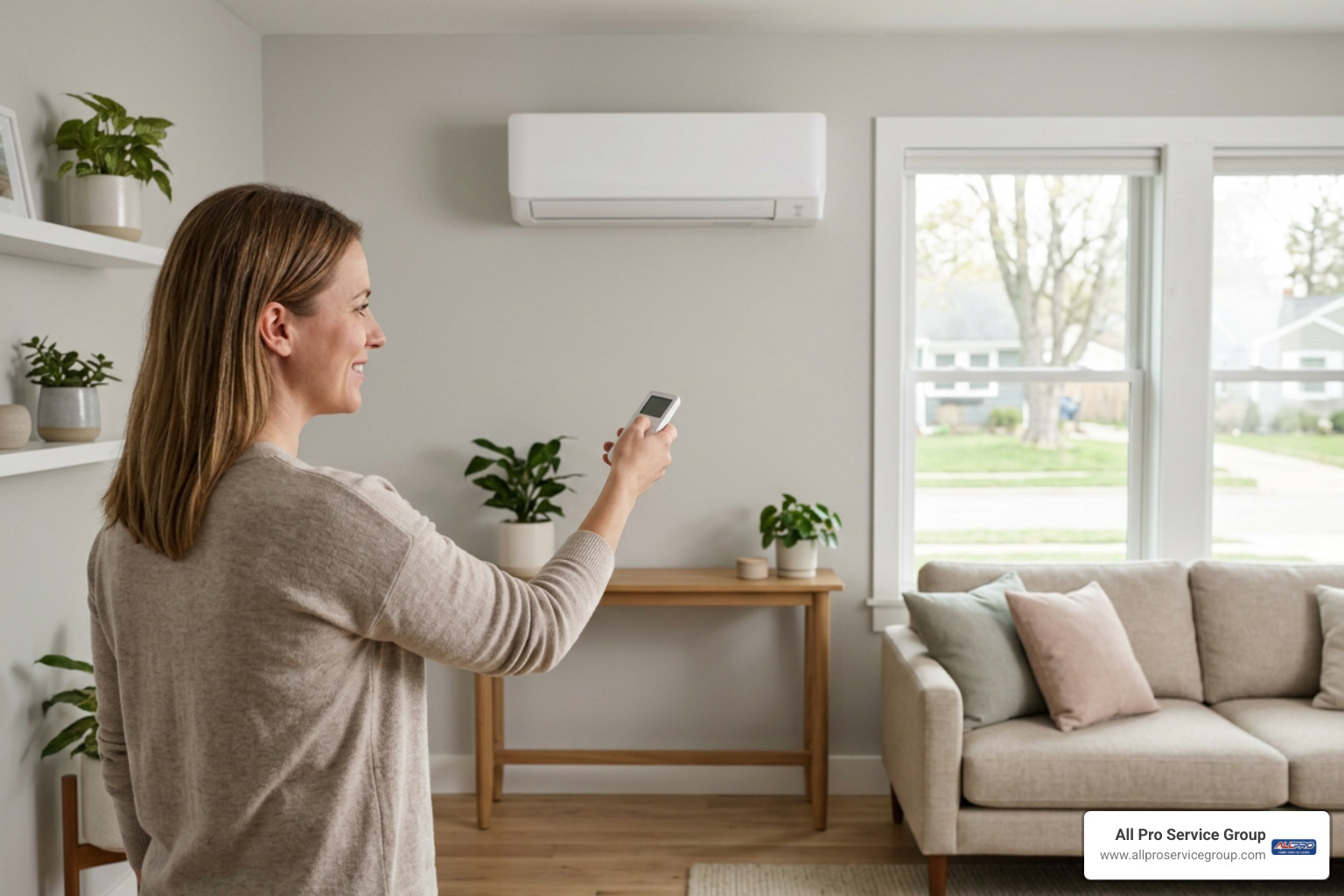
Modern multi-zone heat pumps utilize inverter-driven rotary compressors. Rather than abruptly turning fully on and fully off, an inverter system operates like a dimmer switch, adjusting its rotational speed in tiny increments. This continuous modulation allows the system to maintain room temperatures within ±1°F, reduce indoor operational noise levels to whisper-quiet thresholds below 30 dB, and consume significantly less electricity over a standard operating cycle.
SEER2, HSPF2, and Inverter Compressor Technology
HVAC efficiency standards rely on updated metrics:
- SEER2 (Seasonal Energy Efficiency Ratio 2): Measures cooling efficiency under realistic external static pressures. Top-tier 18,000 BTU dual-zone systems achieve ratings between 20 and 24 SEER2. Modern high-efficiency systems can cut cooling electrical consumption by up to 40% compared to older 10 or 12 SEER units.
- HSPF2 (Heating Seasonal Performance Factor 2): Evaluates winter heat pump performance. Look for models rated at 10.0 HSPF2 or higher to ensure efficient winter operation.
Leading systems are also adopting next-generation, low-GWP (Global Warming Potential) refrigerants like R32 and R454B. These refrigerants provide enhanced thermodynamic heat transfer properties while satisfying the strict CARB 2025 and EPA environmental guidelines. You can review available equipment configurations at Shop All Mini Split Systems & Accessories - Zone Air.
Cold-Climate Heat Pump Capabilities
Cold-weather heating performance is a major consideration for homeowners along the Wasatch Front, from Salt Lake City down to Provo and up into Park City.
Standard heat pumps lose efficiency as ambient outdoor air drops below 32°F. In contrast, cold-climate systems utilize specialized inverter compressors and built-in chassis base pan heaters. The base pan heater prevents condensation from freezing into a solid block of ice along the bottom of the outdoor unit during automated defrost cycles.
Modern low-ambient heat pumps provide steady, reliable heat output in freezing conditions down to -13°F or even -15°F. When sized and installed correctly, a cold-climate 18,000 BTU heat pump handles Utah winters without requiring supplemental resistance heat strips.
Key Technical and Installation Specifications
Installing a dual-zone mini split requires proper electrical infrastructure, line set management, and refrigerant handling.
Electrical and Line Set Setup for an 18000 BTU Mini Split 2 Zone
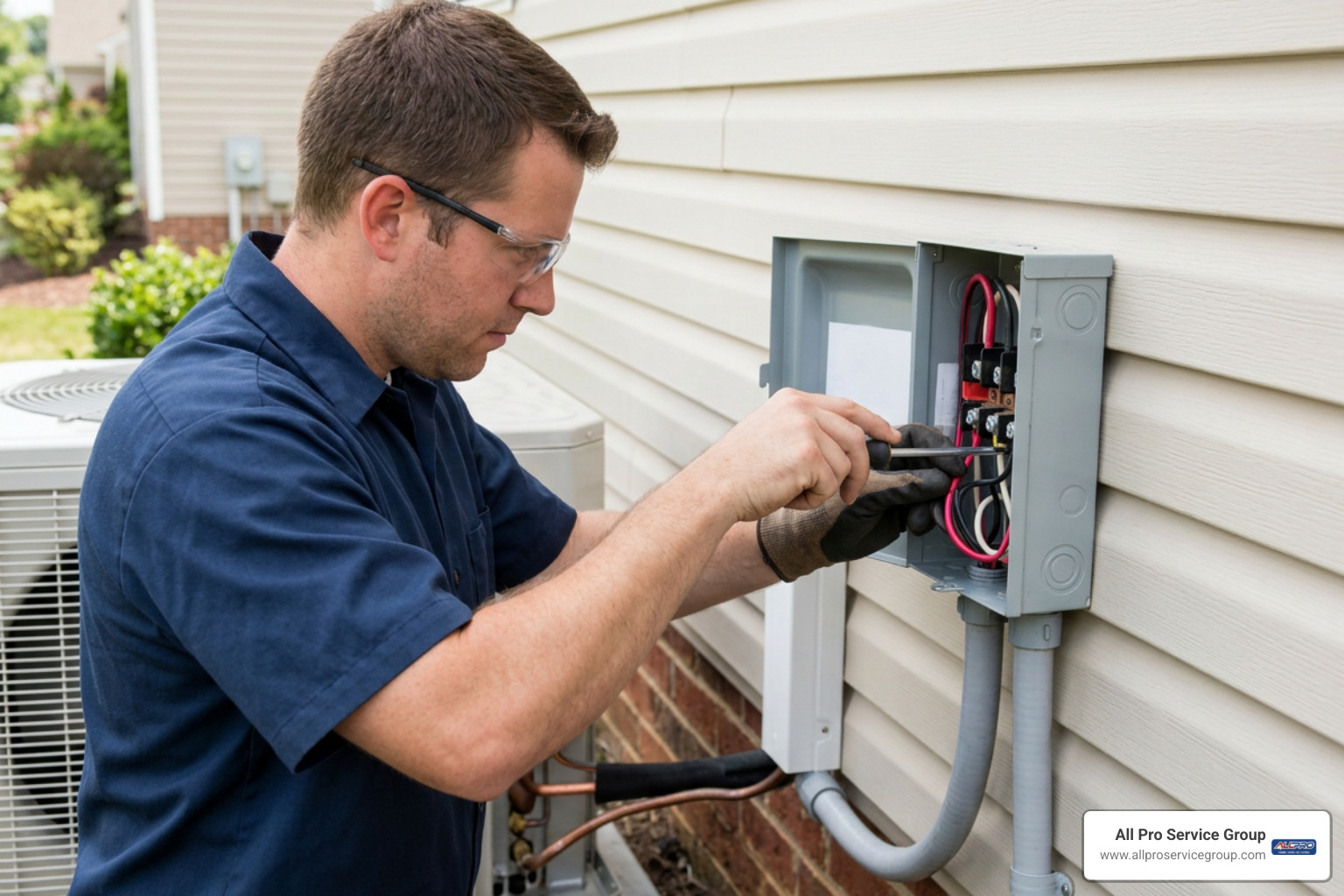
Dual-zone mini split systems cannot simply be plugged into a standard 115V wall outlet. The outdoor compressor powers both indoor heads and requires substantial electrical capacity.
- Power Supply: 208/230-volt, 60Hz, 1-phase electrical service.
- Circuit Breaker: Dedicated double-pole 15-amp to 20-amp breaker installed in your main electrical panel.
- Disconnect Box: A weather-tight outdoor safety disconnect switch mounted within sight of the outdoor condenser.
- Control/Communication Wiring: 14 AWG or 16 AWG 4-conductor shielded stranded wire running between the outdoor unit and each indoor air handler.
- Refrigerant Line Sets: Each zone requires a dedicated pair of copper pipes (typically 1/4" liquid line and 3/8" suction line). Maximum line set runs typically extend between 50 and 82 feet per zone, with vertical elevation limits around 33 to 50 feet.
If your home's main panel lacks open breaker slots or requires subpanel distribution, our licensed technicians provide complete residential electrical service to ensure safe operation.
Professional Placement and Refrigerant Standards
Proper installation directly impacts long-term efficiency and equipment lifespan:
- Mounting: The outdoor condenser must be anchored level on a heavy-duty composite ground pad or secured with heavy-gauge wall brackets at least 12 inches above historical snow levels.
- Flare Connections and Torquing: Copper line flares must be precisely deburred, sized, and tightened with a calibrated torque wrench to prevent microscopic refrigerant leaks.
- Nitrogen Pressure Testing: Lines must be pressurized with dry nitrogen to 450–500 PSI for a minimum of 24 hours to verify system integrity before introducing refrigerant.
- Deep Vacuum Evacuation: A commercial vacuum pump must draw the entire line set below 500 microns to remove all moisture and non-condensable atmospheric gases.
- Refrigerant Trim Charging: While outdoor units include factory pre-charged refrigerant for standard line lengths (typically up to 16 or 25 feet per head), longer copper runs require precise scale-measured additional refrigerant charges.
Professional setup protects your investment and maintains your manufacturer warranties. For system replacements and upgrades, learn more about our Heating Air/Ac Installation Replacement services.
Frequently Asked Questions About Dual-Zone Mini Splits
How much square footage can an 18,000 BTU dual-zone heat pump condition?
An 18,000 BTU dual-zone system comfortably heats and cools between 550 and 1,000 square feet. It works best across two distinct rooms, such as two 300 to 400 sq. ft. bedrooms or a 250 sq. ft. office paired with a 500 sq. ft. master suite.
What electrical circuit is required for a two-zone mini-split?
A dual-zone 18k system requires a dedicated 208/230V, single-phase circuit. It typically requires a 15A to 20A double-pole circuit breaker and a Minimum Circuit Ampacity (MCA) rating of roughly 13 to 15 amps, connected through a dedicated outdoor disconnect switch.
Can a multi-zone ductless unit heat effectively during sub-zero winters?
Yes. When equipped with low-ambient inverter technology and an integrated chassis pan heater, modern dual-zone heat pumps maintain strong heating capacity in sub-zero conditions down to -13°F (-25°C).
Conclusion
An 18,000 BTU dual-zone mini split offers balanced comfort, high seasonal efficiency ratings up to 24 SEER2, and room-by-room temperature customization without expensive duct modifications. Whether you are finishing a basement, adding climate control to an upstairs addition, or eliminating hot and cold spots across your home, selecting the right head split and efficiency tier provides year-round comfort.
All Pro Service Group has delivered trusted heating, cooling, plumbing, and electrical solutions across the Greater Salt Lake Valley since 2008. As a Gephardt Approved contractor, our certified HVAC technicians ensure your multi-zone system is sized, wired, evacuated, and tested to peak manufacturer standards.
Ready to upgrade your home comfort? Contact us today to schedule your in-home evaluation for Heating Air/Ductless Mini Splits.