A Small Drain Pipe Leak Can Cause Big Damage Fast
A drain pipe leak fix done quickly can save you from hundreds — or even thousands — of dollars in water damage, warped flooring, and mold growth. Here's the short answer if you need to act right now:
How to fix a leaking drain pipe (quick summary):
- Shut off the water at the nearest isolation valve or main shutoff.
- Dry the area completely around the leak.
- Identify the pipe material(PVC, ABS, cast iron, etc.) — this determines your repair method.
- Apply a temporary fix(silicone tape, epoxy putty, or a repair clamp) to stop the leak immediately.
- Make a permanent repair by cutting out the damaged section and solvent-welding a new piece with a slip coupling.
- Test the repair by slowly restoring water flow and checking for drips.
The average U.S. household wastes 10,000 gallons of water per year from leaks alone. Drain pipes are gravity-fed systems — they don't spray under pressure like supply lines — but a slow, hidden drip under your sink or behind a wall can silently rot wood, feed mold, and compromise your home's structure before you ever notice it.
The good news? Most drain pipe leaks are fixable without calling a plumber, as long as you know what you're looking at and use the right method for your pipe material.
At All Pro Service Group, our team has diagnosed and repaired countless drain pipe leaks across the Greater Salt Lake Valley since 2008. A proper drain pipe leak fix starts with identifying the source and material correctly — and that's exactly what this guide walks you through.
Diagnosing the Source and Material of Your Leak
Before grabbing your toolbox, you have to find out exactly where the water is coming from and what kind of pipe you are dealing with. Because drain pipes are not under pressure, water doesn't spray out in an obvious geyser. Instead, gravity pulls the water downward, and it often travels along the exterior of the pipe before finally dripping onto your cabinet floor or drywall. This means the visible drip is frequently several inches—or even feet—away from the actual crack or failed joint.
To track down the true culprit, dry the entire run of pipe with a towel. Run water down the drain in short bursts, and use a flashlight or a dry paper towel to wipe along the pipe until you find the exact spot where moisture first appears. If the leak is hidden behind a wall, you may need professional assistance with Detecting Leaks in Pipes to narrow down the location without tearing out your entire home.
Identifying PVC, Cast Iron, and PEX Differences
Modern residential plumbing relies on a few common materials, and each requires a completely different approach for a successful drain pipe leak fix:
- PVC (Polyvinyl Chloride): Rigid, white plastic pipes. This is the modern standard for drain, waste, and vent (DWV) systems because it is lightweight, highly durable, and chemically fused together.
- ABS (Acrylonitrile Butadiene Styrene): Rigid, black plastic pipes. Similar to PVC but slightly different in chemical makeup. They cannot be joined directly to PVC with standard glue; instead, they require specialized transition couplings or green transition cement.
- Cast Iron: Thick, heavy, black or dark gray metal pipes found in older Utah homes built before the 1970s. These are highly prone to internal rust, scaling, and joint leaks. They are typically joined with mechanical no-hub couplings.
- Galvanized Steel: Dull silver or gray metal pipes that screw together. They become brittle over time and can easily snap if you try to tighten them.
- PEX (Cross-linked Polyethylene): Flexible plastic tubing (usually red, blue, or white). While PEX is almost exclusively used for pressurized water supply lines rather than drains, you might encounter it near your fixtures. Leaks at PEX connections usually require a specialized crimping tool.
For a deeper dive into residential pipe identification, check out our Plumbing Repair Complete Guide 2026.
Improper Installation vs. Physical Pipe Damage
Once you find the leak, look closely at why it failed. Is the water seeping out of a joint, or is it dripping from a hairline crack in the middle of a straight run?
Joint leaks are incredibly common and are usually the result of improper installation. During construction or a previous DIY attempt, the installer might have skipped the primer or forgotten to apply the glue entirely. In other cases, the pipe section was cut too short, causing it to pull out of the fitting over time due to natural house settling or temperature swings.
On the other hand, physical pipe damage like stress cracks often happens when drains freeze and expand during cold Utah winters, or when a clog builds up and increases internal pressure. Knowing the difference is crucial: a cracked pipe can sometimes be patched temporarily, but a joint that has physically separated or lacks glue must be cut out and rebuilt. For more tips on managing these issues, see our guide on the Best Way to Stop a Leaking Pipe.
Step-by-Step Permanent Drain Pipe Leak Fix
For plastic drain lines, a permanent drain pipe leak fix involves a process called solvent welding. Unlike standard glue, which simply sticks to the surface, solvent cement chemically melts and fuses the plastic molecules of the pipe and fitting together. When done correctly, a solvent-weld repair has a 95-98% leak-free success rate after 5 years.
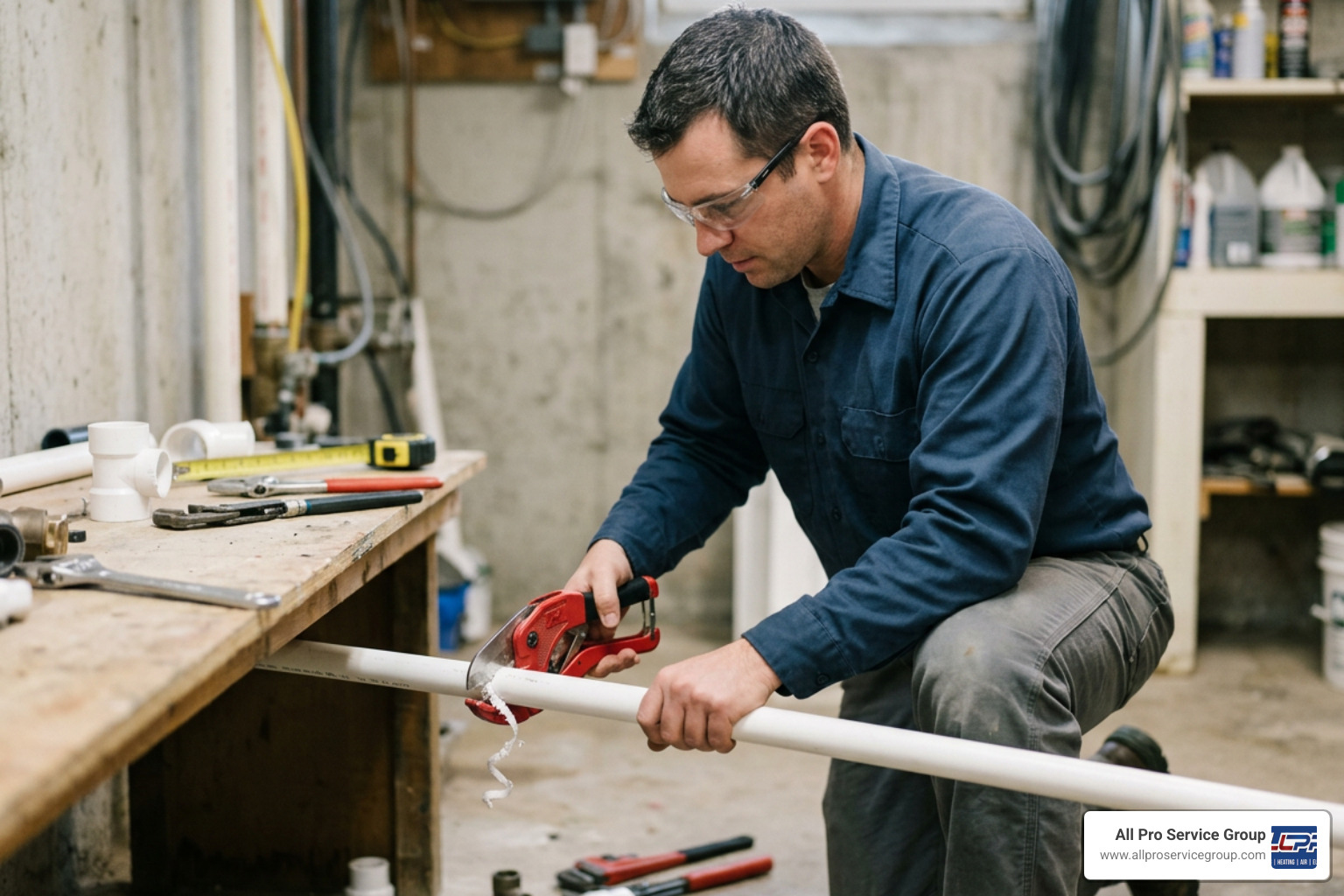
Before you begin, gather the following essential tools and materials:
- Replacement Schedule 40 PVC pipe (matching the diameter of your existing line)
- PVC primer (usually purple) and PVC solvent cement
- A slip coupling (also known as a repair coupling)
- A hacksaw or plastic pipe cutter
- 120-grit sandpaper or an emery cloth
- A clean rag
- Nitrile gloves and safety glasses
For step-by-step instructions on general pipe repairs, you can also consult this external How to Fix a Leaking Pipe (Step-by-Step Guide) - PlumbingToolsReview.
Preparing Your Workspace for a Drain Pipe Leak Fix
Safety and preparation are the foundation of any successful plumbing project. Even though drain lines are not under continuous pressure, you must stop all water flow from entering the system before you cut into a pipe.
- Shut Off the Water: Turn off the local isolation valves under the sink or behind the appliance. If you are working on a main drain line, shut off the main water supply to the home to prevent anyone from accidentally running a faucet or flushing a toilet while the pipe is open.
- Drain the System: Open the lowest faucets in the house to drain any residual water out of the lines.
- Set Up Protection: Place a bucket and old towels directly beneath the work area. Residual wastewater standing in the trap or pipe will spill out when you make your cuts.
- Ensure Ventilation: Solvent cement and primers emit strong fumes. Open nearby windows or set up a fan to keep air moving.
If you suspect you have a leak behind a wall or are uncomfortable locating your main shutoff, professional Plumbing Leak Detection Repair can help secure the area safely.
How to Glue PVC Joints and Install Slip Couplings
Now that your workspace is prepped, follow these steps to permanently replace the damaged section:
- Cut Out the Damaged Section: Using your pipe cutter or hacksaw, make straight, square cuts at least 2 inches past the leak on both sides. A crooked cut reduces the surface contact inside the fitting, which can lead to joint failure.
- Deburr the Edges: Use sandpaper or a utility knife to remove all plastic burrs and rough edges from the cut ends. A smooth surface ensures a tight, flush fit.
- Dry-Fit the Pieces: Measure and cut a new piece of PVC pipe to fill the gap. Slide your slip couplings onto the existing pipes, align the new piece, and make sure everything fits perfectly before applying any glue.
- Clean and Prime: Wipe the pipe ends and the interiors of the couplings with a clean, dry rag. Apply purple primer to the outside of the pipes and the inside of the fittings. Let it sit for 10-15 seconds. Inadequate priming causes 40% of solvent-weld repair failures, so do not skip this step!
- Apply Solvent Cement: Immediately apply a thin, even layer of PVC cement over the primed areas.
- Assemble and Twist: Push the pipe firmly into the fitting and give it a quarter-turn twist to distribute the glue evenly. Hold the joint together tightly for 15-30 seconds to prevent the pipe from pushing itself back out.
- Cure Time: Let the joint cure undisturbed. While some quick-set glues claim to be ready in minutes, we recommend waiting at least 2 hours before running water through the line to ensure a complete, permanent bond.
For further reading on plastic pipe repair sequences, refer to How to Fix a Drain Pipe: A Step-by-Step Repair Guide - Engineer Fix.
Temporary vs. Permanent Repair Methods
When a leak strikes in the middle of the night or right before a holiday weekend, you might not have the time or tools to cut out the pipe immediately. That is where temporary fixes come in handy. However, it is vital to understand when a quick patch is acceptable and when you are simply delaying an inevitable disaster.
For comparison with pressurized water lines, read our Water Line Repair Complete Guide.
When to Choose a Temporary vs. Permanent Drain Pipe Leak Fix
Because drain pipes are gravity-fed and do not operate under high pressure (unlike supply lines which run at 50 to 70 PSI), temporary patches tend to hold up much better and longer on drains. However, accessibility and the extent of the damage should dictate your final decision.
| Repair Method | Best Used For | Average Lifespan | Skill Level Required |
|---|---|---|---|
| Silicone Tape | Small pinholes, minor joint drips | 24 to 48 hours (temporary) | Beginner |
| Epoxy Putty | Hairline cracks, awkward joint angles | Months to years (semi-permanent) | Beginner |
| Pipe Repair Clamp | Straight runs on metal or plastic pipes | 10+ years (permanent if fitted right) | Intermediate |
| Solvent-Weld Replacement | Major cracks, separated joints, aged lines | 50+ years (permanent) | Intermediate to Advanced |
If a leaking pipe is buried behind drywall, under concrete, or inside a ceiling, never rely on a temporary patch. A five-dollar wrap can easily fail, leading to thousands of dollars in structural damage. Always opt for a permanent replacement in hard-to-reach areas.
Best Temporary Repair Options and Lifespans
If you need a quick stopgap measure, these are the most reliable DIY options:
- Self-Fusing Silicone Tape: This specialized tape does not rely on adhesive; instead, it chemically bonds to itself when stretched and wrapped. Stretching the tape to roughly 300% of its length and wrapping it tightly with overlapping layers achieves an 85-92% success rate for over 3 years on leaks smaller than 1/2 inch.
- Epoxy Putty: A two-part clay-like material that you knead together until it turns a uniform color. You press it directly over the crack or joint, where it cures into a rock-hard plastic seal within an hour. It is incredibly versatile and molds easily to awkward curves and joints.
- Rubber Pipe Repair Clamps: A metal sleeve lined with a rubber gasket that bolts tightly over the leak. A high-quality pipe repair clamp can last 10 years or more and is considered a permanent repair for most household pipe sizes and materials on straight, accessible runs.
If you are dealing with a recurring leak or a slow drain that is putting extra pressure on your temporary patch, you may need professional Plumbing Drain Cleaning to clear out the underlying blockage. For more details on PVC-specific repairs, you can also consult How to Fix Leaking PVC Pipe: A DIY Guide.
Frequently Asked Questions about Drain Pipe Repairs
How long does a temporary PVC pipe repair last?
A temporary repair using self-fusing silicone tape or fiberglass wrap is designed to buy you time—typically 24 to 48 hours—while you prepare for a proper replacement. While some high-quality clamps or epoxy putty applications can technically hold for months or even years on non-pressurized drain lines, temperature fluctuations in Utah homes can cause plastic pipes to expand and contract, eventually breaking the temporary seal.
If your temporary fix is holding back a backup caused by a stubborn clog, consider scheduling Drain Unclogging Services to resolve the root of the problem.
Can I use duct tape or Flex Seal to fix a leaking drain?
No. Duct tape is not waterproof, and its adhesive will quickly degrade when exposed to moisture, leaving a sticky mess that makes a permanent repair much harder to clean and glue.
Flex Seal and similar liquid rubber sprays are also poor choices for active leaks. They are not rated to withstand even minor pooling pressure inside a drain line, and they often fail within a few weeks. If your drain is constantly backing up and leaking, a professional Hydro Jetting service can clear the line safely without damaging your pipes.
When should I call a professional plumber for a drain leak?
You should step away from the DIY tools and call a licensed plumber if:
- The leak is located inside a wall, ceiling, or beneath a concrete slab.
- You are dealing with a main sewer stack or a drain line buried underground where tree roots might have broken the pipe.
- The plumbing system is old cast iron or galvanized steel, which requires specialized heavy-duty cutting tools and transition couplings.
- You notice multiple leaks throughout your home, which is a common warning sign of system-wide pipe degradation.
If you are facing any of these complex situations, contact All Pro Service Group for fast, dependable, and "Gephardt Approved" professional assistance.
Conclusion

Taking care of a drain pipe leak fix as soon as you spot it is one of the best ways to protect your home from mold, rot, and expensive structural repairs. By properly diagnosing the pipe material, preparing your workspace, and following correct solvent-welding procedures, you can successfully resolve most minor drain leaks on your own.
To prevent future leaks, we recommend checking under your cabinets monthly for signs of moisture, avoiding harsh chemical drain cleaners that can corrode your pipes from the inside out, and using enzyme-based cleaners to keep your lines flowing smoothly.
If you run into a leak that is hidden behind a wall, involves complex cast iron lines, or if you simply want the peace of mind that comes with a professional touch, we are here to help. All Pro Service Group has provided expert plumbing, heating, and cooling services across the Greater Salt Lake Area—including Ogden, Park City, Provo, South Jordan, West Jordan, West Valley City, and Salt Lake City—since 2008.
More info about water line repair services is just a click away. Contact our friendly, expert team today to keep your home's plumbing running safely and smoothly!