A Leaking Pipe Can Wreck Your Home Fast — Here's What to Do Right Now
The best way to stop a leaking pipe depends on the type of leak, but here's the fastest action plan for most homeowners:
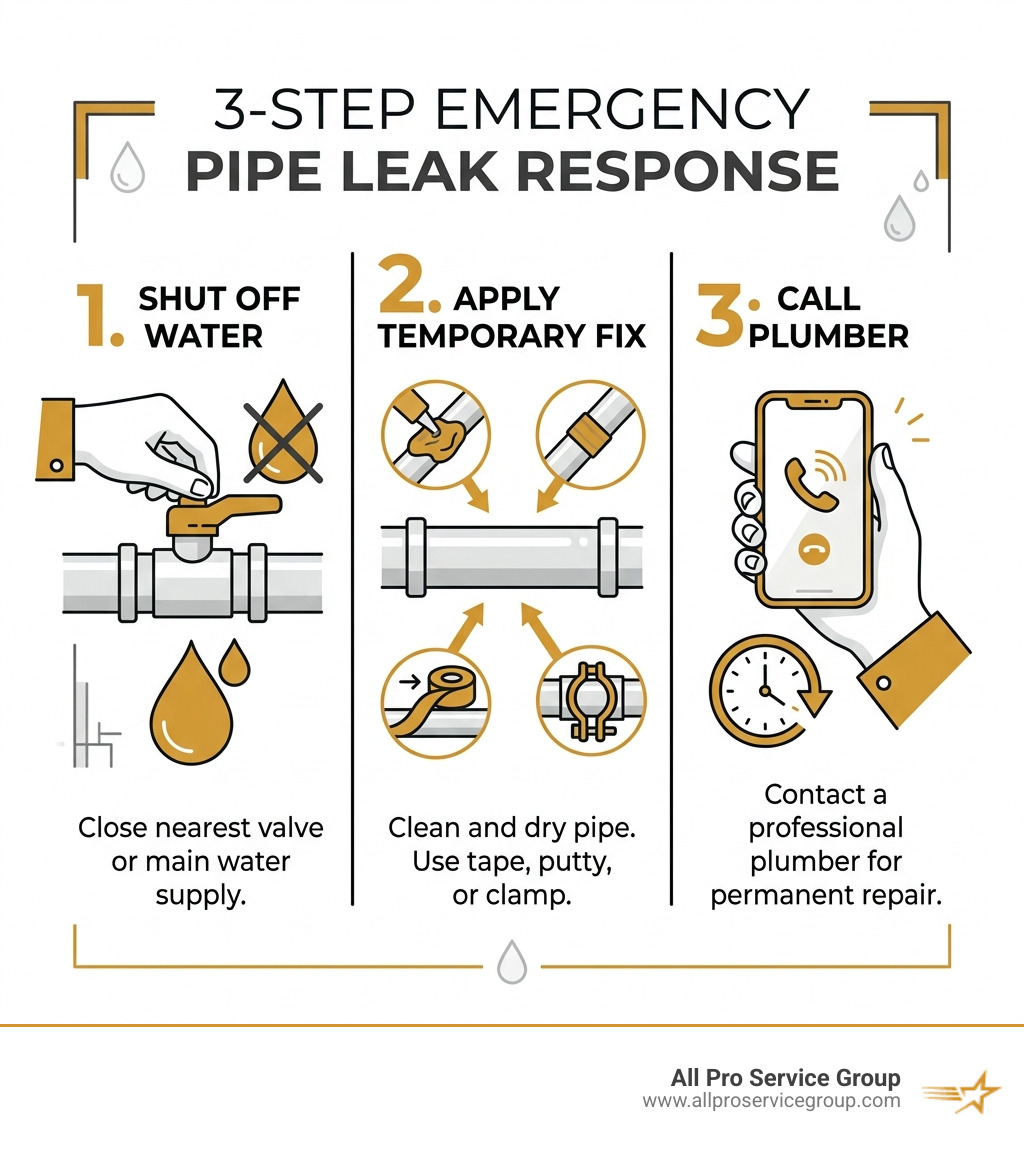
- Turn off the water supply at the shutoff valve nearest to the leak (or the main valve if needed)
- Dry and clean the pipe around the leak area
- Apply a temporary fix — epoxy putty, self-fusing silicone tape, or a pipe repair clamp
- Test the repair by slowly restoring water flow and checking for moisture
- Call a licensed plumber to make a permanent repair as soon as possible
A small leak might not look like much at first. But water moves fast. It travels along pipes, soaks into wood, and saturates cabinet floors — especially the particle board found in most kitchen and bathroom cabinets. Left alone, that moisture creates the perfect conditions for mold growth and structural rot.
In other words, a leaking pipe never gets better on its own. It always gets worse.
Whether you just found a drip under your kitchen sink or you're dealing with something more serious, this guide gives you the clear, step-by-step information you need — starting right now.
I'm Gary Leany, owner of All Pro Service Group, and with over 15 years serving homeowners across the Greater Salt Lake Valley, I've seen how knowing the best way to stop a leaking pipe quickly can mean the difference between a minor fix and thousands of dollars in water damage. Let's walk you through exactly what to do.
Immediate Steps: What to Do When You Discover a Leak
As we move into April 2026, the technology for home leak detection has improved, but the immediate physical response remains the same. When you hear that dreaded spraying sound or see a pool of water, your adrenaline starts pumping. Take a deep breath. Your goal is to stop the flow of water before it reaches your drywall, flooring, or electrical systems.
Shut Off the Water
The absolute best way to stop a leaking pipe from causing further damage is to cut off its source.
- Localized Valves: Look under the sink or behind the toilet for a small chrome handle. Turn it clockwise (righty-tighty) until it stops.
- Main Water Valve: If you can't find a local valve or the pipe itself has burst, you must head to the main shut-off. In the Greater Salt Lake Area, this is typically located in your basement, near the water heater, or where the main line enters the home. If it’s a gate valve (looks like a wheel), turn it until it stops. If it’s a ball valve (a lever), turn it 90 degrees so it is perpendicular to the pipe.
Drain the Lines
Even after the water is off, there is still pressure and water sitting in the pipes. Open the lowest faucet in your house (like a basement utility sink) and a high faucet to let gravity drain the system. This stops the "drip-drip-drip" while you work on a Plumbing Repair.
Electrical Safety
This is critical: if the leak is near an outlet, breaker box, or light fixture, do not touch the water. Go to your electrical panel and shut off power to that zone. You can use a non-contact voltage tester to verify the area is safe. For more details on handling pressurized leaks safely, check out this guide on How to Fix Water Pipe Leaks & Problems.
Clean and Dry the Surface
Temporary fixes like tape and putty will not stick to a wet, slimy pipe. Use a rag to wipe away all moisture. If there is corrosion or "scale" (crusty buildup), use a piece of sandpaper or a wire brush to get down to the clean metal or plastic.
Identifying Your Pipe Material for the Best Way to Stop a Leaking Pipe
Before you run to the hardware store in South Jordan or West Valley City, you need to know what your pipes are made of. Not all "band-aids" work on all materials.
| Pipe Material | Common Use | Appearance | Best Temporary Fix |
|---|---|---|---|
| Copper | Supply lines | Metallic, reddish-gold or green (if old) | Epoxy Putty / Silicone Tape |
| PVC | Drain lines / Cold supply | Rigid, white plastic | Repair Clamp / Silicone Tape |
| CPVC | Hot/Cold supply | Rigid, cream or tan plastic | Silicone Tape / Epoxy Putty |
| PEX | Modern supply lines | Flexible; Red (hot), Blue (cold), or White | Crimp Ring Adjustment |
| Galvanized Steel | Older supply lines | Silver/grey metal, threaded joints | Repair Clamp |
Copper and Galvanized Steel
Copper is the gold standard for many Utah homes, but it is prone to "pinhole leaks" caused by internal corrosion. Galvanized steel is common in older Salt Lake City homes; these pipes often rust from the inside out, making them brittle. If you see a "rust pimple" on a metal pipe, be very gentle—poking it could turn a drip into a flood.
PVC, CPVC, and PEX
Plastic pipes are common in newer builds in areas like Herriman and South Jordan. PVC is usually for drains (DWV - Drain, Waste, Vent), while CPVC and PEX handle pressurized water. PEX is especially popular because it’s flexible and resists bursting in freezing temperatures. However, PEX leaks usually happen at the connections. If you suspect a hidden leak in these materials, professional Leak Detection Repair is often necessary.
Top 3 Temporary Fixes for Emergency Pipe Leaks
Once the pipe is dry and identified, you can apply a patch. Remember: these are temporary. They are meant to hold for a few days—not a few years.
1. Epoxy Putty
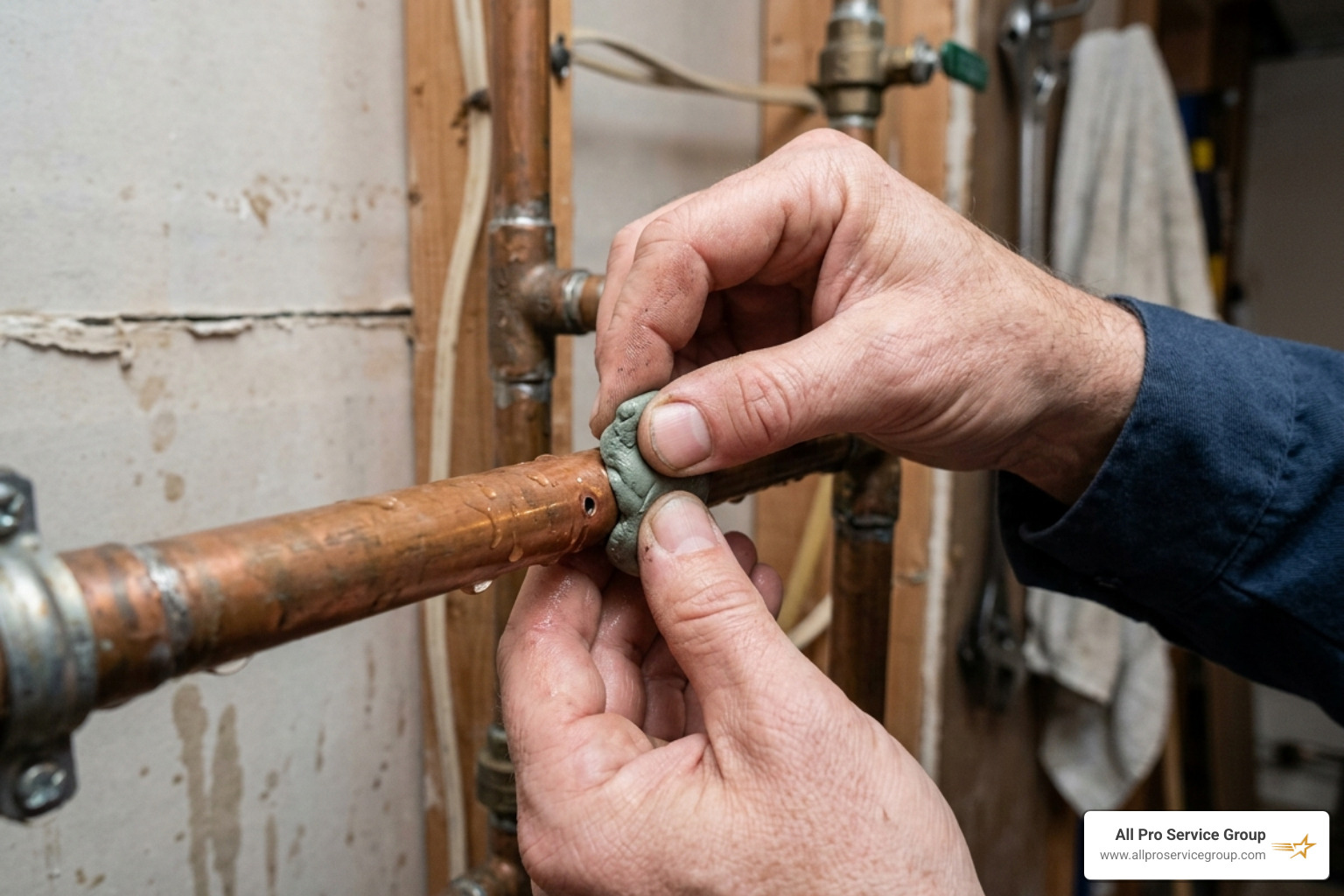
This is the best way to stop a leaking pipe that has a small pinhole or a crack near a joint where tape can't reach. Epoxy putty comes in a stick with two colors. When you knead it together, a chemical reaction occurs that turns the "dough" into a rock-hard seal.
2. Self-Fusing Silicone Tape
Unlike duct tape, silicone tape doesn't have "glue." Instead, it bonds to itself. When you stretch it tightly around a pipe, it creates a waterproof, compressed sleeve. It’s excellent for leaks at angles or on PVC pipes.
3. Pipe Repair Clamps
For larger ruptures or "splits" in a pipe, a clamp is your best bet. These consist of a metal sleeve and a rubber gasket. You wrap the rubber around the leak, slide the metal sleeve over it, and tighten the bolts. Many homeowners find the Pipe Leak Repair: How to Fix Leaking Plumbing | Lowe’s guide helpful for visualizing this mechanical fix.
Using Epoxy Putty as the Best Way to Stop a Leaking Pipe
If you’ve chosen epoxy for your Plumbing emergency, follow these steps:
- Roughen the surface: Use sandpaper to give the putty something to "grip."
- Mix: Cut a piece of putty and knead it with your fingers until the color is uniform.
- Apply: Press it firmly over the hole. Don't just cover the hole; wrap the putty slightly around the circumference of the pipe to anchor it.
- Cure: Most epoxies take about 5 to 10 minutes to harden and about an hour to fully cure before you should turn the water back on.
Applying Silicone Tape as the Best Way to Stop a Leaking Pipe
Silicone tape is a favorite for Water Line Repair Complete Guide scenarios because it’s so fast.
- Start before the leak: Begin wrapping the tape about 2 inches before the actual hole.
- Stretch it: This is the secret. You must stretch the tape to at least double its length as you wrap. This tension creates the seal.
- Overlap: Each layer should overlap the previous one by 50%.
- End after the leak: Continue wrapping 2 inches past the hole. The tape will fuse into one solid piece of rubber.
Permanent Solutions and When to Call a Professional
While DIY fixes are great for a Friday night emergency, they aren't a substitute for a licensed plumber's work. A patch doesn't fix the reason why the pipe leaked. Was it high water pressure? Corrosion? Age?

Permanent Repair Methods
- Soldering (Sweating) Copper: This involves cutting out the bad section and using a torch to melt solder into new fittings. It requires skill and fire safety precautions.
- Push-to-Connect Fittings: Brands like SharkBite allow you to "push" a new section of pipe into a fitting without tools. These are popular but must be installed on perfectly clean, deburred pipe ends to last.
- PEX Re-crimping: If a PEX joint is leaking, a professional will use a "go/no-go" gauge to check the crimp ring. Often, the connection just needs to be replaced and crimped correctly.
For a deeper dive into professional standards for every pipe type, see this Repairing a Leaking Pipe: A Complete Professional Guide for Every Pipe Type - Plumbing Resource.
When to Call All Pro Service Group
Some situations are too dangerous or complex for DIY:
- Leaks Inside Walls: If you see damp drywall but can't find the pipe, don't start hacking at your walls blindly. You could hit electrical wires or gas lines.
- Main Line Bursts: If the leak is before your main shut-off valve, you need emergency help immediately.
- Galvanized Pipe Failures: These pipes are often so brittle that trying to fix one spot causes three more leaks nearby.
- Mold Growth: If you find black or green fuzzy spots, the leak has been there a while. You need a professional to ensure your home's air quality is safe.
Frequently Asked Questions about Pipe Leaks
How do I know if my repair is successful?
The "Paper Towel Test" is the best way to stop a leaking pipe anxiety. After you've applied your fix and waited the required cure time, slowly turn the water back on. Take a dry, colored paper towel and wrap it around the repair. Leave it for 15 minutes. Even the tiniest "micro-leak" will show up as a dark spot on the towel. If it stays bone-dry, your temporary fix is holding!
Can I fix a leaking pipe without turning off the water?
Technically, yes—some specialized "emergency repair tapes" are designed to be applied while water is spraying. However, we don't recommend this for homeowners. Water in your supply lines is under roughly 50-60 PSI of pressure. That’s enough to make tools slippery and cause you to slip or injure yourself. It is always safer to shut off the water first.
What is the ideal water pressure to prevent leaks?
High water pressure is the "silent killer" of plumbing. If your pressure is over 80 PSI, it puts constant stress on every joint and seal in your house.
- The Sweet Spot: Aim for 40 to 60 PSI.
- The Fix: If your water feels "too powerful" or your pipes bang when you turn off a faucet, you may need a Pressure Reducing Valve (PRV). Keeping your pressure regulated is a key maintenance standard for April 2026 and beyond.
Conclusion
Finding a leak is stressful, but now you have the tools to handle it. By acting fast—shutting off the water, identifying the material, and applying a solid temporary patch—you can protect your home from the devastating costs of water damage and mold.
However, a patch is just a "band-aid." To truly sleep soundly, you need a permanent solution. Since 2008, All Pro Service Group has been the "Gephardt Approved" choice for homeowners in Salt Lake City, Ogden, Provo, and throughout the Greater Salt Lake Valley. Whether you need a simple Plumbing Water Line Repair or a full home inspection, our experts are available 24/7.
Don't let a small drip turn into a major disaster. If you're in the South Jordan or West Valley City area and need a hand, give us a call. We'll get your pipes—and your peace of mind—back in working order.