One Simple Way to Learn Hydro Jetting
When Your Drains Won't Quit Clogging, You Need to Know This
Hydro jetting is a professional drain-cleaning method that uses high-pressure water — up to 35,000 PSI — to scour the inside of pipes and blast away clogs, grease, roots, and buildup.
Here's a quick summary of what you need to know:
- What it is: A powerful water-based pipe-cleaning service performed by licensed plumbers
- How it works: A specialized nozzle is inserted into your drain and blasts pressurized water to scrub pipe walls clean
- Best for: Stubborn or recurring clogs, grease buildup, tree roots, slow drains, and sewer line maintenance
- Cost: Typically $350–$600, averaging around $475; severe cases can exceed $1,200
- DIY? Not recommended — high pressure can rupture pipes and cause serious injury without proper training
Every year, between 23,000 and 75,000 sanitary sewer overflows occur in the United States. Nearly half are caused by fats, oils, and grease — the same stuff quietly building up inside residential pipes right now. In London, a single neglected sewer line produced a so-called "fatberg" stretching 800 feet and weighing 143 tons. That's an extreme example, but the principle hits home: buildup doesn't go away on its own.
If your drains keep slowing down or backing up no matter what you try, the problem probably isn't on the surface. It's on the walls of your pipes.
I'm Gary Leany, owner of All Pro Service Group, and I've seen how often stubborn plumbing issues in Salt Lake Valley homes come down to buildup that basic snaking just can't reach — hydro jetting is one of the most effective tools we use to solve it for good. Let's walk through exactly how it works and whether it's the right fix for your situation.
What is Hydro Jetting and How Does It Work?
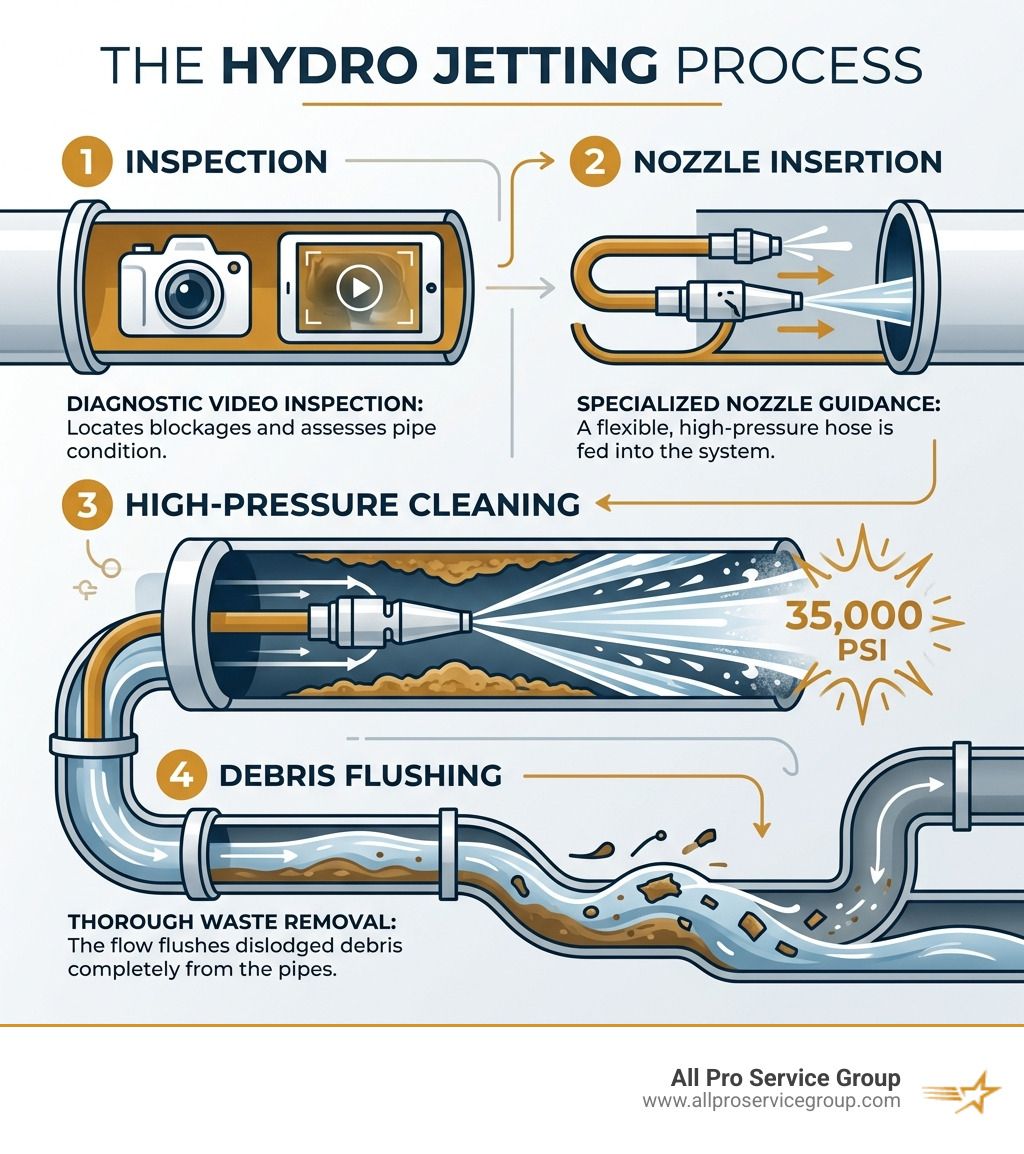
To understand hydro jetting, it helps to think of it as a heavy-duty power wash for the inside of your plumbing. While a standard garden hose might trickle water through a pipe, a hydro jetter uses a massive water tank and a high-pressure pump to blast water at incredible speeds. In some industrial or severe residential cases, these machines can pressurize water up to 35,000 PSI, though most residential jobs hover between 1,500 and 4,000 PSI.
The process begins at a "cleanout," which is an accessible opening in your plumbing system designed for maintenance. We insert a long, flexible high-pressure hose equipped with a specialized nozzle. These nozzles are the "secret sauce" of the operation. They feature forward-facing jets to punch through solid blockages and rear-facing jets that propel the hose forward while simultaneously scouring the pipe walls clean.
As the water blasts against the interior of the pipe, it doesn't just move the clog; it emulsifies grease, pulverizes minerals, and shreds small tree roots. This "scouring" action restores the pipe to its original diameter, something a simple drain snake just can't do. For a deeper dive into how this fits into your home's health, you can check out What Is Hydro Jetting And How Does It Work? or explore our more info about sewer services.
Mechanics of Hydro Jetting Equipment
The equipment used in hydro jetting is significantly more advanced than what you’d find in a typical homeowner's garage. It consists of:
- A Large Water Tank: To provide a steady, high-volume flow.
- A High-Pressure Hose: Built to withstand extreme internal pressure while remaining flexible enough to navigate 90-degree bends in your plumbing.
- The Pump: This is the engine that creates the "blast," managing both the PSI (pounds per square inch) and the GPM (gallons per minute).
- Flow Rate Control: A skilled technician adjusts the flow rate to ensure there is enough water volume to flush the loosened debris down the line and out to the municipal sewer or septic tank.
Types of Clogs Removed
Because hydro jetting uses pure physical force and water volume, it is effective against almost any non-solid obstruction, including:
- Grease and FOG: Fats, oils, and grease are the leading cause of sewer overflows. The jetter turns hardened grease back into a liquid that flushes away.
- Mineral Scale: In areas with hard water, calcium and magnesium can create a "crust" inside pipes.
- Hair and Soap Scum: Common in bathroom lines, these form dense mats that catch other debris.
- Silt and Sand: Often found in area drains after a Utah storm.
- Food Particles and Hygiene Products: Items that should never have been flushed but often find their way into the "fatberg" mix.
Comparing Hydro Jetting to Snaking and Chemicals
When a drain stops working, most people reach for a plunger or a bottle of liquid cleaner. If that fails, they might call a plumber to "snake" the line. While these methods have their place, they are often temporary Band-Aids for a much larger problem.
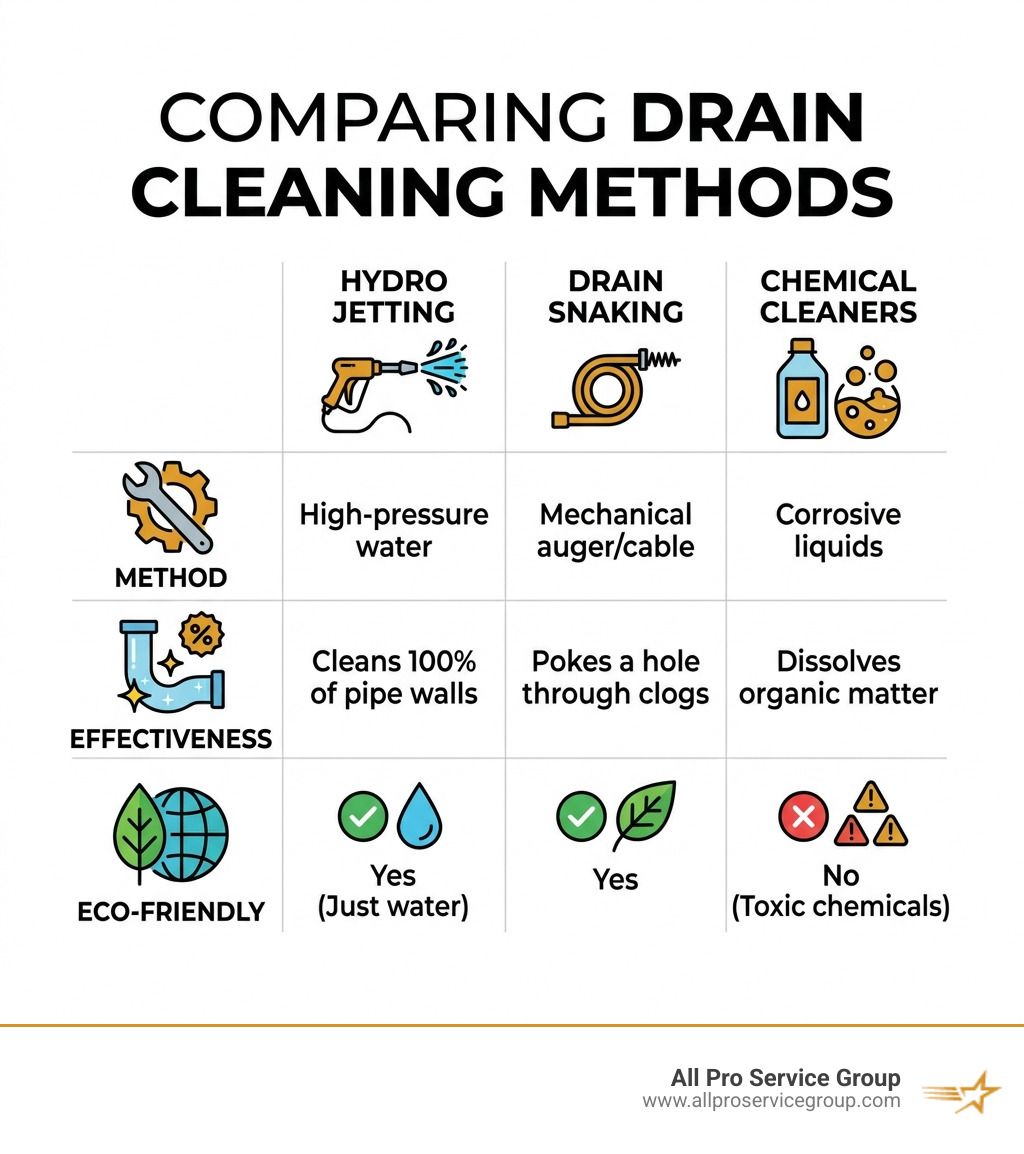
| Feature | Hydro Jetting | Drain Snaking | Chemical Cleaners |
|---|---|---|---|
| Method | High-pressure water | Mechanical auger/cable | Corrosive liquids |
| Effectiveness | Cleans 100% of pipe walls | Pokes a hole through clogs | Dissolves organic matter |
| Eco-Friendly | Yes (Just water) | Yes | No (Toxic chemicals) |
| Safety | Safe for sound pipes | Can scratch/crack pipes | Can corrode older pipes |
| Longevity | Results last for years | Clogs often return quickly | Temporary fix |
For more details on professional drain maintenance, see
Hydro-Jetting for Clogged Drains: How It Works or read our
more info about drain cleaning.
Limitations of Drain Snaking
Drain snaking (or cabling) involves a long metal coil that spins through the pipe. It’s great for pulling out a specific object—like a wad of hair or a flushed toy—but it has major limitations. A snake typically only pokes a hole through a soft clog. Imagine a pipe filled with hardened grease; the snake goes through the middle, leaving a thick layer of "gunk" on the walls. Within weeks, that sticky residue catches new debris, and you’re right back where you started.
The Dangers of Chemical Cleaners
We generally advise Salt Lake City homeowners to stay away from harsh chemical cleaners. These liquids are highly corrosive. If they don't clear the clog immediately, they sit in your pipes, eating away at the material—especially if you have older metal plumbing. Furthermore, they release toxic fumes and are terrible for the Utah environment once they wash into the water system. Hydro jetting is the superior "green" alternative because it uses nothing but pressurized water.
Professional Inspection and Signs of Blockage
We never start hydro jetting blindly. The first step in any professional service is a CCTV sewer camera inspection. This involves threading a high-definition waterproof camera through your lines to see exactly what we’re dealing with.
This inspection is crucial because it tells us two things:
- What is the clog? Is it grease, or is the pipe actually collapsed?
- What is the pipe's condition? If the pipe is cracked, rusted through, or made of fragile material, high-pressure water could cause a rupture.
You can learn more about specific pipe materials in our article Can You Hydro Jet Clay Pipe or browse our more info about drain unclogging services.
Signs You Need Hydro Jetting
How do you know if your pipes are just having a bad day or if they need the "ultimate reset button"? Look for these warning signs:
- Recurring Clogs: If you have to snake your kitchen sink every three months, you have a buildup problem.
- Multiple Slow Drains: If the shower, sink, and toilet are all draining slowly, the blockage is likely in the main sewer line.
- Gurgling Sounds: That "glug-glug" sound after you flush is air trapped by a mainline restriction.
- Bad Smells: Sewage or "rotten egg" odors localized around floor drains are a sign of stagnant waste sitting in your pipes
Removing Tree Roots from Sewer Lines
Tree roots are a common headache in the Greater Salt Lake Area. They seek out moisture and can enter sewer lines through tiny cracks or joints. Once inside, they grow into massive "root balls" that act as a filter, catching grease and toilet paper.
Hydro jetting is incredibly effective at slicing through these "soft" roots. Using a specialized penetrating nozzle, the high-pressure water cuts the roots like a laser, clearing the path without the need for invasive digging. However, roots will eventually grow back, so we often recommend a follow-up chemical treatment to discourage regrowth.
Safety, Costs, and DIY Risks
While the idea of "blasting away" clogs sounds satisfying, hydro jetting is a high-stakes task that requires professional calibration.
Why DIY Hydro Jetting is Risky
It might be tempting to rent a power washer or buy a "jetter kit" online for $60, but we strongly discourage this for several reasons:
- Pipe Rupture: Without a camera inspection, you don't know if your pipes are thin or cracked. Applying 4,000 PSI to a compromised pipe can cause it to burst inside your walls or underground, turning a $500 cleaning into a $5,000 repair.
- Personal Injury: Water at these pressures can literally cut through skin and bone. Professional technicians undergo rigorous training to handle these machines safely.
- Insurance Exclusions: Many homeowner insurance policies will not cover water damage caused by DIY plumbing mishaps.
- Incomplete Cleaning: Consumer-grade equipment often lacks the GPM (flow) to actually flush the debris out, meaning you might just move the clog further down the line.
For more on why professional expertise matters, see What is Hydro Jetting? or check our more info about plumbing repair.
Average Costs and Maintenance Frequency
On average, hydro jetting costs between $350 and $600. The price can fluctuate based on:
- Accessibility: Is there a cleanout, or do we have to remove a toilet to reach the line?
- Severity: A massive "fatberg" or extensive root intrusion takes longer to clear.
- Location: Jobs in Park City or Provo might vary slightly based on travel and specific municipal requirements.
For most residential homes, we recommend a preventative jetting every 18 to 24 months. However, for commercial properties—especially restaurants in West Jordan or Salt Lake City—a 6-to-12-month schedule is often necessary to stay ahead of grease buildup.
Frequently Asked Questions about Hydro Jetting
Is hydro jetting safe for older or fragile pipes?
It depends entirely on the condition of the pipe, not just its age. We have successfully jetted older cast iron and clay pipes, but only after a thorough video inspection. If the inspection reveals significant corrosion or structural cracks, we may recommend a gentler cleaning method or a trenchless sewer repair.
Can hydro jetting effectively remove tree roots?
Yes, it is one of the most effective non-invasive ways to remove roots. The high-pressure water shreds the roots and flushes them away. However, it does not "seal" the crack where the roots entered. To prevent them from coming back, you may need a pipe liner or regular maintenance treatments.
How often should sewer lines be hydro jetted for maintenance?
For a standard family home in the Salt Lake Valley, every two years is a great "rule of thumb" for preventative care. If you live in an older neighborhood with lots of mature trees (like parts of Ogden or South Salt Lake), or if you do a lot of heavy cooking, you might want to schedule it annually.
Conclusion
Hydro jetting is the gold standard for drain cleaning. It’s eco-friendly, incredibly thorough, and provides a "like-new" interior for your plumbing system that snaking simply can't match. By removing the residue that causes future clogs, you save money and stress in the long run.
At All Pro Service Group, we’ve been serving the Greater Salt Lake Area since 2008. Whether you’re in West Valley City or Park City, our "Gephardt Approved" experts are ready to help you clear the way with 24/7 availability and dependable service. Don’t let a "fatberg" start growing in your basement—give your pipes the reset they deserve.
If you're ready to see the difference professional cleaning makes, explore our Drain Cleaning Services and let us help you keep your home running smoothly.