
What Does It Cost to Replace a Toilet Seal?
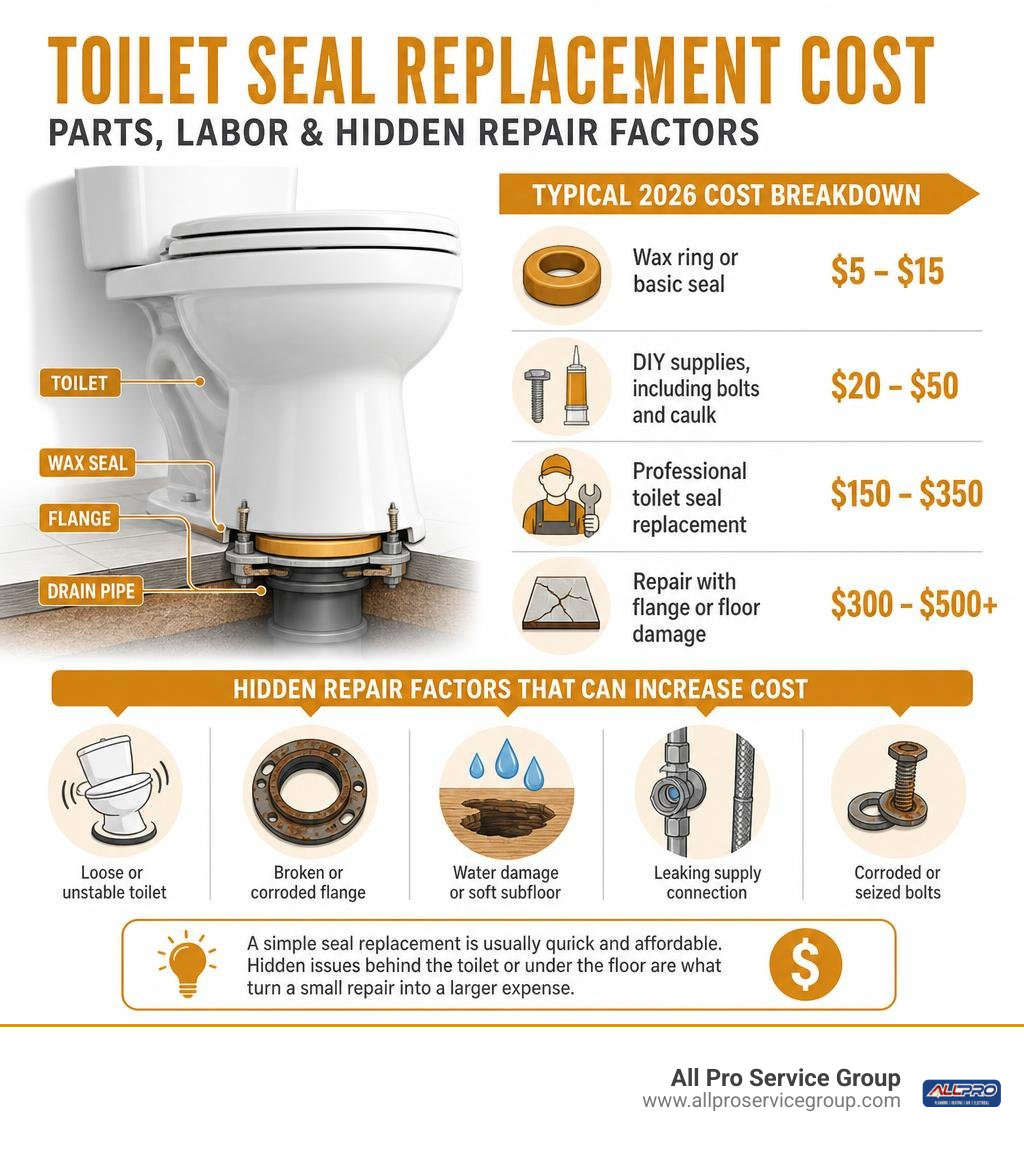
The cost to replace toilet seal is usually $150 to $350 when a licensed plumber does the work in 2026. The wax ring itself often costs just $5 to $15, but lifting, resetting, and testing the toilet makes labor the larger part of the bill.
| Cost item | Typical 2026 cost |
|---|---|
| Wax ring or basic seal | $5-$15 |
| DIY supplies, including bolts and caulk | $20-$50 |
| Professional toilet seal replacement | $150-$350 |
| Repair with flange or floor damage | $300-$500+ |
A simple replacement can be fairly quick. But a loose toilet, broken flange, hidden leak, or soft subfloor can change the estimate fast. Water at the toilet base is not always a failed wax ring, either; it can also come from a supply connection, tank bolts, or condensation.
All Pro Service Group has been serving Greater Salt Lake Valley homeowners with dependable plumbing repairs and inspections since 2008. In this guide, we will help you understand the cost to replace toilet seal and the repair issues that may affect your final price.
Breakdown of Average Cost to Replace Toilet Seal
When you look at the overall expense of fixing a leaky commode base, the national average total project cost ranges between $88 and $510, with the vast majority of standard jobs landing right around $222. If you choose to bring in a licensed pro, expecting a range between $150 and $350 is a safe baseline for your household budget.
Why is there such a range for what seems like a simple donut of wax? The answer lies in the distinction between raw materials and professional physical labor. While the physical ring itself is one of the cheapest hardware parts in modern home improvement, resetting a commode is a labor-intensive, precise process. If you want to dive deeper into general seal fixes, you can check out our dedicated guide to Fix Toilet Seal.
Parts vs Labor Breakdown
Labor consistently accounts for 60% to 75% of the total bill when a professional replaces a toilet wax ring. Understanding where every dollar goes helps demystify your final service invoice:
- The Seal Kit ($5 to $25): A standard petroleum wax ring with a plastic flanged horn retail for $5 to $15. Modern wax-free rubber or foam gasket kits sit slightly higher, between $10 and $25.
- Hardware & Accessories ($10 to $25): Replacing old, corroded brass closet bolts, washers, nuts, and applying a fresh line of mildew-resistant bathroom caulk adds a tiny fraction to material costs.
- Plumbing Labor Rates ($75 to $200 per hour): Professional plumbers spend anywhere from 30 to 90 minutes pulling, cleaning, prepping, setting, and testing the fixture.
- Service Call / Dispatch Minimums ($50 to $150): Most licensed plumbing companies maintain a baseline trip fee or a 1-hour minimum labor charge to cover travel, vehicle overhead, insurance, and professional equipment.
As noted in recent market data from Angi's Toilet Repair Cost Breakdown, the average toilet repair costs around $271, with the actual physical replacement part representing a minor slice of that total fee.
DIY vs Professional Cost to Replace Toilet Seal
Tackling this project as a weekend DIY warrior will certainly save you money upfront on labor charges. Purchasing a DIY seal kit alongside new closet bolts usually keeps your out-of-pocket expenses right around $20 to $40. However, saving money on labor introduces personal physical risk and potential property liability.
A standard porcelain toilet weighs between 60 and 100+ pounds. Manuevering a heavy, awkward porcelain fixture in a tight, cramped powder room without chipping tile or slamming the base down off-center requires steady hands and a strong back. Furthermore, if you drop the toilet onto the new wax ring misaligned, you will crush the wax unevenly. Once compressed, a traditional wax ring loses its shape and cannot spring back—it must be discarded and replaced with a fresh ring.
If a DIY seal installation fails silently behind your bathroom baseboards, unseen water leaks can slowly rot your structural subfloor or ceiling drywall below, escalating a simple $20 fix into a $2,000+ structural restoration. To review all aspects of keeping your fixtures in top shape, browse our Toilet Repair Complete Guide.
Key Factors That Impact the Cost to Replace Toilet Seal
No two bathrooms in the Salt Lake Valley are built identically, and several key variables drive your real-world quote higher or lower:
- Toilet Fixture Type: Standard two-piece floor-mounted toilets are straightforward to pull and reset. One-piece toilets are significantly heavier, while skirted trapway commodes hide closet bolts behind narrow porcelain walls, requiring extra labor time. Wall-hung toilets are the most expensive, as access panel adjustments drive labor costs higher.
- Bathroom Accessibility & Working Space: A spacious primary bathroom allows a technician to work quickly. A tiny water closet tucked under a staircase limits movement and increases labor time.
- Geographic Location & Regional Rates: Hourly plumbing fees vary by market. In urban and suburban Utah centers like Salt Lake City, Sandy, or Park City, labor rates reflect local trade licensing standards, business overhead, and fuel costs.
- Emergency Surcharges: Discovering water leaking onto your subfloor on a holiday weekend or late Sunday evening will incur after-hours service premiums, adding $100 to $300 to standard rates.
When scheduling non-emergency plumbing maintenance during regular business hours, you avoid peak emergency surcharges. For comprehensive piping and fixture support, explore our Plumbing Repair Services.
Flange Damage and Hidden Repairs
The toilet flange (or closet flange) is the metal or plastic fitting anchored to your floor that connects the toilet base to your home's drain pipe. The wax ring sits directly between this flange and the bottom porcelain horn of the toilet.

If your toilet has been rocking back and forth for months, or if water has been slowly seeping past the seal, the flange may be cracked, rusted, or corroded. According to published repair data from Plumbing Price Guide's Toilet Repair Breakdown, replacing a broken toilet flange typically adds $150 to $400 onto your service invoice, depending on whether the fitting is PVC, ABS, or vintage cast iron.
If water has escaped long enough to rot the wooden subfloor surrounding the pipe, floor restoration costs can add anywhere from $200 to $1,500+. If you suspect liquid is actively pooling around your fixture, read our detailed troubleshooting guide on Commode Leaking Around Base.
Traditional Wax Rings vs Wax-Free Gaskets
When choosing replacement seals, homeowners generally choose between two primary options:
- Traditional Petroleum Wax Rings ($5 – $15): The industry standard for over a century. Petroleum wax creates a permanent, sticky, airtight seal that conforms perfectly to slight floor irregularities. However, wax rings are single-use only, messier to clean up, and can melt if exposed to underfloor radiant heating systems.
- Modern Wax-Free Rubber / Foam Gaskets ($10 – $25): Made from synthetic rubber or closed-cell foam, these seals compress without sticky residue. They can be repositioned during installation if you align the commode incorrectly, and they hold up better against radiant floor heat or persistent toilet movement.
While traditional plumbers often prefer standard wax rings for their time-tested reliability, high-quality wax-free rubber gaskets offer DIYers an easier, cleaner installation process with zero price penalty on labor costs.
Signs Your Toilet Seal Needs Replacement and When to Repair vs Replace
How do you know it is time to inspect your commode's base seal? Look for these distinct warning signs:
- Foul Sewage Smells: The primary job of a toilet wax ring is to form an airtight barrier against dangerous sewer gases. If your bathroom smells constantly like a sewer despite deep cleaning, methane gas is likely escaping past a failed wax ring.
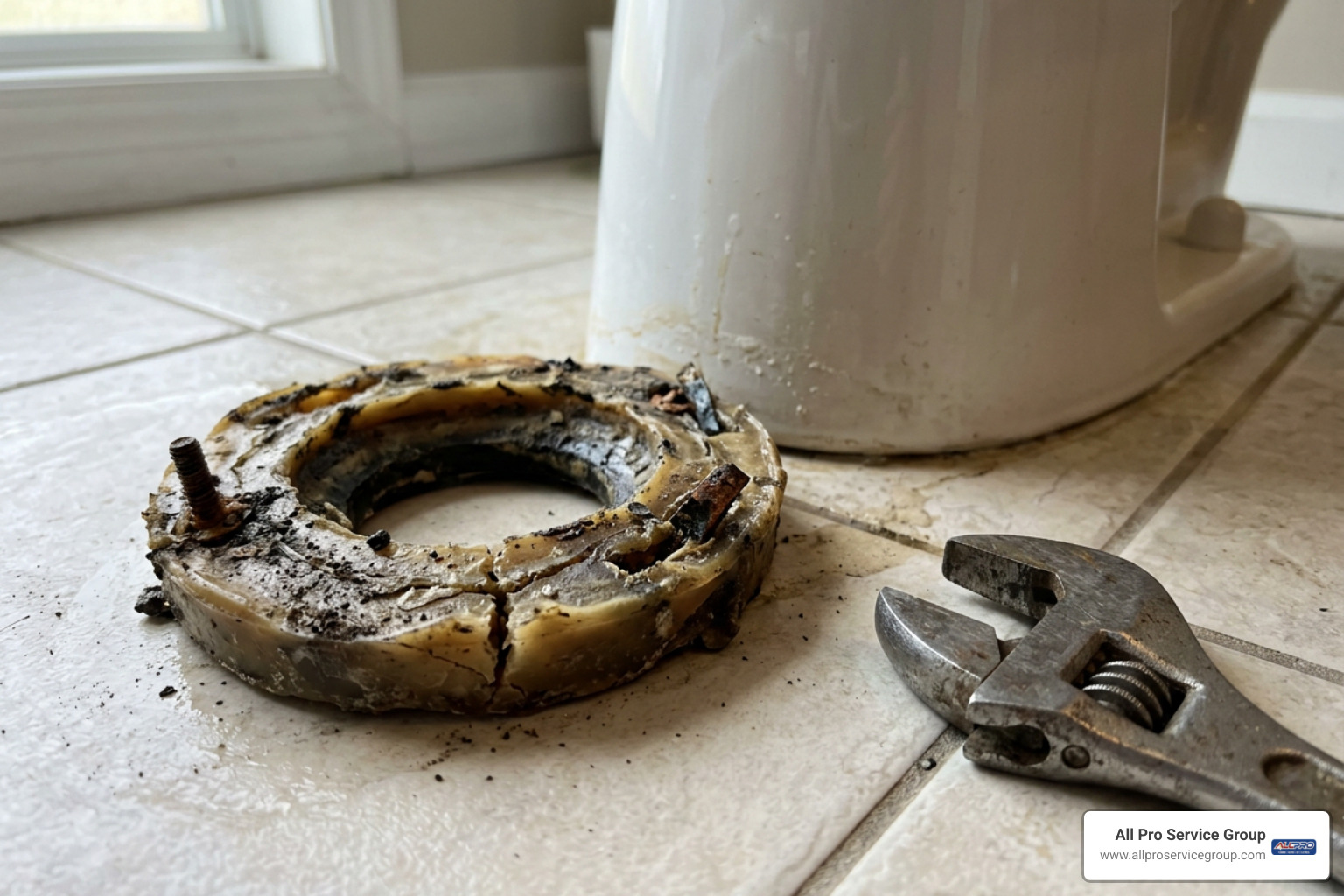
- Water Pooling on Floor Tile: Clear or dirty water trickling out from the base after a flush indicates the watertight seal is broken.
- A Rocking or Wobbling Base: If your toilet shifts when you sit down, the closet bolts have loosened or the underlying wax ring has squished out of position.
- Water Damage on Ceilings Below: Water stains on the drywall ceiling directly underneath a second-story bathroom frequently point back to a leaking toilet seal.
If your fixture is cracked, chipped, or over 25 years old, investing $150 to $300 to fix a seal on an outdated porcelain unit might not be financially wise. Modern WaterSense-certified commodes use just 1.28 gallons per flush compared to older 3.5+ GPF models, saving an average family thousands of gallons of water per year. To weigh your options between fixing or upgrading, take a look at our article on Broken Toilet Issues or review Block Renovation's Toilet Replacement Guide.
Hidden Expenses in the Cost to Replace Toilet Seal
Beyond parts and plumbing labor, hidden expenses can occasionally catch homeowners off guard:
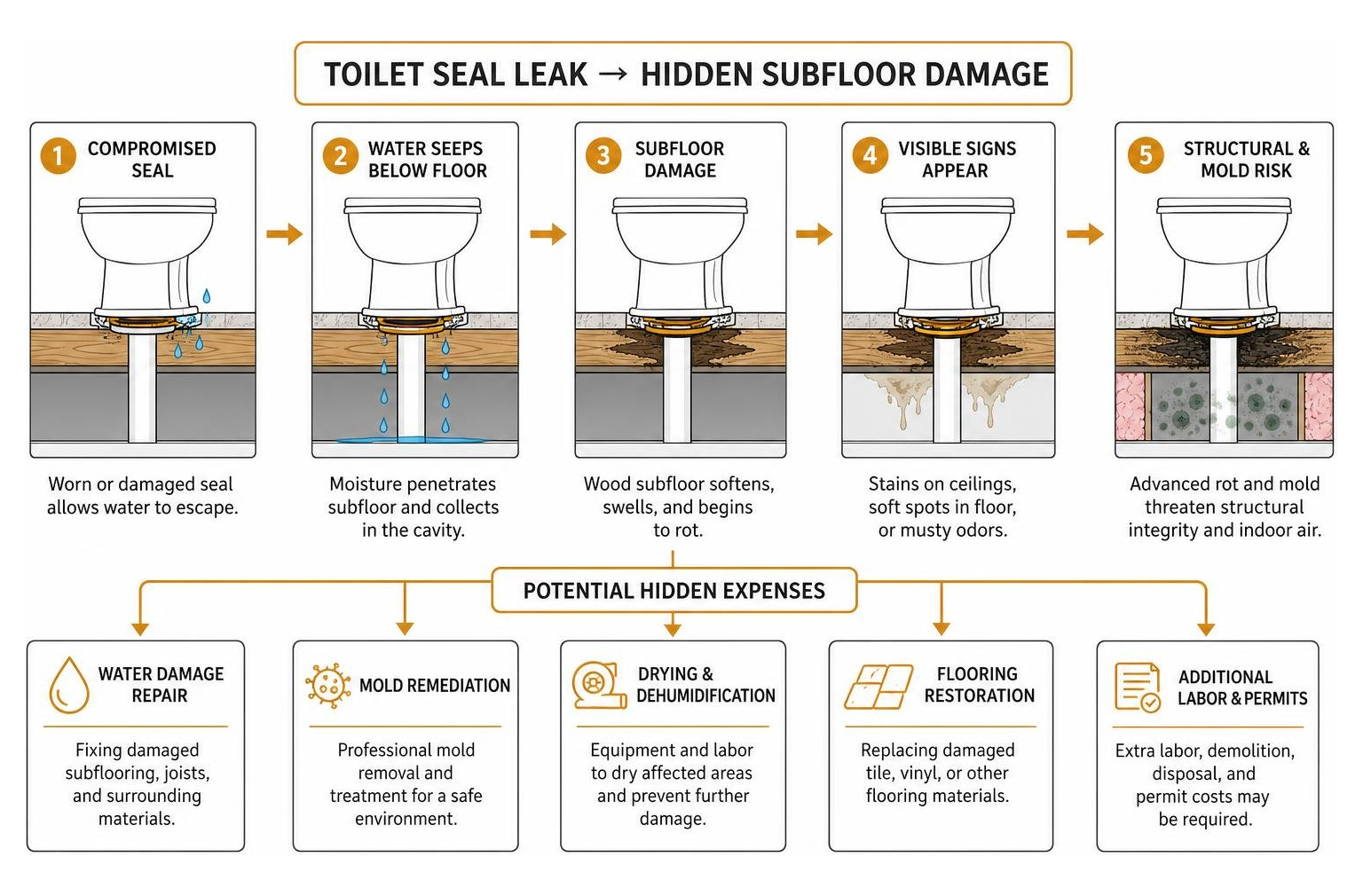
When a silent base leak goes unnoticed for months, moisture becomes trapped beneath vinyl plank or tile flooring, creating the ideal environment for toxic black mold. Mold remediation and subfloor drying can quickly add several hundred dollars to your total restoration bill.
For professional leak detection services, check out our Leak Detection Repair page to resolve moisture issues before severe structural damage occurs.
Frequently Asked Questions About Toilet Seal Costs
How long does a toilet wax seal last?
A properly installed wax ring can last 20 to 30 years —often lasting the entire functional lifespan of the toilet fixture itself. However, a wax ring can fail prematurely if the toilet wobbles, if closet bolts corrode, if floor joists sag, or if high temperature radiant heating melts the petroleum wax.
Does homeowners insurance cover a leaking toilet seal?
Standard homeowners insurance policies generally do not cover replacing the wax seal itself, as insurance carriers classify worn gaskets as routine home maintenance. However, if a sudden, unexpected seal failure causes secondary water damage to lower-level ceilings or flooring, your policy may help pay for the structural water restoration work.
How long does it take a plumber to replace a toilet seal?
A licensed professional plumber typically completes a standard toilet seal replacement in 30 to 60 minutes. If the existing closet flange is rusted, cracked, or requires height extension shims, the repair process can extend to 90 minutes or two hours.
Professional Plumbing Support for Toilet Repairs
Estimating your cost to replace toilet seal comes down to balancing part expenses, labor time, and underlying floor integrity. While a $10 wax ring seems like an easy fix, ensuring a perfectly level, leak-free seat that protects your subfloor for decades takes expertise and precision.
Since 2008, All Pro Service Group has provided top-tier plumbing, heating, cooling, and electrical support throughout Ogden, Park City, Provo, Salt Lake City, South Jordan, West Jordan, and the entire Greater Salt Lake Valley. As a trusted local company that is "Gephardt Approved," we deliver upfront pricing, convenient financing options, and reliable service.
Whether you need a quick wax ring swap, a full flange restoration, or an expert home leak inspection, our friendly team is ready to help. Explore our Plumbing Repair Complete Guide 2026 to learn more, or Contact Us today to request your expert quote!