
Why Most Toilet Repair Problems Are Easier to Fix Than You Think
Toilet repair is something most homeowners can handle on their own — no plumber required.
Here are the most common toilet problems and their quick fixes:
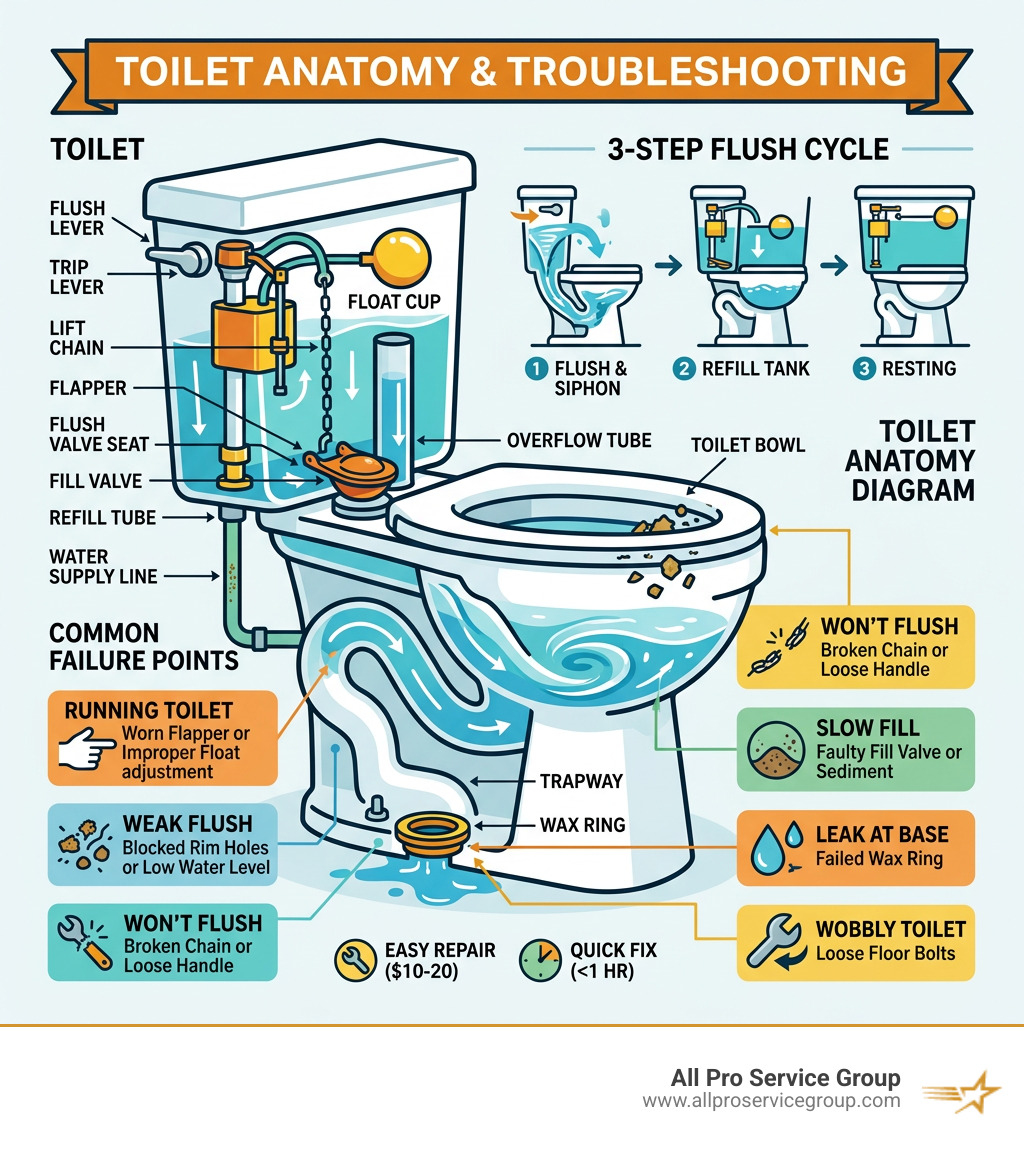
| Problem | Most Likely Cause | Quick Fix |
|---|---|---|
| Toilet keeps running | Worn flapper or float | Replace flapper or adjust float |
| Weak or incomplete flush | Clogged rim holes or low water level | Clean rim holes, adjust water level |
| Toilet won't flush | Broken chain or handle | Reconnect or replace chain/handle |
| Slow-filling tank | Faulty fill valve | Clean or replace fill valve |
| Leak at base | Failed wax ring | Replace wax ring |
| Wobbly toilet | Loose floor bolts | Tighten or replace closet bolts |
Most of these fixes cost between $10 and $20 and take less than an hour.
A running toilet alone can waste up to 200 gallons of water per day — so a small repair can make a real difference on your water bill.
Toilets are simple devices. They have just a handful of moving parts, and nearly all of them are cheap and easy to replace. Whether your toilet is running nonstop, flushing weakly, or leaking at the base, there's a good chance you can fix it yourself today.
I'm Gary from All Pro Service Group, and after years of hands-on toilet repair and plumbing work across the Greater Salt Lake Valley, I've seen virtually every toilet problem imaginable. Read on and I'll walk you through exactly what to do.
Anatomy and Preparation for Toilet Repair
Before we dive into the "how-to," we need to understand the "how-it-works." Most toilets in the Greater Salt Lake Area, from Provo to Ogden, operate on a simple gravity-flush system. When you push the handle, it lifts a flapper, allowing water to rush from the tank into the bowl. This creates a siphon effect, pulling waste down through the trapway and into the sewer line.

Safety First: Preparing Your Workspace
Before touching any internal components, follow these essential safety steps:
- Shut Off the Water: Locate the silver handle on the wall or floor behind the toilet. Turn it clockwise until tight. Do not use a wrench on plastic handles, as they can snap.
- Drain the Tank: Flush the toilet and hold the handle down to remove as much water as possible. Use a sponge to soak up any remaining liquid.
- Handle with Care: Toilet lids are heavy porcelain. Place them on a towel in a safe area to avoid chipping them or cracking your floor tiles.
- Prevent Sewer Gas: If you are removing the toilet entirely, stuff an old rag into the open floor pipe. This prevents sewer gases from entering your home and keeps tools from falling into the drain.
If you're dealing with a standard 2-inch flush valve, you can find Everything you need to fix your 2" flush valve toilet in a single kit. For more complex issues, you can always check out our guide on plumbing repair.
5 Methods for Successful Toilet Repair
Approaching a toilet repair systematically saves time and prevents trips to the hardware store. Start by identifying the symptom—is it a sound, a puddle, or a failure to flush?
Method 1: Stop a Running Toilet Repair
A running toilet is usually caused by a flapper that doesn't seal or a fill valve that doesn't shut off. This issue is the primary culprit behind high water bills, wasting up to 200 gallons daily.
- The Flapper Fix: If you hear water trickling, the flapper is likely worn out. These rubber seals last about 3 to 5 years before they harden or warp. If you touch the flapper and get black residue on your hands, it's definitely time for a replacement.
- Ghost Flushing: If your toilet "flushes" itself every few hours, water is leaking from the tank into the bowl. This is almost always a flapper issue.
- Adjusting the Fill Valve: Look at the water level in the tank. It should be about 1/2 to 1 inch below the top of the overflow tube. If water is constantly running into that tube, adjust the float screw to lower the water level.
You can often Fix a Running Toilet in 10 Minutes by simply swapping the fill valve. If you suspect a hidden leak, our leak detection & repair services can help pinpoint the problem.
Method 2: Clearing Clogs and Weak Flushes
A weak flush can be just as frustrating as a clog. If the water swirls but doesn't pull waste down, you might have mineral buildup or a partial obstruction.
- The Plunger Technique: Use a flange plunger (the one with the extra rubber flap at the bottom) for toilets. Ensure a tight seal and use 8-10 rhythmic pumps.
- Cleaning Rim Holes: Over time, hard water in the Salt Lake Valley can clog the small holes under the toilet rim. Use a small wire or a stiff brush to clear them out. This restores the "push" needed for a strong flush.
- The Siphon Jet: Check the small hole at the bottom of the bowl. If it’s blocked by minerals, the toilet won't siphon correctly.
If a plunger doesn't work, a toilet auger (or snake) is the next step. For persistent backups, professional drain cleaning is the safest way to clear the line without damaging your pipes. You might also consider if you need to Fix Weak Flush with 502 Flapper to ensure the tank releases enough water.
Method 3: Fixing Leaks at the Base or Tank Toilet Repair
Water pooling around the base of the toilet is a serious issue that can rot your subfloor.
- Wax Ring Replacement: The wax ring creates the seal between the toilet and the floor flange. If the toilet rocks or was recently bumped, this seal can break. Replacing it involves lifting the toilet, cleaning the old wax, and setting a new ring.
- Tank-to-Bowl Gasket: If the leak is between the tank and the bowl, you likely need a new "spud washer" or tank bolts.
- Supply Line Leaks: Check the flexible hose connecting the wall valve to the toilet. If it's dripping, simply replacing it with a "click-seal" connector can solve the problem instantly.
For a mess-free alternative, you can learn How to Install a Wax-Free Toilet Seal. For comprehensive help with all your fixtures, see our plumbing services page.
Method 4: Repairing Slow-Filling Tanks
If your toilet takes forever to refill after a flush, the problem is usually a restriction in the water flow.
- Check the Shut-off Valve: Ensure the wall valve is fully open. Sometimes they get bumped into a partially closed position.
- Flush Debris from the Fill Valve: It is common for sediment to get trapped in the fill valve cap. You can often remove the top of the valve and flush out the debris without replacing the whole unit.
- Replacing the Fill Valve: If cleaning doesn't work, the internal seals have likely failed. You can see How to Fix a Slow Filling Toilet by replacing the cap assembly or the entire valve.
Method 5: Adjusting Handles and Wobbly Bases
Sometimes the fix is purely mechanical and requires no new parts.
- The Handle and Chain: If you have to jiggle the handle, the chain might have too much slack. Aim for about 1/2 inch of slack. If the handle is "sticky," remove it and clean the mounting nut (remember: these are often reverse-threaded!).
- Wobbly Bases: A rocking toilet will eventually break the wax seal. Use plastic shims to level the toilet on an uneven floor, then tighten the closet bolts gently. Warning: Overtightening will crack the porcelain.
- Loose Seats: If your seat slides around, the bolts are likely loose in the oversized holes of the porcelain. Adding a small rubber bushing can provide a permanent fix.
If your handle is broken beyond repair, you can learn How to Install a Universal Tank Lever to upgrade your bathroom's look and function.
Choosing the Right Parts for Your Toilet
When you walk into a hardware store in West Jordan or South Jordan, the wall of toilet parts can be overwhelming. Use this table to understand what you need:
| Part | Lifespan | DIY Cost | Why it Fails |
|---|---|---|---|
| Flapper | 3-5 Years | $10-$20 | Chlorine and hard water degrade rubber |
| Fill Valve | 5-7 Years | $15-$30 | Mineral buildup or internal seal wear |
| Wax Ring | 10-20 Years | $5-$10 | Toilet movement or floor settling |
| Flush Handle | 10+ Years | $10-$25 | Corrosion or plastic snapping |
| Supply Line | 5-10 Years | $10-$15 | Seal failure or hose kinking |
Pro Tip: Measure your flush valve opening before buying a flapper. Older toilets usually use a 2-inch flapper, while newer high-efficiency models often require a 3-inch size. If you have a one-piece toilet (where the tank and bowl are a single molded unit), ensure the repair kit specifically states it is compatible, as many "universal" kits only work for two-piece toilets.
When to Call a Pro for Toilet Repair
While many toilet repair tasks are DIY-friendly, some situations require a licensed professional to prevent catastrophic water damage.
- Cracked Porcelain: If you see a crack in the bowl or tank, the toilet is a ticking time bomb. Porcelain cannot be reliably "glued" or patched; the entire unit must be replaced.
- Sewer Backups: If water comes up into the shower when you flush the toilet, you have a main line clog. This requires professional equipment to clear.
- Recurring Leaks: If you've replaced the wax ring twice and it still leaks, the floor flange might be broken or set too low.
- Hidden Damage: If the floor around the toilet feels soft or "spongy," water has already reached the subfloor.
Professional toilet repair typically costs between $75 and $400, with the average repair landing around $242. Considering that a major flood can cost thousands in restoration, calling an expert is often the most cost-effective choice. For urgent issues, All Pro Service Group offers emergency plumbing across the Salt Lake Valley.
Frequently Asked Questions about Toilet Repair
How do I know if my flapper is the wrong size?
The easiest way is to measure the diameter of the hole at the bottom of your tank. A 2-inch opening is about the size of an orange, while a 3-inch opening is closer to the size of a grapefruit. If you aren't sure, adjustable "universal" flappers are available that can fit both sizes.
Can I use chemical drain cleaners to fix a toilet clog?
We strongly recommend against this. Chemical cleaners generate heat that can crack the porcelain bowl or damage the rubber seals and wax ring. Furthermore, they rarely reach the actual clog in the trapway. A plunger or an auger is much safer and more effective.
Why does my toilet "ghost flush" in the middle of the night?
This is caused by a slow leak from the tank into the bowl. When the water level in the tank drops low enough, the float triggers the fill valve to turn on for a few seconds to refill it. Replacing the flapper almost always solves this "spooky" problem.
Conclusion
Mastering toilet repair is a rite of passage for homeowners. By understanding how the tank components work together and keeping a few basic tools on hand, you can save hundreds of dollars and prevent thousands of gallons of water waste. Remember to check your flapper and fill valve every few years as part of your regular home maintenance.
At All Pro Service Group, we’ve been serving the Greater Salt Lake Area—including Salt Lake City, West Valley City, and South Salt Lake—since 2008. We are "Gephardt Approved" and dedicated to providing dependable, 24/7 service. Whether you need a simple part replacement or a brand-new toilet installation, our trained experts are here to help.
If your DIY project gets complicated, or if you just want the peace of mind that comes with professional service, don't hesitate to reach out to us for plumbing repair services. We’re your local experts, ready to keep your home running smoothly.