
What to Do When You Have a Commode Leaking Around the Base
A commode leaking around base is one of those problems that's easy to ignore — until it isn't. What starts as a small puddle after a flush can quietly rot your subfloor, feed mold growth, and let sewer gas seep into your home.
Here's a quick answer if you're in a hurry:
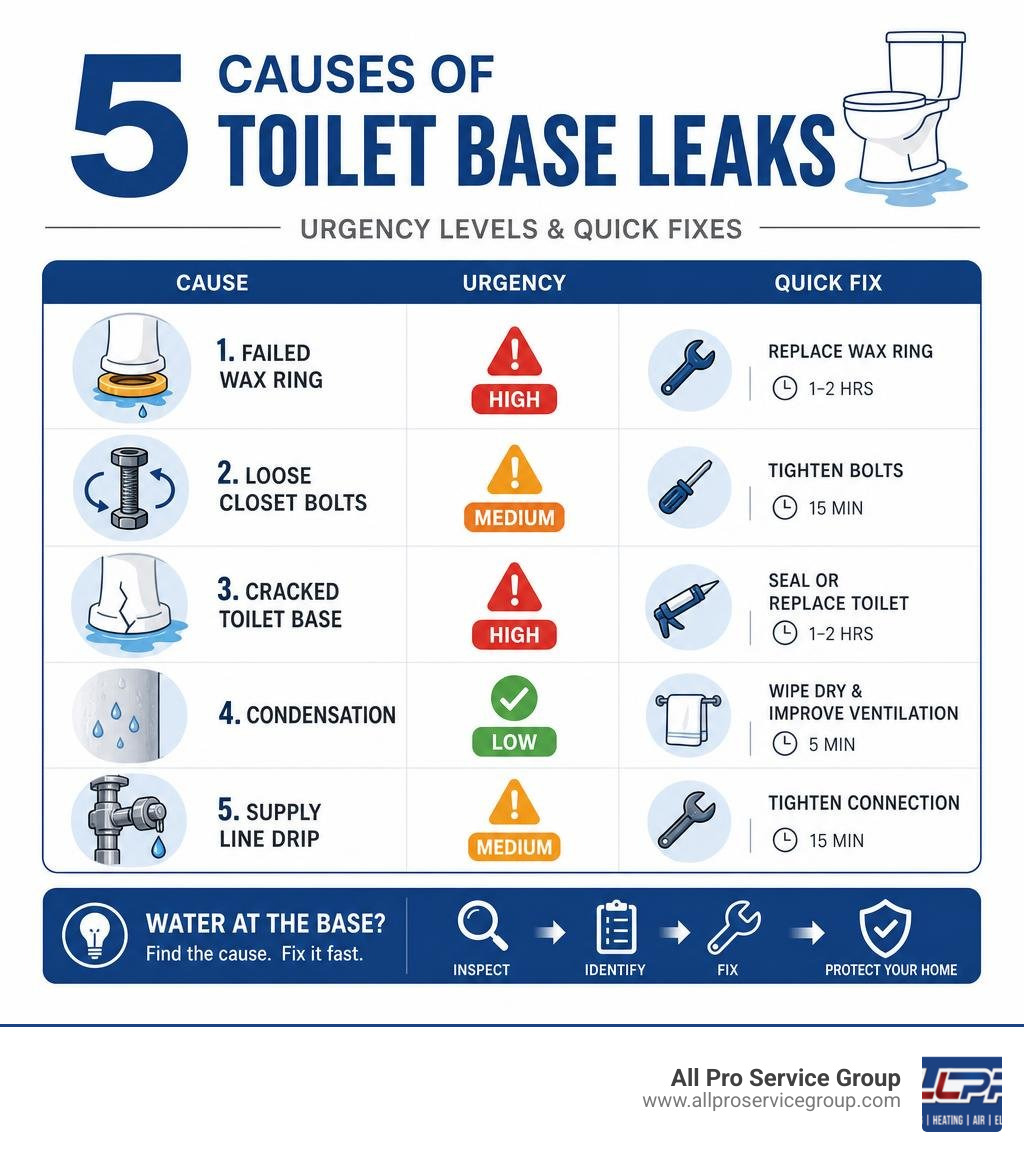
| Most Likely Cause | Quick Sign | Urgency |
|---|---|---|
| Failed wax ring | Water appears only after flushing | High |
| Loose closet bolts | Toilet rocks or wobbles | Medium |
| Cracked toilet base | Visible crack, constant leak | High |
| Condensation | Water appears without flushing | Low |
| Supply line drip | Moisture near shutoff valve | Medium |
Most base leaks come down to one of these five causes. The fix ranges from a simple bolt tighten (15 minutes) to a full wax ring replacement (1–2 hours). We'll walk you through how to tell the difference — and what to do about each one.
Spotting water on your bathroom floor is stressful, especially when you're not sure if it's a quick fix or a sign of something worse. The good news: most commode leaks around the base are diagnosable in under 30 minutes with no special skills.
At All Pro Service Group, our team has diagnosed and repaired hundreds of commode leaking around base cases across the Greater Salt Lake Valley since 2008. In this guide, we'll share exactly what we look for on every service call so you can make a smart, confident decision.
Diagnosing a Commode Leaking Around Base
Before you grab a wrench or call in the professionals, you need to play detective. Water is sneaky. Because gravity rules your bathroom floor, a leak from the top of the tank or a sweating pipe can pool at the bottom, making it look like your commode leaking around base is a failed floor seal when it's actually something else entirely.
To help you pinpoint the exact source of your puddle, we recommend a couple of simple, highly effective tests.
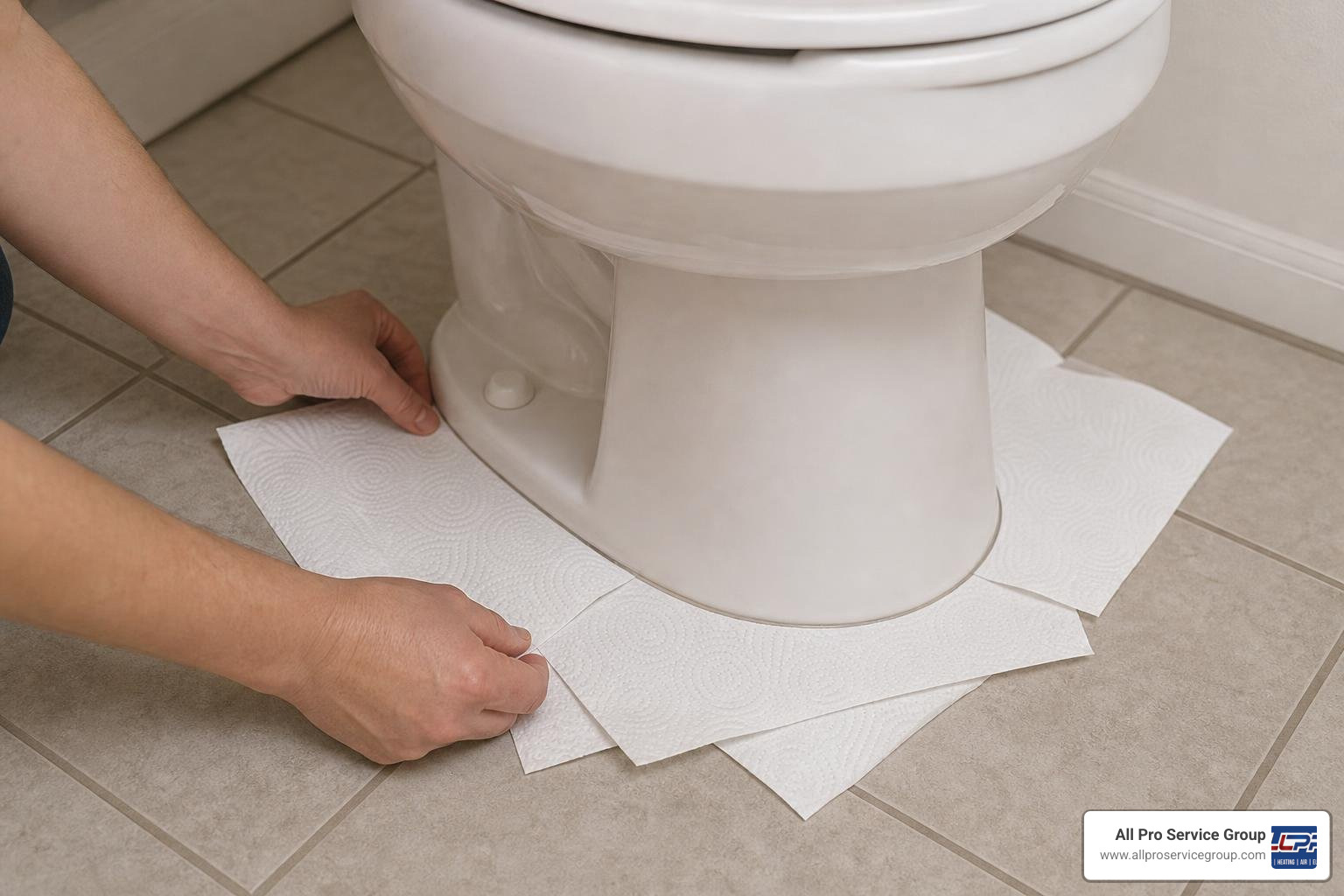
First, try the Paper Towel Test. Thoroughly dry the entire toilet from top to bottom using a towel. Lay fresh, dry paper towels around the base of the bowl, near the water supply line, and directly under the tank. Flush the toilet and watch closely. If water drips from higher up, the paper towels will catch it before it pools on the floor.
If the paper towels remain dry but water still slowly pools at the floor level, try the Food Coloring Test. Add 10 to 15 drops of dark food coloring (blue or red works best) into the toilet tank and another 10 drops into the bowl. Do not flush. Wait about 30 minutes. If colored water begins seeping out onto the floor, you have confirmed that the water is escaping from the internal plumbing connections rather than external condensation. For a deeper look at these diagnostic steps, check out this guide on Toilet Leaking at the Base, How to Tell, Causes & Fixes - Toiletseek.
Is Your Commode Leaking Around Base or Just Condensating?
During hot, humid Utah summers, "tank sweat" is incredibly common. When cold water fills your toilet tank, the warm, humid air in the bathroom condenses on the cold porcelain. This moisture naturally trickles down the back of the toilet and pools at the base.
To rule out condensation, dry the toilet completely and run your bathroom exhaust fan during and after showers to lower the humidity. If the floor stays dry when the bathroom is cool and dry, you are dealing with condensation rather than a plumbing failure. If you want to learn more about managing toilet moisture, our Toilet Repair Complete Guide covers these issues in detail.
Identifying Other Sources: Supply Lines and Tank Cracks
If your tests show that the water is clean and dripping from above, inspect these three main culprits:
- The Shutoff Valve and Supply Line: Feel the metal valve coming out of the wall and the flexible hose connecting it to the toilet. If you feel moisture, the connection nuts may simply need to be snugged up, or the valve itself may need to be rebuilt.
- The Tank-to-Bowl Gasket: If water leaks only when you flush and appears to drip from the space between the tank and the bowl, the large rubber gasket sealing these two pieces together has likely degraded.
- Hairline Cracks: Inspect the porcelain tank and bowl for tiny cracks. A cracked tank will leak constantly, while a cracked bowl may only leak when weight is applied. If you notice a drip coming from the bottom of the tank connection, you might need to look into Changing Toilet Valve components or gaskets.
Common Causes of Toilet Base Leaks
Once you have ruled out condensation and supply line drips, it is time to look at the three primary structural reasons a toilet leaks at its base.
| Cause | Primary Symptom | Best Fix |
|---|---|---|
| Failed Wax Ring | Sewer gas smell, water pools only during/after flushes | Replace wax ring |
| Loose Closet Bolts | Toilet rocks or wobbles when you sit down | Tighten or replace bolts |
| Damaged Flange | Toilet won't tighten down, persistent base leaks | Repair or replace flange |
If you are dealing with a persistent leak, understanding these elements will help you decide if you can tackle the repair yourself. For more technical background on these issues, you can review Fixing a Leaky Commode Base - Yale Files.
Failed Wax Ring Seal
The wax ring is the unsung hero of your bathroom. It sits between the bottom of the toilet bowl (the horn) and the floor flange, creating an airtight and watertight seal. While a high-quality wax ring has an average lifespan of 20 to 30 years, it can fail prematurely if the toilet moves, if the floor settles, or if household temperatures fluctuate wildly.
When a wax ring fails, wastewater escapes onto your floor every time you flush. Worse yet, because the airtight seal is broken, foul-smelling sewer gas can seep into your bathroom. If you suspect your seal has run its course, check out our Toilet Repair Complete Guide 2026 for the latest tips on choosing the right replacement, including modern waxless rubber seals.
Loose or Corroded Closet Bolts
The closet bolts (or tee bolts) are the two brass screws securing your toilet to the floor flange. If these bolts wiggle loose over time, the toilet will rock slightly when you sit down. This subtle rocking motion pinches and deforms the wax ring, quickly destroying the watertight seal.
If the bolts are just loose, tightening them might stop the leak if the wax ring hasn't been completely flattened or damaged yet. However, you must be incredibly gentle. Overtightening these bolts can easily crack the delicate porcelain base of your toilet, turning a simple fix into an expensive replacement.
Damaged Toilet Flange or Subfloor
The toilet flange is the metal or plastic collar secured to your subfloor that connects your toilet to the waste pipe. In older Salt Lake Area homes, cast iron or plastic flanges can crack, corrode, or break over time. If the flange is broken, the closet bolts cannot hold the toilet stable.
Furthermore, if a minor leak has been ignored for months, the escaping water will slowly rot the wooden subfloor surrounding the flange. If your toilet rocks and the floor feels soft or spongy, a simple wax ring replacement won't cut it — the subfloor must be repaired to ensure a stable, safe installation.
Step-by-Step Repair Guide
If you have confirmed that your commode leaking around base is caused by a failed wax ring or loose bolts, you can often complete this intermediate-level repair yourself in under two hours.
How to Fix a Commode Leaking Around Base
Before you begin, gather the necessary tools. You will need:
- A new wax ring (or a modern waxless rubber seal)
- A set of new brass closet bolts and washers
- An adjustable wrench
- A flathead screwdriver and putty knife
- A bucket, sponge, and old towels
- Disinfectant cleaner and heavy-duty rubber gloves
- A hacksaw (in case your old bolts are too corroded to unscrew)
For a visual breakdown of the tools and materials required, refer to the step-by-step instructions provided by How to Fix a Leaking Toilet Base - The Home Depot.
Step 1: Preparation and Toilet Removal
- Shut Off the Water: Turn the water supply valve behind the toilet clockwise until it stops.
- Drain the Toilet: Flush the toilet and hold the lever down to drain as much water as possible from the tank and bowl.
- Remove Remaining Water: Use a sponge or a dry-vac to suck out the remaining water from both the tank and the bottom of the bowl. Leaving water inside will make the toilet heavy and messy to move.
- Disconnect the Supply Line: Unscrew the flexible water line from the fill valve at the bottom of the tank.
- Unbolt the Base: Pry off the plastic bolt caps at the base of the toilet and use your adjustable wrench to remove the nuts from the closet bolts. If the bolts spin or are too corroded to turn, carefully cut them off with a hacksaw.
- Lift the Toilet: Grab the toilet under the bowl (not the tank, which can crack) and rock it gently side to side to break the wax seal. Lift the toilet straight up and place it on an old blanket or a piece of cardboard to protect your bathroom floor.
Step 2: Cleaning and Replacing the Wax Ring
- Plug the Drain: Immediately stuff an old rag into the open drain pipe. This blocks sewer gas from filling your home and prevents tools from falling down the pipe.
- Scrape Away the Old Wax: Use your putty knife to scrape every bit of the old, sticky wax off the bottom of the toilet bowl and the floor flange. Clean the flange thoroughly with a disinfectant cleaner.
- Inspect the Flange: Ensure the flange is intact. If it is cracked or sitting too far below the finished floor level, you may need a flange repair ring or an extra-thick wax seal.
- Install New Closet Bolts: Slide the new tee bolts into the slots on the flange, ensuring they point straight up.
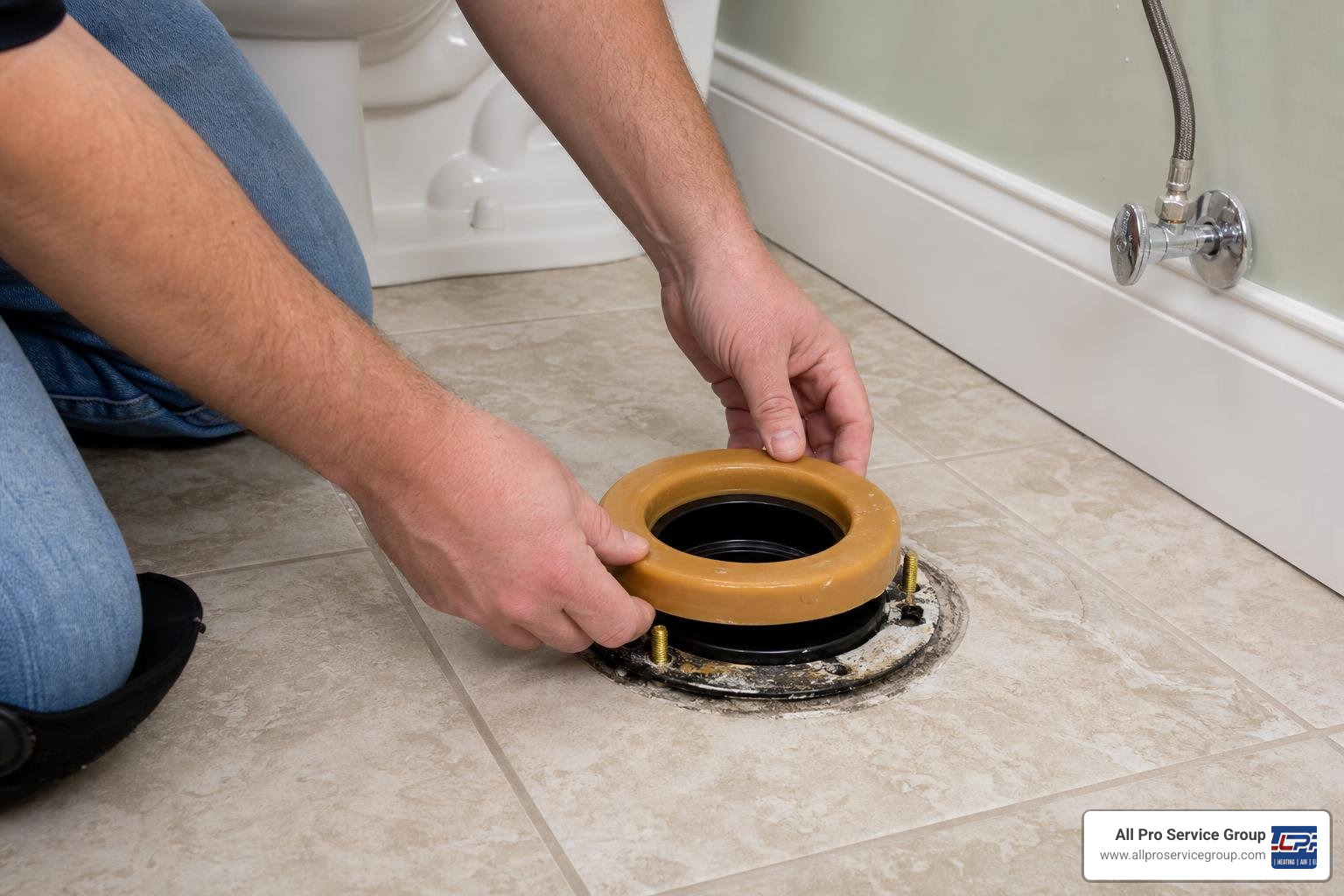
- Set the New Seal: Remove the rag from the drain. Place the new wax ring directly onto the flange, centering it over the opening. Alternatively, you can press the wax ring onto the bottom of the toilet bowl horn before lowering it. If you want to see this process in action, you can watch Anyone Can Fix a Leaky Toilet - YouTube for a helpful visual guide.
Step 3: Reinstalling and Testing the Toilet
- Lower the Toilet: Carefully lift the toilet, align the holes in the base with the upright closet bolts, and lower it straight down onto the new wax ring.
- Compress the Seal: Press down firmly on the center of the bowl with your body weight. You should feel the toilet settle as the wax compresses. Do not rock the toilet once it is set, as this can break the brand-new seal.
- Secure the Bolts: Place the plastic washers and metal nuts onto the bolts. Tighten them hand-tight, then use your wrench to turn them an extra half-turn, alternating between the left and right sides to keep the pressure even. Stop immediately if you feel resistance — overtightening will crack the porcelain base.
- Reconnect and Test: Reconnect the water supply line, turn the water valve back on, and let the tank fill. Flush the toilet several times while watching the base closely for any signs of water.
- Caulk the Base: Apply a bead of silicone caulk around the front and sides of the toilet base to keep bathroom cleaning water from seeping underneath. Crucial Tip: Always leave a small gap in the caulk at the very back of the toilet. If the wax ring ever fails in the future, the escaping water will run out the back, alerting you to the leak immediately rather than trapping the water to rot your subfloor.
The Risks of Ignoring a Leaking Toilet Base
It is easy to look at a tiny puddle of water and think, "I'll get to that next month." However, ignoring a leaking toilet base is a gamble that rarely pays off. Because the water from a toilet flush contains bacteria and organic waste, even a minor leak can quickly turn into a major hazard.
- Subfloor Rot and Structural Damage: If water seeps under your tile, vinyl, or wood flooring, it will saturate the wooden subfloor. Over time, the wood will rot, weaken, and eventually sag. Repairing a rotted subfloor requires removing the toilet, cutting out the damaged wood, and rebuilding the floor structure — a project that costs significantly more than a simple wax ring replacement.
- Toxic Mold Growth: Dark, warm, and constantly damp spaces under a toilet are the perfect breeding ground for mold and mildew. Mold can spread silently beneath your flooring and inside wall cavities, compromising your home's air quality and posing health risks to your family.
- Sewer Gas Exposure: A broken wax seal doesn't just leak water; it also lets sewer gases (including methane and hydrogen sulfide) escape into your living space. These gases carry an unpleasant "rotten egg" smell and can cause headaches, dizziness, and nausea over time.
- High Water Bills: While a base leak itself only wastes water during a flush, it is often accompanied by a running toilet or a faulty fill valve, which can waste hundreds of gallons of water a day.
If you suspect your plumbing system is experiencing wider issues, exploring professional Plumbing services can help protect your home from long-term water damage.
Frequently Asked Questions About Toilet Base Leaks
Can I use silicone caulk to stop a toilet base leak?
No, you should never use silicone caulk to "seal up" an active leak at the base of your toilet. Caulk is designed to keep external water (like mop water or shower splashes) from getting under the toilet. If your wax ring is leaking, caulking the base will simply trap the dirty wastewater underneath the porcelain. Instead of drying out, the trapped water will soak directly into your subfloor, accelerating wood rot and mold growth out of sight. The only real solution is to replace the wax ring.
How long does a standard toilet wax ring last?
A standard wax ring can easily last 20 to 30 years under normal conditions. Because wax doesn't degrade or dry out easily when sealed, it is incredibly durable. However, its lifespan is cut short if the toilet moves or rocks, which breaks the airtight seal. If your bathroom floor is uneven or the closet bolts loosen, the wax ring can fail in a matter of months.
When should I call a professional plumber instead of DIY?
While replacing a wax ring is a manageable project for many homeowners, you should call a professional plumber if:
- The toilet flange is cracked, corroded, or broken.
- The subfloor around the toilet feels soft, spongy, or is visibly rotted.
- The toilet base itself is cracked (the entire toilet must be replaced).
- You are uncomfortable lifting a heavy, awkward 80-pound porcelain fixture.
- The leak persists even after you have successfully replaced the wax ring.
Conclusion
A commode leaking around base is a common household nuisance, but it doesn't have to turn into a plumbing disaster. By acting quickly, diagnosing the source of the moisture, and replacing a worn-out wax ring or tightening loose bolts, you can protect your bathroom floor and keep your home safe and sanitary.
If you are located in the Greater Salt Lake Area — including Salt Lake City, West Valley City, South Jordan, West Jordan, Provo, Park City, or Ogden — and you would prefer to leave this messy job to the experts, All Pro Service Group is here to help. Since 2008, our team of trained, Gephardt Approved experts has provided dependable plumbing repair, replacement, and inspection services.
Don't let a small puddle turn into an expensive floor repair. Contact us today to Schedule Plumbing Repair Services and enjoy the peace of mind that comes with a dry, stable, and professionally sealed bathroom.