Why Finding the Best Way to Fix a Copper Pipe Leak Can Save Your Home
The best way to fix copper pipe leak damage depends on the size of the leak, your pipe's condition, and whether you need a quick patch or a lasting repair. Here's a fast answer:
Quick Answer: Best Copper Pipe Leak Fixes
| Situation | Best Fix | Permanent? |
|---|---|---|
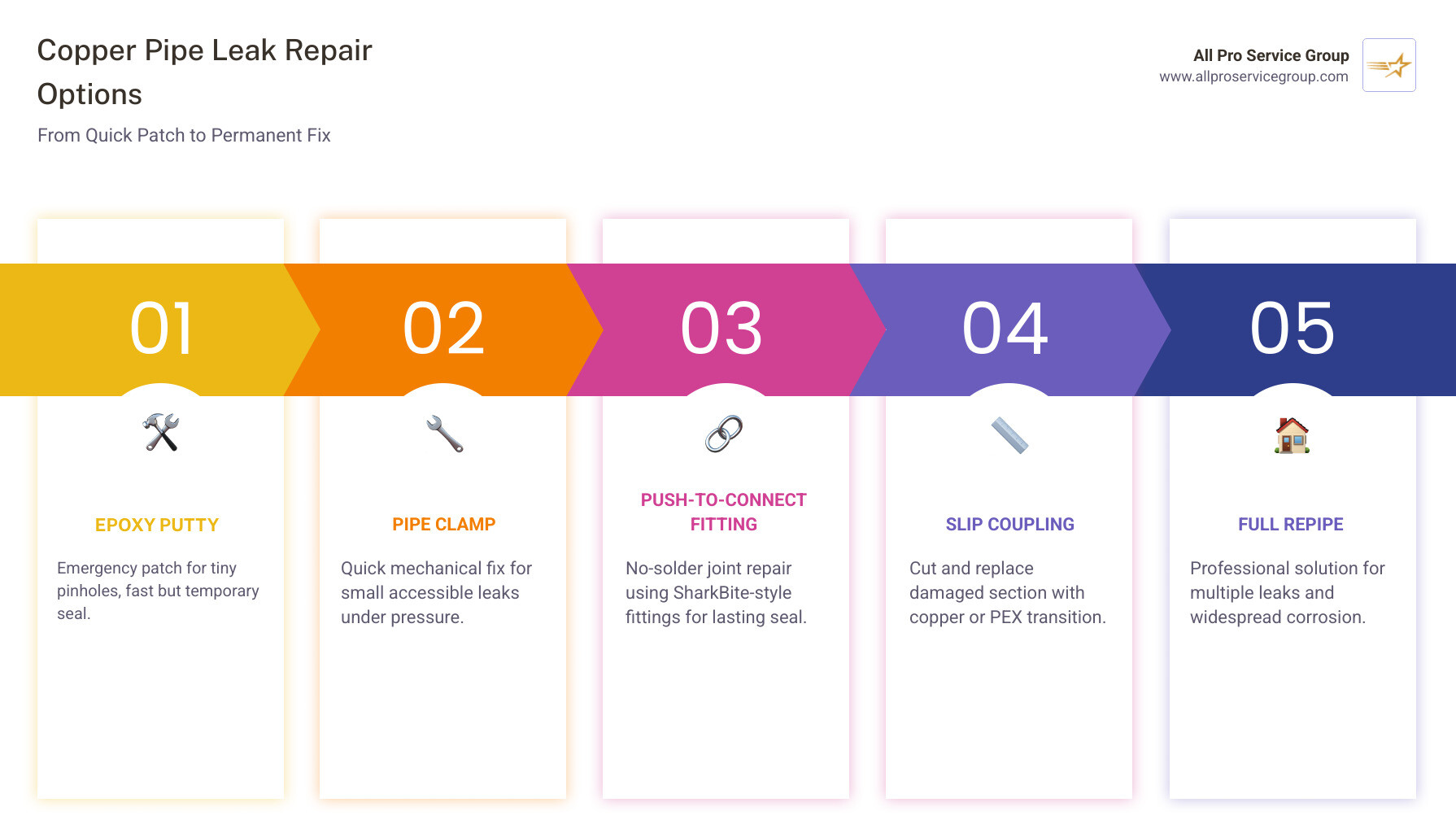
| Tiny pinhole, emergency | Epoxy putty or pipe clamp | No |
| Joint leak, no torch | Push-to-connect fitting (e.g. SharkBite) | Yes |
| Accessible damaged section | Cut out and replace with PEX or copper + slip coupling | Yes |
| Long corroded section | Solder with repair sleeve | Yes |
| Multiple leaks throughout home | Full repipe | Yes |
Few sounds stop a homeowner cold like the hiss of water spraying from a pipe or the steady drip echoing behind a wall. Copper pipes can last up to 70 years under ideal conditions — but pinhole leaks from corrosion, high water pressure, or poor installation can show up long before that.
The good news? Many copper pipe leaks are fixable without calling a plumber. Others need professional attention before they become a flooded room or a mold problem.
This guide walks you through every repair option — from a 5-minute emergency patch to a code-approved permanent fix — so you know exactly what to do when a leak appears.
At All Pro Service Group, our team has spent years diagnosing and repairing copper plumbing across the Greater Salt Lake Valley — making us well-versed in the best way to fix a copper pipe leak for homes of every age and condition. Whether it's a simple pinhole or a corroded section behind drywall, the right repair approach makes all the difference between a lasting fix and a recurring headache.
Identifying the Source and Cause of Your Copper Pipe Leak
Before you grab your toolbox, you need to understand what you’re dealing with. Copper is a durable material, but it isn't invincible. In the Greater Salt Lake area, we often see leaks triggered by local water conditions or aging infrastructure.
Identifying the leak is the first step in Plumbing Leak Detection & Repair. Often, a leak isn't a "burst" but a slow, silent failure known as pitting corrosion. This happens when the protective lining inside the pipe breaks down, leading to tiny, needle-sized holes.
Signs of an Undetected Leak
Sometimes the best way to fix copper pipe leak issues is to find them before they cause a flood. Keep an ear and nose out for these red flags:
- Musty Smells: If a room smells like a damp basement, water is likely collecting behind a wall.
- Spiking Bills: An unexplained jump in your monthly water utility bill is a classic sign of a hidden leak.
- Dripping Sounds: Even if you can't see the water, the sound of rhythmic tapping inside a wall cavity is a call for Plumbing Repair.
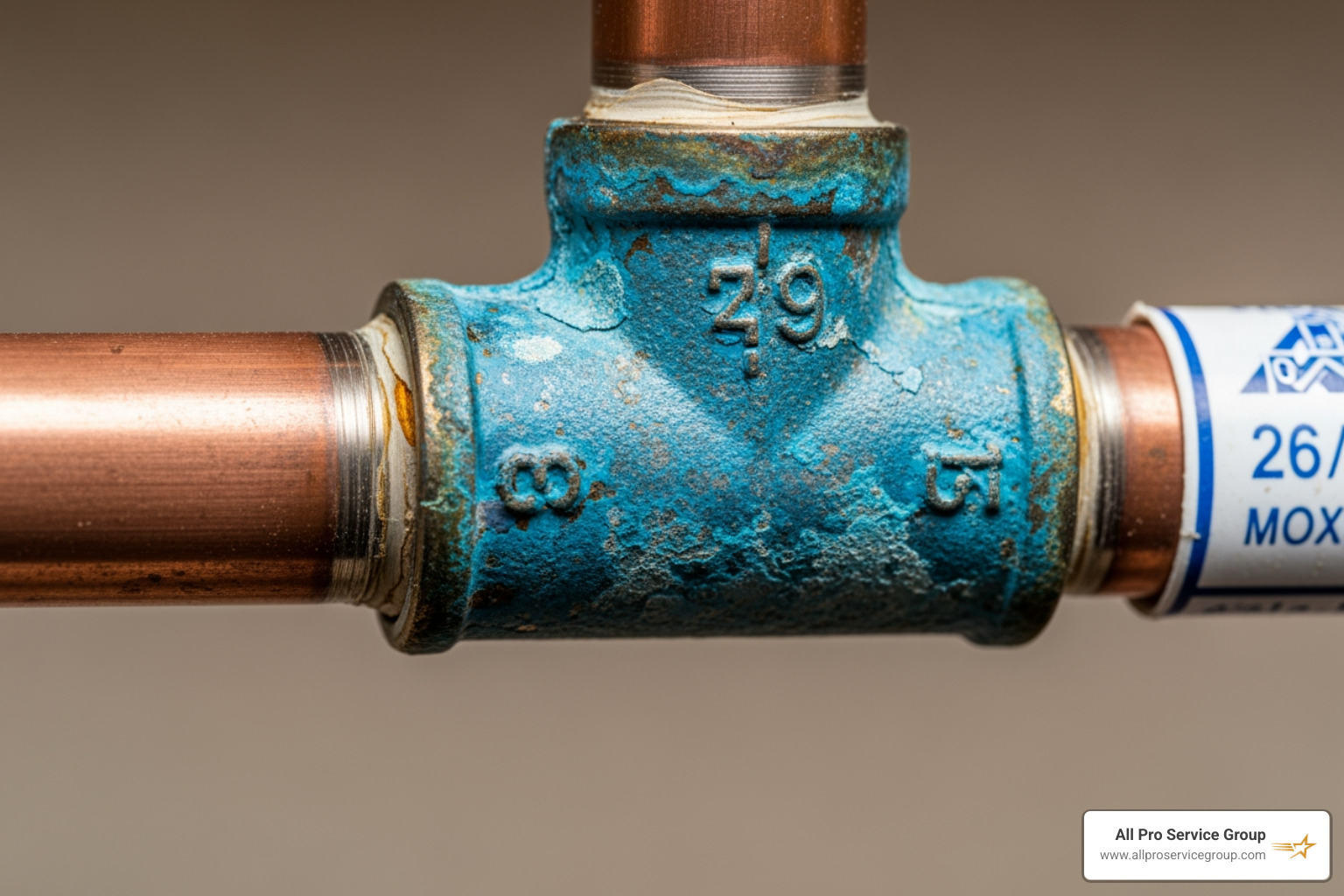
- Discoloration: Look for blue-green stains on the pipe itself (oxidation) or water stains on your ceiling.
Common Causes of Pinhole Leaks
Why do these leaks happen? Several factors are usually at play:
- pH Levels: Water with a pH below 7.0 is acidic and will slowly eat away at copper.
- Chlorine Corrosion: High levels of chlorine in municipal water can act as an oxidizing agent.
- Sediment Buildup: Tiny particles can settle in horizontal pipes, creating "hot spots" for corrosion.
- Water Hammer: High water velocity and sudden pressure shifts can rattle pipes, weakening joints over time. If you want to learn more about the structural side of these issues, check out How to Fix a Cracked Copper Pipe Without Replacing It | (2026).
The Best Way to Fix Copper Pipe Leak: Temporary vs. Permanent
When you find water spraying in your basement, your priority is stopping the flow. However, there is a massive difference between a "right now" fix and a "forever" fix.
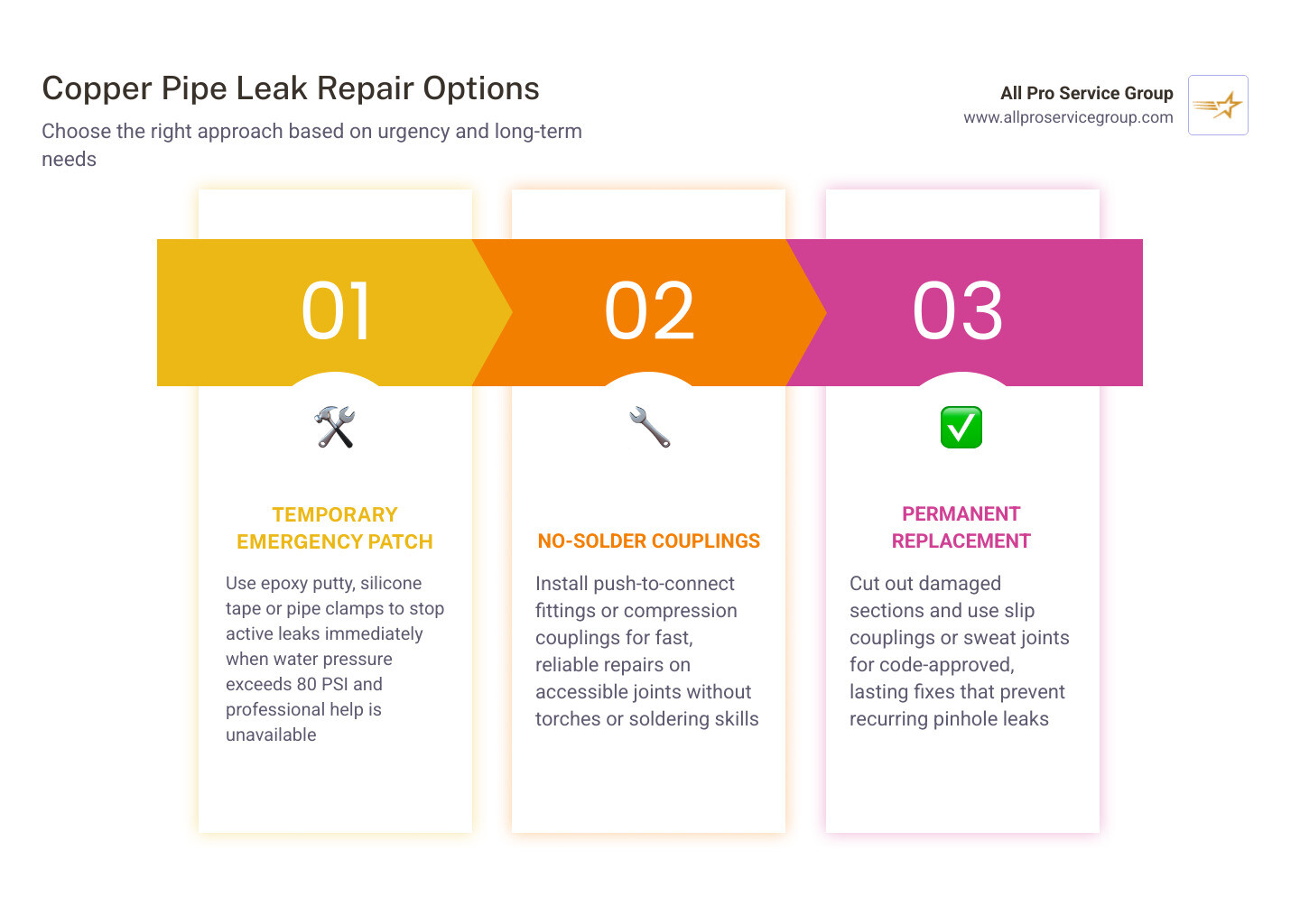
Using a temporary patch on a high-pressure line is risky. Water pressure above 80 PSI significantly increases the risk of erosion, and a weak patch can fail spectacularly while you're at work. For a deep dive into different scenarios, see our guide on the Best Way to Stop a Leaking Pipe.
Temporary Emergency Patches
If you need to stop the water today but can't perform a full repair, these are your best bets:
- Epoxy Putty: A two-part putty you knead and press over the leak. It hardens into a plastic-like seal.
- Silicone Tape: Self-fusing tape that creates a watertight wrap when stretched tightly around the pipe.
- Pipe Clamps: A rubber gasket held in place by a metal sleeve and bolts.
For a step-by-step on these kits, How to Use Copper Pipe Hole Repair Kit | 6 Easy Steps (2026) is an excellent resource. Just remember: these are not code-approved for permanent use and can lead to recurring leaks if left for months.
Permanent Professional Solutions
A permanent fix involves restoring the integrity of the pipe. This usually means:
- Sweat Couplings: The traditional method of soldering a new copper fitting.
- Slip Couplings: A specialized fitting that slides over the pipe ends to bridge a gap where a section was removed.
- PEX Transition: Replacing a damaged section with flexible PEX pipe and push-to-connect fittings.
For a long-term strategy, refer to our Water Line Repair Complete Guide or our specific Water Line Repair service page.
Top No-Solder Methods for Copper Pipe Repair
Not everyone is comfortable wielding a propane torch in a tight crawlspace. Fortunately, modern technology has given us the best way to fix copper pipe leak issues without a single spark. These mechanical fixes are reliable and, in many cases, code-approved for permanent installation.
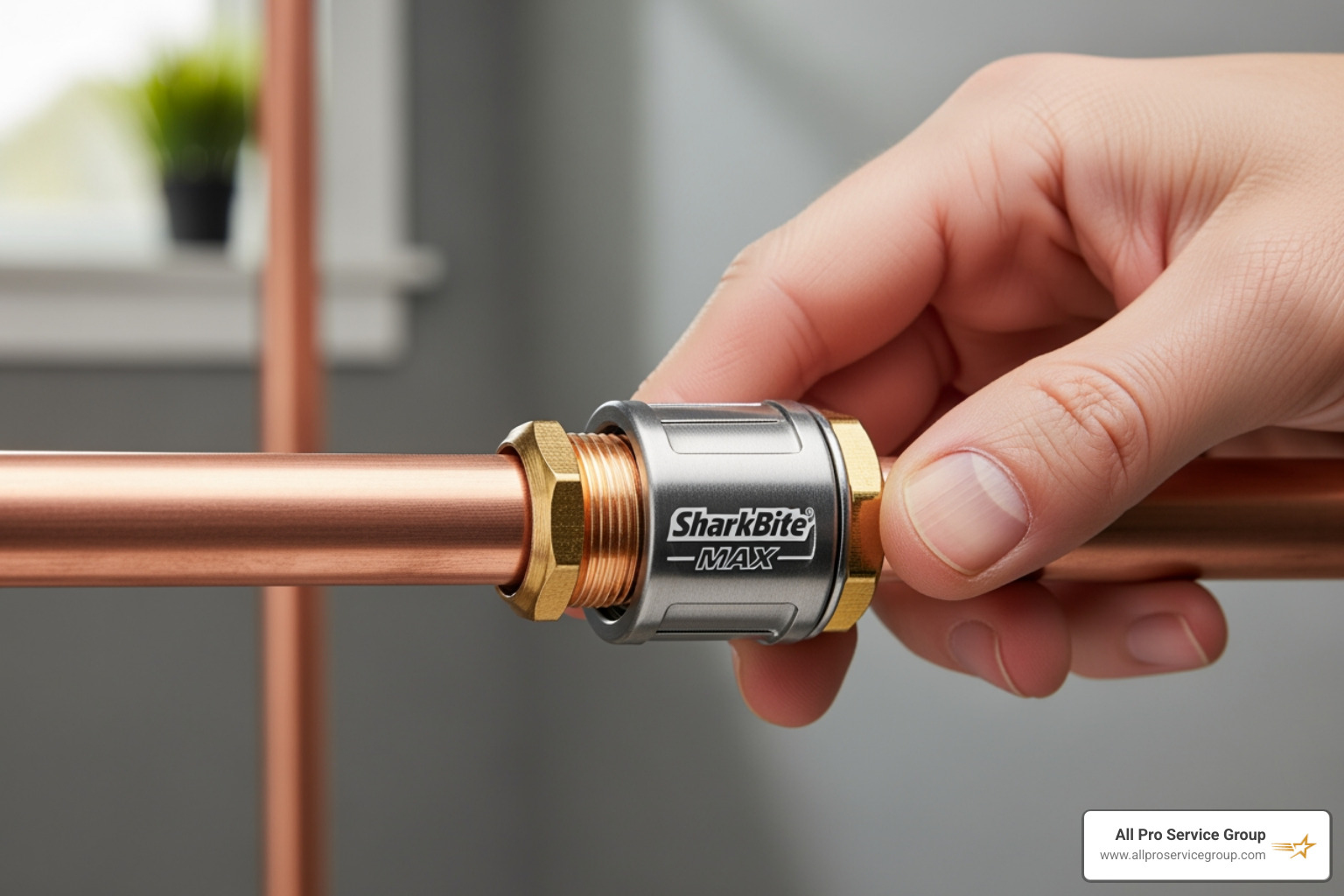
Best way to fix copper pipe leak with Push-to-Connect Fittings
Push-to-connect fittings (like SharkBite Max) are the gold standard for DIYers. They use a "grab ring" and an O-ring to create a seal.
- Cut and Clean: Use a pipe cutter for a square cut.
- Deburr: This is the most important step. Use a deburring tool to smooth the inside and outside of the pipe. If you don't, the sharp edges can slice the O-ring, causing a leak later.
- Mark and Push: Mark the required insertion depth on the pipe and push the fitting until it reaches that line.
These are perfect for transitioning to PEX-a pipe if you are dealing with a long section of damage. You can find more details on these methods in 4 Ways to Fix a Leaky Copper Joint Without Solder or our general Plumbing overview.
Using Compression Couplings for Joint Leaks
Compression fittings use a brass nut and a "ferrule" (a small metal ring) to create a mechanical seal. When you tighten the retainer nuts with a wrench, the ferrule is squeezed against the pipe. These are great for beginners because they require only basic hand tools, but they must be tightened perfectly—too loose and they leak; too tight and you can crush the pipe.
Step-by-Step Guide to Replacing a Damaged Pipe Section
When a pipe is severely corroded or has a long split from freezing, a patch won't cut it. You need to cut out the bad part and put in the new. This is often the best way to fix copper pipe leak damage permanently.
Preparation and Safety Precautions
Before you start:
- Shut off the water: Find your main shutoff valve and turn it off.
- Drain the lines: Open the lowest faucet in the house to let the water out.
- Safety Gear: Wear protective gloves and safety glasses.
- Electrical Check: If the leak is near an outlet or electrical panel, turn off the power to that area.
Best way to fix copper pipe leak using a Slip Coupling
A slip coupling (also called a repair coupling) doesn't have an internal "stop," allowing it to slide fully onto one pipe so you can align the replacement section.
- Measure and Cut: Use a tube cutter to remove the damaged section, extending at least an inch past the visible damage.
- Clean: Use an emery cloth or wire brush to scrub the pipe ends and the inside of the coupling until they shine like a new penny.
- Flux: Apply a thin layer of plumbing flux to the pipe and the inside of the fitting.
- Solder: Heat the fitting with a propane torch. Once the flux bubbles, touch lead-free solder to the joint. The "capillary action" will pull the solder into the joint.
For a visual guide on this project, How to Repair Long Sections of a Leaking Copper Pipe | Family Handyman provides a great step-by-step breakdown.
Preventing Future Corrosion and Pinhole Leaks
Fixing a leak is great, but preventing the next ten is better. If your home was built decades ago, your copper might be reaching its limit.
Managing Water Chemistry
If you have acidic water (blue-green stains in your tub are a giveaway), consider a neutralizer system to raise the pH. Carbon filters can remove chlorine, which protects the copper from oxidizing. If you have gas appliances nearby, keep in mind that Gas Line Plumbing Complete Guide principles often overlap regarding safety and system integrity.
Managing Water Pressure
High pressure is a silent killer for copper.
- The Ideal Range: Your home should be between 40-60 PSI.
- The Danger Zone: Anything over 80 PSI is asking for trouble.
- The Fix: Install a pressure-reducing valve (PRV) if your pressure is too high. This one step can double the remaining life of your plumbing. For more tips on this, The ULTIMATE Leaky Copper Pipe Fix Guide | GOT2LEARN has some fantastic professional insights.
Frequently Asked Questions about Copper Pipe Repair
When should I call a professional plumber?
While DIY is great, you should call All Pro Service Group if:
- You have severe corrosion throughout the system.
- The leak is in an inaccessible location like a slab or deep inside a structural wall.
- You have a main line burst that threatens to flood your foundation.
Can I use PEX to fix a copper pipe?
Yes! Using PEX to replace a section of copper is a very common and effective repair. You just need the correct transition fittings (like push-to-connect or specialized crimp adapters). PEX is naturally resistant to the corrosion that kills copper, making it a great long-term fix.
Is epoxy putty a permanent fix?
No. While it can last for a surprisingly long time, epoxy putty is not a code-approved permanent repair. It can eventually pull away from the pipe due to thermal expansion (the pipe growing and shrinking as hot and cold water move through it), leading to recurring leaks.
Conclusion
The best way to fix copper pipe leak issues is to address them early and use the right tool for the job. Whether you're using a SharkBite for a quick joint fix or soldering a slip coupling for a permanent repair, taking action now prevents thousands of dollars in water damage later.
If you're in the Greater Salt Lake Area—from Ogden down to Provo—and you're facing a plumbing mystery you can't solve, we're here to help. All Pro Service Group has been "Gephardt Approved" and serving our community since 2008. We provide professional inspections and dependable repairs to keep your home dry and safe.
Don't let a small drip turn into a big disaster. For expert help, visit our Water Line Repair page and schedule an inspection today!