Why Every Salt Lake Homeowner Should Know About Tankless Water Heaters
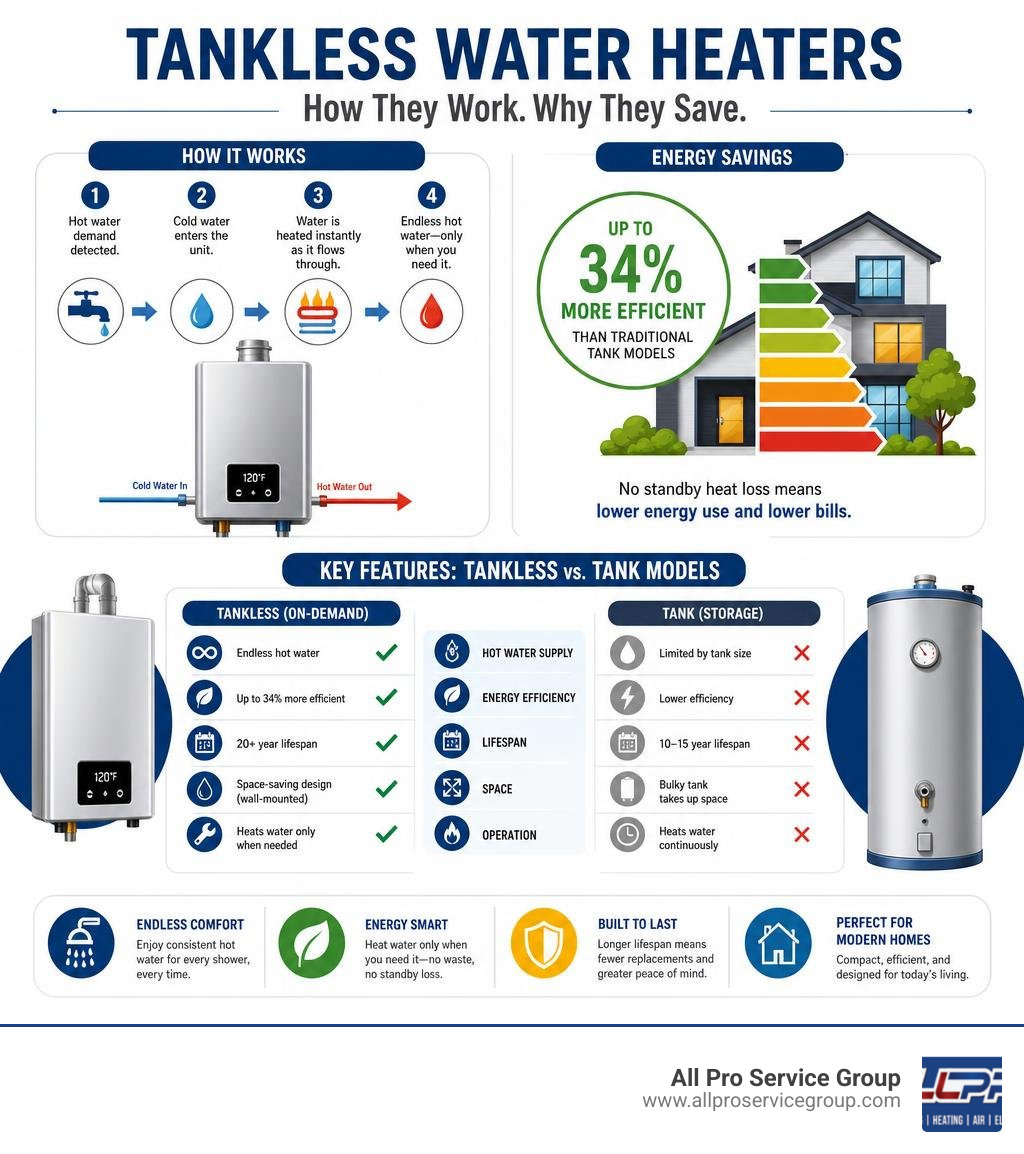
A tankless water heater heats water instantly — only when you need it — instead of storing hot water in a tank around the clock. Here's a quick summary:
| Feature | Tankless Water Heater |
|---|---|
| How it works | Heats water on demand using a gas burner or electric element |
| Energy savings | Up to 34% more efficient than traditional tank models |
| Hot water supply | Endless — no tank to run out of |
| Lifespan | 20+ years (vs. 10-15 for tank models) |
| Flow rate | Typically 2 to 5 GPM depending on model |
| Best for | Homes wanting lower energy bills and continuous hot water |
Traditional tank water heaters keep 30 to 80 gallons of water hot all day — even when nobody's home. That constant reheating wastes energy and money. A tankless system only fires up when you turn on the tap.
For homeowners across the Wasatch Front, this matters even more. Salt Lake's hard water, high altitude, and cold winters add extra stress to water heating systems. When a tank heater fails, it often fails suddenly — leaving you with cold showers and an urgent repair bill.
Understanding your options before that happens puts you in a much better position.
At All Pro Service Group, we've been installing and servicing tankless water heaters across the Greater Salt Lake Valley since 2008. In that time, we've seen how the right unit — properly sized and installed — can transform a home's hot water reliability and cut monthly energy costs. Let's walk through everything you need to know.
How On-Demand Water Heating Systems Work
To understand why a tankless water heater is so efficient, we have to look at what happens behind its sleek metal cover. Unlike traditional systems that continuously preheat dozens of gallons of water, an on-demand system remains completely idle until you turn on a hot water tap.
Here is the step-by-step process of how these smart machines work:
- Flow Detection: When you turn on a hot water faucet, cold water enters the unit. A highly sensitive internal flow sensor detects this movement and instantly tells the computer brain of the unit to start heating.
- Ignition or Activation: For gas models, a burner ignites. For electric models, heavy-duty heating elements power up.
- Heat Transfer: The cold water travels through a winding path inside a heat exchanger. The heat exchanger absorbs the extreme heat from the burner or elements and transfers it directly to the flowing water.
- Delivery: The water exits the unit at your desired temperature and flows straight to your shower, sink, or washing machine.
- Shutdown: The moment you turn off the faucet, the flow sensor detects that the water has stopped moving. The system immediately shuts off the burner or heating elements, returning to a standby state.
By only heating water when you are actively using it, you completely eliminate standby energy loss. Standby loss is the heat that escapes through the walls of a traditional tank, forcing the system to turn back on and reheat the exact same water over and over again while you are sleeping or at work.
Understanding How a Tankless Water Heater Can Help Your Home starts with recognizing the materials used inside these systems. Most high-quality units feature primary heat exchangers made of commercial-grade copper, which transfers heat up to 25 times faster than stainless steel. Some advanced models also include a secondary heat exchanger made of durable 316L stainless steel to capture extra heat from exhaust gases before they leave the home, maximizing energy efficiency.
While these systems are outstanding for most households, they are not the only energy-efficient option on the market. If you are comparing different technologies, you might also want to read our Heat Pump Water Heater Guide 2026 to see how hybrid systems compare to on-demand models.
| Feature Comparison | Traditional Storage Tank | Tankless (On-Demand) |
|---|---|---|
| Energy Efficiency (UEF) | Typically 0.60 to 0.70 | 0.80 to 0.95+ |
| Standby Energy Loss | Yes (constantly loses heat) | No (only heats when active) |
| Physical Footprint | Large (takes up ~16 sq. ft. of floor space) | Small (compact, wall-mounted) |
| Average Lifespan | 10 to 15 years | 20+ years |
| Water Supply | Limited to tank capacity (30-80 gallons) | Endless continuous stream |
Sizing and Siting Your Tankless Water Heater
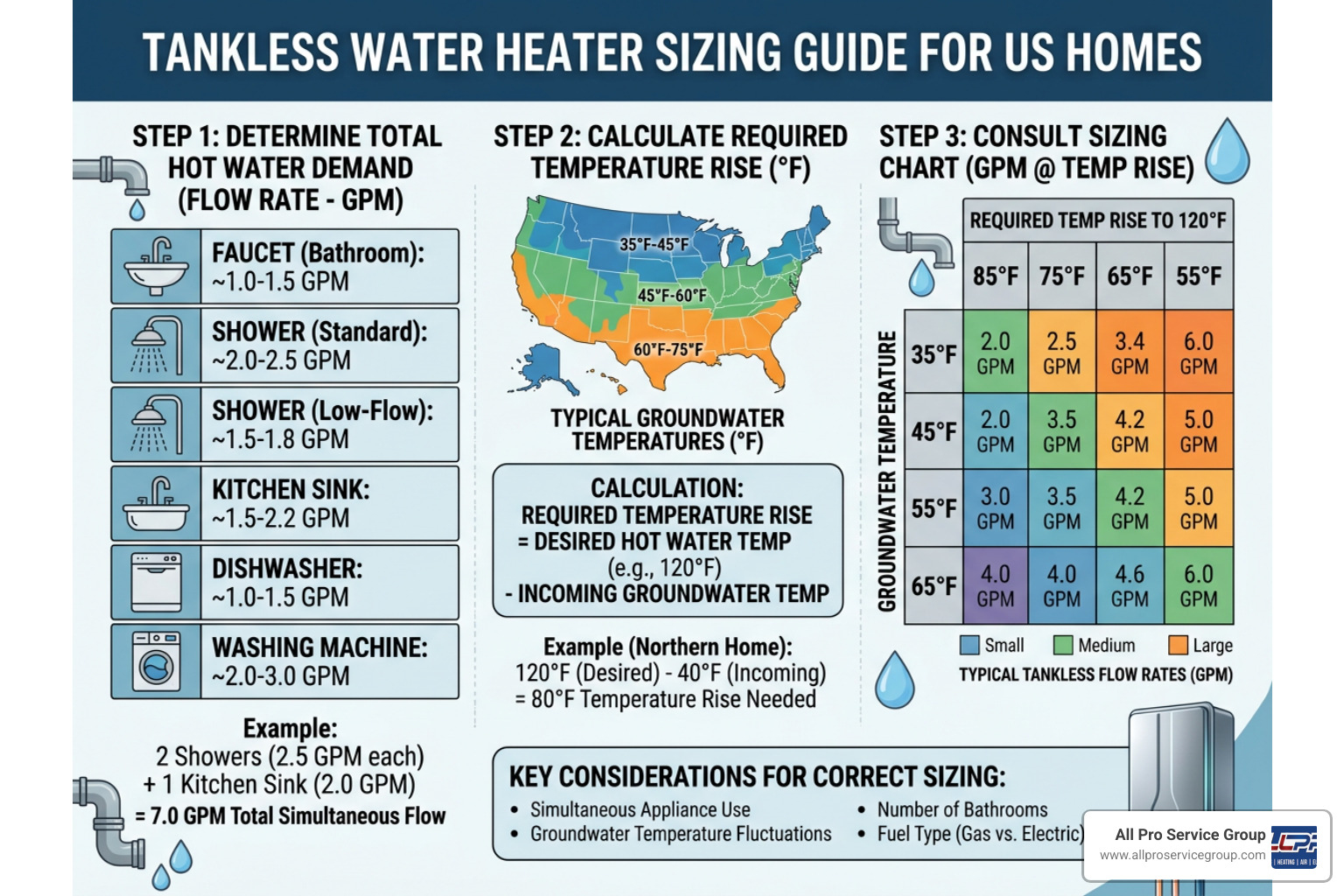
A tankless water heater is not a "one-size-fits-all" appliance. If you choose a unit that is too small, you will experience frustrating temperature drops when multiple people try to use hot water at the same time. Sizing a tankless system requires calculating two critical factors: flow rate and temperature rise.
- Flow Rate (GPM):
This is the total volume of hot water you expect to use at any single moment, measured in Gallons Per Minute (GPM). To calculate your peak demand, add up the GPM of the fixtures you might run simultaneously:
- Low-flow showerhead: 1.5 to 2.0 GPM
- Standard bathroom faucet: 0.5 to 1.5 GPM
- Kitchen sink faucet: 1.0 to 2.2 GPM
- Dishwasher or washing machine: 1.0 to 2.0 GPM
- Temperature Rise: This is the difference between your desired output temperature (usually 120°F) and the temperature of the cold groundwater entering your home.
In Utah, groundwater temperatures drop significantly during our cold winters, often falling below 40°F. This means your system must achieve a massive temperature rise of 80°F or more to deliver comfortable hot water. Because the incoming water is so cold, a unit that delivers 8.0 GPM in a warm climate like Florida might only deliver 4.5 to 5.4 GPM in Utah.
Sizing a Gas Tankless Water Heater
Gas-fired tankless water heaters are incredibly popular because they generate the high BTU (British Thermal Unit) outputs required to handle cold Utah winters. These systems are available in both natural gas and liquid propane configurations.
When shopping for a gas system, you will choose between condensing and non-condensing models:
- Condensing Models: These units capture extra heat from the exhaust gases using a secondary stainless steel heat exchanger, achieving incredible efficiency ratings of up to 0.95 UEF. Because the exhaust is cooler, they can be vented using affordable, easy-to-install PVC or CPVC pipes.
- Non-Condensing Models: These systems vent hot exhaust gases directly out of the home. Because the exhaust is so hot, they require specialized stainless steel venting (Category III) and operate at slightly lower efficiencies (around 0.81 UEF).
Excellent examples of high-performance condensing units include the ProLine® XE Indoor 180,000 BTU Condensing Natural Gas Tankless Water Heater, as well as the Ultra-Low NOx Indoor 180,000 BTU Condensing Propane Tankless Water Heater and its natural gas counterpart, the Ultra-Low NOx Indoor 180,000 BTU Condensing Natural Gas Tankless Water Heater. These condensing models are ENERGY STAR certified and perfect for larger homes with high hot water demands.
If you have a smaller home or want a non-condensing option, you might consider the heavy-duty Ultra-Low NOx Indoor 190,000 BTU Non-Condensing Natural Gas/Liquid Propane Tankless Water Heater or the compact Ultra-Low NOx Indoor 140,000 BTU Non-Condensing Natural Gas/Liquid Propane Tankless Water Heater, which is ideal for apartments, cabins, or single-bath homes in colder climates.
Sizing an Electric Tankless Water Heater
Electric tankless units are exceptionally clean and quiet, but they require a massive amount of electrical power. If you choose a whole-home electric model, you must ensure your home's main electrical panel can handle the amperage draw.
For example, a high-capacity unit like the Plus 208/220/240-Volt 27 Kw 4.5 GPM Wi-Fi Enabled Smart Electric Tankless Water Heater requires three separate 40-amp double-pole breakers and heavy 8 AWG wiring. If your home only has a 100-amp or 150-amp main service panel, you will likely need an electrical service upgrade to run a whole-home electric unit.
However, electric models are fantastic as point-of-use systems. If you have a remote bathroom, a new home addition, or a workshop that takes forever to get hot water from the main house, installing a Mini Electric Tankless Water Heater under the sink is a highly efficient, affordable solution that provides instant hot water without modifying your entire plumbing system.
Indoor vs. Outdoor and Portable Options
Where you site your water heater depends heavily on your local climate. In warm southern states, outdoor tankless water heaters are incredibly common because they save valuable indoor space and require no indoor exhaust venting.
However, in Northern Utah locations like Park City, Ogden, and Salt Lake City, outdoor installations are generally not recommended due to our freezing winter temperatures and sub-20°F inversion cycles. If an outdoor unit is installed in Utah, it must have robust, built-in freeze protection and heat-tracing cables to prevent the heat exchanger from cracking.
For indoor installations, modern tankless units offer incredible space savings. While a traditional tank takes up about 16 square feet of valuable floor space, a tankless unit mounts directly to the wall, freeing up room for water softeners or storage. To prevent freezing through the exhaust vent during freezing weather, we install indoor units with specialized backdraft venting dampers that seal shut when the unit is not firing.
For camping, washing muddy pets outside, or rinsing off horse gear with warm water, portable outdoor tankless heaters are also available. These portable units run on small propane tanks and attach to a standard garden hose, providing warm comfort wherever you are.
Installation Requirements and Local Utah Considerations
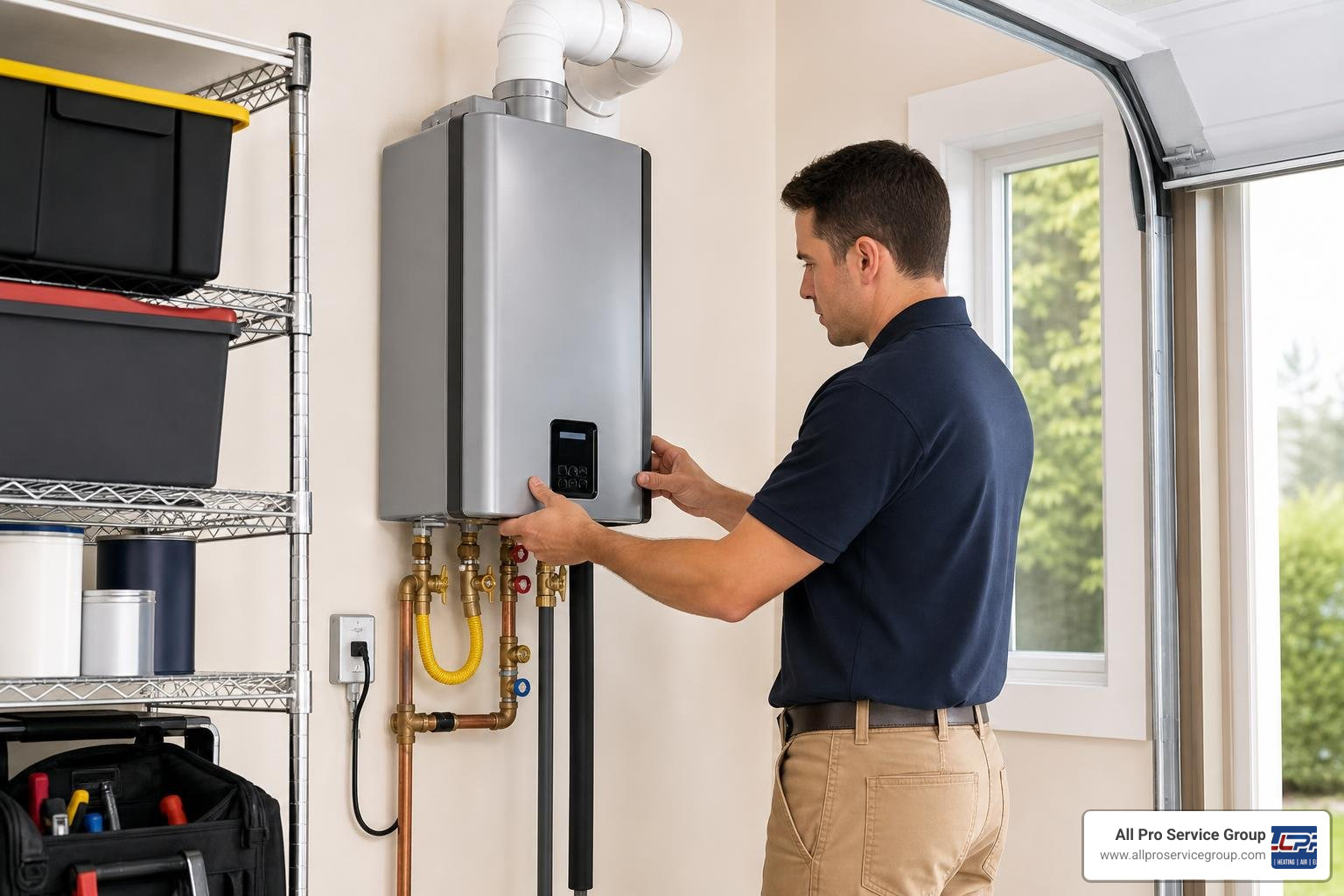
Installing a tankless water heater is a complex job that requires licensed expertise. It is not a simple swap like replacing an old tank heater with a new one. There are several strict infrastructural requirements and local Utah safety codes that must be followed.
If you are planning an upgrade, read our comprehensive Water Heater Install Guide to understand the full scope of the project. Here are the primary installation challenges we address:
- Gas Supply Line Upgrades: Traditional tank heaters use a relatively small gas line (usually 1/2-inch) because they heat water slowly over time. Tankless units, however, require a massive burst of energy to heat water instantly. A tankless unit can require up to 190,000 BTUs of gas, meaning we often need to upgrade your gas supply line to a larger 3/4-inch pipe to ensure adequate fuel flow.
- Venting Options: Gas units must vent combustion byproducts safely out of your home. Condensing models can vent directly through a side wall using affordable PVC, while non-condensing units require high-temperature stainless steel pipes routed through the roof or a dedicated exterior wall.
- High-Altitude Derating: The air is thinner along the Wasatch Front. Salt Lake City sits at over 4,200 feet, and Park City is well over 6,000 feet. Because there is less oxygen in the air, gas burners can burn inefficiently, resulting in dangerous soot buildup. Our certified technicians must manually adjust the gas-to-oxygen mixture and "derate" the unit to match our local altitude.
- Seismic Strapping: Utah is active earthquake country. Per Utah residential plumbing code P2801.8, all water heaters must be securely strapped to the wall studs to resist lateral movement and prevent gas leaks or water damage during a seismic event.
- Mechanical Permits: Swapping to a tankless system requires a Mechanical Permit from your local building services department (such as Salt Lake City Building Services). This ensures your system is inspected and fully compliant with safety codes.
When you are ready to make the switch, we highly recommend scheduling a professional Water Heater Installation with our certified team to ensure every local code and safety parameter is met perfectly.
Maintenance and Longevity of On-Demand Systems
A tankless water heater can easily last more than 20 years — roughly double the lifespan of a traditional tank. However, achieving this impressive longevity depends entirely on regular maintenance, especially here in Utah.
The biggest threat to a tankless unit in our region is hard water. The water across the Greater Salt Lake Valley is highly mineralized, often measuring around 117.5 PPM (parts per million) of water hardness.
When hard water is heated inside the tiny, narrow channels of a copper heat exchanger, calcium and magnesium minerals bake out of the water and stick to the metal walls. Over time, this scale buildup forms an insulating barrier. The burner has to run hotter and work harder to heat the water through the scale, which degrades the heat exchanger and can cause the system to shut down due to overheating.
To protect your system and keep your warranty valid, you must perform an annual flush and descale:
- Isolate the Unit: Close the hot and cold isolation valves to disconnect the water heater from your home's plumbing.
- Connect a Pump Kit: Attach specialized service hoses to the unit's built-in maintenance valves. Hook one hose to a small submersible pump placed in a bucket, and the other hose to return water to the bucket.
- Circulate Descaler: Fill the bucket with food-grade virgin white vinegar or a specialized non-toxic descaling solution. Run the pump to circulate the solution through the heat exchanger for 45 to 60 minutes to dissolve all mineral scale.
- Flush and Clean: Flush the unit with clean tap water to remove any remaining descaler, clean the internal inline water filter screen, disconnect the hoses, and reopen the main water valves.
For detailed instructions and tips on keeping your system running smoothly, check out our guide on AO Smith Water Heater Maintenance. If you ever experience system errors, lukewarm water, or strange noises, do not hesitate to contact our team for professional Water Heater Repair. We also provide specialized AO Smith Hot Water Heater Repair to keep your high-efficiency systems running at peak performance.
Whether you are in Salt Lake City, West Valley City, South Jordan, West Jordan, Provo, Park City, or Ogden, our team at All Pro Service Group is ready to help with all your maintenance and repair needs.
Frequently Asked Questions
How much money can you save with an on-demand system?
Because they completely eliminate standby energy loss, tankless systems can reduce your water heating bills by up to 30%. According to the U.S. Department of Energy, tankless systems are 24% to 34% more energy efficient than traditional tanks in homes using 41 gallons or less of hot water daily, and 8% to 14% more efficient in larger households using around 86 gallons per day. Over the 20-year lifespan of the unit, these monthly savings add up to thousands of dollars.
Additionally, local natural gas providers like Dominion Energy frequently offer generous rebates (often up to $300) for upgrading to qualifying high-efficiency, ENERGY STAR certified tankless models, helping to offset your initial installation costs.
What is the average lifespan of these units?
A well-maintained tankless water heater has an average lifespan of more than 20 years. In comparison, traditional storage tank water heaters typically last only 10 to 15 years. Furthermore, tankless systems are highly modular, meaning individual parts like sensors, valves, and heating elements can be easily replaced if they wear out, allowing you to extend the life of the system even further without replacing the entire unit.
Does high altitude affect performance?
Yes, high altitude significantly impacts gas-fired appliances. Because the air is thinner at altitudes above 4,000 feet, there is less oxygen available for combustion. If a gas tankless unit is installed straight out of the box without adjustments, it will burn fuel inefficiently, resulting in heavy soot buildup, decreased efficiency, and frequent system errors.
Our technicians are experts at derating these systems for the Wasatch Front, adjusting the internal gas valves and electronic controls to ensure clean, safe, and highly efficient operation.
Conclusion
Upgrading to a tankless water heater is one of the smartest investments you can make for your home. It eliminates the frustration of running out of hot water mid-shower, frees up valuable floor space, and slashes your monthly utility bills by eliminating wasteful standby energy loss.
However, because of Utah's unique environmental challenges — including high altitude, freezing winters, and heavily mineralized hard water — successful installation and long-term performance depend on expert planning and precise calibration.
At All Pro Service Group, we have been providing dependable, high-quality plumbing services across the Greater Salt Lake Area since 2008. We are proud to be fully "Gephardt Approved," offering trained experts, transparent financing options, and exceptional customer service. Whether you are in Salt Lake City, West Valley City, South Jordan, West Jordan, Provo, Park City, or Ogden, we are here to help you find the perfect water heating solution for your home.
Ready to enjoy an endless supply of hot water and lower energy bills? Schedule Tankless Water Heater Installation with our certified team today, or contact us to learn more about our comprehensive Plumbing services.