
Why Heat Pump Water Heater Installation Is One of the Best Home Upgrades You Can Make
Heat pump water heater installation is a straightforward process for most homes — here's a quick overview of what it involves:
- Confirm your space — You need 450–700 cubic feet of air volume and ambient temps between 37°F and 120°F.
- Check your electrical panel — Most units require a dedicated 240V circuit with a 30–50 amp breaker.
- Remove the old unit — Drain the existing water heater and disconnect power and water lines.
- Position and connect the new unit — Use flexible piping, install a condensate drain, and make electrical connections.
- Fill, test, and set the mode — Fill the tank slowly, check for leaks, and select Hybrid mode for daily use.
Your water heater is one of the biggest energy users in your home — typically second only to heating and cooling. Switching to a heat pump model can cut your water heating costs by up to 5X compared to a standard electric unit. That's real money back in your pocket every month, while also reducing your home's carbon footprint.
But there's more to a successful installation than just swapping one tank for another. Space, airflow, electrical capacity, and proper plumbing connections all matter — and getting them wrong can hurt efficiency, void your warranty, or create safety risks.
The good news? Heat pump water heater installation is very similar to replacing a standard electric water heater. No gas lines. No refrigerant handling. Most homeowners with solid DIY experience can tackle it in about half a day.
This guide walks you through everything — from prepping your space to step-by-step installation, noise reduction, maintenance, and maximizing your energy savings.
I'm the team at All Pro Service Group, and we've been helping Greater Salt Lake Valley homeowners with heat pump water heater installation and all their plumbing needs since 2008. Whether you're going the DIY route or want a licensed pro to handle it, this guide gives you everything you need to make the right call.
How Heat Pump Water Heaters Work and Their Benefits
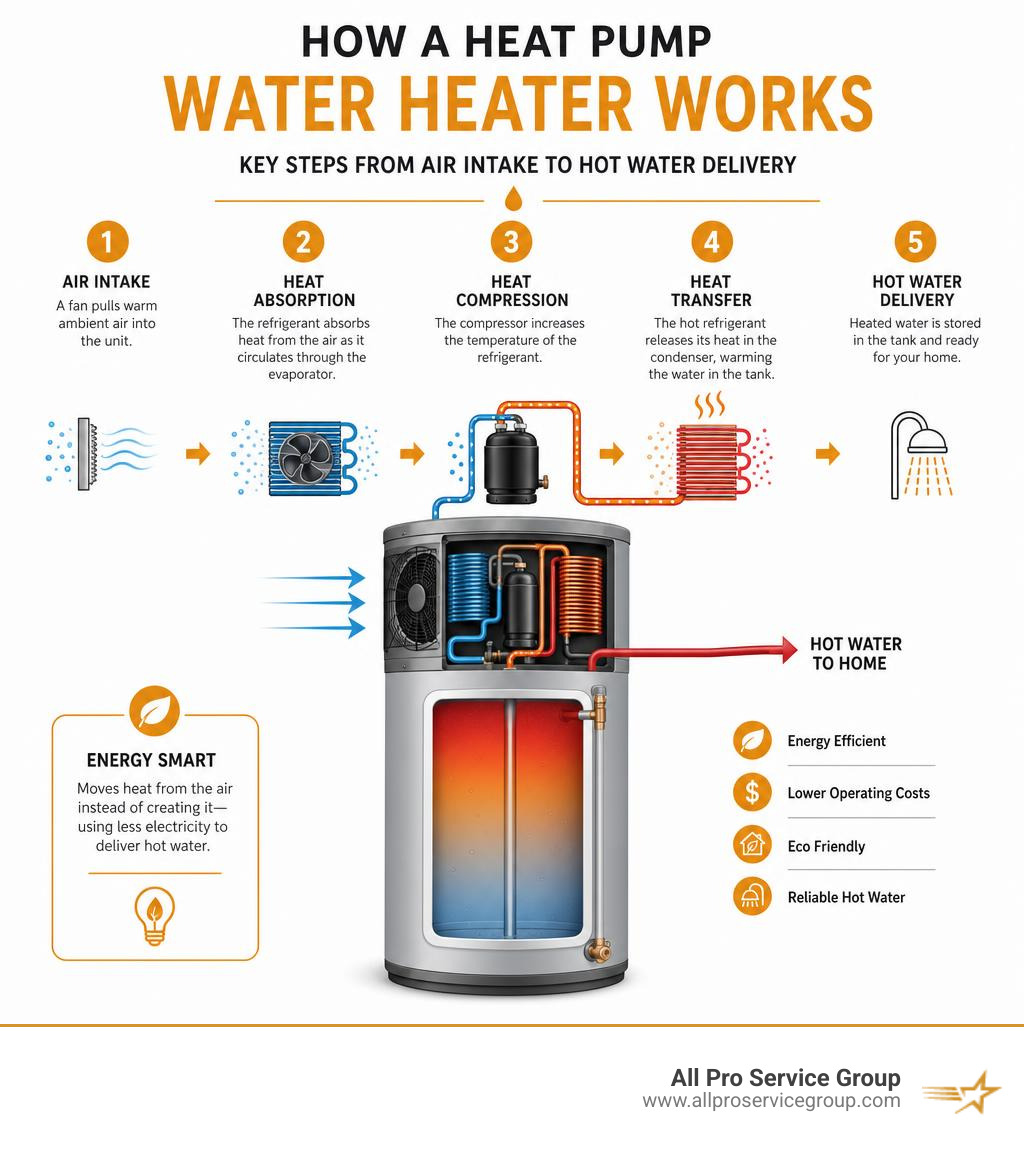
To understand why a hybrid water heater is so incredibly efficient, it helps to look under the hood. Traditional electric water heaters rely on electric resistance elements to generate heat—essentially acting like a giant toaster inside a tank of water. Gas water heaters burn fossil fuels to produce flames. Both of these methods require a massive amount of energy to create heat from scratch.
A heat pump water heater (HPWH), often called a hybrid electric water heater, takes a completely different approach. Instead of creating heat, it simply moves existing heat from one place to another.
Here is how the heat transfer process works:
- Air Intake: A fan at the top of the unit draws in warm ambient air from the surrounding room.
- Heat Extraction: This air passes over an evaporator coil containing a specialized refrigerant (typically R-134a). The refrigerant absorbs the heat from the air, causing it to vaporize.
- Compression: A small, highly efficient compressor pumps the vaporized refrigerant, squeezing it and dramatically raising its temperature and pressure.
- Heat Transfer: The hot refrigerant gas passes through a condenser coil wrapped around the water tank, transferring its heat directly to the water.
- Cool Air Exhaust: Having given up its heat, the refrigerant cools back into a liquid, and the fan blows the now-cooled and dehumidified air back out into the room.
Because it only uses electricity to run the fan and compressor—rather than to heat the water directly—the system can achieve up to 5X the efficiency of standard electric water heaters.
Operating Modes Explained
Most hybrid models feature several operating modes to balance energy savings and hot water demand:
- Efficiency/Economy Mode: This mode relies entirely on the heat pump compressor. It is the most energy-efficient setting but has the slowest recovery time.
- Hybrid Mode: The default and most practical mode. It primarily uses the heat pump but will automatically kick on the backup electric resistance elements if there is a sudden, high demand for hot water.
- Electric Resistance Only Mode: This mode turns off the heat pump entirely and operates exactly like a traditional electric water heater. It is the least efficient mode but can be useful in extremely cold conditions or if the heat pump compressor requires servicing. If your unit experiences issues, you can learn more about troubleshooting on our Water Heater Repair page.
- Vacation Mode: This setting drops the tank temperature to a low, energy-saving level (usually around 60°F) while you are away, preventing the system from cycling unnecessarily.
For those interested in technical specifications, you can review the detailed Hybrid Electric specifications to see how these modes interact to optimize energy consumption.
Integrated vs. Split-System Heat Pump Water Heaters
When planning your heat pump water heater installation, you will choose between two main configurations: integrated units and split-system units.
- Integrated Units: These are the most common models on the market. The heat pump, compressor, fan, and water tank are all housed in a single, self-contained appliance. They are highly convenient to install but require sufficient indoor space (airflow) and will cool down the room they occupy.
- Split-System Units: In a split system, the water storage tank sits indoors, while the compressor and fan are installed outside—very similar to a mini-split air conditioner. These systems often use advanced refrigerants like CO2, which has an incredibly low Global Warming Potential (GWP) and operates exceptionally well in freezing outdoor temperatures. Split systems are ideal for tight indoor spaces, utility closets, or homes where indoor noise and cool exhaust air are concerns.
Sizing Your System for Maximum Efficiency
Sizing a heat pump water heater is slightly different than sizing a traditional tank. Because heat pumps heat water more slowly than gas or standard electric elements, it is often wise to upsize the tank slightly. This ensures you have a larger buffer of hot water during peak usage times, preventing the system from relying on the less efficient backup electric elements.
Sizing should be based on your home's bedroom count and typical peak occupancy rather than just your current household size.
| Household Size | Number of Bedrooms | Recommended Tank Size |
|---|---|---|
| 1–2 Adults | 1–2 Bedrooms | 40–50 Gallons |
| 3–4 People | 2–3 Bedrooms | 65 Gallons |
| 5+ People | 4+ Bedrooms | 80 Gallons |
Preparing for Your Heat Pump Water Heater Installation
Before you purchase a hybrid water heater, you must verify that your home can accommodate its unique physical and electrical requirements. Taking the time to evaluate these factors beforehand will prevent costly surprises on installation day.
1. Airflow and Space Requirements
Because integrated heat pumps extract heat from the surrounding air, they need a constant supply of it.
- Minimum Air Volume: Most models require at least 450 to 700 cubic feet of surrounding air space (roughly an 8' x 8' room with an 8-foot ceiling). Some larger models require up to 800 cubic feet.
- Temperature Range: The ambient air temperature in the installation space must remain between 37°F and 120°F year-round (ideally between 40°F and 109°F for maximum efficiency). If the space drops below freezing, the system will be forced to run in inefficient electric-only mode.
- Exhaust and Clearance: The unit will discharge cool, dry air. Ensure there is at least 6 to 12 inches of clearance around the sides and back, and 12 to 18 inches in front for service access.
If you must install the unit in a confined space (like a small closet), you will need to install fully louvered doors or use an engineered ducting kit to draw air from a larger room or the outdoors.
2. Electrical Panel Capacity
Most hybrid water heaters operate on a dedicated 208/240-volt circuit and require a 30-amp double-pole circuit breaker with 10-gauge solid copper wire.
- If you are replacing an existing electric water heater, your current wiring and breaker are likely already sufficient.
- If you are switching from a natural gas or propane water heater, you will need to run a new 240V line from your main electrical panel to the water heater location.
Always check your home's main panel capacity to ensure you have space for a new 30-amp double-pole breaker. If you need assistance determining your home's electrical or plumbing readiness, our licensed team is ready to help through our comprehensive Plumbing services.
Safety, Permits, and Local Code Requirements
A proper heat pump water heater installation must comply with all local building codes and safety regulations. In Utah—including Salt Lake City, West Jordan, and Provo—obtaining a building permit is typically required when replacing or installing a water heater.
Key safety components required by code include:
- Temperature and Pressure (T&P) Relief Valve: This critical safety valve automatically opens to release water if the tank's internal pressure or temperature exceeds safe limits. The discharge tube must be routed downward and terminate within 6 inches of a floor drain or the ground.
- Seismic Strapping: Because Utah is a seismically active region, local codes require water heaters to be secured to the wall framing using heavy-duty, 22-gauge metal straps. You should install at least two straps—one in the upper third of the tank and one in the lower third—to prevent the unit from tipping over during an earthquake.
- Thermal Expansion Tank: If your home has a "closed" plumbing system (one with a backflow preventer or pressure-reducing valve on the main water line), you must install a thermal expansion tank on the cold water inlet. This small tank absorbs the excess pressure created when water expands as it heats up, protecting your pipes and appliances from damage.
For a detailed look at industry-approved installation guidelines, you can refer to the RHA Best Practices Guide.
Step-by-Step Guide to Installing a Hybrid Water Heater

If you have evaluated your space, confirmed your electrical capacity, and gathered your permits, you are ready to begin the installation process.
Step-by-Step Heat Pump Water Heater Installation
Step 1: Shut Off Power and Water
Before touching any tools, turn off the circuit breaker powering your existing water heater. Use a non-contact voltage tester at the unit to double-check that the wires are completely dead. Next, shut off the main cold water supply valve to the water heater.
Step 2: Drain the Old Tank
Attach a standard garden hose to the drain valve at the bottom of your old water heater. Run the other end of the hose to a floor drain, utility sink, or outside. Open a hot water faucet upstairs to break the vacuum, then open the drain valve to empty the tank.
Step 3: Disconnect and Remove the Old Unit
Once the tank is fully drained, disconnect the hot and cold water pipes. If you have copper pipes, you may need to cut them with a pipe cutter. Disconnect the electrical wiring from the junction box on top of the unit. Carefully remove the old water heater.
Step 4: Position and Level the New Hybrid Heater
Place a metal drain pan on the floor where the new unit will sit. The pan should be at least 2 inches wider than the base of the heater. Carefully maneuver the new hybrid water heater into the pan. Use a level to ensure the unit is perfectly plumb, using plastic shims under the tank if necessary.
Step 5: Connect Water Supply Lines
Install flexible plumbing connectors (such as braided stainless steel or flexible copper lines) to the hot and cold water ports on top of the water heater.
- Dielectric Unions: Always use dielectric unions or brass fittings when connecting copper pipes to steel water heater connections. This prevents galvanic corrosion, which can destroy your pipes and cause leaks.
- Shut-off Valve: Install a full-flow ball valve on the cold water inlet side for easy future servicing.
Step 6: Address Condensate Management
Unlike standard electric water heaters, hybrid units extract moisture from the air, producing a significant amount of condensation. You must manage this liquid properly to prevent water damage.
- Gravity Drain: If you have a nearby floor drain, run a 1/2-inch PVC drain line from the unit's condensate overflow port directly to the drain. Ensure the line maintains a downward slope of at least 1/8 inch per foot.
- Condensate Pump: If a floor drain is not accessible, you must install a small condensate pump to lift and route the water to a utility sink, washing machine drain, or the outdoors.
Step 7: Fill the Tank and Check for Leaks
CRITICAL STEP: Never turn on the electrical power to a dry water heater, or you will instantly burn out the backup heating elements. Open the cold water supply valve and let the tank fill completely. Keep a hot water faucet running elsewhere in the house until water flows steadily without sputtering air. Inspect all plumbing connections thoroughly for any signs of leaks.
Step 8: Complete Electrical Connections
Route your electrical supply line into the junction box on top of the unit. Connect the ground wire, then connect the two hot wires (typically black and red) to the corresponding wires on the water heater using wire nuts. Secure the junction box cover. Turn the circuit breaker back on.
Step 9: Configure and Register Your Unit
Follow the manufacturer's instructions to power up the control panel. Connect your water heater to your home's Wi-Fi network (or setup apps like Rheem's EcoNet app) to monitor performance and set schedules. Finally, register your unit with the manufacturer within 90 days to secure your full warranty.
Noise and Vibration Mitigation Best Practices
Because hybrid water heaters contain a compressor and a fan, they produce a low, humming sound when operating (typically between 49 and 52 decibels—roughly equivalent to a modern dishwasher). To keep this sound from traveling through your home:
- Isolation Mats: Place a heavy-duty rubber isolation mat under the water heater inside the drain pan. This absorbs vibrational energy before it can transfer to your floor joists.
- Flexible PEX Connectors: Use flexible PEX or corrugated stainless steel water connectors rather than rigid copper piping. Rigid pipes can act like a megaphone, carrying compressor vibrations throughout your home's entire plumbing system.
- Seismic Standoffs: When installing seismic straps, place rubber spacers or grommets between the metal straps and the water heater tank to dampen vibrations.
Post-Installation Maintenance and Maximizing Savings
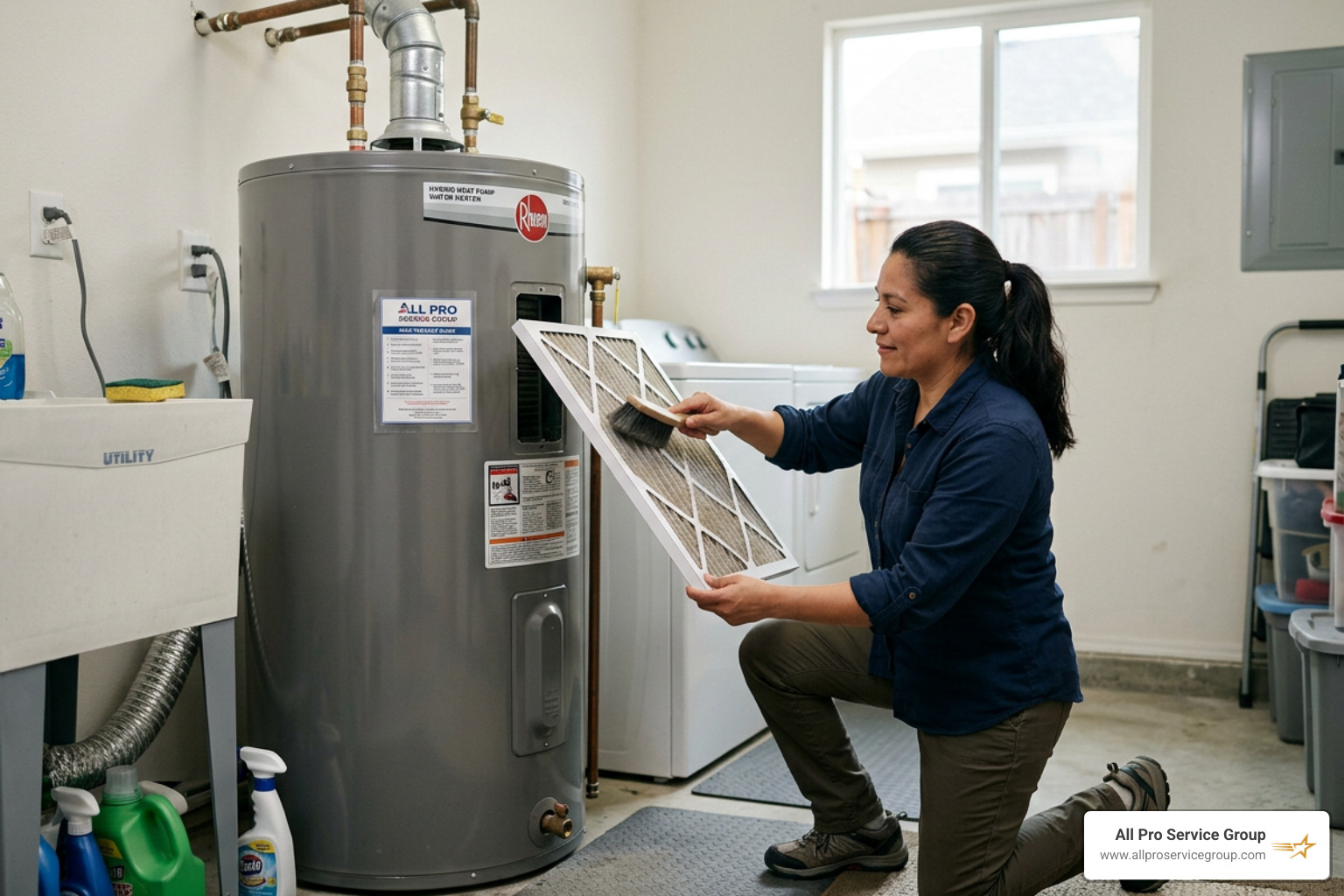
To keep your hybrid water heater running at peak efficiency and protect its lifespan, you must perform regular preventative maintenance. Fortunately, these tasks are simple and take only a few minutes.
1. Clean the Air Filter (Every 6 to 12 Months)
Your hybrid water heater relies on steady airflow. Over time, the air filter on top of the unit will gather dust and pet dander, forcing the fan to work harder and reducing efficiency.
- Simply slide the filter out from the top of the unit.
- Wipe away dust with a damp cloth or rinse it under warm water.
- Let the filter dry completely before sliding it back into place.
2. Flush the Condensate Line (Annually)
Because the condensate line carries moisture away from the unit, algae or mold can occasionally build up inside the pipe and cause a blockage. Pour a cup of food-grade white vinegar down the condensate drain line access tee once a year to keep the line clear and free-flowing.
3. Flush the Tank (Annually)
Just like traditional water heaters, mineral scale and sediment will settle at the bottom of your hybrid tank over time—especially in Utah, where hard water is common. Hook up a garden hose to the drain valve once a year and flush out a few gallons of water until it runs completely clear. For a detailed guide on maintaining your system, check out our Water Heater Installation Guide.
How to Lower Utility Bills and Optimize Settings
Once your unit is installed, you can take advantage of advanced settings to slash your energy bills even further:
- The Thermostatic Mixing Valve (TMV) Strategy: Storing water at a higher temperature (like 140°F) kills harmful bacteria like Legionella. However, 140°F water can cause severe scalds in seconds. By installing a thermostatic mixing valve on the hot outlet, you can safely store water at 140°F inside the tank, while the valve automatically blends in cold water to deliver a safe 120°F to your faucets. This simple trick adds the equivalent of 10 to 15 gallons of hot water capacity to your tank without requiring a larger physical footprint.
- Time-of-Use (TOU) Rates: If your utility provider charges different rates for electricity based on the time of day, you can program your hybrid water heater to do its heating during off-peak hours (like late at night or early in the morning) and "load-shift" your energy consumption away from expensive peak hours.
Professional vs. DIY Heat Pump Water Heater Installation
If you are a handy homeowner with experience in basic plumbing (cutting pipes, using push-to-fit connectors) and electrical work (wiring a 240V circuit), tackling a DIY heat pump water heater installation can save you an estimated $500 to $750 in labor costs.
However, hiring a licensed professional is highly recommended for several important reasons:
- Warranty Protection: Many manufacturers, including Rheem, offer extended warranties or full coverage only if the unit is installed by a licensed contractor. If you make a mistake during a DIY install, you could void your 6-to-10-year equipment warranty. You can read more about manufacturer-specific requirements in the Rheem Heat Pump Installation Guide.
- Code and Safety Compliance: Professional plumbers understand local seismic strapping codes, proper T&P relief valve routing, and electrical safety standards. They also handle the hassle of securing building permits.
- Complex Upgrades: If you are transitioning from a gas unit to a hybrid system, or if your current space requires complex ducting or an electrical panel upgrade, a professional ensures the job is done safely and correctly.
If you are weighing your options and want to compare different systems, you can also read about Tankless Water Heater Installation to see which technology is the best fit for your home.
Frequently Asked Questions
Do heat pump water heaters require a floor stand?
No. Unlike gas water heaters, which often must be elevated off the floor to prevent the risk of igniting flammable vapors, electric storage and hybrid water heaters do not need to be raised on a stand. They should be placed directly on a level floor (ideally inside a metal drain pan) to support their significant filled weight.
Can I use a continuous recirculation pump with a hybrid water heater?
No, using a continuously running recirculation pump is highly discouraged. Continuous circulation continuously mixes the water inside the tank, preventing the hot and cold water from stratifying. This constant disruption forces the unit out of its highly efficient "Heat Pump Only" mode and into its inefficient "Electric Only" mode, destroying your energy savings. If you need a recirculation system, use an on-demand pump with manual buttons or motion sensors.
How much space does a heat pump water heater actually need?
As a general rule, integrated hybrid units require at least 450 to 700 cubic feet of open, unrestricted air space to operate efficiently. If your utility room or closet is smaller than this, you must install louvered doors to allow air exchange with the rest of the house, or install an intake/exhaust duct kit to route air from an adjacent room.
Conclusion
Upgrading to a hybrid electric water heater is one of the smartest investments you can make for your home. By taking advantage of advanced heat transfer technology, you can slash your water heating costs by up to 5X while enjoying reliable, plentiful hot water.
While a DIY installation is possible for highly experienced homeowners, hiring a licensed expert ensures your system is sized perfectly, complies with local Utah codes, and maintains its full manufacturer warranty.
At All Pro Service Group, we have been providing dependable, "Gephardt Approved" plumbing, heating, and electrical services across the Greater Salt Lake Area—including Salt Lake City, South Jordan, West Jordan, Ogden, Provo, and Park City—since 2008. If you are ready to make the switch, contact us today to schedule your professional Water Heater Installation and start saving green!