
A Practical Guide to Water Heater Installation
Why Water Heater Installation Is One of the Most Important Home Decisions You'll Make
Water heater installation is something most homeowners don't think about — until they're standing in a cold shower at 6 a.m. wondering what went wrong.
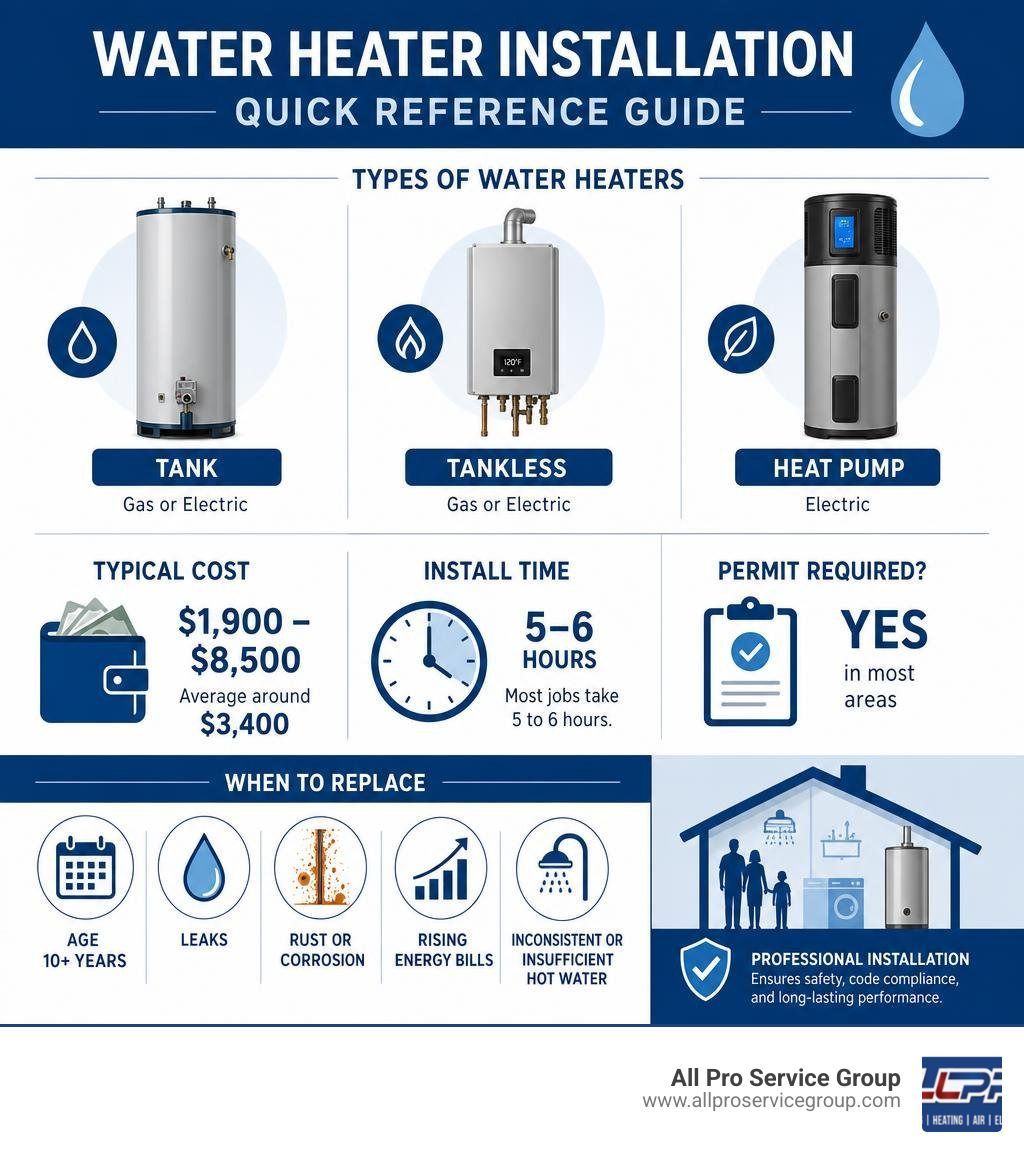
Here's a quick overview of what you need to know:
| Topic | Quick Answer |
|---|---|
| Main types | Tank, tankless, heat pump (gas or electric) |
| Typical cost | $1,900 – $8,500, average around $3,400 |
| Time to install | Most jobs take 5 to 6 hours |
| Permit required? | Yes, in most areas |
| When to replace | Age 10+ years, leaks, rust, rising energy bills |
| DIY vs. professional | Professional installation strongly recommended |
Your water heater quietly runs in the background every single day — powering showers, laundry, dishes, and more. When it fails, it rarely gives much warning. And in Utah, where hard water and cold winters put extra strain on these systems, the stakes are even higher.
This guide walks you through everything: the types of water heaters available, how to size one for your home, what installation involves, what it costs, and how to keep your unit running for years after it's in place.
We are All Pro Service Group, and our team has handled hundreds of water heater installations across the Greater Salt Lake Valley since 2008 — from straightforward tank swaps to full tankless conversions. Whether your unit just gave out or you're planning ahead, we'll help you make the right call.
Understanding Your Options: Types and Sizing of Water Heaters
Selecting the right replacement system is the first and most critical step of any water heater installation. The system you choose impacts your upfront costs, monthly utility bills, and how long you can enjoy hot water before the system needs to recover.
To help you visualize your options, let's compare the three primary categories of residential water heaters:
| Feature | Traditional Storage Tank | Tankless (On-Demand) | Hybrid Heat Pump |
|---|---|---|---|
| Upfront Cost | Low to Moderate | High | Moderate to High |
| Lifespan | 8 to 12 Years | 20+ Years | 10 to 15 Years |
| Energy Efficiency | Standard | Very High (24%–30% savings) | Extremely High (Up to 3-4x more efficient) |
| Energy Efficiency | High (Requires dedicated floor space) | Extremely Low (Wall-mounted) | High (Needs airflow & clearance) |
| Fuel Sources | Natural Gas, Propane, Electric | Natural Gas, Propane, Electric | Electric |
For a deeper dive into modern on-demand systems, read our guide on How a Tankless Water Heater Can Help Your Home. If you have a small space or a single-use point like an outdoor kitchen, you might also consider a Mini Electric Tankless Water Heater.
Traditional Tank vs. Tankless Water Heater Installation
The classic storage tank model remains a popular choice for many homeowners because of its lower initial purchase price. These units work by constantly heating a large volume of water (usually 40 to 80 gallons) so it is ready when you turn on a faucet.
However, keeping dozens of gallons of water hot 24/7 leads to standby heat loss. This means you are paying to heat water even when you are sleeping or away at work.
In contrast, a tankless unit heats water only when you turn on a hot water tap. Cold water travels through a pipe and into the unit, where either a gas burner or an electric element rapidly heats it to your target temperature. This process eliminates standby heat loss entirely, resulting in energy savings of up to 30%.
Additionally, tankless units are compact, wall-mounted boxes that free up valuable floor space in your utility closet or basement. If you want to make the switch, our team specializes in seamless Tankless Water Heater Installation to adapt your home's gas lines and venting systems.
Gas vs. Electric Water Heaters
When deciding between gas and electric models, your home's existing infrastructure is usually the deciding factor:
- Gas Water Heaters: These units generally heat water faster than electric models (meaning they have a faster "recovery rate"). However, they require dedicated venting to safely exhaust combustion gases, such as carbon monoxide, outside your home. If you are installing a high-BTU gas unit, you must ensure your gas supply lines are properly sized. For technical details on gas connections, you can review the Owner’s Guide Installation Instructions.
- Electric Water Heaters: These units are highly reliable and do not require venting or gas lines. However, they can take longer to heat a full tank of cold water. If you are upgrading to a high-capacity electric unit or a tankless electric model, your home may require an electrical panel upgrade to handle the increased amperage.
Hybrid Heat Pump Water Heaters
Hybrid heat pump water heaters (HPWHs) represent a massive leap in energy efficiency. Instead of directly generating heat using electrical resistance elements, a heat pump pulls heat from the surrounding ambient air and transfers it into the water tank.
Because they move heat rather than create it, hybrid units can be up to three to four times more energy-efficient than standard electric tanks. To learn more about how these innovative systems operate in Utah's climate, check out our Heat Pump Water Heater Guide 2026.
It is important to note that hybrid units have specific installation requirements. They require a minimum installation space of 450 cubic feet with unrestricted airflow so they can draw enough warmth from the air.
Additionally, because they cool the air around them and generate condensation, they must be installed near a suitable floor drain or equipped with a condensate pump. For comprehensive safety guidelines and electrical requirements, refer to the manufacturer's guide on Hybrid Electric installations.
Sizing Your Water Heater
Installing a water heater that is too small means frequent cold showers. Installing one that is too large means paying for hot water capacity you will never use.
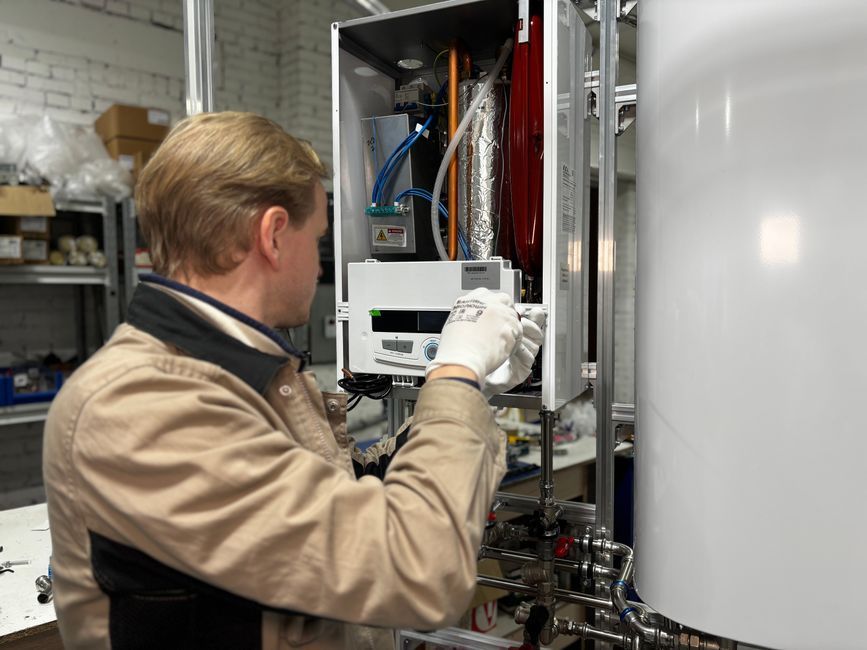
To size a traditional tank system, we look at the First Hour Rating (FHR). This rating, found on the unit's Energy Guide label, measures how many gallons of hot water the unit can deliver in a single hour starting with a fully heated tank. You calculate your home's peak demand by estimating the hot water usage of your household during its busiest one-hour window (usually in the morning when multiple people are showering and running appliances).
For tankless systems, sizing is calculated in Gallons Per Minute (GPM) based on the maximum number of fixtures you might run simultaneously. Because Utah's groundwater is very cold in the winter, a tankless unit must work harder to heat incoming water to a comfortable 120°F. This "temperature rise" requirement means you may need a larger GPM capacity unit than a home in a warmer climate.
To calculate your household's exact hot water demand, consult the official guide on Sizing a New Water Heater.
What to Expect During Professional Water Heater Installation
Many homeowners wonder what actually happens when our team arrives for a water heater installation. It is a highly coordinated process designed to protect your home, ensure safety, and get your hot water back on as quickly as possible.
A standard professional installation includes:
- Site Preparation: We shut off the main water valve and the gas or electrical supply to the old unit. We place drop cloths to protect your flooring.
- Draining and Removal: We connect a hose to the old tank's drain valve and empty the water safely into a floor drain or outdoors. Once empty, we disconnect the plumbing, gas, or electrical lines and haul the old unit away for recycling.
- Positioning the New Unit: We place the new water heater in position, ensuring it is level and meets all clearance requirements.
- Plumbing Connections: We install new supply lines, shut-off valves, and a thermal expansion tank.
- Venting and Gas/Electrical Hookups: For gas units, we secure the flue venting and test the gas lines for leaks. For electric or hybrid units, we make secure wiring connections.
- System Testing and Walkthrough: We fill the tank, turn on the power or gas, check for leaks, verify the temperature settings, and walk you through how to operate your new system.
Most professional installations are completed in just 5 to 6 hours. For a smooth experience from start to finish, you can schedule our certified team for Plumbing Water Heater Installation.
Permits, Codes, and Safety Standards
You might wonder if you really need a permit for a simple water heater replacement. In Utah, the answer is a definitive yes. Local municipalities require mechanical and plumbing permits to ensure the installation complies with safety codes.
Key safety features required by modern building codes include:
- Temperature and Pressure (T&P) Relief Valve: This valve is a critical safety device that automatically opens if the temperature or pressure inside the tank exceeds safe limits, preventing a dangerous pressure buildup. The discharge pipe must point straight down and terminate near a floor drain.
- Thermal Expansion Tank: In a "closed" plumbing system (one with a backflow preventer or pressure-reducing valve), water expands as it heats up. Without an expansion tank to absorb this extra volume, the increased pressure can damage your pipes, fittings, and the water heater itself.
- Earthquake Bracing: Because Utah is seismically active, local codes require water heaters to be secured with heavy-duty metal straps anchored to the wall studs to prevent them from tipping over during an earthquake.
To understand what local inspectors look for during a safety compliance inspection, you can reference the Microsoft Word - #420-A Water Heater Install Guide June 2025 Final or read our comprehensive Water Heater Install Guide.
Average Costs and Financing Options
The cost of a new water heater installation depends heavily on the type of unit, its capacity, and the complexity of the installation (such as converting from gas to electric or upgrading venting).
While national averages vary, most standard water heater installations in our service areas fall within a price range of $1,900 (low) to $8,500 (high), with an average overall cost of $3,400.
- Traditional Tank Installation: Typically ranges from $1,500 to $4,500.
- Tankless Installation: Typically ranges from $3,000 to $7,000+ due to the specialized gas line, venting, and electrical work required.
- Hybrid Heat Pump Installation: Typically ranges from $2,500 to $6,000, though these units qualify for significant federal tax credits and local utility rebates.
To make these essential upgrades more manageable, we partner with top financial institutions to offer flexible financing with low monthly payments and on-the-spot approvals. Additionally, you can find active savings and manufacturer rebates by using the Energy Star Rebate Finder.
Lifespan, Repairs, and Post-Installation Maintenance
A water heater is a major investment, and naturally, you want it to last as long as possible. Understanding when to repair your system and how to maintain it after installation will save you money and prevent unexpected breakdowns.
If your current system is acting up, we can help you diagnose the issue. Our technicians specialize in Plumbing Water Heater Repair, including specialized AO Smith Hot Water Heater Repair.
When to Repair vs. Replace
How do you know if you should call for a repair or invest in a full replacement? Consider these guidelines:
- Age of the Unit: Traditional tank water heaters generally last 8 to 12 years. If your unit is over 10 years old and experiencing issues, replacement is usually the most cost-effective long-term decision.
- The "50% Rule": If a single repair bill costs more than 50% of the price of a brand-new water heater, you should replace the unit.
- Rusty Water or Tank Corrosion: If you see rust in your hot water or notice corrosion on the metal shell of the tank itself, the tank is deteriorating internally. Once a tank begins to rust through, a catastrophic leak is inevitable, and the unit must be replaced immediately.
- Frequent Repairs: If you find yourself calling a plumber multiple times a year for the same water heater, it is time to upgrade to a reliable new system.
Routine Maintenance for Longevity
To keep your new water heater running at peak efficiency and protect your warranty, you must perform regular maintenance. This is especially true in Utah, where hard water mineral deposits can accumulate quickly inside your tank.
Key maintenance tasks include:
- Annual Sediment Flush: Over time, minerals like calcium and magnesium settle at the bottom of your tank, forming a thick layer of sediment. This sediment acts as a barrier between the burner and the water, forcing the unit to run longer, overheat, and eventually crack. Flushing the tank once a year keeps it clean and efficient.
- Anode Rod Inspection: The sacrificial anode rod is a metal rod that hangs inside your tank. It is designed to attract corrosive elements in the water so they eat away at the rod instead of your steel tank. You should inspect and replace this rod every 3 to 5 years.
- Air Filter Cleaning (For Hybrid Units): Air filters on heat pump water heaters must be cleaned every 6 to 12 months—with more frequent cleaning in high-dust locations—to maintain proper airflow and efficiency.
For step-by-step instructions on keeping your system in top shape, check out our guide on AO Smith Water Heater Maintenance.
Frequently Asked Questions
Do I need a permit for water heater installation?
Yes. Local building codes in Utah require a permit for water heater installations. This ensures that a third-party inspector verifies the safety of the gas connections, electrical wiring, venting, and seismic bracing. When you work with us, our team handles the entire permit and inspection process for you.
How long does a water heater installation take?
A straightforward, professional water heater replacement typically takes between
5 to 6 hours from the time our team arrives to the final cleanup. Upgrading to a tankless system or relocating a unit can take slightly longer due to the additional plumbing, venting, and gas line modifications required.s a water heater installation take?
Can I finance my new water heater installation?
Yes. We understand that a sudden water heater failure can be an unexpected financial burden. We offer flexible financing options with convenient monthly payments and competitive rates to help you get hot water back in your home without breaking your budget.
Conclusion
A professional water heater installation is an investment in your home's comfort, safety, and energy efficiency. By choosing the right system type, sizing it accurately for your household, and keeping up with basic annual maintenance, you can enjoy reliable hot water for many years to come.
Since 2008, All Pro Service Group has provided dependable Plumbing services throughout Ogden, UT, Park City, UT, Provo, UT, Salt Lake City, UT, and the surrounding communities. As a "Gephardt Approved" home service provider, we stand behind our workmanship, offer clear upfront pricing, and treat your home with the utmost respect.
Don't wait for your old water heater to leave you in the cold. Contact us today to
Schedule Water Heater Installation with our certified local experts!