Is Hydro Jetting Safe for Old Pipes? Here's What Salt Lake Homeowners Need to Know
Is hydro jetting safe for old pipes? The short answer: it depends — not on how old the pipes are, but on what condition they're actually in.
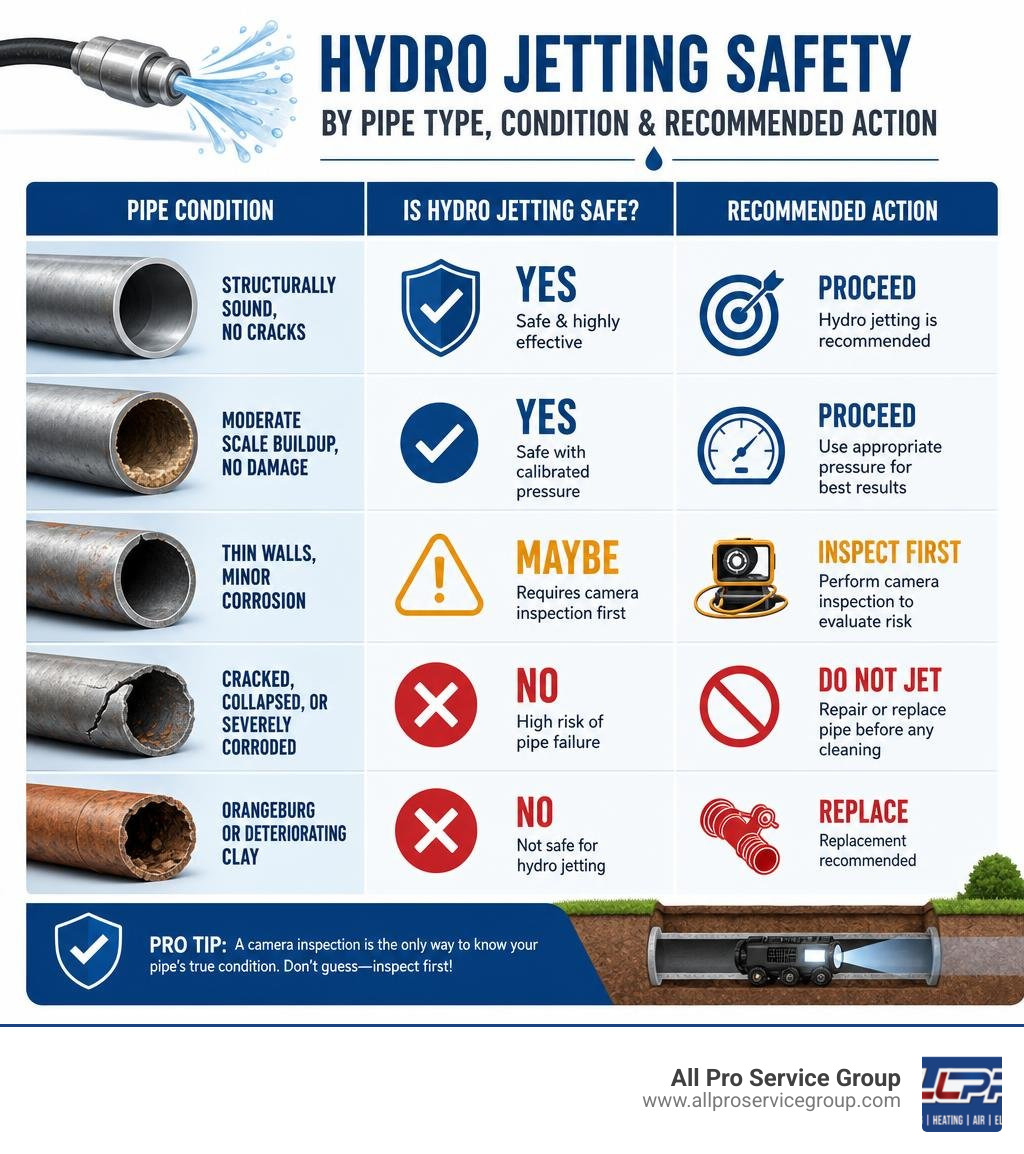
Here's a quick breakdown:
| Pipe Condition | Is Hydro Jetting Safe? |
|---|---|
| Structurally sound, no cracks | Yes — safe and highly effective |
| Moderate scale buildup, no damage | Yes — with calibrated pressure |
| Thin walls, minor corrosion | Maybe — requires camera inspection first |
| Cracked, collapsed, or severely corroded | No — risk of pipe failure |
| Orangeburg or deteriorating clay | No — replacement recommended |
If your home was built before the 1980s, there's a good chance you have cast iron, clay, or galvanized steel pipes. These materials age differently — and respond to high-pressure water differently, too. A 50-year-old pipe might be completely fine for hydro jetting, or it might be one pressure surge away from failing. You can't know without looking inside first.
That's the real issue. Too many homeowners (and even some contractors) treat hydro jetting as a one-size-fits-all fix. It isn't. The pressure, the nozzle, the pipe material, and the pipe's current condition all have to line up — or the cure becomes worse than the problem.
At All Pro Service Group, we've been inspecting and cleaning aging sewer lines across the Greater Salt Lake Valley since 2008. Whether hydro jetting is safe for old pipes is one of the most common questions we get from homeowners dealing with recurring clogs or slow drains — and the answer always starts with a camera, not a guess.
What is Hydro Jetting and How Does It Work?
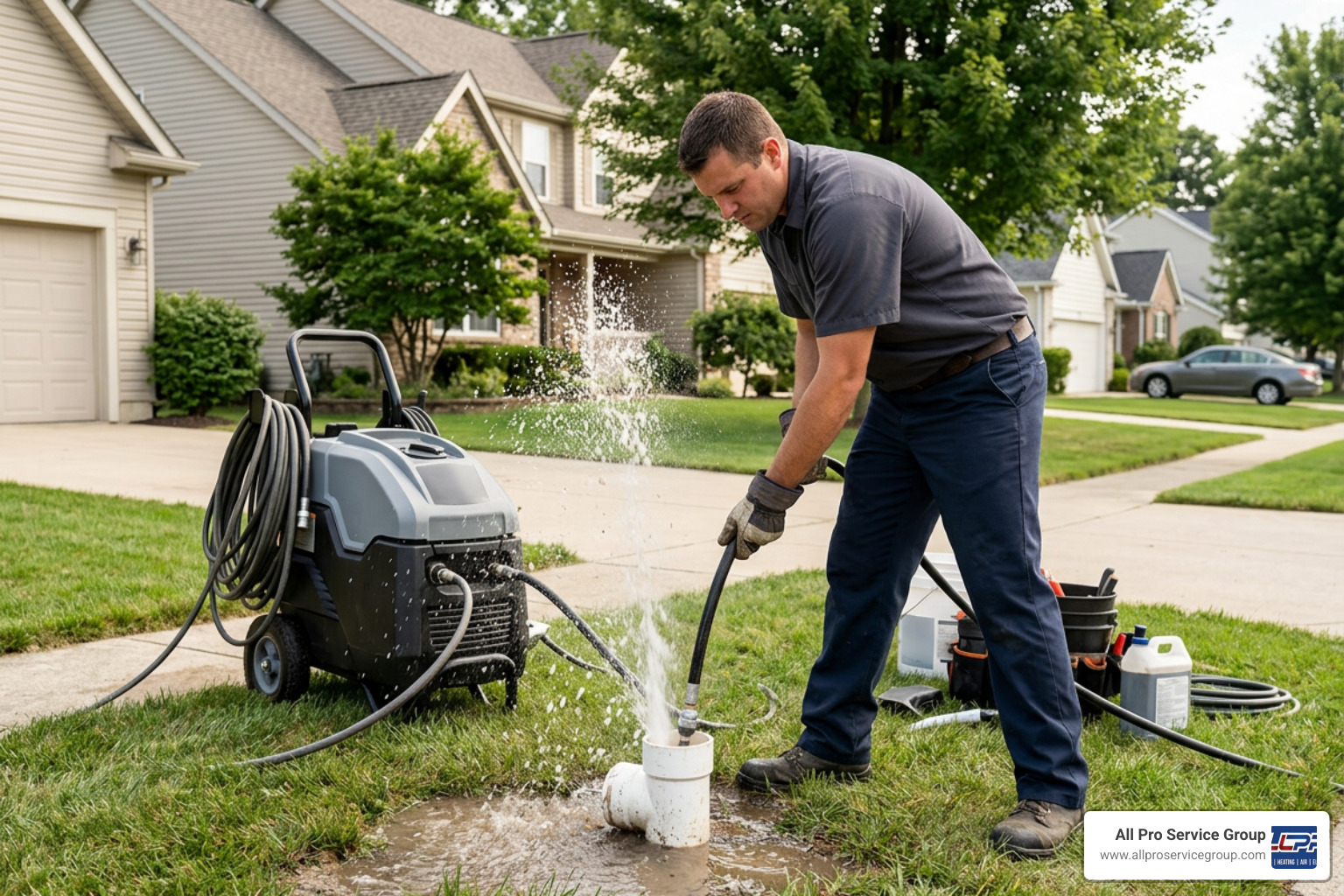
Hydro jetting is a highly effective, eco-friendly method of clearing stubborn clogs, grease, and invasive tree roots from sewer and drain lines. Unlike traditional drain snaking, which only punches a temporary hole through a blockage, hydro jetting scours the entire inner diameter of the pipe clean.
The process relies on a specialized machine equipped with a high-pressure hose and a custom-engineered nozzle. This machine pumps water at incredibly high pressures, typically ranging from 1,500 to over 4,000 PSI (pounds per square inch) for residential applications. In some commercial settings, water pressures can reach up to 10,000 PSI for PVC and up to 40,000 PSI for heavy-duty metal pipes, though these ultra-high pressures are never used on standard home systems.
As the hose is fed into your plumbing cleanout, the nozzle shoots high-velocity water streams in multiple directions. A forward-facing jet blasts through the core of the clog, while several rear-facing jets propel the hose forward and scrub the pipe walls clean of grease, hair, mineral scale, and sludge. Because it uses only pressurized water and air, it is completely chemical-free, making it safe for the household water supply and far healthier for your plumbing than corrosive chemical drain cleaners. Keeping sewer and drain lines clear also helps reduce the risk of backups and overflow issues; the U.S. Environmental Protection Agency provides helpful background on sanitary sewer overflows and why proper wastewater flow matters.
For homeowners in the Greater Salt Lake Area, including West Jordan, South Jordan, and Sandy, hydro jetting is often the ultimate solution for lines plagued by heavy grease, sludge, or tree roots. To learn more about this advanced cleaning process, you can explore More info about hydro jetting services and see how we restore original flow capacity to residential lines.
Is Hydro Jetting Safe for Old Pipes?
When we talk about "old pipes," we are generally referring to plumbing systems installed in homes built before the 1980s. In communities like Salt Lake City, Ogden, and Provo, many historic homes still rely on their original sewer lines.
The chronological age of a pipe is actually less important than its current structural integrity. Some 50-year-old pipes are in remarkably good shape and can easily withstand standard hydro jetting, while newer, poorly installed lines might fail under pressure. However, because older pipe materials naturally degrade over decades, the physical condition of the line must be carefully evaluated before any high-pressure work begins.
To understand the difference between hydro jetting and traditional methods for older systems, consider this comparison:
| Feature | Hydro Jetting | Traditional Drain Snaking |
|---|---|---|
| Method | High-pressure water streams (1,500–4,000 PSI) | Rotating steel cable with a cutting blade |
| Cleaning Depth | Cleans 100% of the pipe diameter, removing grease and scale | Pokes a hole through the clog to restore basic flow |
| Safety for Old Pipes | Safe only if the pipe is structurally sound | Safer for fragile pipes, but can scrape or scratch walls |
| Risk of Damage | High risk if pipes are cracked, thin, or corroded | Low risk of pipe rupture, but can get stuck in collapsed lines |
| Long-Term Efficacy | Prevents recurring clogs for years | Clogs often return quickly as residue remains |
If an older pipe is structurally sound, hydro jetting is actually gentler than mechanical snaking because there is no metal-on-pipe contact. Rotating metal blades on a traditional snake can scrape, scratch, or crack fragile, brittle pipe walls. However, if the pipe walls have thinned due to corrosion, or if there are pre-existing fractures, the intense pressure of hydro jetting can blow through the weakened material, leading to a catastrophic collapse.
Professional plumbers emphasize that a pipe's current physical state dictates whether high-pressure cleaning is a safe option, rather than its age alone.
Material Matters: Is Hydro Jetting Safe for Old Pipes Made of Clay or Cast Iron?
Different pipe materials age in very different ways, and each presents unique risks when subjected to high-pressure water jetting.
Clay Pipes
Commonly used for sewer lines until they were mostly phased out in the 1960s and 1970s, clay pipes are highly durable against chemical corrosion but are naturally brittle. Over time, soil movement in the Salt Lake Valley and pressure from tree roots can cause clay pipe joints to shift or separate. Once a joint separates, tree roots easily find their way inside to access water.
While hydro jetting is excellent at cutting through these root intrusions, uncalibrated water pressure can shatter fragile, cracked clay. For more information on safely clearing these lines, read our guide: Can you hydro jet clay pipe?.
Cast Iron Pipes
Cast-iron pipes, which were the residential standard until the early 1980s, typically have a maximum lifespan of 50 to 60 years. As cast iron ages, it corrodes from the inside out, a process known as tuberculation. This creates a rough, heavily scaled interior surface that catches waste and causes frequent backups.
While hydro jetting can knock down this rust scale, it carries a major risk: in severely corroded pipes, the rust scale may actually be the only thing holding the pipe together. Blasting away this scale can reveal that the bottom of the pipe has completely eroded away, essentially "blowing through" the pipe walls.
PVC Pipes
Modern PVC pipes are highly resilient, flexible, and do not corrode. Standard Schedule 40 PVC can safely withstand water pressures up to 10,000 PSI. However, older PVC installed 30 or more years ago can become brittle from chemical exposure or soil stress. Additionally, if the joints were poorly glued during installation, high-pressure water can separate them.
While PVC is highly durable, older plastic lines can still be vulnerable if they have suffered from poor installation or ground movement.
Orangeburg Pipes
Common in homes built from the 1940s through the 1970s, Orangeburg pipes are made of wood pulp sealed with coal tar. Over the decades, these pipes absorb water, flatten under the weight of the soil, and become soft and bubbly. Hydro jetting should never be used on Orangeburg pipes, as the high-velocity water will instantly shred the paper-based walls.
How Plumbers Determine If Hydro Jetting Is Safe for Old Pipes
Experienced plumbers do not simply hook up a jetter and blast away at maximum pressure. We follow a careful, highly controlled diagnostic process to protect your home's infrastructure.
First, we calibrate the water pressure specifically to the pipe material and age. For interior residential drain lines (which are typically smaller and thinner), we keep pressures conservative, usually between 1,500 and 2,500 PSI. For exterior sewer lines, we adjust the pressure based on what the pipe can handle, rarely exceeding 2,800 to 3,000 PSI on older cast iron or clay.
Second, nozzle selection is critical. Rather than using aggressive, sharp cutting nozzles right away, we often start with general-purpose flushing nozzles or specialized rotary nozzles (like a Warthog nozzle or chain knocker) that gently scour the walls without focusing a direct, high-pressure stream on a single weak spot.
Finally, we always run the jetter from downstream to upstream. This ensures that as the clog is broken up, the loose debris and water can flow naturally down the line and out of your home, preventing a messy sewage backup.
Why a Sewer Camera Inspection is Essential
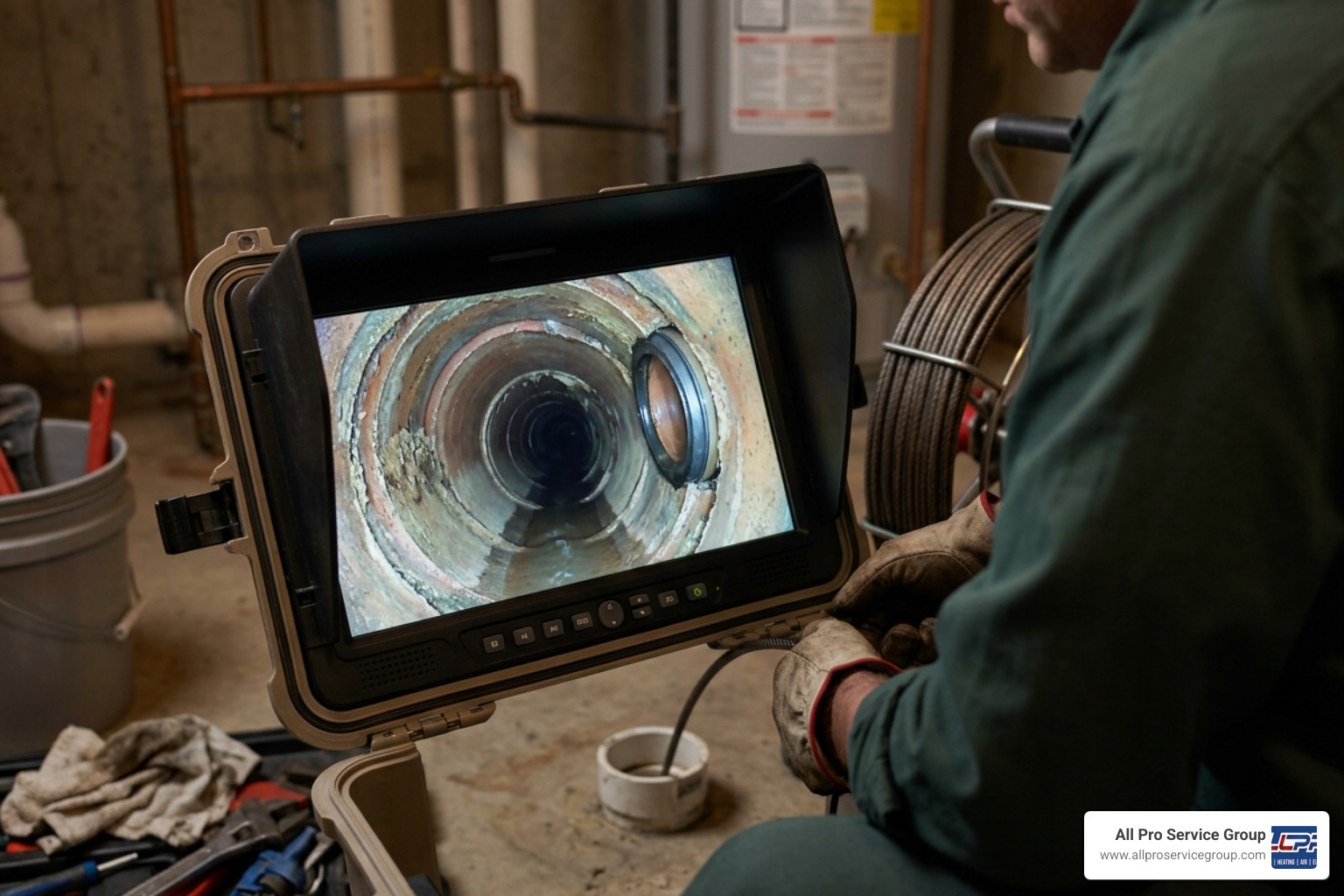
Skipping a sewer camera inspection before hydro jetting an old pipe is like a surgeon operating without an X-ray. It is a recipe for disaster. A professional camera inspection involves feeding a high-definition, flexible fiber-optic camera down into the plumbing line to provide a real-time video feed of the pipe’s interior.
This diagnostic step allows us to:
- Identify the exact pipe material: We can confirm whether you have cast iron, clay, PVC, or failing Orangeburg.
- Assess structural integrity: We look for cracks, sagging sections (bellies), offset joints, or severe corrosion.
- Locate and analyze the blockage: We can see if we are dealing with soft grease, hard mineral scale, or thick tree roots, allowing us to choose the right nozzle and pressure settings.
- Prevent catastrophic pipe collapse: If the camera reveals that the pipe is already broken or collapsing, we stop immediately and discuss repair options instead of risking a total line failure under pressure.
Equally important is the post-inspection. After the hydro jetting process is complete, we run the camera through the line a second time. This verifies that the blockage has been completely cleared, scoured clean to the pipe walls, and documents the true, clean condition of your plumbing system. To schedule a visual check of your sewer lateral, visit our Schedule a drain inspection service page.
What Happens When Hydro Jetting Reveals Hidden Damage?
A common misunderstanding among homeowners is that hydro jetting "broke" their pipe when a leak or collapse is discovered after the service. In reality, hydro jetting rarely causes damage to a healthy pipe; instead, it clears away the debris that was masking pre-existing structural failure.
Over decades, a thick layer of grease, sludge, or hard water scale can build up over cracks, separated joints, and holes in a pipe. This buildup essentially acts as a temporary patch, holding the pipe together and keeping soil from entering. When the hydro jetter scrubs the pipe clean, it removes this debris, revealing the pre-existing cracks or joint separations.
If a camera inspection reveals that your old pipes are too compromised to survive hydro jetting, or if clearing the line exposes severe structural damage, you don't have to panic. Modern plumbing technology allows us to address these issues without digging up your entire yard. You can Learn about trenchless sewer repair methods, such as cured-in-place pipe (CIPP) lining, which creates a brand-new, durable pipe right inside your old, damaged one.
Safer Alternatives to Hydro Jetting for Fragile Pipes
If a camera inspection reveals that your aging plumbing system is too weak, brittle, or corroded to withstand the high pressures of hydro jetting, there are several safer, highly effective alternatives we can use to restore flow.

Mechanical Snaking (Motorized Augers)
Traditional drain snaking uses a flexible steel cable with a rotating blade or corkscrew tip at the end. The cable is fed into the pipe to physically punch a hole through localized clogs, such as hair, soap scum, or small tree roots. While it doesn't clean the pipe walls as thoroughly as a hydro jet, it exerts zero water pressure on the pipe walls, making it an excellent, low-risk option for fragile or thinning lines. To clear a simple blockage safely, you can Find drain unclogging services.
Physical Pipe Descaling
For older cast iron pipes with heavy rust and scale buildup, we can use mechanical chain knockers or descaling machines. These tools feature specialized, rotating abrasive chains that gently knock the scale off the pipe walls without using high-pressure water. The loose scale is then flushed away with a low-pressure water stream. This restores the pipe's original diameter without risking a pressure-induced blowout.
Enzyme Treatments
For minor, organic waste buildup, enzyme-based drain cleaners are a safe, non-corrosive alternative. These treatments contain natural bacteria and enzymes that eat away at organic matter, grease, and hair over time. Unlike harsh chemical drain cleaners, they will not degrade PVC joints, corrode metal, or harm the environment.
Pipe Replacement
When old pipes have reached the end of their lifespan and are actively collapsing or leaking, cleaning is only a temporary band-aid. In these cases, replacing the line is the most cost-effective long-term solution. To plan for your home's future plumbing health, you can review the Cost to replace drain pipes in house to make an informed decision about your property.
Frequently Asked Questions About Hydro Jetting Old Pipes
What questions should I ask a plumber before they hydro jet my old pipes?
Before letting any contractor hook up a hydro jetting machine to your older plumbing system, protect yourself and your property by asking these key questions:
- "Will you perform a sewer camera inspection before you begin?"(If they say no, find another plumber immediately. Skipping this step is a major red flag.)
- "How will you calibrate the water pressure for my specific pipe material?"(An experienced technician should explain how they adjust the PSI and select nozzles based on whether you have clay, cast iron, or PVC.)
- "Do you perform a post-jetting camera inspection to verify the results?"(This ensures the line is completely clean and undocumented damage wasn't left behind.)
- "What is your company's policy or liability disclaimer if a compromised pipe fails during the process?"(A trustworthy contractor will be transparent about the structural risks of old pipes and help you understand the difference between caused damage and revealed damage.)
Can hydro jetting cause a pipe to collapse?
Yes, hydro jetting can cause a pipe to collapse, but only if the pipe is already severely compromised, cracked, or structurally weakened. In a healthy, structurally sound pipe, standard residential hydro jetting pressures (up to 4,000 PSI) will not cause damage.
However, if an old clay pipe has major fractures, or if a cast-iron pipe has thinned to the point of paper-thinness due to internal rust, uncalibrated high-pressure water can break through the remaining material, leading to structural failure. This is why a pre-service camera inspection is non-negotiable.
How much pressure (PSI) is safe for older residential pipes?
The safe pressure limit for older pipes depends entirely on the material and its current physical condition:
- Compromised Cast Iron: Should be jetted very conservatively, typically at pressures under 2,800 PSI, using multiple gentle passes and specialized descaling nozzles.
- Clay Pipes: If the joints are aligned and there are no active cracks, clay can handle 2,500 to 3,000 PSI to clear root intrusions.
- Older PVC: Typically cleaned safely at 2,000 to 3,000 PSI, provided the joints are secure.
- Orangeburg Pipes: 0 PSI. These pipes should never be hydro jetted under any circumstances.
Conclusion
When it comes to maintaining the plumbing in an older home, you don't have to guess whether hydro jetting is safe. While high-pressure water is an incredibly powerful tool for clearing stubborn clogs and restoring your sewer lateral to like-new condition, it must be used with precision, care, and professional diagnostics.
At All Pro Service Group, we have been serving homeowners throughout the Greater Salt Lake Valley — including Salt Lake City, Ogden, West Jordan, and Provo — since 2008. As a "Gephardt Approved" plumbing contractor, we pride ourselves on dependable repair, honest inspections, and exceptional customer service. We always put a camera down the line first to ensure your older pipes can safely handle the process, protecting your home from unexpected damage.
If you are dealing with slow drains, recurring backups, or suspect you have tree roots in your sewer line, don't wait for a costly backup. Schedule professional drain cleaning today with the trusted experts at All Pro Service Group, and let us restore your plumbing system safely and effectively.