
When You Need a Clogged Drain Fix Fast
A clogged drain fix doesn't always require a plumber. Here's how to handle it quickly:
Quick fix by clog type:
| Clog Type | Best First Step |
|---|---|
| Grease (kitchen) | Hot water + dish soap |
| Hair (bathroom) | Zip-It tool or manual removal |
| Soap scum | Baking soda + vinegar |
| Complete backup | Plunger with sealed overflow |
| Recurring or multi-drain | Call a professional |
Roughly 80% of household drain clogs can be cleared at home with basic tools. The remaining 20% involve deeper line issues that need professional equipment.
A sink that drains slowly at night has a way of becoming a full blockage by morning. Whether it's standing water in your shower or a kitchen sink that won't budge, a clogged drain is stressful — especially when you don't know where to start or whether you might make things worse.
The good news: most clogs are closer to the surface than you think, and the right steps taken in the right order can clear them safely without harsh chemicals or an emergency service call.
At All Pro Service Group, after years of handling plumbing issues across the Greater Salt Lake Valley, we've seen every kind of clogged drain fix situation — from simple hair blockages to full sewer line backups. This guide walks you through exactly what we've learned works, in the safest and most effective order.
Common Causes and Prevention of Blockages
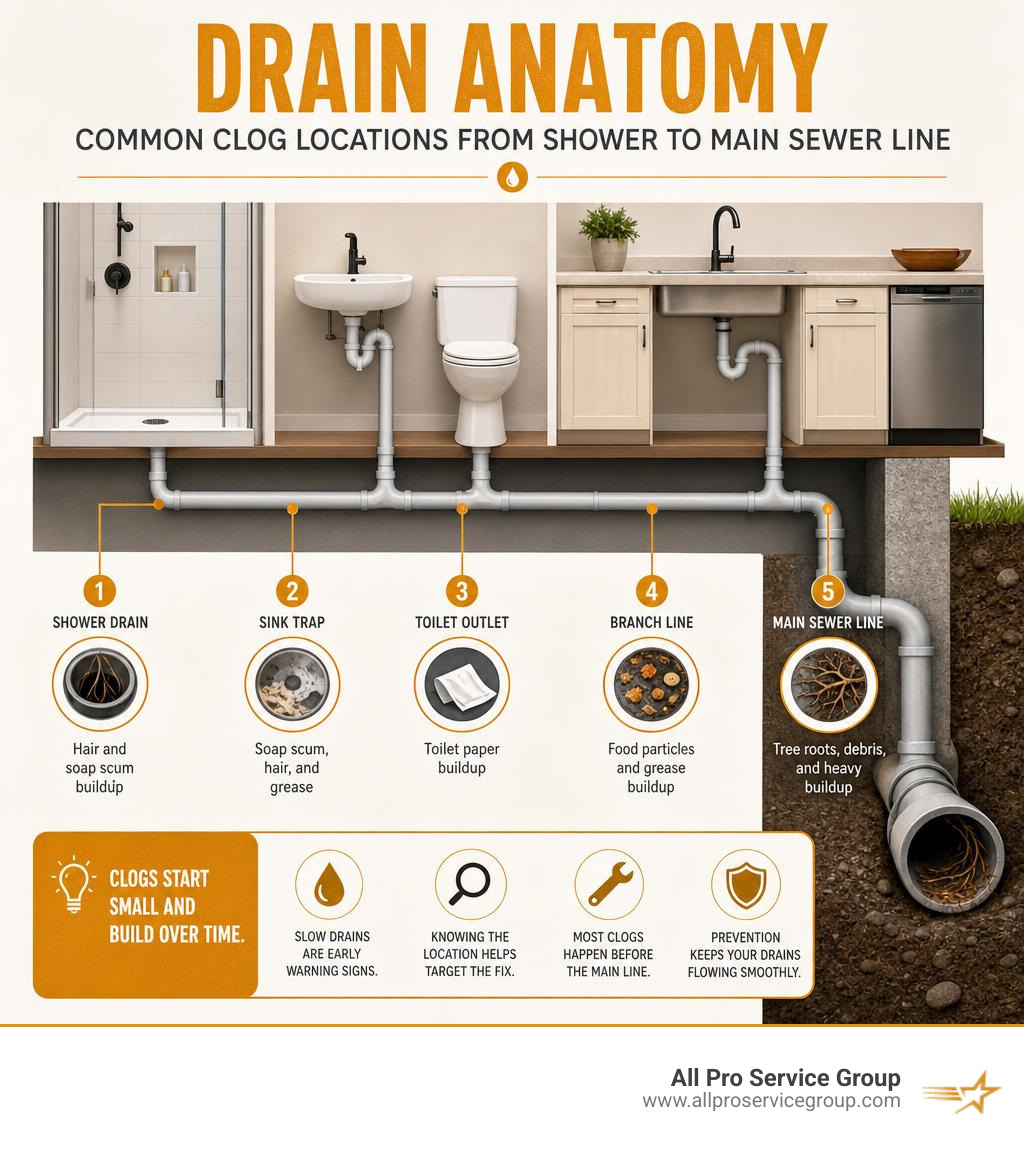
Understanding what is happening inside your pipes is the first step to finding a permanent clogged drain fix. Pipes do not simply clog overnight without warning; rather, debris builds up gradually over several months. As the passage narrows, water flows slower and slower until a single piece of hair or food scrap triggers a complete shutdown.

When we perform plumbing drain cleaning across Utah, we find that the location of the drain dictates the type of clog. Kitchen sinks face entirely different challenges than bathroom showers, and understanding these differences helps us apply the correct physical or natural remedy.
Bathroom Drain Culprits: Hair and Soap Scum
In the bathroom, hair is the undisputed king of clogs. Human hair is incredibly strong, does not dissolve in water, and easily snags on the rough edges of pop-up stoppers, drain grates, and internal pipe joints.
When hair combines with soap scum—the sticky film left behind by traditional bar soaps reacting with minerals in hard water—it forms a dense, water-resistant rope. This hair-and-soap matrix acts like a net, catching dental floss, dead skin cells, and grooming products. To prevent this, installing simple silicone hair catchers or mesh drain screens over your shower and tub drains is the single most effective habit you can adopt.
Kitchen Drain Culprits: Grease and Food Waste
Kitchen drains face a completely different set of enemies. The primary offender here is grease, cooking oil, and animal fat (often collectively referred to as FOG). When warm grease is poured down the sink, it looks like a harmless liquid. However, as soon as it hits the cold metallic or PVC pipes about 12 inches down the line, it rapidly cools and solidifies into a thick, waxy paste.
This greasy paste catches food scraps, particularly starchy items like pasta, rice, and potato peels, which swell when exposed to water. Even if you have a garbage disposal, overloading it with fibrous vegetables (like celery) or coffee grounds will quickly lead to a stubborn kitchen blockage.
A Monthly Clogged Drain Fix Routine for Prevention
The best way to deal with a clogged drain is to make sure it never happens in the first place. We recommend a quick, two-minute weekly or monthly preventative maintenance routine:
- Weekly Hot Water Flush: At the end of the week, run hot tap water down your kitchen sink for two to three minutes to flush away grease film before it solidifies.
- Monthly Baking Soda Flush: Pour half a cup of baking soda down your drains, followed by hot water. This deodorizes and breaks down light organic buildup.
- Use Enzyme-Based Cleaners: Unlike harsh chemical drain openers, enzyme-based cleaners use natural bacteria to digest organic matter over time. They are safe for monthly maintenance and won't damage your pipes.
- Install Drain Guards: Keep mesh strainers in all sinks to catch food particles and hair before they enter the plumbing system.
The Safe Order of Operations for a Clogged Drain Fix
When dealing with a slow or blocked sink, sequence matters. Jumping straight to aggressive tools or harsh chemicals can permanently damage your plumbing, warp plastic pipes, or splash corrosive liquids back into your face.
We recommend following a strict, step-by-step safe order of operations to clear 90% of household blockages safely and cheaply.
Step 1: Hot Water and Dish Soap for Grease
If your kitchen sink is draining slowly due to a gradual accumulation of grease, start with the simplest and cheapest remedy: hot water and liquid dish soap.
- Remove Standing Water: If your sink is completely backed up, scoop out the cold standing water first.
- Apply Dish Soap: Pour half a cup of grease-fighting dish soap (like Dawn) directly down the drain. Let it sit for 5 to 10 minutes to penetrate the grease layer.
- Flush with Near-Boiling Water: Pour a kettle of hot water down the drain in stages. Note: If you have PVC pipes, do not use boiling water (212°F), as it can warp plastic joints. Use hot tap water instead.
Step 2: Using a Plunger the Right Way
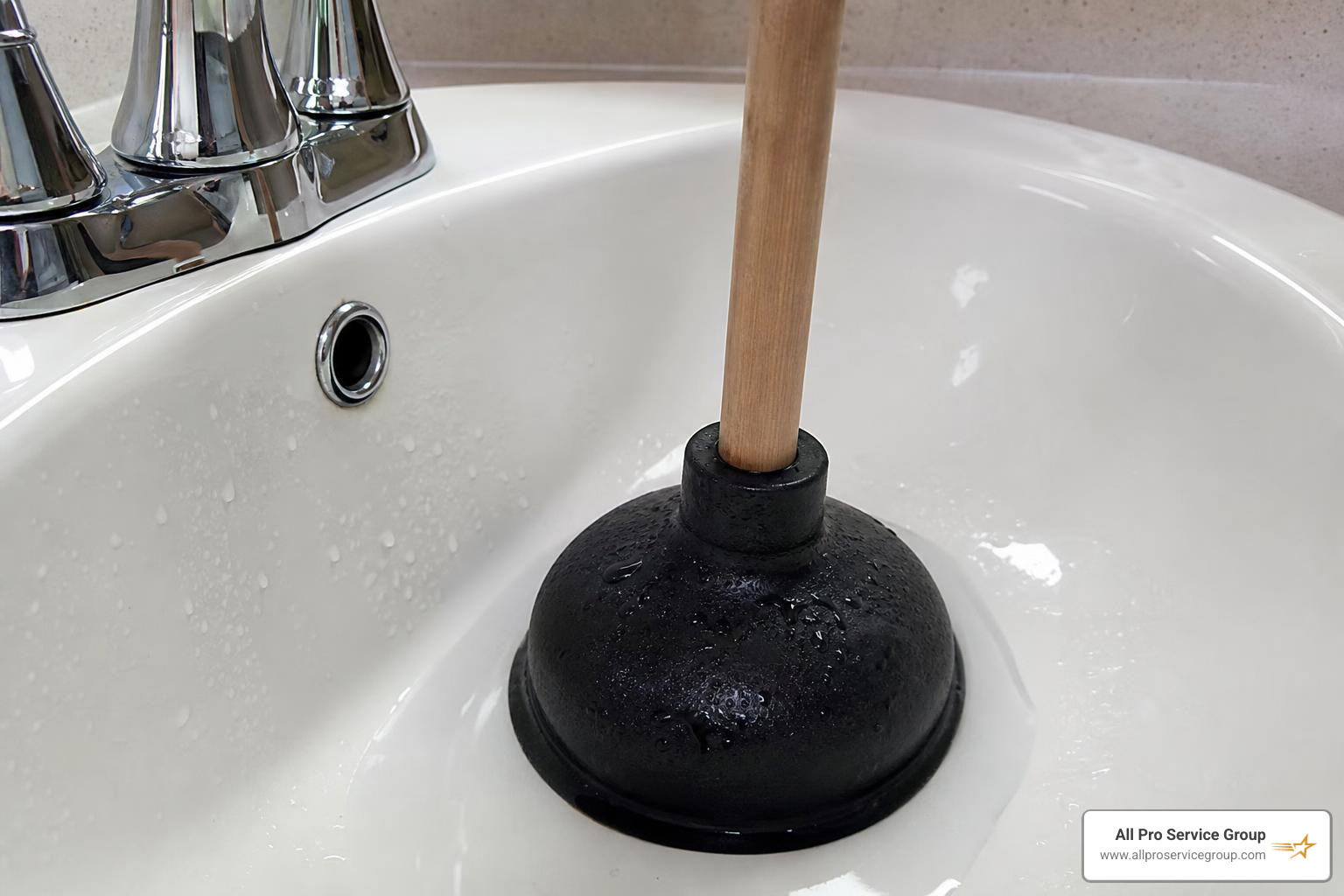
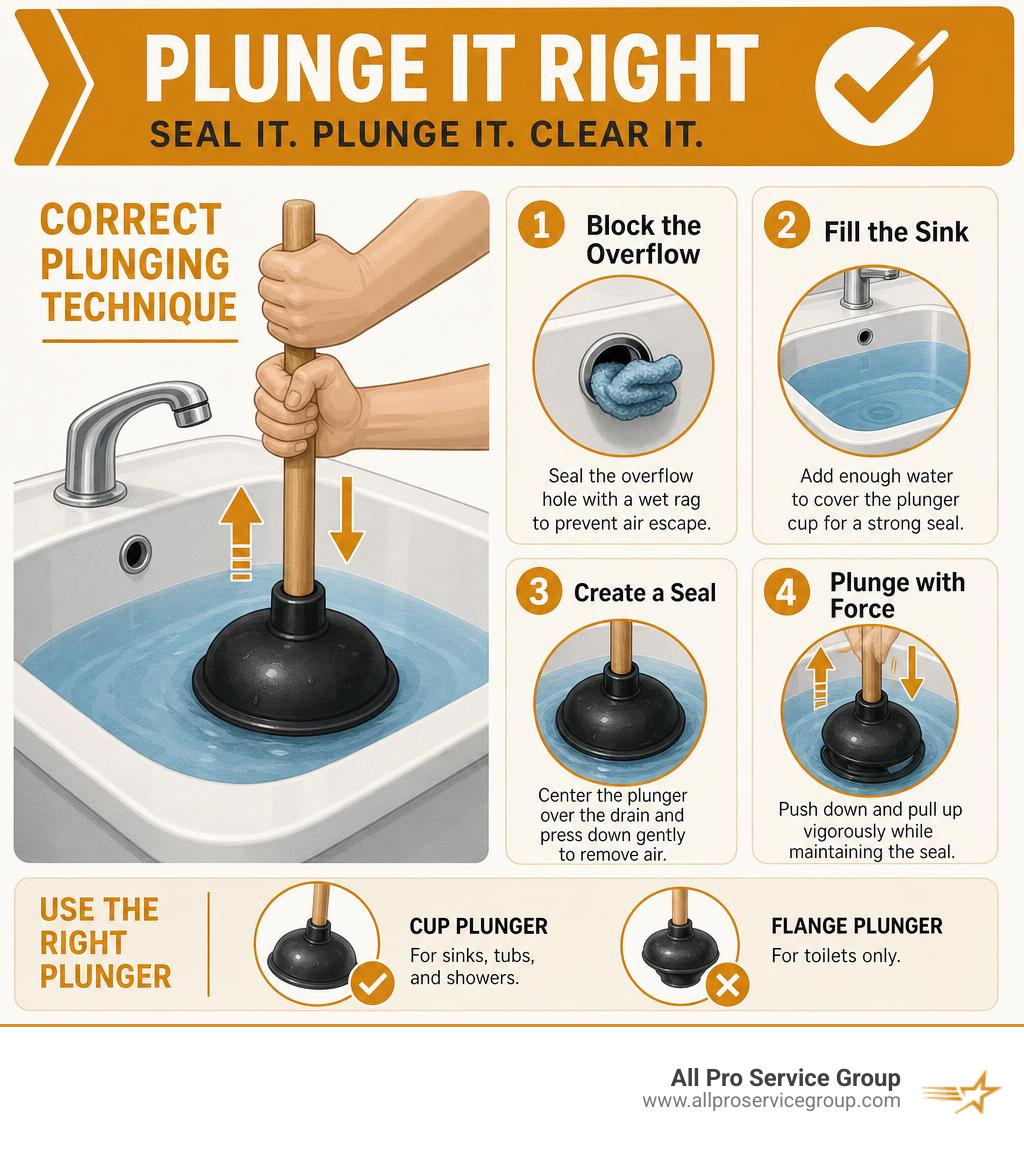
Plunging is the fastest non-chemical way to clear a completely backed-up drain, but most homeowners use the wrong tool or technique.
- Choose the Right Plunger: Use a flat-bottomed cup plunger for flat sinks, tubs, and showers. Save the bell-shaped flange plunger for toilets.
- Create a Seal: Apply a thin layer of petroleum jelly to the rim of the plunger to improve suction.
- Block the Overflow: If you are plunging a bathroom sink or a double kitchen sink, you must seal the overflow hole or the second drain with a wet rag. If you don't, the plunger's air pressure will simply escape through the open hole instead of pushing against the clog.
- Plunge with Force: Fill the sink with enough water to cover the head of the plunger. Push down gently to release air, then plunge vigorously up and down, maintaining the seal. The upward pulling motion is often what actually dislodges the clog.
Step 3: Manual Hair Removal and the Zip-It Tool
If your bathroom sink or shower is clogged, the blockage is almost always hair located within the first 6 to 12 inches of the drain.
- Remove the Stopper: Unscrew or pull out the pop-up drain stopper.
- Use a Zip-It Tool: Insert a cheap, flexible plastic hair-snaking tool (often called a Zip-It tool) into the drain.
- Twist and Pull: Push it down as far as it goes, twist it slightly so the plastic barbs catch the hair, and slowly pull it out. You will likely pull out a surprising and slightly unpleasant amount of hair and soap scum, resolving the issue instantly.
Step 4: A Natural Clogged Drain Fix with Baking Soda and Vinegar
For slow drains that are sticky with soap scum or minor organic debris, the classic baking soda and vinegar combination is highly effective.
- Pour Baking Soda: Dump half a cup of dry baking soda directly down the drain.
- Add Vinegar: Pour half a cup of white distilled vinegar down immediately after.
- Cover the Drain: Quickly cover the drain opening with a plug or a wet rag to force the fizzing chemical reaction downward into the pipe rather than letting it escape upward.
- Wait and Flush: Let it sit for 15 to 30 minutes while the carbon dioxide gas mechanically agitates and loosens the sticky buildup. Flush the drain thoroughly with hot tap water.
Step 5: Snaking the Drain with a Hand Auger
When a clog is located further down the pipe where a plunger cannot reach, it is time to use a mechanical hand auger (drain snake).
- Insert the Cable: Feed the metallic cable of the hand snake directly into the drain opening.
- Navigate Turns: When you feel resistance, you have likely hit a pipe bend. Rotate the handle of the auger clockwise while pushing gently to guide the cable through the turn.
- Break Up the Clog: Once you reach the actual blockage, continue cranking clockwise. The spring-like head of the snake will either chew through the clog or entangle it.
- Retrieve Slowly: Slowly pull the cable back out while continuing to rotate, then clean the debris off the tip.
Step 6: Removing and Cleaning the P-Trap
If all else fails and your sink is still completely blocked, the clog is likely sitting in the U-shaped bend beneath your sink, known as the P-trap. The P-trap is designed to hold standing water, which acts as a barrier to prevent sewer gases from entering your home. However, it also acts as a natural collection point for heavy debris.
- Place a Bucket: Position a bucket directly beneath the P-trap to catch any dirty standing water.
- Loosen the Slip Nuts: Use channel lock pliers or your hands to unscrew the plastic slip nuts on both ends of the U-shaped pipe.
- Remove and Clean: Pull the trap down, empty the contents into the bucket, and scrub the inside of the pipe with an old bottle brush.
- Reassemble: Slide the pipe back into place and hand-tighten the slip nuts. Do not over-tighten plastic nuts, as they can crack easily.
Natural Remedies vs. Chemical Drain Cleaners
When faced with a slow drain, many homeowners immediately head to the local hardware store in Salt Lake City to buy a bottle of liquid chemical drain cleaner. However, professional plumbers almost universally advise against using these products.
| Feature | Baking Soda & Vinegar | Chemical Drain Cleaners |
|---|---|---|
| Primary Action | Mechanical agitation via CO2 fizzing | Corrosive acid/base dissolution |
| Pipe Safety | 100% safe for metal and PVC | High risk of pipe corrosion and joint damage |
| Environmental Impact | Eco-friendly and biodegradable | Toxic to groundwater and septic systems |
| User Safety | Non-toxic | Causes severe chemical burns and toxic fumes |
| Cost | Extremely cheap (household items) | Expensive per bottle |
Why Baking Soda and Vinegar Works
The combination of baking soda (sodium bicarbonate) and vinegar (acetic acid) is often misunderstood. It does not dissolve hair or grease chemically. Instead, it creates an acid-base reaction that produces carbon dioxide gas.
This intense fizzing action physically agitates, loosens, and lifts sticky debris from the pipe walls, allowing it to be easily washed away by a hot water flush. It is completely safe for all types of plumbing, septic systems, and the environment.
The Hidden Dangers of Chemical Cleaners
Liquid chemical drain cleaners rely on incredibly harsh active ingredients, such as sodium hydroxide (lye) or sulfuric acid. These chemicals work by generating extreme heat to melt grease and dissolve organic material.
Unfortunately, this chemical heat can easily warp or melt PVC pipes, soften older metal pipes, and eat away at the rubber seals inside your plumbing joints. If the chemical fails to clear the clog, you are left with a sink full of highly corrosive, toxic standing water. This creates an incredibly dangerous situation for you or any plumber who eventually has to disassemble the pipes.
When to Stop DIY and Call a Professional
While roughly 80% of residential drain issues can be handled at home, there is a point where DIY attempts become risky. Continuing to push tools down a stubborn line can puncture older pipes, scrape away protective coatings, or lodge tools permanently inside the walls.
If you have tried plunging, snaking, and cleaning the P-trap without success, it is time to seek professional drain unclogging services.
Signs of a Deep Sewer Line Blockage
A single slow sink is a localized issue. However, if you observe any of the following symptoms, you are likely dealing with a deep main sewer line blockage that requires immediate emergency plumbing intervention:
- Multiple Clogged Fixtures: Your shower, toilet, and bathroom sink are all backing up simultaneously.
- Cross-Fixture Backups: Flushing the toilet causes water to bubble up or rise inside your bathtub or shower stall.
- Gurgling Sounds: You hear distinct bubbling or gurgling noises coming from unused drains or toilets when your washing machine drains.
- Persistent Sewage Odor: A rotten-egg or sewer smell rises from multiple drains in your home, indicating that sewer gas is bypassing the P-traps.
Professional Solutions: Hydro Jetting and Camera Inspections
When you call us for professional drain resolution, we don't guess where the problem is. We use advanced diagnostic and clearing tools that are unavailable to the average homeowner:
- Sewer Camera Inspections: We feed a high-resolution, waterproof camera on a flexible cable down your line to inspect the interior of your pipes in real-time. This allows us to locate the exact source of the block—whether it is tree root intrusion, a collapsed pipe, or a heavy grease build-up.
- Hydro Jetting: While a drain snake only punches a temporary hole through a clog, hydro jetting uses high-pressure water streams (up to 4,000 PSI) to scrub the entire interior wall of your pipes clean. This completely removes grease, scale, and roots, restoring your pipes to like-new condition.
Frequently Asked Questions About Unclogging Drains
Why does my drain keep clogging repeatedly?
If you find yourself performing a clogged drain fix on the same sink every few weeks, the clog was likely never fully removed. A basic hand snake might simply punch a small hole through a thick grease or hair blockage, allowing water to flow temporarily before the opening closes up again.
Alternatively, you could be dealing with structural pipe issues, such as a "pipe belly" (a sagging section of pipe where water pools and debris collects) or tree roots invading underground pipe joints. If your pipes are leaking or damaged due to these blockages, you may need a professional leaking pipe fix to prevent water damage to your home's foundation.
Can I use boiling water on PVC pipes?
No, you should not use boiling water (212°F) if your home has PVC or ABS plastic drain pipes. Standard residential PVC pipes are only rated to handle continuous temperatures up to 140°F, or intermittent exposure up to 160°F.
Pouring boiling water down a plastic drain can soften the pipes, warp the joints, and cause the chemical glue sealing the connections to fail, leading to hidden leaks inside your walls. Stick to hot tap water (around 120°F to 130°F) for plastic plumbing.
Are flushable wipes really safe to flush?
Absolutely not. Despite what the packaging claims, "flushable" wipes do not break down in water like standard toilet paper. Traditional toilet paper dissolves into tiny fibers within seconds of being flushed.
Flushable wipes, however, are made of synthetic materials that remain intact for days or even weeks. They easily snag on minor pipe imperfections or tree roots, creating massive, expensive blockages in both residential sewer lines and municipal wastewater treatment systems. Always dispose of wipes in the trash bin.
Conclusion
A clogged drain doesn't have to ruin your week. By following a safe, logical order of operations—starting with hot water, moving to a plunger, and using natural remedies like baking soda and vinegar—you can safely resolve the vast majority of minor household plumbing blockages on your own.
However, when DIY methods fall short, or if you suspect a deeper main line issue, continuing to force tools down the drain can cause expensive structural damage to your pipes.
If you live in the Greater Salt Lake Area—including Salt Lake City, Ogden, Park City, Provo, South Jordan, West Jordan, or West Valley City—and need a dependable, permanent solution, we are here to help. All Pro Service Group has been providing top-tier, "Gephardt Approved" plumbing services since 2008.
Contact us today to schedule an expert plumbing inspection or professional plumbing repair to clear your lines for good!