When Your Sewer Line Fails, You Have a Better Option Than Digging Up Your Yard
Trenchless pipe repair is a modern method of fixing or replacing damaged underground pipes without large-scale excavation. Instead of digging a long trench across your yard, technicians work through small access points to rehabilitate your pipes from the inside.
Here's a quick comparison of the main no-dig pipe repair options:
| Method | Best For | Typical Downtime |
|---|---|---|
| CIPP Lining | Cracked, leaking, or root-intruded pipes that still hold their shape | 4–12 hours |
| Pipe Bursting | Severely damaged or collapsed pipes needing full replacement | ~1 day |
| Slip Lining | Larger pipes needing a new liner inserted inside | 1–2 days |
| Spot/Point Repair | Isolated damage at a specific section | A few hours |
All methods share the same core advantage: far less digging, faster completion, and lower total cost than traditional excavation.
When your sewer line fails, the fear is rarely just the broken pipe itself — it's the thought of your yard torn apart for weeks, your driveway cracked open, and your plumbing out of commission. For homeowners in the Greater Salt Lake area, that disruption is especially frustrating when you need a fast, reliable fix.
The good news: in most cases, you don't need to dig at all.
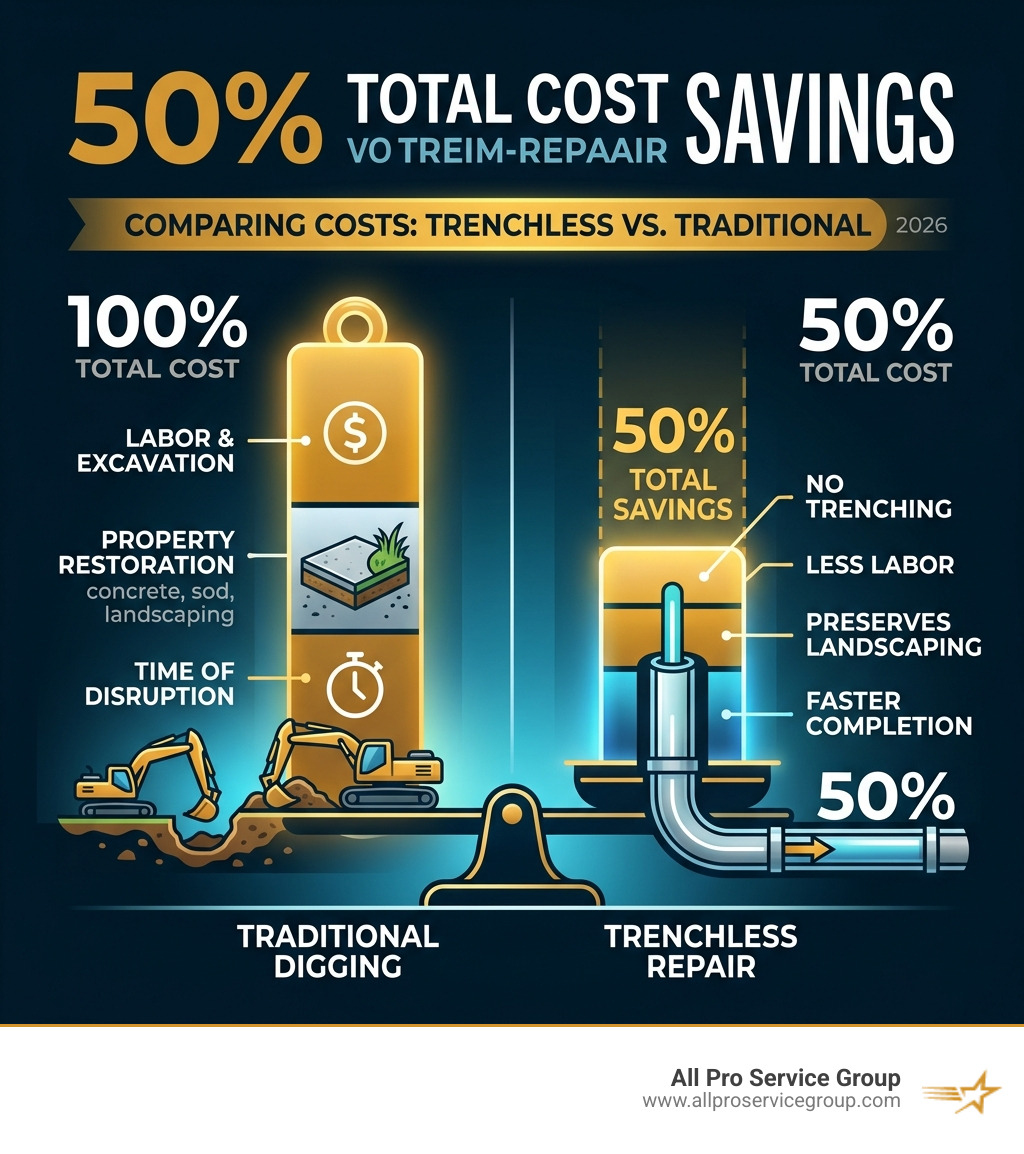
Trenchless technology has become the standard for underground pipe rehabilitation. Properly installed solutions like cured-in-place pipe (CIPP) lining are engineered to last 50 years or more — and most residential jobs are finished in a single day, often for 30–50% less than traditional dig-and-replace methods once you factor in restoration costs.
I'm Gary Leany, owner of All Pro Service Group, and our team has been helping Salt Lake Valley homeowners navigate exactly these kinds of stressful plumbing situations since 2008 — including providing reliable trenchless pipe repair as part of our full-service plumbing offering. In this guide, I'll walk you through every option so you can make a confident, informed decision.
What is Trenchless Pipe Repair and How Does It Work?
For decades, the only way to fix a broken sewer line was the "big dig." This meant bringing in heavy machinery to carve a deep trench through your landscaping, porch, or driveway just to reach the pipe. Trenchless pipe repair flips that script. Instead of digging to the pipe, we use the existing pipe as a pathway to install a brand-new one.
Think of it as subterranean surgery. We utilize small access points—often existing cleanouts—to perform Sewer Services from the inside out. This "pipe-within-a-pipe" approach creates a seamless, structural replacement that addresses leaks, cracks, and root intrusion without the surface-level carnage.
When we perform a Plumbing Repair using trenchless methods, we aren't just applying a temporary patch. We are restoring the structural integrity of the line. By the time we’re done, your subterranean pipelines are often stronger and smoother than the day they were first installed. This minimal disruption is a game-changer for Utah homeowners who want to keep their curb appeal intact while ensuring their waste system works perfectly.
Comparing the Main Trenchless Pipe Repair Techniques
Not every pipe failure is the same, which is why we utilize different technologies depending on the damage. Whether you're in Salt Lake City or Park City, the choice of method usually comes down to the condition of the host pipe and the desired flow capacity.
As noted in the Collection Systems O&M Fact Sheet: Trenchless Sewer Rehabilitation, these methods are designed to reduce inflow and infiltration (I/I), which can lead to sewer overflows. By choosing the right Trenchless Sewer Repair technique, we ensure your home stays compliant and your yard stays green.
Cured-in-Place Pipe (CIPP) Lining
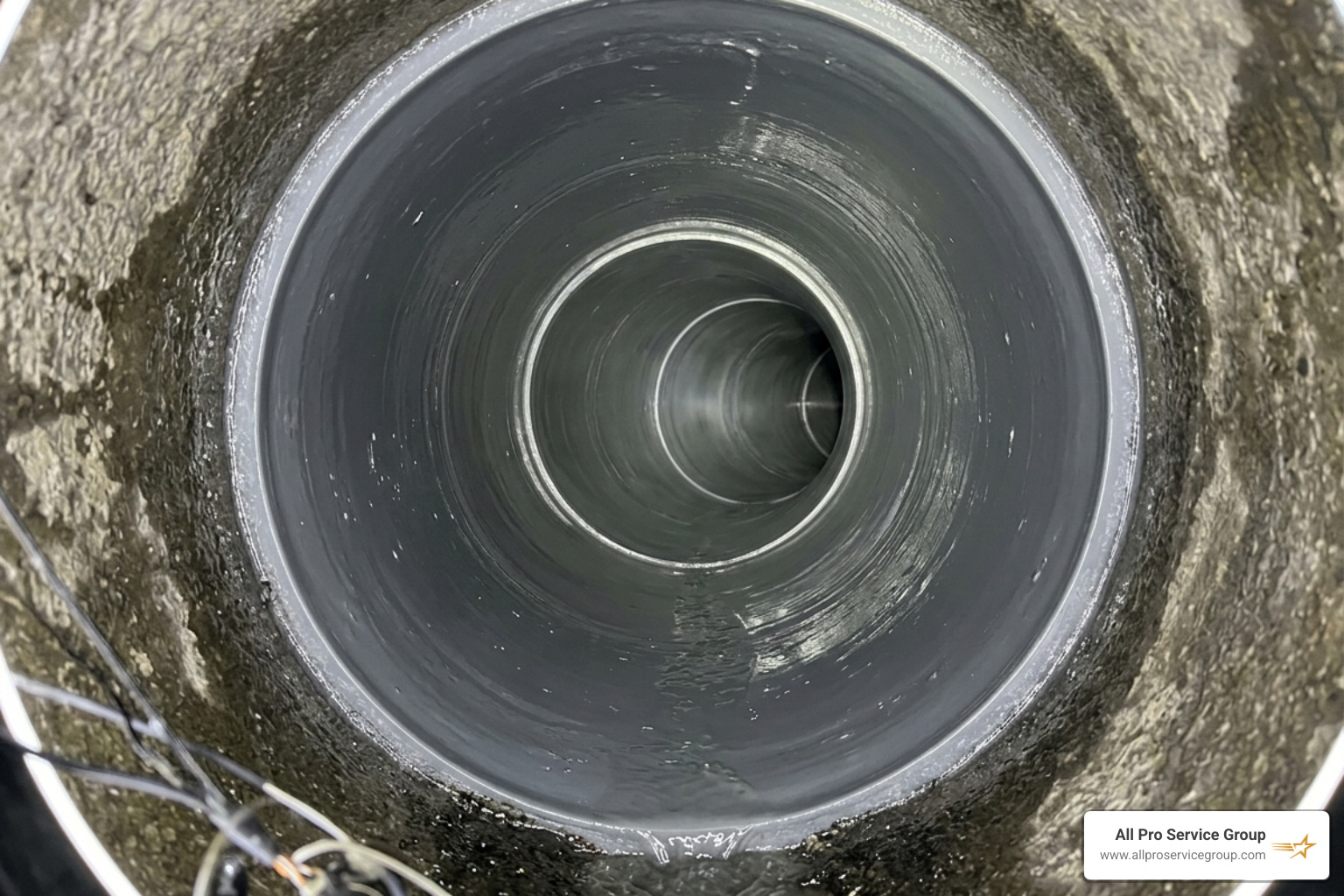
CIPP is the gold standard for pipes that are still mostly intact. The process involves "epoxy saturation," where a flexible felt liner is soaked in a high-strength resin. We pull or blow this liner into your existing sewer line and then "cure" it using air pressure or heat.
Once the resin hardens, it creates a seamless, joint-free pipe that is incredibly resistant to root intrusion. Before the lining begins, a thorough Drain Cleaning is required to ensure the epoxy bonds perfectly to the old pipe walls. The result is a smooth interior that can actually improve your sewage flow.
Pipe Bursting and In-Line Expansion
If your pipe is severely collapsed or if you need to increase the diameter of the line, pipe bursting is the answer. We use a conical "bursting head" that is pulled through the old pipe. As it moves, it fragments the old pipe and pushes the pieces into the surrounding soil.
Simultaneously, a new High-Density Polyethylene (HDPE) pipe is pulled in behind it. This method is often used for Water Line Repair as well. Once the main line is in place, we perform lateral reconnections to ensure every drain in your house is hooked up to the new, indestructible system.
The Pros and Cons of No-Dig Sewer Solutions
While we love trenchless technology, we believe in being 100% transparent with our Utah neighbors. Here is the breakdown of what to expect.
The Pros:
- Longevity: Most liners and HDPE pipes are engineered for a 50-year lifespan, with some materials rated for 100 years.
- Cost-Effectiveness: While the specialized equipment makes the initial repair cost comparable to digging, you save thousands on "restoration." You won't have to pay to repave your driveway or replant a mature oak tree.
- Soil Stability: Digging a deep trench can destabilize the soil around your foundation. Trenchless methods keep the ground compacted and secure.
- Speed: Most residential projects are finished in 24 hours.
The Cons:
- Skilled Technicians Required: This isn't a DIY project. It requires advanced Leak Detection Repair technology and certified experts to ensure the liner doesn't have "slugs" or sags.
- Limited Applicability: If a pipe has completely pancaked or has a severe "belly" (a deep sag where water pools), trenchless might not be enough. In those cases, we might recommend Drain Unclogging Services as a temporary fix before a more traditional repair.
The Process: From CCTV Inspection to a 50-Year Solution
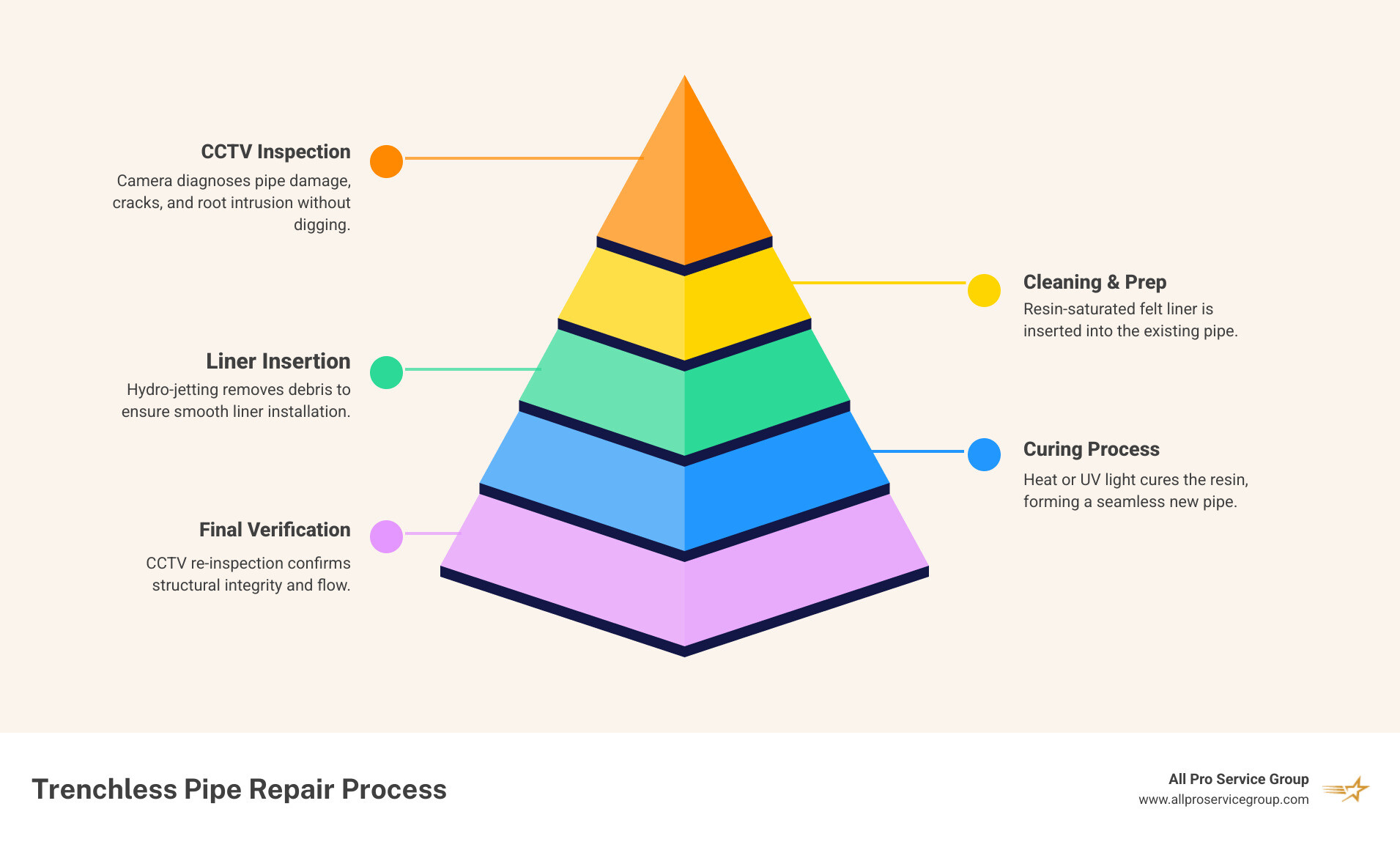
We don't guess; we inspect. Every project starts with a high-definition video diagnosis. We send a waterproof camera down the line to map out every crack, root ball, and offset joint. This allows us to see exactly what we're dealing with before we ever start the machinery.
- Inspection: We use a camera to confirm if the line is a candidate for lining.
- Preparation: We perform Drain Cleaning In Salt Lake City using hydro-jetting to remove debris and scale.
- Wet-Out: The liner is saturated with epoxy resin.
- Installation: The liner is inserted and inflated.
- Curing: We allow the resin to harden (usually 4–12 hours).
- Verification: A final camera inspection ensures the pipe is perfect.
In some commercial or complex residential cases, we may also perform Backflow Prevention Testing to ensure the entire system is operating safely and meeting local Utah codes.
Frequently Asked Questions about Trenchless Pipe Repair
How long does trenchless pipe repair take to complete?
Most residential projects in areas like South Jordan or West Valley City are completed in a single workday. Your plumbing downtime is typically limited to 4 to 12 hours. While you might need to avoid flushing for the afternoon, you’ll usually have full service back by dinner. This is a massive improvement over traditional digging, which can leave you needing Emergency Plumbing support for days on end. Surface recovery is almost immediate since there are no massive mounds of dirt to settle.
Is trenchless pipe repair suitable for all pipe conditions?
Not always. While it's a miracle for 90% of cases, severe sags or a "grade failure" (where the pipe no longer slopes downward) can't always be fixed by a liner alone. If your pipe has completely collapsed, we may need to perform a Repiping Main Line service using pipe bursting or strategic excavation. We also check material compatibility; while epoxy works on cast iron, clay, and PVC, some extremely brittle pipes require a gentler touch.
What are the typical costs of no-dig solutions?
When people look at the "per foot" price of trenchless pipe repair, it can look higher than traditional digging. However, that’s a narrow view. According to industry statistics, traditional repair restoration—replacing concrete, sod, and landscaping—can add $5,000 to $15,000 to a bill. Trenchless avoids those costs entirely. As our Water Line Repair Complete Guide explains, the labor reduction and lack of property damage lead to a 30-50% total savings on average.
Conclusion
At All Pro Service Group, we’ve seen how a sewer failure can turn a homeowner's week upside down. Our goal is to provide the most advanced, least disruptive solutions available in the Greater Salt Lake Valley. Whether you are in Provo, Ogden, or right here in Salt Lake City, our "Gephardt Approved" experts are ready to help.
We offer 24/7 availability for those middle-of-the-night backups, financing options to fit your budget, and the peace of mind that comes with hiring a team that has served Utah since 2008. Don't let a broken pipe ruin your landscaping or your week.
Stop the digging and restore your lines today with professional Repiping Main Line services. Give us a call, and let’s get your plumbing back on track with a solution that lasts for the next half-century.