
Why Most Homeowners Get Adding a Plug Socket from a Light Switch Wrong
Adding a plug socket from a light switch is possible — but only under the right wiring conditions. Here's the quick answer:
- If your switch box has a neutral wire and a constant hot: You can add a socket directly from the switch box.
- If your switch box only has a switch loop (no neutral): You cannot add a working socket without running new cable from a power source.
- Either way: The lighting circuit must have enough spare capacity, and the work must meet local electrical code.
Over 50% of homeowners wish they had more outlets in rooms where only a light switch controls power. It's a completely understandable frustration — you're standing next to a perfectly good electrical box with no place to plug anything in.
But here's the catch most DIY guides skip: not every switch box can support a new socket. A standard light switch circuit often uses what's called a switch loop — a wiring method where no neutral wire reaches the switch at all. Without a neutral, a socket simply won't work. Plugging into an improperly wired outlet can trip your breaker, damage appliances, or worse, create a fire hazard.
At All Pro Service Group, after years of diagnosing electrical issues across the Greater Salt Lake Valley, we have found that adding a plug socket from a light switch is one of the most common DIY jobs we see done unsafely. Below, we'll walk you through exactly how to do this correctly — and when to call a pro instead.
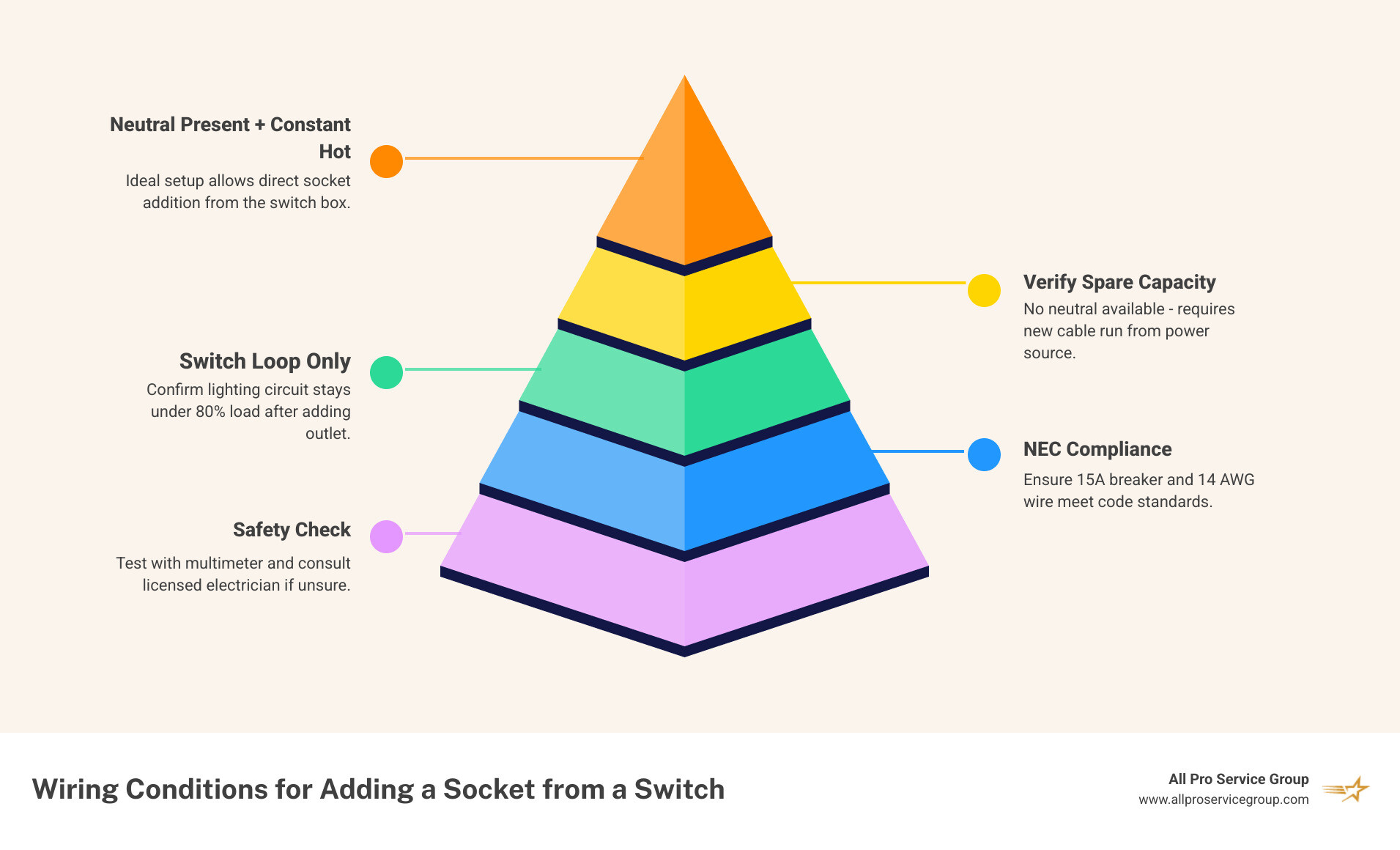
Is Adding a Plug Socket from a Light Switch Safe and Code-Compliant?
When we talk about adding a plug socket from a light switch, the first question isn't "how," but "should I?" In the Greater Salt Lake Area, our homes generally follow the National Electrical Code (NEC). According to these standards, adding a receptacle to a lighting circuit is generally legal, provided you don't overload the circuit.
Most residential lighting circuits in Utah are protected by a 15A breaker and utilize 14 AWG wire. A key safety rule we follow is the 80% load rule. This means a 15A circuit should not carry a continuous load exceeding 12A (about 1440 watts). If your existing lights already draw a significant amount of power—perhaps from older, non-LED fixtures—adding a socket for a vacuum cleaner or a space heater could easily trip the breaker.
Furthermore, code requires that every room have a switch-controlled light or receptacle near the entrance. If you "convert" a switch into an outlet and lose the ability to turn on a light when you enter the room, you are likely in violation of safety codes designed for first responder access. Before you start cutting into walls, it is wise to consider if your current system needs Electrical wiring rewiring to handle the modern demands of 2026 electronics.
For a deeper dive into whether your specific setup is a good candidate for this modification, check out this discussion on Should I convert a single light switch to a receptacle/switch combo?.
Essential Requirements for Electrical Modifications
To successfully move forward with adding a plug socket from a light switch, your switch box must contain three specific things:
- A Neutral Wire: This is the most common dealbreaker. In older switch loops, the white wire was often used as a "hot" return to the light. A socket must have a dedicated neutral (usually a bundle of white wires tucked in the back) to complete the circuit.
- A Constant Hot: You need a wire that has power all the time, not just when the switch is flipped "on."
- A Ground Wire: For safety and code compliance, the new outlet must be grounded to prevent shocks.
Below is a quick reference table to help you understand why lighting circuits have limitations compared to dedicated power circuits.
| Feature | Typical Lighting Circuit | Dedicated Power Circuit |
|---|---|---|
| Breaker Rating | 15A (Standard US) | 20A |
| Wire Gauge | 14 AWG | 12 AWG |
| Max Continuous Load | 1440 Watts | 1920 Watts |
| Ideal Usage | LED Bulbs, Fans | Heaters, Power Tools |
If your goal is to install a heavy-duty outlet for a workshop or kitchen appliance, you likely need a professional Outlet and switch installation rather than a simple tap into a light circuit.
Identifying the Neutral Wire for Adding a Plug Socket from a Light Switch
How do you know if you have that elusive neutral wire? Start by turning off the power at the breaker. Use a non-contact voltage tester to ensure the box is dead.
When you pull the switch out, look past the terminals. If you see two wires (usually black and white) connected directly to the switch and nothing else in the box, you have a switch loop. In this case, that white wire is actually a "switched hot," and there is no neutral available.
However, if you see a bundle of white wires capped together with a wire nut in the back of the box, you’ve hit the jackpot! That is your neutral path. To be 100% sure, we use a multimeter to verify 120V between the constant hot wire and that white bundle.
Step-by-Step Guide to Extending Power from a Switch Box
If you’ve confirmed you have a neutral and a constant hot, you’re ready to begin. You will need a few basic tools: wire strippers, a Phillips and flat-head screwdriver, and some "pigtails" (short lengths of wire).

- Preparation: Turn off the breaker. Verify with your tester.
- Access the Power: Disconnect the "Line" (constant hot) wire from the switch.
- Create Pigtails: You’ll need to share the power. Take your constant hot wire and use a wire nut to connect it to two short black pigtail wires. One will go back to the switch; the other will go to your new outlet.
- Connect the Neutral: Do the same with the white neutral bundle. Add a white pigtail to the bundle to provide a connection for your new socket.
- Grounding: Ensure all ground wires (bare copper or green) are bonded together and connected to both the switch and the outlet.
For a visual walkthrough of this process, you can refer to Easy Wiring: Add Outlet from Light Switch! or see specific diagrams for 13a switch socket outlet wiring.
Wiring the New Adding a Plug Socket from a Light Switch Connection
When attaching the wires to the new receptacle, remember the "Gold to Bold" rule:
- The Black (Hot) wire connects to the Brass screw.
- The White (Neutral) wire connects to the Silver screw.
- The Green or Bare (Ground) wire connects to the Green screw.
Wrap the wire clockwise around the screw so that tightening the screw pulls the wire tighter. We also recommend wrapping the perimeter of the outlet with electrical tape to cover the terminals, providing an extra layer of protection against "box fill" issues where wires might touch the sides of a metal box.
Speaking of box fill, ensure you aren't cramming too many wires into a small space. Overcrowded boxes can lead to heat buildup and arcing. If the box is too small, you may need to install a deeper "old work" box.
Understanding Circuit Load and Amperage Limitations
One of the biggest mistakes we see in the Salt Lake Valley is homeowners plugging high-draw appliances into these new outlets. While a 15A circuit sounds like a lot, it’s easily overwhelmed.
Lighting circuits are designed for—you guessed it—lights. Modern LED bulbs draw very little, but motor-driven devices like vacuum cleaners or circular saws have a high inrush current. This is a sudden spike in power when the motor starts. If you’re adding a plug socket from a light switch in a garage, for example, and you plug in a table saw, your lights will likely dim or the breaker will trip immediately.
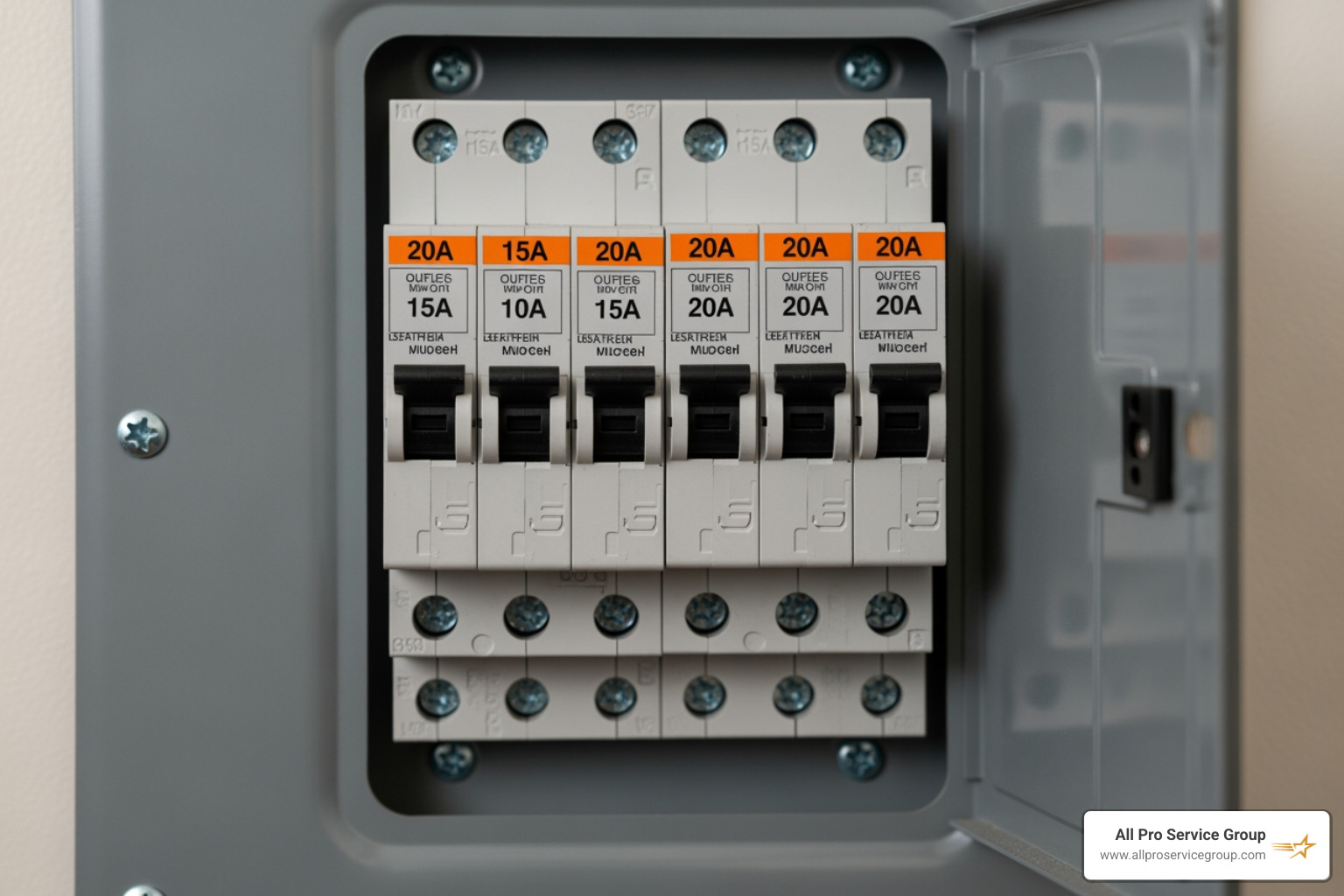
In some older Utah homes, you might even find lighting circuits limited to very low capacities. If you see 1.5mm cable (common in some older or international-style installs), it may only safely carry 10A when buried in insulation. Always check your Electrical outlets switches capacity before adding more "mouths to feed" to the circuit.
Frequently Asked Questions about Lighting Circuit Outlets
Can I add an outlet if there is no neutral wire in the switch box?
No. An outlet requires a complete path for electricity to return to the panel. Without a neutral, the outlet will not function. Your only option in this scenario is to run a new 14/2 or 12/2 Romex cable from a nearby power source or the main panel.
What devices are safe to plug into a lighting circuit outlet?
Low-wattage electronics are generally safe. Think phone chargers, floor lamps, or a clock radio. Avoid "heat-producing" or "motor-heavy" appliances like space heaters, hair dryers, or large power tools, as these can easily exceed the 80% load rule for a 15A circuit.
Do I need a permit for adding a socket to a light circuit in 2026?
In many jurisdictions within the Greater Salt Lake Area, including West Valley City and Provo, adding a new outlet is considered an "extension of a branch circuit" and may require a minor electrical permit. This ensures that the work is inspected and meets the 2026 safety standards, which is vital for your home insurance validity.
Conclusion: Ensuring Safety with Professional Electrical Services
Adding a plug socket from a light switch can be a rewarding DIY project, but it’s one that carries significant risk if the underlying wiring isn't understood. From missing neutrals to overloaded 15A breakers, there are many ways for a simple convenience to become a safety hazard.
At All Pro Service Group, we’ve been the trusted experts for Electrical services salt lake since 2008. Whether you’re in Ogden, Park City, or South Jordan, our "Gephardt Approved" team is ready to ensure your home’s electrical system is up to 2026 standards. We offer dependable inspections and can help you safely expand your power options without the guesswork.
If you’ve opened up your switch box and found a confusing mess of wires, don't risk a fire or a shock. We are available to help you get the job done right the first time. For More info about outlet and switch services, reach out to us today!