Hard Water Is a Real Problem — Here's What Salt Free Water Softeners Actually Do
Salt free water softeners are whole-house water treatment systems that prevent limescale buildup without using salt, electricity, or wasting water. Instead of removing hard minerals like calcium and magnesium, they change the minerals' physical structure so they can't stick to your pipes, appliances, or fixtures.
Quick answer — here's what you need to know:
| Question | Answer |
|---|---|
| Do they soften water? | No — they condition it (minerals stay in the water) |
| Do they prevent scale? | Yes — top systems prevent up to 99.6% of scale |
| Do they need salt or electricity? | No |
| Best for what hardness? | Most systems handle up to 15–81 GPG depending on model |
| Maintenance needed? | Minimal — sediment filter replacement every 6–9 months |
| Cost range? | ~$330 to $1,300+ for whole-house systems |
Over 85% of American homes deal with hard water. In the Greater Salt Lake area, the problem is especially severe — local water picks up high levels of calcium and magnesium as it flows through limestone and mountain rock formations. That means scale buildup on faucets, spotty dishes, stiff laundry, and worn-out appliances are facts of life for many Utah homeowners.
Salt free systems have become a popular alternative to traditional salt-based softeners — especially in areas with brine discharge restrictions. But they work very differently, and they're not the right fit for every situation. This guide breaks it all down so you can make a confident decision.
I'm Gary Leany, owner of All Pro Service Group, and my team has spent years helping Greater Salt Lake Valley homeowners evaluate and install the right water treatment solutions — including salt free water softeners — as part of our whole-home plumbing services. In the sections below, I'll walk you through exactly how these systems work, their real strengths and limitations, and how to choose the right one for your home.
How Salt Free Water Softeners Work
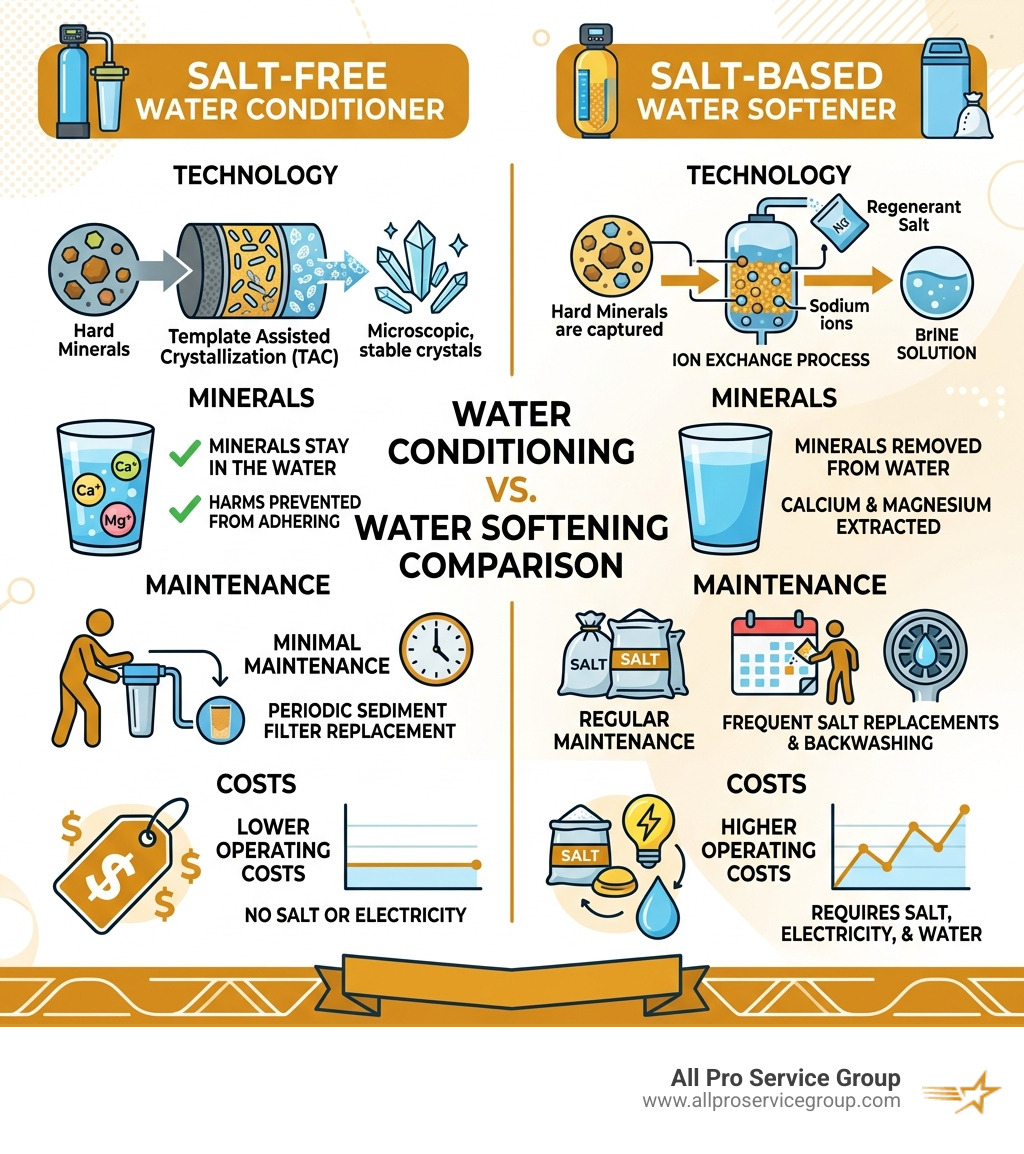
To understand salt free water softeners, we first have to clear up a bit of terminology. Technically, these systems are "water conditioners" or "descalers," not softeners. A traditional softener uses ion exchange to physically pull calcium and magnesium out of the water and replace them with sodium. A salt-free system leaves the minerals in the water but renders them harmless.
The most effective technology used today is Template Assisted Crystallization (TAC). The process is widely discussed in water treatment literature, and the underlying chemistry is related to how calcium carbonate forms stable crystals instead of hard scale on surfaces.
The TAC Process: Turning Scale into Crystals
Imagine hard water minerals as tiny, sticky magnets looking for a place to land-like the inside of your water heater or your showerhead. TAC technology uses specialized polymeric beads that act as a "template." As water flows through the tank, the dissolved hardness minerals are drawn to these beads and converted into microscopic, stable crystals.
Once these crystals form, they are released back into the water stream. Because they are now in a crystallized state, they lose their "stickiness." They simply float through your plumbing system and down the drain without ever attaching to your pipes or heating elements. This physical conditioning process is highly effective; top-tier systems like the SpringWell FutureSoft can prevent up to 99.6% of scale buildup.
Other Salt-Free Methods
While TAC is the gold standard, you may also encounter:
- Nucleation Assisted Crystallization (NAC): Very similar to TAC, using a medium to transform minerals into crystals.
- Electromagnetic/Magnetic Descaling: These use electric fields or magnets wrapped around pipes to alter mineral behavior. While easy to install, research shows these are generally less consistent than media-based TAC systems, often reducing scale by only 17% to 70%.
- Chelation/Sequestration: Systems like the NuvoH2O use food-grade additives (like citric acid) to bind to minerals so they can't form scale.
| Feature | TAC (Salt-Free) | Ion Exchange (Salt-Based) |
|---|---|---|
| Mineral Removal | No (Retains minerals) | Yes (Removes minerals) |
| Scale Prevention | Up to 99.6% | Near 100% |
| Wastewater | Zero | High (Regeneration cycles) |
| Electricity | None | Required |
| Water Feel | Natural | "Slippery" or "Slimy" |
For homeowners looking for NoScale Salt-Free Water Conditioners, the focus is on this physical transformation rather than chemical removal.
Pros and Cons of Salt-Free Conditioning
Deciding between a salt-based and a salt-free system often comes down to what you want to achieve. If you live in Salt Lake City or Park City, where water hardness can be extreme, weighing these pros and cons is essential.
The Pros: Why Salt-Free is Winning
- Eco-Friendly and Code Compliant: Traditional softeners discharge brine (saltwater) into the sewer system. Many municipalities are beginning to restrict this. Salt-free systems have zero wastewater and discharge no salt.
- Maintenance-Free Lifestyle: You never have to haul 40-pound bags of salt from the grocery store to your basement again.
- Healthier Drinking Water: Because no sodium is added, the water is safer for those on low-sodium diets. Plus, you keep beneficial minerals like calcium and magnesium in your diet.
- Protects Your Home: These systems are excellent at protecting expensive appliances. In fact, many tankless water heater warranties require some form of scale protection to remain valid.
- No Electricity Required: Most salt free water softeners work purely on water pressure, meaning your system keeps working even during a power outage.
The Cons: What You Should Expect
- Doesn't "Soften" the Water: Since the minerals are still there, you won't get that "slippery" feel in the shower. Your soap won't lather as easily as it would with 100% soft water.
- Spotting Can Still Occur: If water is left to evaporate on a surface (like a glass shower door), the minerals are still physically present and will leave a spot. However, because they are crystallized, these spots are usually much easier to wipe away than traditional hard water scale.
- Hardness Limits: While some systems like the SpringWell FutureSoft can handle up to 81 GPG (Grains Per Gallon), cheaper models often fail when hardness exceeds 15–25 GPG.
- Effectiveness is Hard to Test: You can't use a standard DIY "hardness test" to see if a salt-free system is working, because the minerals are still in the water. You have to rely on the lack of scale buildup in your home as proof.
Many residents looking for Salt Lake City salt-free water softener and conditioning solutions appreciate the balance of protection and mineral retention these systems provide.
Sizing and Installation Requirements
Getting the right size system is the difference between enjoying consistent water pressure and a frustrating trickle in the shower. When we talk about "size" for salt free water softeners, we aren't just talking about the physical tank—we're talking about the Flow Rate, measured in Gallons Per Minute (GPM).
Understanding GPM and Household Size
If you have a large home in West Valley City or South Jordan with multiple bathrooms, you need a higher GPM.
- 1-3 Bathrooms: Typically requires 9–12 GPM.
- 4-6 Bathrooms: Typically requires 12–15 GPM.
- Large Estates: May require 17-25 GPM systems.
If you undersize your system, you’ll experience a significant drop in water pressure when two people try to shower at the same time. High-performance systems like the Aquasure Serene or the SoftPro Elite are designed to maintain flow even in high-demand households.
Installation Essentials
While many homeowners consider a DIY approach, professional Installation Of Water Softeners is often recommended to ensure the system is integrated correctly with your home's main water line.
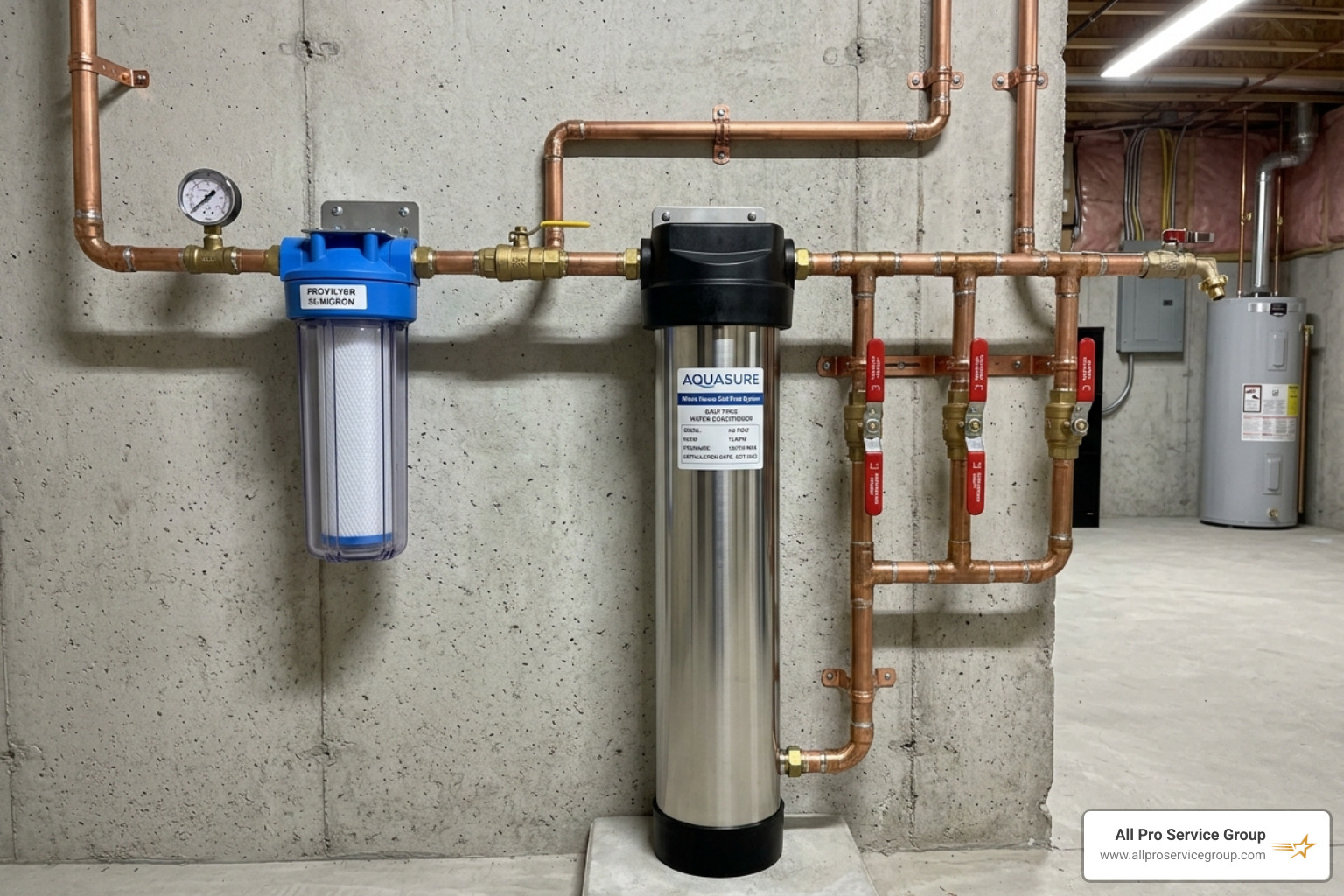
- Bypass Valve: Essential for maintenance, allowing you to turn off water to the unit without cutting off water to the whole house.
- Sediment Pre-Filter: Most salt-free systems require a 5-micron pre-filter. This catches dirt, silt, and rust that could otherwise "foul" or clog the expensive TAC media inside the main tank.
- Plumbing Codes: In Utah, installations must meet specific plumbing codes regarding backflow prevention and pipe materials.
Choosing the Best Salt Free Water Softeners for Your Household
When shopping in April 2026, look for systems with a proven track record. For example, the SpringWell FutureSoft is widely considered a top choice because it handles up to 81 GPG and offers a lifetime warranty. If you have city water, you might consider a combo system that includes a carbon filter to remove chlorine taste and odor alongside the scale prevention.
Long-Term Maintenance for Salt Free Water Softeners
One of the biggest "pros" is the low maintenance, but it isn't "zero" maintenance.
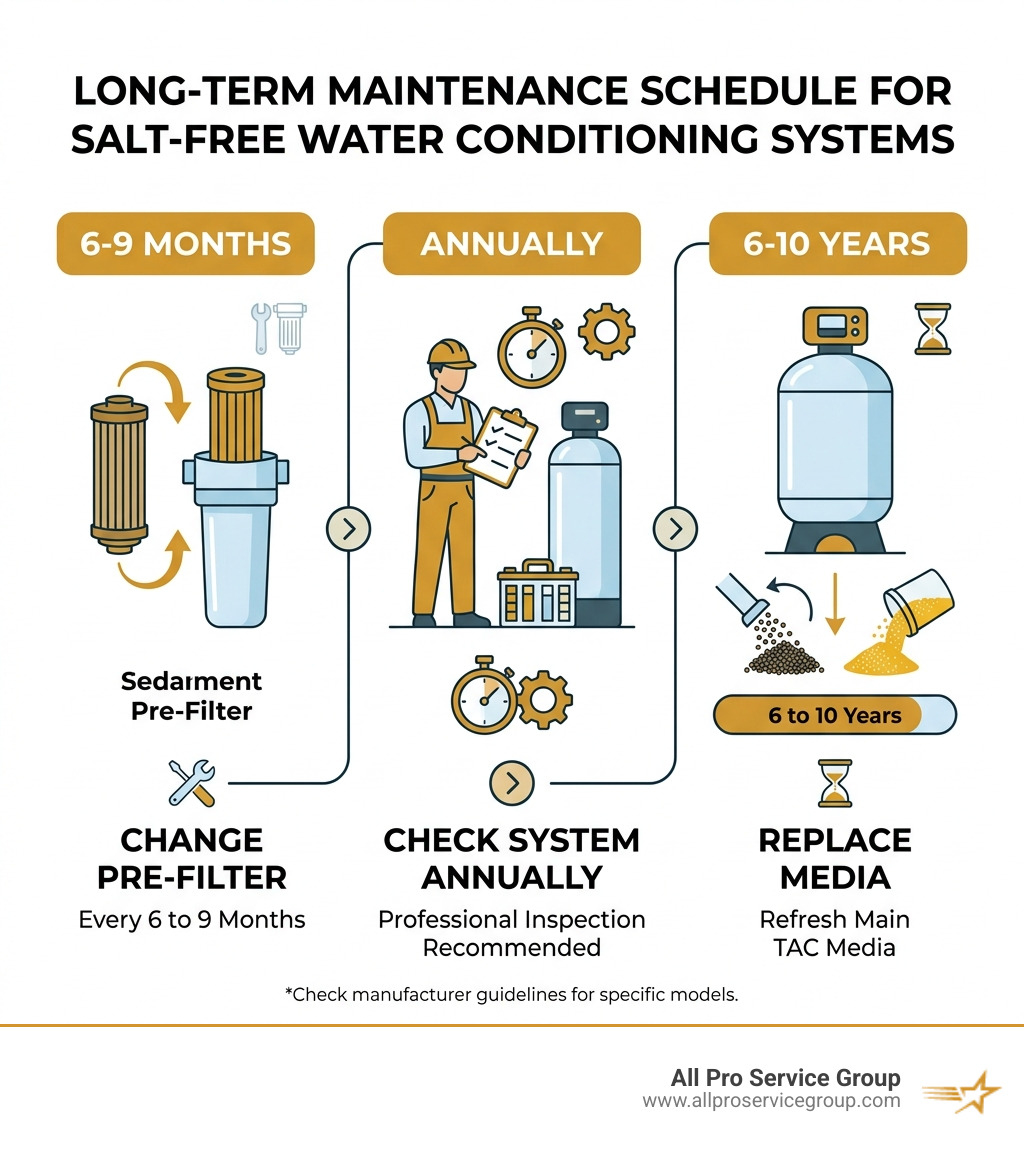
- Pre-Filter Replacement: The sediment filter needs to be changed every 6 to 9 months. This usually costs about $35–$40 per year.
- Media Replacement: The main TAC media inside the tank is incredibly durable. Most high-quality systems are rated for 1,000,000 gallons or roughly 6 to 10 years of use before the media needs to be refreshed.
- No Chemicals: There are no monthly chemicals or salts to buy, making the annual operating cost significantly lower than salt-based alternatives.
Frequently Asked Questions
Do salt-free systems remove hard minerals?
No. Salt free water softeners are designed to retain minerals like calcium and magnesium because they are considered healthy for consumption. They only change the structure of the minerals to prevent them from sticking to surfaces. If you test your water after installation with a Total Dissolved Solids (TDS) meter, the reading will remain the same.
Are salt-free conditioners effective for well water?
They can be, but with a major caveat: Iron and Manganese. Most salt-free media will be ruined if your water has iron levels above 0.3 ppm. If you are on a well in the Greater Salt Lake area, you must have your water tested first. You may need a dedicated iron filter installed before the salt-free conditioner to protect the media.
Will a salt-free system fix spots on dishes?
It will help, but it won't eliminate them as well as a salt-based system. Because the minerals are still in the water, when that water evaporates off a plate in the dishwasher, it leaves the mineral crystal behind. The good news is that these "salt-free" spots don't chemically bond to the dish, so they usually wipe off with a dry cloth or rinse away easily.
Conclusion
Salt free water softeners represent a modern, eco-friendly approach to a classic Utah problem. They are the perfect solution for homeowners who want to protect their pipes and appliances from scale damage without the hassle of salt bags or the "slimy" feel of traditional soft water. While they don't provide the same lathering and spot-free benefits as ion exchange systems, their low maintenance and environmental benefits make them a top-tier choice for the modern home.
At All Pro Service Group, we’ve been the trusted experts for plumbing and water treatment in the Greater Salt Lake Area since 2008. Whether you’re in Ogden, Provo, or Salt Lake City, our "Gephardt Approved" team is available 24/7 to help you test your water and find the perfect conditioning system for your family's needs.
Ready to protect your home from the effects of hard water? More info about plumbing services is just a click away, or give us a call to schedule your inspection today.