Don't Get Salty: A DIY Guide to Installing Water Softeners
Why the Installation of Water Softeners Is Worth Your Attention
The installation of water softeners is one of the most impactful upgrades you can make to protect your home's plumbing, appliances, and water quality.
Here's a quick overview of how to install a water softener:
- Test your water hardness using a test kit or strips
- Choose the right system(salt-based or salt-free) and size for your household
- Pick a location near your main water line, before the water heater, with drain and power access
- Shut off the main water supply and drain the lines
- Cut into the main supply pipe and install a bypass valve
- Connect the softener to the inlet and outlet lines
- Hook up the drain line and overflow tube
- Fill the brine tank with water softener salt
- Restore water, check for leaks, and run a backwash cycle
- Program the control valve with your water hardness and household size settings
If your home has hard water, you've probably already noticed the signs — white crusty buildup on faucets, spots on dishes that won't scrub off, skin that feels dry and tight after a shower. Over 85% of American homes deal with hard water, and the Salt Lake Valley is no exception. The calcium and magnesium minerals dissolved in your water quietly wreak havoc on pipes, water heaters, and appliances over time — all while making your soap less effective and your laundry look dull.
The good news? A water softener solves all of that. And with some basic plumbing skills and the right preparation, you can tackle the installation yourself.
I'm Gary, owner of All Pro Service Group, and I've been helping Greater Salt Lake Valley homeowners with plumbing challenges — including the installation of water softeners — since 2008. Let's walk through everything you need to know to get this done right.
Planning Your Installation of Water Softeners
Before we start cutting into pipes, we need a solid game plan. The installation of water softeners isn't a "one-size-fits-all" project. In places like South Jordan or West Valley City, our water hardness can vary significantly depending on the source.
Water Testing
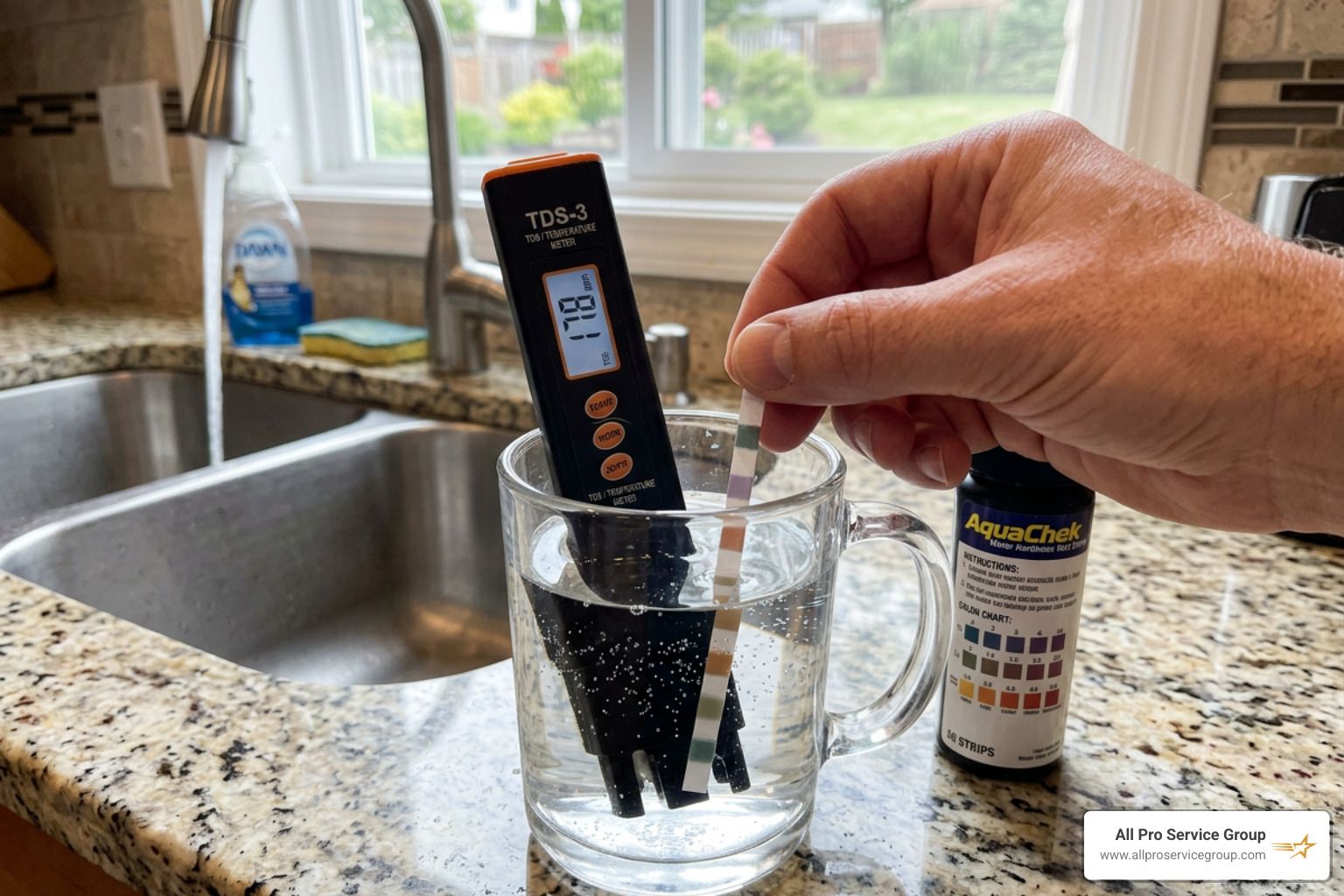
The first step is knowing exactly what you're dealing with. You can't program your unit correctly if you don't know the hardness level of your water. Most homeowners in the Greater Salt Lake Area use test kits or strips to measure "grains per gallon" (GPG).
- Soft Water: 0–3 GPG
- Moderate: 3.5–7 GPG
- Hard: 7.5 GPG and above
In Utah, it is very common to see numbers well above 10 GPG due to mountain runoff picking up minerals. Once you have your GPG number, you can decide which type of system fits your lifestyle.
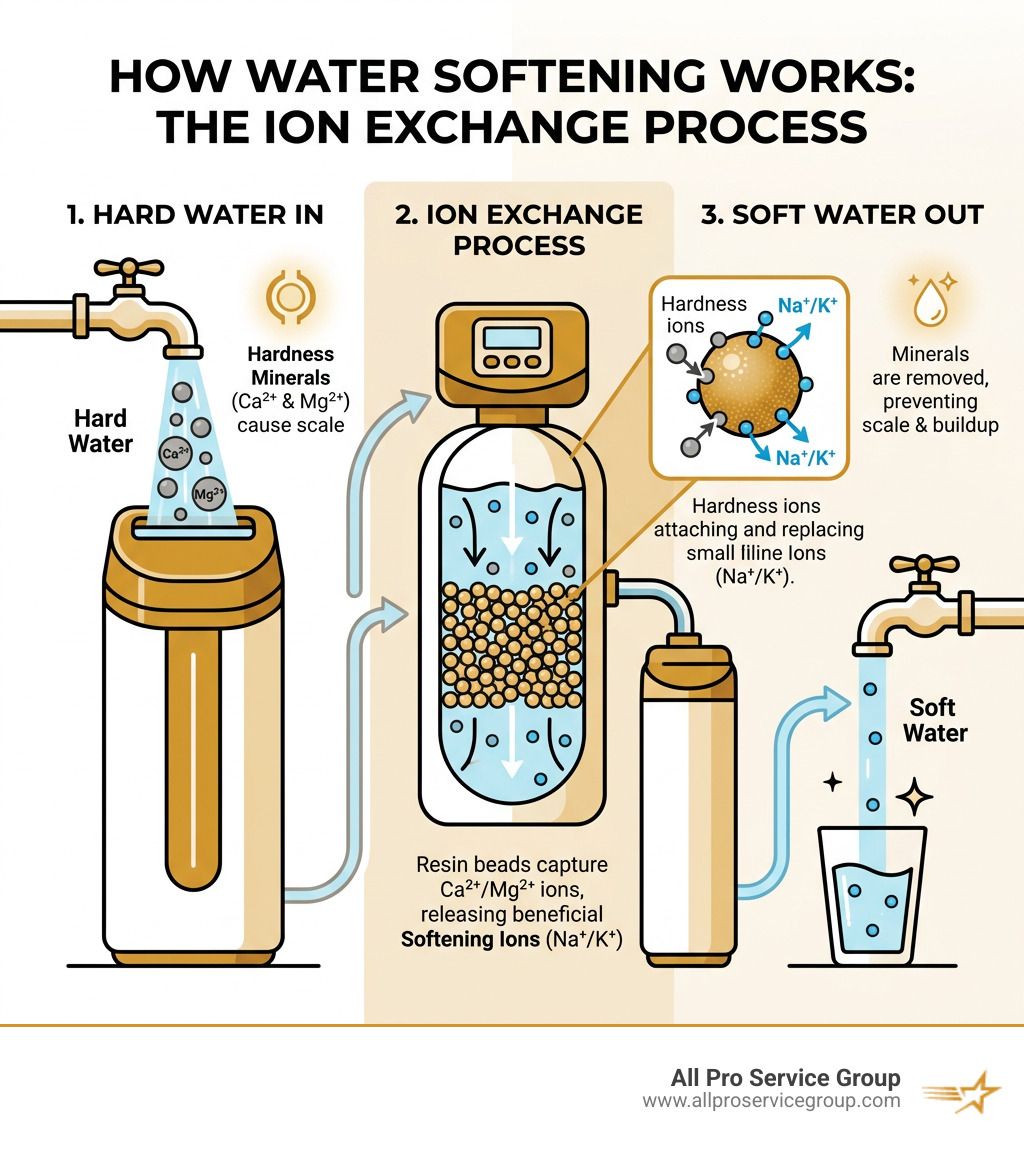
Comparing Salt-Based vs. Salt-Free Systems
| Feature | Salt-Based (Ion Exchange) | Salt-Free (Conditioner) |
|---|---|---|
| Primary Goal | Removes minerals entirely | Prevents scale buildup |
| Maintenance | Requires monthly salt refills | Low maintenance (filter changes) |
| Feel | "Slippery" or soft feel | Water feels the same |
| Price | $500 – $1,700 | $800 – $4,000 |
| Effectiveness | Best for very hard water | Best for moderate hardness |
If you discover your pipes are already in rough shape during this planning phase, you might need a plumbing repair before the new unit can be integrated safely.
Location Selection
Choosing the right spot is half the battle. You want the unit as close as possible to the main water entry point of your home. This ensures that all the water entering your house—except maybe your outdoor hose bibs—is treated.
Critical Location Factors:
- Before the Water Heater: You want to protect your heater from scale.
- Level Surface: The brine tank can be heavy when full of salt and water.
- Drain Access: The unit needs to purge salty water during its regeneration cycle. This drain should be within 30 feet of the unit.
- Power: You’ll need a standard 120V grounded outlet nearby.
- Temperature: Never install a softener where it might freeze. In Utah, this usually means a basement, utility room, or a heated garage.
Choosing the Right Size for Installation of Water Softeners
Sizing a water softener is about more than just physical dimensions; it's about "grain capacity." If you buy a unit that is too small, it will regenerate too often, wasting salt and water. If it’s too large, it’s an unnecessary expense.
To find your daily softening need, use this simple formula: Number of people in home x 75 gallons (average daily water use ) x GPG of hardness.
For example, a family of four in Salt Lake City with 10 GPG hardness needs to treat 3,000 grains per day. Most experts suggest a buffer so the unit only regenerates about once a week. For medium to large households , a 33,000 to 48,000-grain unit is usually the "sweet spot."
Pre-Installation Safety and Codes
We always tell our neighbors in Park City and West Jordan: check your local building codes! Some jurisdictions require specific backflow protection or even a permit for the installation of water softeners.
- Pressure Levels: Ensure your home's water pressure is under 125 PSI. If it’s higher, you might need a pressure-reducing valve.
- Grounding: If you cut into a metal pipe that acts as a ground for your electrical system, you must install a jumper wire across the gap to maintain that ground.
- Inspections: If you're unsure about the local requirements, professional plumbing inspections can save you from a "fix-it" notice later.
Essential Tools and Materials for the Job
Modern plumbing tech has made this project much easier. Back in the day, you had to sweat copper pipes with a torch. Today, we can use push-to-connect fittings.
The "Must-Have" List:
- pipe cutter : For a clean, square cut on your main line.
- Adjustable wrench : For tightening the bypass valve connections.
- SharkBite push-to-connect fittings : These allow you to connect PEX or copper without soldering.
- 24-inch flexible SharkBite softener lines : These act as a bridge between your home's plumbing and the softener unit.
- Teflon Tape: Essential for sealing threaded connections.
- Water softener salt : High-quality pellets are better for preventing "mushing."
- PEX Tubing: If you need to route lines from your main pipe to the unit's location.
Step-by-Step Guide to the Installation of Water Softeners
Ready to get your hands dirty? Follow these steps carefully. If at any point you feel like you're in over your head, don't sweat it—that's what we're here for.
1. Shut Off and Drain
Turn off the main water valve to your home. Open the highest and lowest faucets in the house to drain the remaining water from the lines. This prevents a "mini-flood" when you cut the pipe.
2. Cut the Main Line
Identify the section of pipe after the main shutoff but before the water heater. Using your tube cutter, remove a section of pipe (usually 6 to 8 inches) to make room for your new connections. Keep a bucket underneath to catch any residual drips.
3. Install the Bypass Valve
Most modern units come with a bypass valve. This is a lifesaver because it allows you to divert water around the softener if you ever need to perform maintenance without shutting off water to the whole house. Follow the manufacturer's How to Install a Water Softener Step by Step instructions to secure the valve to the back of the control head.
4. Connect the Lines
Using your flexible SharkBite lines, connect the "Inlet" port of the softener to the pipe coming from your water meter. Then, connect the "Outlet" port to the pipe leading into the rest of your home. Pro-tip: Double-check the arrows on the bypass valve. Connecting it backward is the most common mistake we see!
5. Setup the Drain and Overflow
Connect the small-diameter drain tubing to the softener's control valve. Route this to a floor drain, utility sink, or standpipe. Ensure there is an "air gap" (the tube shouldn't be shoved directly into the drain pipe) to prevent sewage backflow. Also, connect the overflow tube to the side of the brine tank—this is your "insurance policy" in case the tank overfills.
6. Add Salt and Sanitize
Pour about 3 gallons of water into the brine tank, then add at least two bags of salt. Before starting the first cycle, many manufacturers recommend adding a small amount of household bleach to the brine well to sanitize the resin beads.
Programming and Startup After Installation of Water Softeners
Once the plumbing is tight, it’s time to bring the "brain" of the unit to life.
- Plug it in: You should see the LCD display light up.
- Set the Clock: Current time is vital so the unit regenerates at 2:00 AM while you’re asleep.
- Enter Hardness: Input the GPG number you found earlier.
- Run a Backwash: This cycle purges air from the lines. You’ll hear some hissing and gurgling—that’s normal!
- Check for Leaks: While the unit is running, dry off every connection with a paper towel. If the towel stays dry, you're golden.
To keep the system running at peak efficiency, you might want to use a specialized cleaner quarterly. Some brands even extend their warranty if you can prove you’ve been using their recommended cleaner regularly.
Differences for Well Water vs. City Water
If you live in a more rural part of the Greater Salt Lake Valley and rely on a well, your installation of water softeners might need an extra step. Well water often contains sediment or high levels of iron that can "foul" the resin beads in a standard softener.
- Sediment Filters: We recommend installing a 5-micron pre-filter before the softener to catch sand and grit.
- Iron Removal: If your water turns orange when left in a glass, you have "clear water iron." You'll need a softener specifically designed for iron removal or a dual-tank system.
- Dual-Tank Systems: These are great for high-usage homes because one tank can regenerate while the other stays "on duty," providing continuous soft water.
If you find that your old water heater has already been damaged by years of well-water minerals, it might be time for a fresh water heater installation to go along with your new softener.
Post-Installation Maintenance and Care
Congratulations! You’ve successfully tackled the installation of water softeners. But like a car, a softener needs a little TLC to last its full 10–15 year lifespan.
Monthly Salt Checks
Don't let the brine tank go empty. Check it once a month and keep the salt level at least half-full. Using high-quality pellets reduces the risk of "salt bridges"—a hard crust that forms over the water, preventing the salt from dissolving.
Don't let the brine tank go empty. Check it once a month and keep the salt level at least half-full. Using high-quality pellets reduces the risk of "salt bridges"—a hard crust that forms over the water, preventing the salt from dissolving.
Annual Inspections
Once a year, it’s a good idea to:
- Clean the Venturi: This is the small part that creates the suction to pull brine into the resin tank. If it’s clogged, the unit won't soften.
- Check for Leaks: Vibrations from the regeneration cycle can occasionally loosen fittings over time.
- Sanitize: Run a resin cleaning cycle to keep the beads efficient.
If you’ve upgraded to a more efficient system, you might also consider a tankless water heater installation. Tankless units are especially sensitive to hard water, so having a softener in place is the perfect prerequisite for that upgrade.
Frequently Asked Questions About Water Softeners
Can I install a water softener myself?
Absolutely. If you are comfortable using a pipe cutter and following a manual, it’s a manageable weekend project. However, if your main water line is in an awkward spot or you have old, corroded galvanized pipes, calling in a professional is a safer bet.
How much does water softener installation cost?
If you go the DIY route, you’re looking at the cost of the unit ($500–$1,500) plus about $100–$200 in tools and materials. Professional labor typically adds $150 to $1,000 depending on the complexity. However, considering you can save £100–£200 ($130–$260) per year on energy bills and 50% on soap, the system usually pays for itself in just a few years.
Where is the best location to install a water softener?
As mentioned, the basement or a utility room near the main water entry is best. In our Utah climate, the garage is a popular choice, but only if it's insulated and heated enough to prevent the water in the tanks from freezing.
Conclusion
The installation of water softeners is more than just a home improvement project; it's an investment in your home's longevity and your family's comfort. From Ogden down to Provo, we know that Utah water is tough on homes. By taking the time to test, size, and install a quality system, you're saving yourself thousands of dollars in potential appliance repairs and plumbing replacements down the road.
At All Pro Service Group, we've been the Greater Salt Lake Area's "Gephardt Approved" experts since 2008. Whether you need help with a tricky plumbing setup, want a professional second opinion on your DIY work, or need a full-service installation, our team is available 24/7. We take pride in serving our neighbors in Salt Lake City, West Jordan, and beyond with dependable, expert service.
Ready to say goodbye to hard water spots for good? If the DIY route feels a bit too "salty" for you, give us a call—we’d love to help you get the soft water your home deserves.