
What House Repiping Cost Looks Like Before You Call a Plumber
House repiping cost is one of the bigger surprises a homeowner can face — and in the Greater Salt Lake area, aging pipes make it more common than most people expect.
Here's a fast answer if you need a number right now:
| Home Size | PEX (Installed) | Copper (Installed) |
|---|---|---|
| 1,000 sq ft | $4,000 – $5,500 | $8,000 – $12,000 |
| 1,500 sq ft | $4,500 – $8,500 | $9,000 – $15,000 |
| 2,000 sq ft | $5,500 – $9,000 | $12,000 – $22,000 |
| 2,500+ sq ft | $7,000 – $16,000 | $16,000 – $28,000+ |
National average: ~$7,500. Most single-family homes land between $4,000 and $15,000 all-in. Labor typically makes up 40–60% of that total.
Those numbers can feel like a lot — especially when the problem starts as something small, like a faint rust tint in your tap water or a slow drop in shower pressure. By the time most homeowners realize what's happening, the pipes have been quietly corroding for years.
This guide walks you through everything that affects your final bill: home size, pipe material, foundation type, and the hidden fees that often don't show up in a first quote.
I'm Gary Leany, owner of All Pro Service Group, and our team has helped homeowners across the Greater Salt Lake Valley navigate house repiping cost decisions since 2008. With years of hands-on experience replacing galvanized, polybutylene, and aging copper systems in local homes, we'll give you a straight, practical breakdown of what to expect.
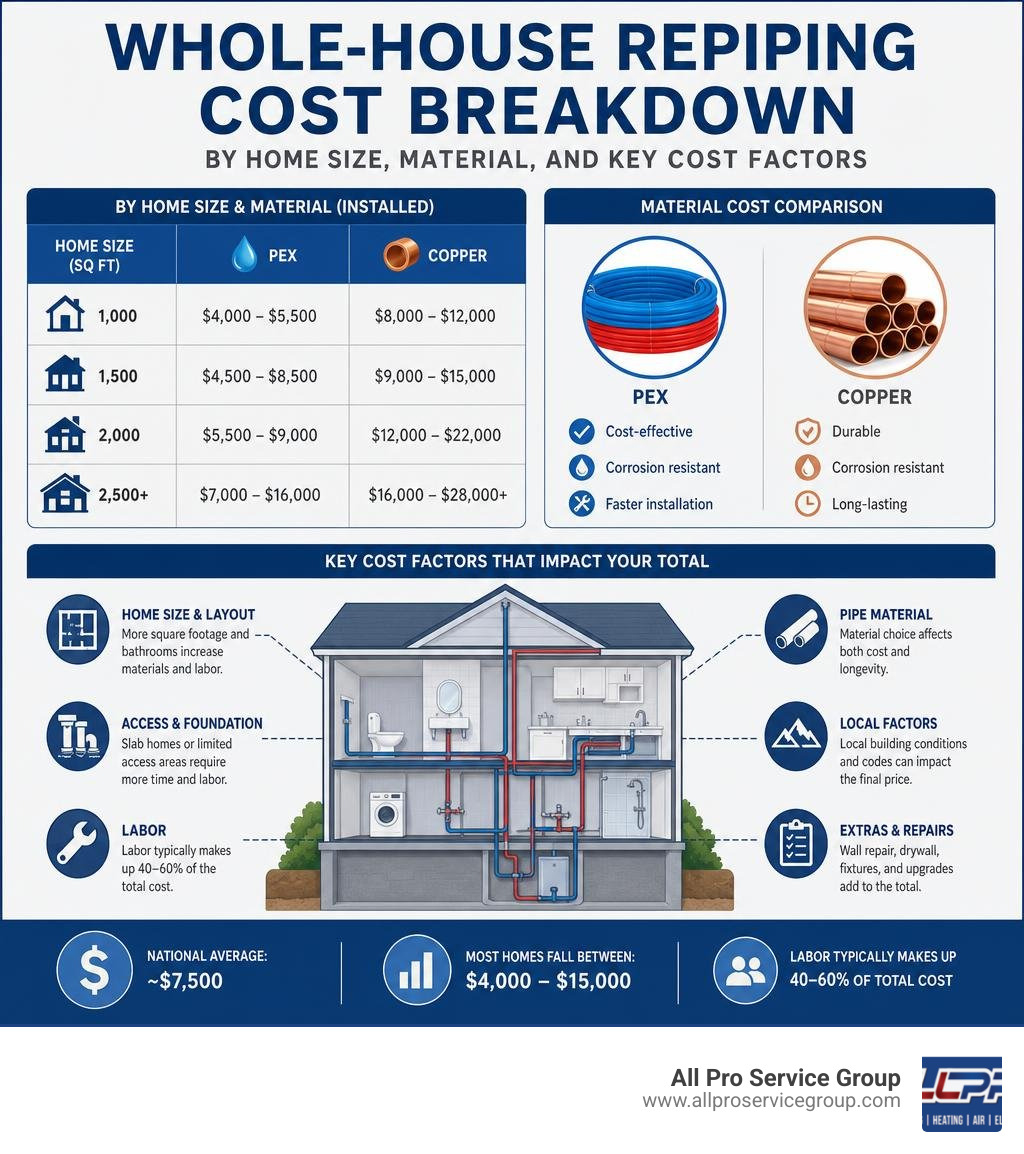
Real-World Breakdown of House Repiping Cost in 2026
When you begin researching how much it will take to replumb your home, the wide range of estimates can feel overwhelming. In 2026, professional house repiping projects across the country range from $1,250 on the absolute lowest end (such as a tiny mobile home or a very limited partial repipe) up to $22,000 or more for sprawling, multi-story estates.
To help make sense of these numbers, it is best to look at them through the lens of realistic local averages. For a standard single-family home in Utah, you can generally expect the baseline cost to fall between $4,500 and $15,000.
Labor is the single biggest driver of this expense. Unlike a quick fixture swap, repiping requires a highly skilled crew to navigate the tight spaces behind your walls, under your floors, and through your attic. Because of this complexity, labor typically accounts for 40% to 60% of your total project bill—and in highly complex layouts, it can climb as high as 70%.
To help you visualize where your home might fall, we have put together a detailed House Repiping Cost Guide — What to Expect in 2026 | CalculatorCove breakdown comparing different home sizes, pipe materials, and average price tiers:
| Home Square Footage | Standard Fixture Count | Budget Option (CPVC) | Mid-Range Option (PEX) | Premium Option (Copper) |
|---|---|---|---|---|
| 1,000 sq ft | 6 – 8 fixtures | $4,000 – $5,500 | $4,000 – $7,000 | $8,000 – $12,000 |
| 1,500 sq ft | 8 – 10 fixtures | $6,500 – $13,000 | $4,500 – $8,500 | $12,000 – $22,000 |
| 2,000 sq ft | 10 – 12 fixtures | $8,000 – $15,000 | $6,000 – $9,000 | $16,000 – $25,000 |
| 2,500+ sq ft | 12+ fixtures | $10,000 – $18,000 | $7,500 – $16,000 | $18,000 – $28,000+ |
How Home Size and Layout Impact Your House Repiping Cost
It is no secret that a larger home requires more physical piping, but the relationship between square footage and your final invoice is not always a simple 1:1 calculation. The real driver of the cost is the layout and the number of plumbing "drops" or fixtures.
In the plumbing world, we look closely at how many water-using fixtures your home has. A fixture is anything that connects to your water lines: toilets, sinks, showers, tubs, washing machine connections, outdoor hose bibs, and refrigerator ice makers.
- Standard Homes (6 to 12 fixtures): For most standard homes, you can expect to invest between $4,500 and $6,500 for a complete PEX repipe.
- Larger Homes (More than 12 fixtures): If you have a larger home with multiple bathrooms, a wet bar, and a spacious laundry room, the cost typically ranges from $6,500 to $16,000. Each additional bathroom beyond the standard two-bath layout generally adds $800 to $1,500 to the total project cost.
Vertical layout also plays a massive role. Multi-story homes are significantly more difficult to repipe than single-story ranches. In a one-story home with a crawlspace or basement, we can easily run new lines upward into the walls. In a two-story or three-story home, we have to route pipes vertically through stacked walls, which requires more labor, more drywall cuts, and creative routing strategies. Because of this, two-story homes typically carry a 30% to 50% cost premium per square foot compared to single-story homes of the exact same size.
If you are wondering about the specifics of managing a standard-sized layout, you can read more about How Much Does It Cost to Replumb a 1,500 Sq Ft House in ... to see how these layout factors combine in a typical residential project.
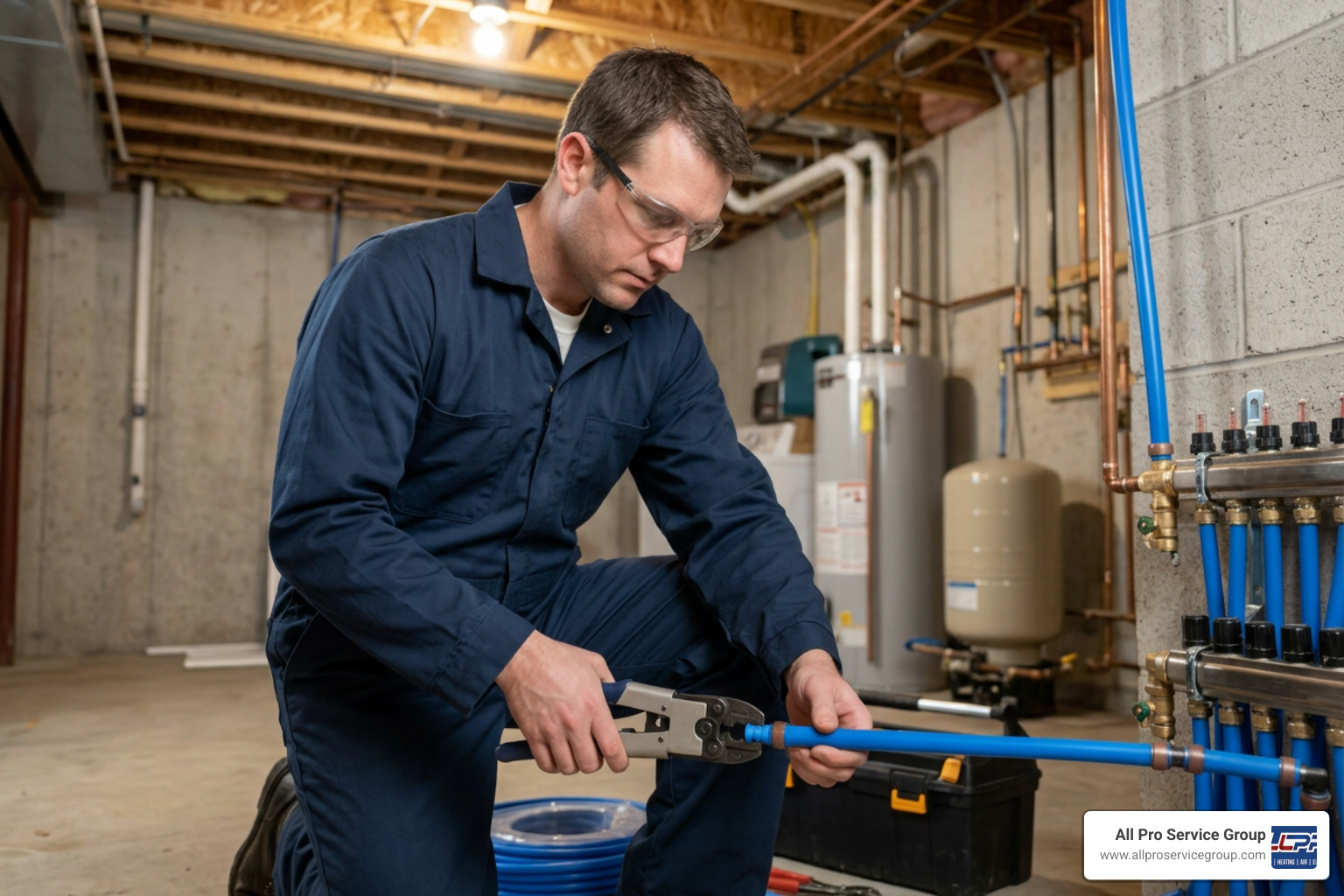
PEX vs. Copper: Choosing the Right Material for Your House Repiping Cost
The material you choose for your new plumbing system will have the largest impact on your material budget. Today, there are three primary options used in residential repiping: PEX, Copper, and CPVC.
1. PEX (Cross-Linked Polyethylene)
PEX has quickly become the undisputed king of residential repiping, now accounting for over 75% of all repiping projects. It is a flexible, highly durable plastic tubing that can be snaked through walls much like electrical wiring.
- The PEX-A Advantage: We highly recommend PEX-A for local homes. It uses expansion fittings that provide superior water flow and have a "shape memory," meaning the pipe naturally shrinks back around the fitting to form an incredibly secure seal. PEX-A requires 30% to 50% fewer joint fittings than rigid copper, which directly eliminates potential leak points behind your walls.
- Cost: PEX is incredibly cost-effective, running about $0.50 to $2.00 per linear foot for materials, or $3.50 to $7.00 per square foot installed.
- Lifespan & Durability: PEX lasts between 50 and 100+ years. It is highly resistant to scale buildup and corrosion from hard water. Most importantly for Utah homeowners in cold areas like Park City or Ogden, PEX is highly freeze-resistant. It can expand and contract if water freezes inside it, making it far less likely to burst during our freezing winter cycles.
- Downsides: PEX is sensitive to UV light, meaning it cannot be stored or installed outdoors where it is exposed to direct sunlight.
To learn more about the specific financial benefits of this material, check out this guide on How Much Does It Cost to Repipe a House with PEX?
2. Copper
Copper is the traditional, time-tested premium standard of the plumbing industry. It is rigid, beautiful, and incredibly long-lasting.
- Cost: Copper is expensive. Material costs range from $2.00 to $4.00 per foot (or up to $8.00 per foot depending on market rates), translating to $8.00 to $14.00 per square foot installed. Choosing copper typically adds 40% to 60% to your total project cost compared to PEX.
- Lifespan & Durability: Copper has a lifespan of 70+ years. It is naturally antimicrobial, does not degrade under UV light, and can handle extreme heat.
- Downsides: Aside from the high cost, copper is rigid, which means we must cut more drywall to install it. It is also highly susceptible to pinhole leaks if your local water has a high mineral content (hard water), and it is prone to bursting if it freezes during a cold Utah winter.
3. CPVC (Chlorinated Polyvinyl Chloride)
CPVC is a rigid plastic pipe that has been used for decades as a lower-cost alternative to copper.
- Cost: CPVC is very affordable, costing about $0.50 to $1.00 per linear foot for materials, or $4.00 to $8.50 per square foot installed.
- Downsides: While it is cheap, CPVC becomes brittle as it ages. Over time, exposure to hot water and municipal chlorine can cause the plastic to crack, leading to sudden leaks. In fact, some homeowners insurance companies in 2026 have begun flagging older CPVC installations for premium surcharges or non-renewal. If you currently have CPVC and are looking to upgrade, we almost always recommend switching to PEX.
Key Factors That Drive Repiping Expenses Up or Down
While home size and materials establish your baseline budget, several physical and logistical variables can push your final house repiping cost up or down.
Foundation Type: Slab vs. Crawlspace
How your home was built determines how easily we can access your plumbing lines.
- Crawlspaces and Unfinished Basements: If your home in South Jordan or Salt Lake City has a crawlspace or an unfinished basement, you are in luck. This is the easiest and most affordable scenario. We can easily access the main trunk lines and run new pipes up through the floor joists with minimal disruption to your living spaces.
- Slab Foundations: If your home is built on a concrete slab, the labor requirements change dramatically. Because the original pipes are buried beneath inches of solid concrete, we cannot easily access them. To repipe a slab home, we must either jackhammer the concrete (which is messy and expensive) or completely abandon the old under-slab pipes. We then reroute the new plumbing system upward through the attic and drop the lines down through interior walls. Rerouting pipes for a slab foundation adds a 25% to 50% labor premium to the project.
Wall Accessibility and Drywall Repair
To run new pipes, we must cut access holes in your drywall. A specialized, experienced repiping crew will make strategic, neat cuts (usually about the size of a textbook) to minimize damage. However, once the plumbing is pressure-tested and approved, those holes must be patched, textured, and painted.
Drywall restoration is a major variable. Some plumbing quotes include basic drywall patching, while others leave it entirely to the homeowner. Professional drywall repair and painting typically adds $500 to $2,000 to the total project cost. If you have specialty finishes like lath-and-plaster walls in a historic home in the Avenues of Salt Lake City, or custom wood paneling, the restoration costs will be higher.
If your drain lines are also showing signs of aging, you may want to review the Cost To Replace Drain Pipes In House to see how waste line replacement coordinates with a fresh supply line installation.
Permits and Inspections
Never hire a contractor who suggests skipping the permit process to save money. A municipal permit ensures that an independent city inspector reviews the work to guarantee it meets local building codes. Permit fees for a whole-house repipe typically range from $50 to $500 depending on your city (such as West Valley City, Provo, or Ogden). This fee is a small price to pay for the peace of mind that your new system is safe and code-compliant.
When planning these upgrades, it is helpful to look at the entire system. Understanding what goes into a professional Plumbing/Water Line Repair can help you see how local permits protect your home's infrastructure.
Hidden Fees and Common Add-Ons to Budget For
When budgeting for a whole-house repipe, it is important to look beyond the basic cost of the pipes themselves. There are several common add-ons and potential hidden fees that you should discuss with your contractor before signing a contract:
- Water Main Replacement ($600 – $2,500): A standard repipe replaces the water lines inside your home. However, if the main water line running from the city meter at the street to your house is also corroded or leaking, it should be replaced at the same time. To understand this process, you can read our Water Line Repair Complete Guide.
- Water Heater Installation ($850 – $1,750): Since the water system will already be shut down and drained, repiping is the most cost-effective time to upgrade an aging water heater. Upgrading to a modern tankless water heater during a repipe can save you hundreds of dollars in future labor costs.
- Fixture Upgrades ($8 to $20 per valve): We highly recommend replacing all old, corroded shutoff valves with modern, reliable quarter-turn ball valves during your repipe.
- Asbestos Abatement ($1,500 – $5,000+): If your home was built before 1980, there is a chance we may encounter asbestos-containing materials in the drywall joint compound or pipe insulation. If asbestos is discovered, it must be safely abated by a licensed specialist before work can continue.
Repair vs. Replace: Is a Full Repipe Cheaper Than Ongoing Patches?
If you are dealing with a single leak, a localized repair is almost always the smartest immediate choice. A simple spot repair typically costs between $150 and $400.
However, if you are experiencing recurring leaks, the financial math changes quickly. This is especially true for homes with slab foundations. A single slab leak repair in Utah can easily cost $2,000 to $3,000 because of the specialized equipment required to pinpoint and access the leak.
If you pay for two or three slab leak repairs over a few years, you will easily spend $6,000 to $9,000—and you still have the old, failing pipe system waiting to spring another leak. In this scenario, investing in a permanent PEX repipe is by far the more economical long-term choice.
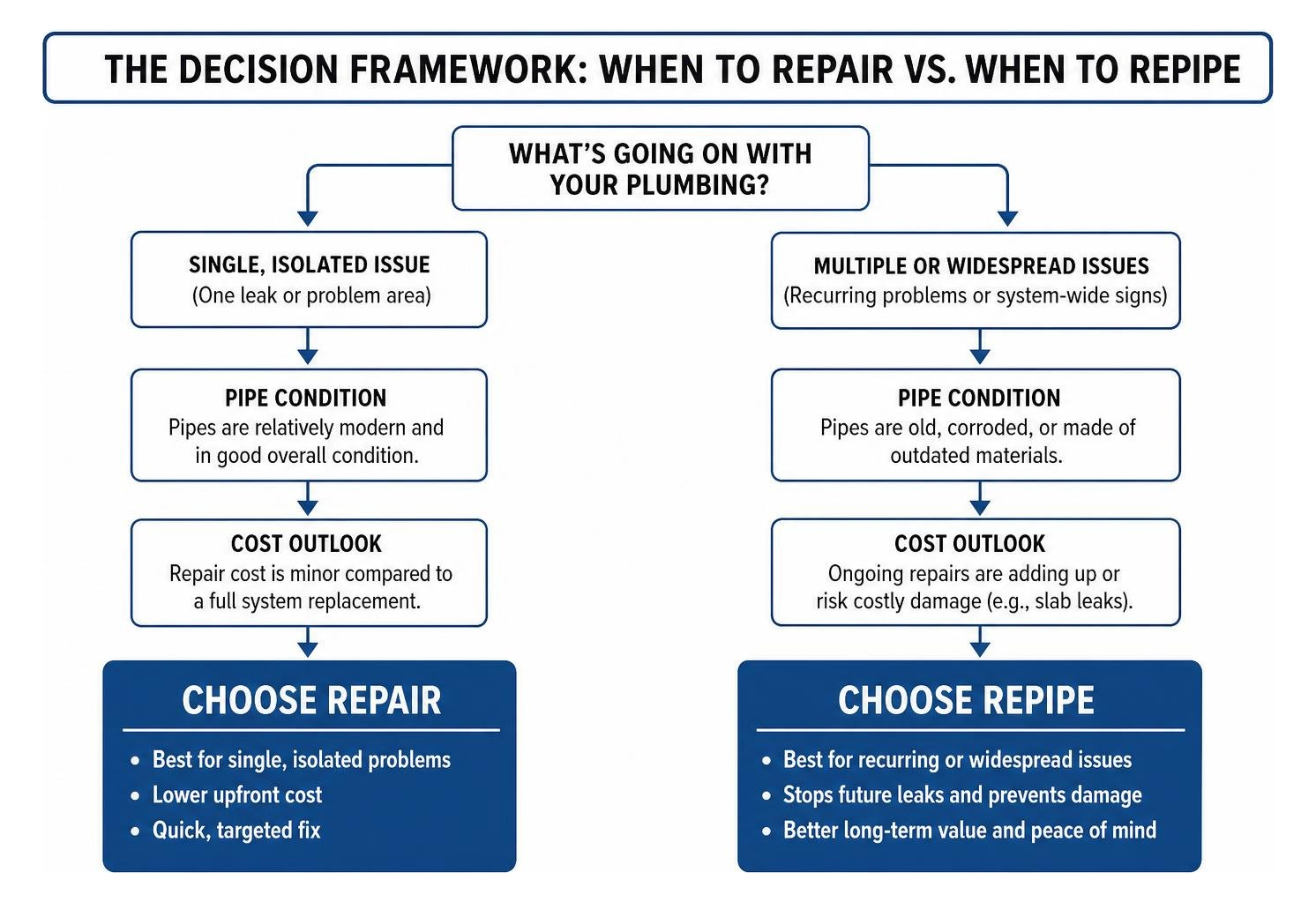
To help you decide which path is right for your home, you can learn more about professional Plumbing/Leak Detection Repair to see how we locate hidden issues before they cause catastrophic water damage.
Signs Your Home Needs a Whole-House Repipe
How do you know if your home is simply experiencing a minor plumbing hiccup or if it is actively pleading for a complete system replacement? Keep an eye out for these common warning signs:
1. Water Discoloration
If you turn on your bathtub faucet after a weekend away and see brown, orange, or red-tinted water, it is a clear sign of internal rust. Galvanized steel pipes corrode from the inside out, flaking rust directly into your drinking and bathing water.
2. Chronically Low Water Pressure
As galvanized pipes rust, the internal diameter of the pipe narrows due to mineral and rust buildup. This restricts the flow of water, leading to a slow, frustrating drop in water pressure throughout your entire home.
3. Recurring Leaks
If you find yourself calling a plumber every few months to patch a new pinhole leak, your pipes have reached the end of their natural lifespan. Patching a system that is structurally failing is like putting a band-aid on a dam.
4. Outdated Pipe Materials
If your home was built during specific eras, the materials themselves are a ticking clock:
- Galvanized Steel (Pre-1970s): These pipes have a service life of 20 to 50 years. If your home still has them, they are well past their expiration date.
- Polybutylene (1978 – 1995): This gray plastic pipe (often stamped with "PB2110") was installed in millions of homes. Over time, municipal chlorine degrades the plastic from the inside out, causing it to become brittle and burst without warning.
- Lead Pipes (Pre-1950s): Lead poses severe, irreversible health risks, especially to children. If you have lead pipes, they must be replaced immediately.
If you are noticing any of these warning signs, it is time to consult with an expert. You can read about our Plumbing/Plumbing Repair services to see how we evaluate aging systems, or reach out for immediate assistance with Plumbing/Emergency Plumbing if a pipe has already failed.
Frequently Asked Questions About Repiping
How long does a whole-house repipe take?
For a standard single-family home (1,500 to 2,500 sq ft), a professional PEX repipe typically takes 1 to 3 days of active plumbing work. Copper repiping takes slightly longer, usually 5 to 7 days, because of the rigid material and the need to solder connections.
The good news is that you do not have to move out during the project. While the water may be shut off for 4 to 8 hours during the day while the crew is actively working, we make sure to restore your water service at the end of each workday so your family can shower and use the plumbing overnight.
Does repiping increase home value?
Yes! Repiping is a highly attractive upgrade for potential buyers. It eliminates the fear of sudden water damage, improves water pressure, and ensures clean, rust-free drinking water. A whole-house repipe typically increases a home's appraisal value by $10,000 to $25,000, allowing homeowners to recoup 80% to 100% of the project cost upon resale. It also helps homes sell 15% to 20% faster because buyers love knowing they won't face a major plumbing bill right after moving in.
How can I get an accurate estimate for my home repiping project?
While online calculators are fantastic for establishing a baseline budget, the only way to get an accurate, dependable quote is through an in-home consultation. A licensed plumbing specialist needs to physically inspect your home's layout, count your fixtures, verify your foundation type, and assess your wall access.
Before you schedule a consultation, you can use this House Repiping Cost Calculator 2026 | PEX vs Copper Cost to run different scenarios based on your home's square footage and preferred materials.
Conclusion
Investing in a whole-house repipe is a significant decision, but it is one of the most effective ways to protect your home's structural integrity, restore strong water pressure, and ensure clean water for your family. By understanding the real-world factors that drive house repiping cost —from PEX vs. copper materials to foundation access and drywall restoration—you can make an informed, confident choice for your budget.
At All Pro Service Group, we have been providing dependable, high-quality plumbing, heating, air, and electrical services across the Greater Salt Lake Valley since 2008. From Salt Lake City and South Jordan to West Valley City, Ogden, and Provo, our trained experts are dedicated to delivering transparent pricing, financing options, and "Gephardt Approved" service.
If you are ready to say goodbye to low water pressure, rusty water, and the constant stress of hidden leaks, we are here to help. Contact us today to schedule a comprehensive evaluation of your home's plumbing system, or learn more about our specialized Plumbing/Repiping Main Line services.