
Two Rooms One Solution: Choosing the Best 24000 BTU Dual Zone Mini Split
Two Rooms, One System: What to Know Before You Buy a 24000 BTU Dual Zone Mini Split
A 24000 BTU dual zone mini split is one of the most practical ways to heat and cool two separate rooms independently — using just one outdoor unit.
Here's what you need to know at a glance:
| Feature | Details |
|---|---|
| Total capacity | 24,000 BTU (2 tons) |
| Zones supported | 2 independent rooms |
| Typical coverage | Up to 1,000–1,500 sq ft combined |
| Common configurations | 12,000 + 12,000 BTU or 9,000 + 15,000 BTU |
| Efficiency ratings | 21–24 SEER2 (top models) |
| Estimated installed cost | $3,000–$6,000+ |
| Federal tax credit | Up to $2,000 (30% of cost) |
| Operates in cold weather | Down to -13°F on cold-climate models |
If two rooms in your home need different temperatures — a bedroom that runs warm while a home office stays cool, for example — a dual-zone system solves that without adding ductwork or running two separate systems. It's also significantly more energy-efficient than window units or older central HVAC setups.
Utah's climate makes this especially relevant. Salt Lake area homes swing between hot summers and freezing winters, and many older properties simply weren't built with ductwork. A 24,000 BTU dual-zone system handles both seasons, both rooms, and does it without tearing up your walls.
At All Pro Service Group, our team has been installing and servicing mini split systems — including 24,000 BTU dual zone mini split setups — across the Greater Salt Lake Valley since 2008. In this guide, we'll walk you through everything you need to choose the right system, size it correctly, and get it installed the right way.
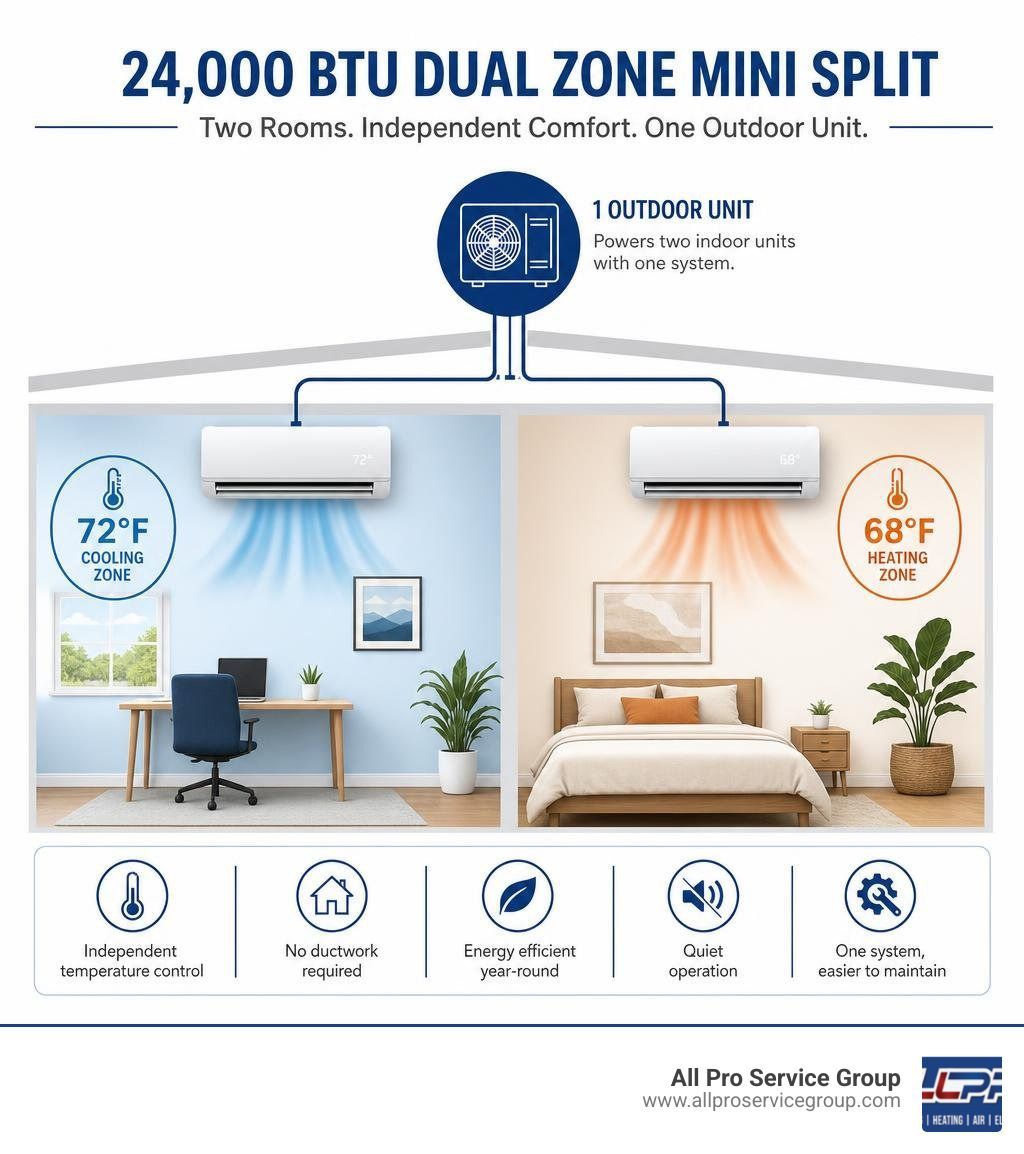
What is a 24000 BTU Dual Zone Mini Split and How Does It Work?
To understand why a 24000 BTU dual zone mini split is such a game-changer, it helps to look at how it differs from traditional central air conditioning and older single-zone options.
At its core, a dual-zone system consists of a single outdoor condenser unit connected to two separate indoor air handlers (or "heads"). This outdoor unit is a multi-port condenser, meaning it has dedicated connection valves and electronic expansion valves for each indoor unit. Instead of pushing conditioned air through a massive network of dusty, leaky ducts, the system circulates refrigerant directly to the indoor units via small, insulated copper linesets.
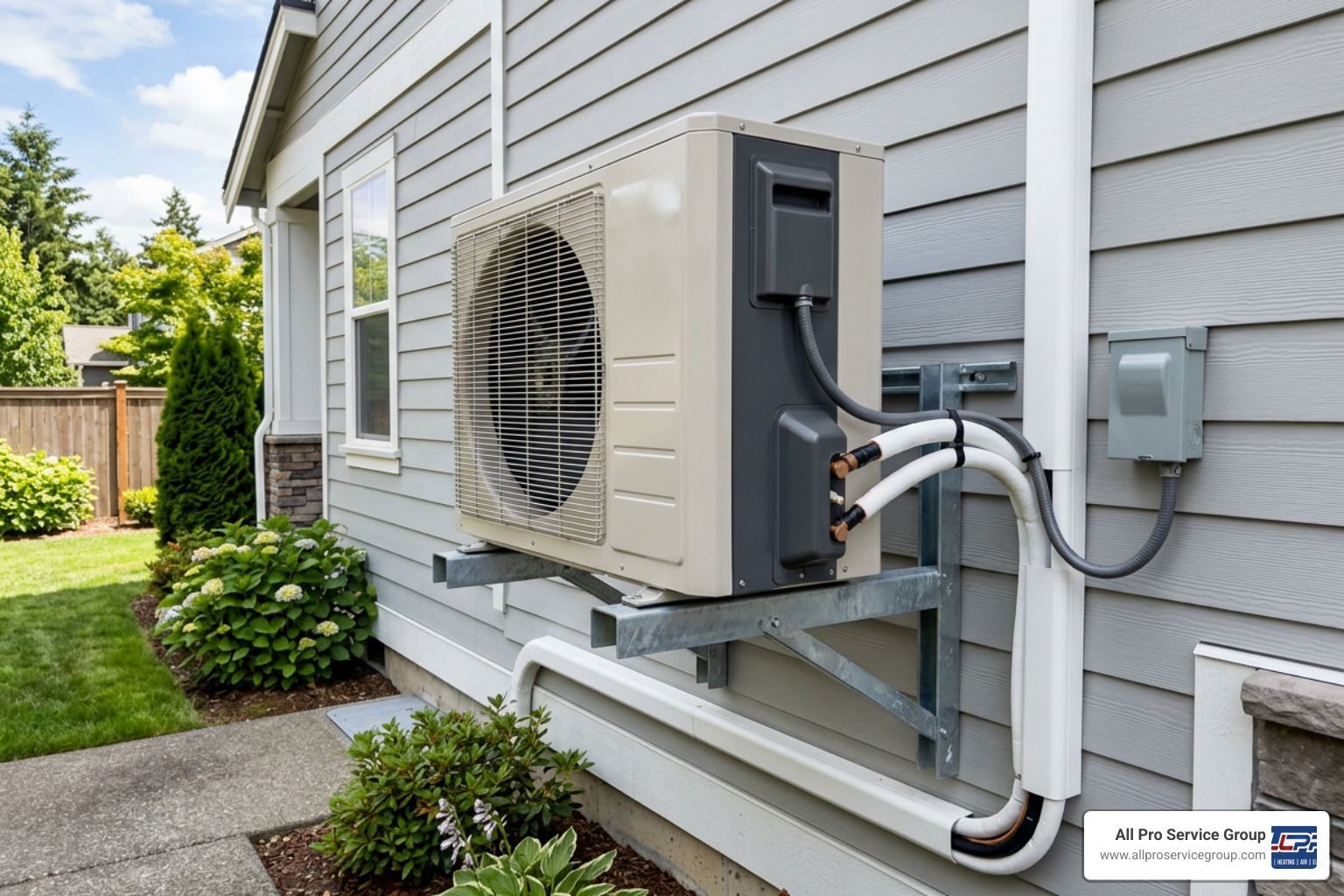
This direct-delivery method is incredibly efficient. According to the Department of Energy, traditional ducted systems can lose up to 30% of their energy through duct leakage, especially if those ducts run through unconditioned spaces like attics or crawlspaces. By going ductless, you instantly reclaim that lost energy. If you want to dive deeper into how these systems stack up against traditional systems, check out our Ductless Mini Splits Complete Guide.
The real magic of a modern dual-zone system lies in its inverter-driven compressor. Traditional HVAC systems operate like a single-speed light switch: they are either 100% on or completely off. This leads to uncomfortable temperature swings and high energy bills as the system repeatedly starts up and shuts down.
In contrast, our dual-zone mini splits use variable-speed inverter technology. The compressor adjusts its speed dynamically, operating at a fraction of its maximum capacity to maintain a perfectly steady temperature. It hums along quietly in the background, consuming only the exact amount of electricity required at any given moment.
Furthermore, each indoor unit is controlled by its own independent thermostat. This means you can keep your master bedroom at a crisp 68°F for sleeping while leaving your guest bedroom or home office at 74°F. If one room isn't being used, you can turn its indoor unit off entirely, saving you even more on your monthly utility bills.
Sizing and Configuring Your 24000 BTU Dual Zone Mini Split
Sizing a mini split isn't just about picking a number out of a hat. If your system is too small, it will run constantly, struggle to keep you comfortable, and wear out prematurely. If it is too large, it will cool the room too quickly without properly dehumidifying the air, leaving your home feeling damp and clammy.
With a 24,000 BTU (2-ton) outdoor condenser, you have a total pool of heating and cooling capacity that you can distribute between your two indoor zones. The most common configurations include:
| Configuration | Zone 1 Capacity | Zone 2 Capacity | Best Use Case |
|---|---|---|---|
| 12,000 + 12,000 BTU | 12,000 BTU | 12,000 BTU | Two medium-sized rooms of equal size (e.g., two bedrooms) |
| 9,000 + 15,000 BTU | 9,000 BTU | 15,000 BTU | One small bedroom paired with a larger open-concept living space |
| 9,000 + 12,000 BTU | 9,000 BTU | 12,000 BTU | A small office and a medium master bedroom (condenser runs with extra headroom) |
If you are looking for single-room alternatives, you can read our 12000 BTU Mini Split Guide 2026 or learn more about coverage requirements in our guide on 1 Ton Mini Split Square Footage.
Sizing a 24000 BTU Dual Zone Mini Split for Your Home
To determine if a 24,000 BTU system is right for your space, we must calculate the heating and cooling load of each room. While a general rule of thumb states that a 24,000 BTU system can handle up to 1,000 to 1,500 square feet of total space, real-world conditions require a more precise look.
When we evaluate a home in Salt Lake City, Ogden, or Park City, we look at several key adjustment factors:
- Insulation Quality: Older historic homes in the Avenues or downtown Salt Lake City often have minimal wall insulation and drafty windows, requiring more BTUs per square foot than a brand-new build in South Jordan.
- Ceiling Height: Rooms with vaulted ceilings contain more volume of air to condition, which increases the required BTU capacity.
- Sunlight and Windows: A room with large, south-facing windows will experience significant solar heat gain in the summer, requiring a larger indoor head to keep cool.
- Room Layout: An open-concept kitchen and living room layout allows air to flow freely, whereas a highly partitioned layout might require creative head placement.
For detailed performance metrics on how these systems operate under load, you can explore the 24,000 BTU dual-zone heat pump specifications to see how capacity adjusts based on outdoor conditions.
Choosing Indoor Unit Types for Your 24000 BTU Dual Zone Mini Split
One of the greatest benefits of a multi-zone mini split is that you aren't locked into just one style of indoor unit. You can mix and match different styles to suit the aesthetic and structural needs of each room.
- Wall-Mounted Units: These are the most common and cost-effective options. They mount high up on an exterior wall, keeping them out of the way while providing excellent air distribution.
- Ceiling Cassettes: If you prefer a more discreet look, ceiling cassettes mount flush with your ceiling. They distribute air in four directions and are perfect for open living areas.
- Concealed Ducted Units: These units are hidden away in an attic, closet, or crawlspace. They use short duct runs to deliver air through subtle grilles in the ceiling or wall, giving you the benefits of a mini split with the invisible look of central air.
- Floor-Mounted Units: Ideal for attic spaces with low knee walls or rooms where wall space is at a premium. They sit low on the wall, similar to a radiator, and are exceptionally good at heating.
When choosing your system, look for advanced features like built-in Wi-Fi and high-efficiency ratings. Many of the industry's high-efficiency 23 SEER2 dual-zone systems offer smartphone app integration, allowing you to set schedules and monitor your energy usage right from your phone.
Efficiency, Costs, and Installation Requirements
Investing in a
24000 BTU dual zone mini split is a smart financial move, but it is important to understand the upfront costs, efficiency ratings, and structural requirements involved.
When shopping for a system, you will see two primary efficiency ratings:
- SEER2 (Seasonal Energy Efficiency Ratio 2): This measures cooling efficiency. The higher the SEER2, the less electricity the system uses to cool your home. Modern high-efficiency systems boast SEER2 ratings between 21 and 24.
- HSPF2 (Heating Seasonal Performance Factor 2): This measures heating efficiency. Look for an HSPF2 rating of 9.0 or higher for excellent winter performance.
By choosing an Energy Star certified system, you may qualify for the federal Section 25C Energy Efficient Home Improvement Credit. This tax credit can cover up to 30% of the total installation cost, up to a maximum of $2,000. Additionally, local Utah utilities often offer cash-back rebates for upgrading to high-efficiency heat pumps.
What Does Installation Involve?
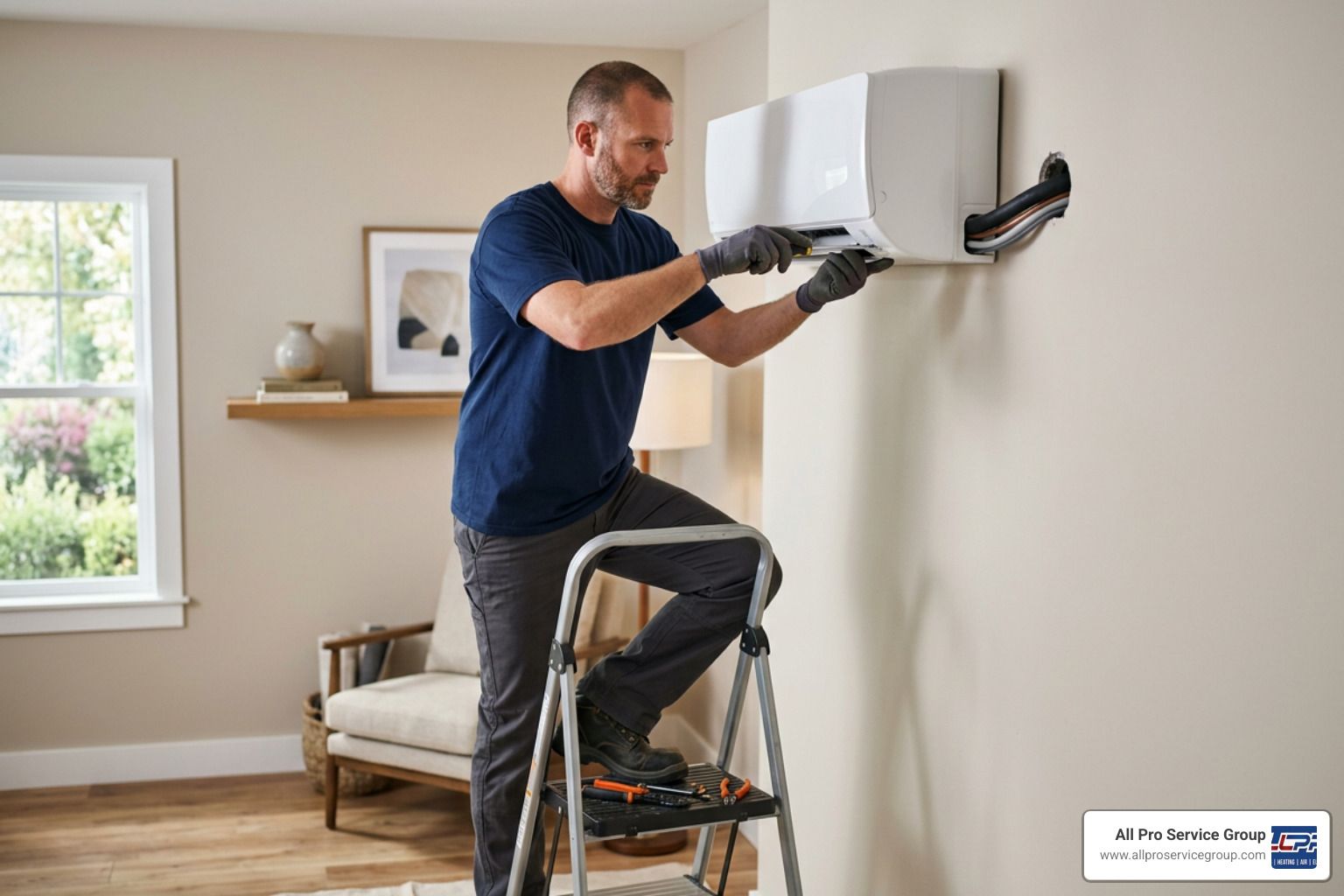
Installing a dual-zone mini split is a highly technical process. Unlike smaller single-room units that might run on standard household power, a 24,000 BTU system requires a dedicated 208/230-volt electrical circuit with a outdoor disconnect switch. If your current electrical panel is fully loaded, we may need to perform a panel upgrade to accommodate the new system. You can learn more about electrical requirements in our guide to 110V Mini Split systems versus higher voltage models.
While there are DIY dual-zone mini split options available on the market that feature pre-charged linesets, we strongly advise against self-installation for several reasons:
- Warranty Protection: Most major manufacturers will void their multi-year parts and compressor warranties unless the system is installed by a licensed HVAC professional.
- Refrigerant Handling: Handling and charging refrigerant lines requires specialized tools, including a vacuum pump and micron gauge, to ensure there are no moisture or non-condensable gases left in the lines.
- Longevity: A poorly flared joint or an improper vacuum will lead to slow refrigerant leaks, which can burn out your compressor within a few years.
If you are replacing an old, inefficient system, our team can handle the entire process from start to finish. You can read about our professional installation process on our AC Installation Replacement page. If you are curious about intermediate capacities, you can also explore our resource on the 23000 BTU Mini Split.
Frequently Asked Questions about Dual Zone Mini Splits
We hear many of the same questions from homeowners in Salt Lake City, West Valley City, and Provo when they are considering a mini split upgrade. Here are the facts you need to know.
Can I run one zone on heating and the other on cooling simultaneously?
No. Because both indoor units are connected to a single outdoor compressor, the system must operate in the same mode—either heating or cooling. If you set one indoor unit to cool and the other to heat, you will cause a mode conflict, and the system will display an error code or fail to condition either room. However, you can run one unit in "Fan Only" or "Dry" mode while the other is cooling, or turn one off completely.
How much square footage can a 24,000 BTU system cover?
Typically, a 24,000 BTU system can comfortably heat and cool between 1,000 and 1,500 square feet of space. This is usually split into two zones of up to 500 to 750 square feet each. However, the exact coverage depends heavily on your home’s insulation, layout, and window exposure. In well-insulated modern homes, it can easily handle slightly larger spaces, while older, drafty homes may require a bit more capacity.
Do I need a professional to install a dual-zone mini split?
Yes, professional installation is highly recommended. Properly installing a dual-zone system involves running high-voltage electrical lines, mounting heavy outdoor units, flaring copper linesets, pressure-testing the system with nitrogen, and pulling a deep vacuum to remove moisture. Doing this incorrectly can ruin the equipment, void your warranty, and create safety hazards.
Conclusion
A 24000 BTU dual zone mini split is one of the smartest, most efficient comfort solutions available for Utah homeowners. By delivering targeted heating and cooling directly to the rooms that need it most, you can eliminate hot and cold spots, lower your energy bills, and enjoy personalized comfort in both zones.
Whether you are looking to condition a new home addition, add climate control to an older home without ductwork, or simply solve a stubborn comfort issue in two rooms, we are here to help. At All Pro Service Group, we have been serving the Greater Salt Lake Area—from Ogden down to Provo and up into Park City—since 2008. We are proud to be a "Gephardt Approved" company, offering dependable service, trained experts, and robust financing options.
Ready to upgrade your home's comfort? Explore our Ductless Mini Splits service page or contact us today to schedule your professional in-home consultation!