
Why Your Drains Smell — and How to Fix It Fast
Cleaning smelly drains is easier than most homeowners think. Here's a quick overview of what works:
- Flush with hot water to loosen surface buildup
- Remove visible debris(hair, food scraps) manually
- Apply baking soda and vinegar — let sit 10–15 minutes, then flush
- Use an enzyme cleaner for stubborn biofilm and grease (best results: 78–86% odor reduction)
- Clean or refill the P-trap if a sewer smell persists
- Call a plumber if odors remain after all of the above
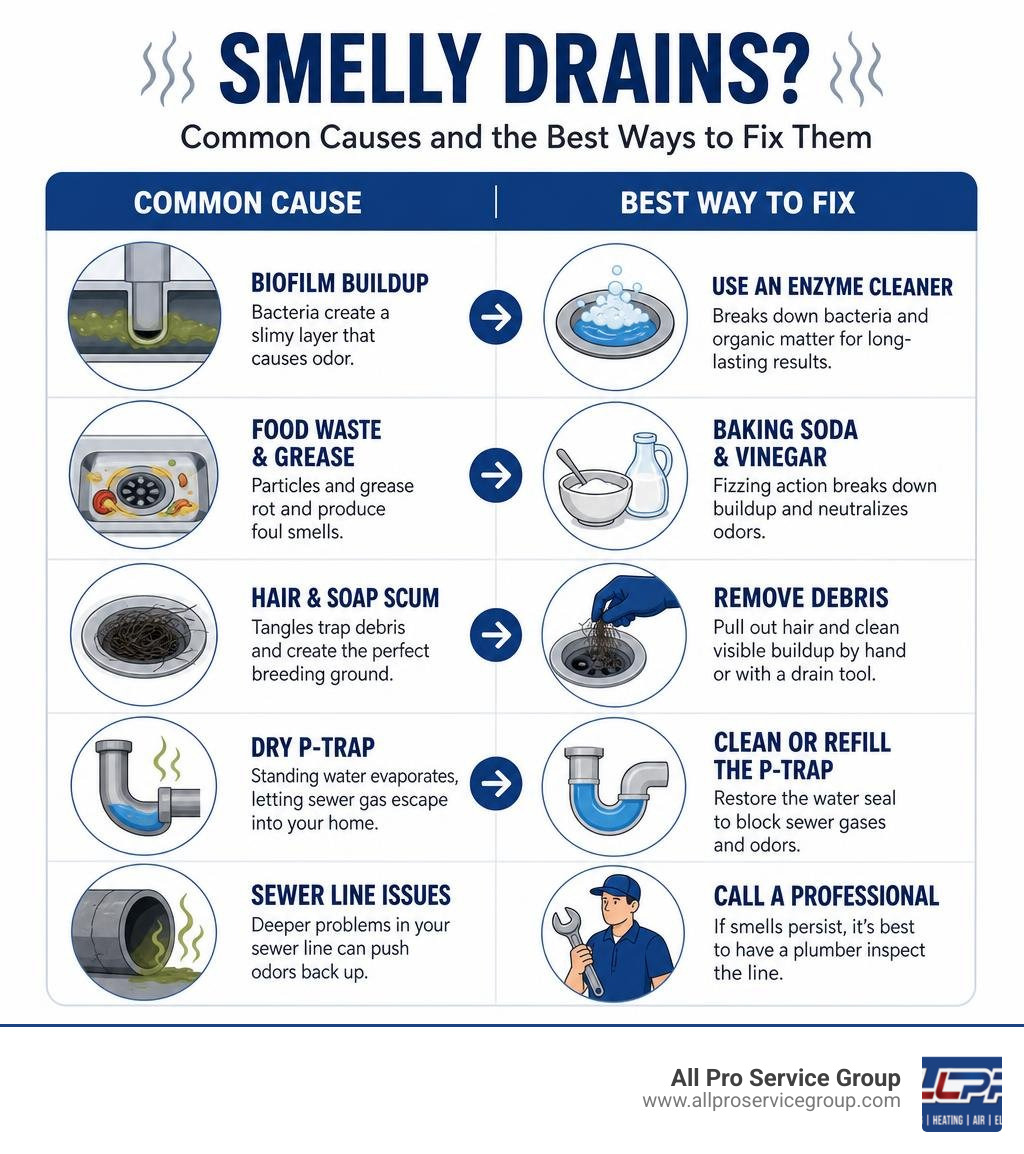
That smell hitting you when you walk into your kitchen or bathroom isn't random. It means something is growing — or drying out — inside your drains. The most common culprits are biofilm(a slimy bacterial layer coating the inside of your pipes), food waste and grease, hair and soap scum, and a dry P-trap letting sewer gas creep back into your home.
The good news: most smelly drains can be fixed in under an hour with supplies you already own.
I'm Gary Leany from All Pro Service Group, and we've been solving plumbing problems for homeowners across the Greater Salt Lake Valley since 2008 — including more cleaning smelly drains calls than we can count. In the sections below, I'll walk you through exactly what to do, from simple DIY fixes to knowing when it's time to call us.
Why Does My Sink Drain Smell? Common Causes of Odor
Before you grab the nearest cleaning product, it helps to understand exactly what is causing that unpleasant odor. Drains are dark, warm, and wet environments, making them the perfect breeding grounds for bacteria and mold. When you introduce organic waste, you essentially create an all-you-can-eat buffet for microbes.
Here are the most common culprits behind a smelly sink drain:
- Biofilm Buildup: Biofilm is a slimy, sticky layer of bacteria and fungi that clings to the inner walls of your pipes. As these microorganisms feed on soap scum, skin cells, and hair, they release gases that smell musty or sour.
- Decomposing Food Waste and Grease: In kitchen sinks, food particles, cooking oils, and fats frequently slide down the drain. Over time, grease cools and solidifies on the pipe walls, trapping food scraps that rot and emit a foul, rancid odor.
- Hair and Soap Scum: In bathroom sinks and showers, hair binds with sticky soap scum to form dense clogs. This trapped mass acts like a sponge, holding onto stagnant water and organic debris that quickly begins to decay.
- A Dry P-Trap: The P-trap is the U-shaped pipe directly beneath your sink. It is designed to hold a small, constant pool of water that acts as a physical seal, blocking sewer gases from rising out of the sewer line and entering your home. If a sink is rarely used—such as in a guest bathroom or basement—this water barrier can evaporate completely, allowing foul-smelling gases to escape freely.
- Sewer Gas Leaks: If the smell is persistent, highly sulfurous, or resembles rotten eggs, you may be dealing with actual sewer gas. This is not only unpleasant but can also be hazardous to your health due to the presence of methane and hydrogen sulfide. Understanding how to get rid of sewer gas smell in your house often involves checking the integrity of your plumbing seals and vent lines.
- Blocked Sewer Vent Pipes: Your home's plumbing system relies on vent stacks that exit through the roof to balance air pressure and allow sewer gases to escape safely outside. If birds' nests, leaves, or snow block these vents, the trapped sewer gas has nowhere to go but back up through your household drains.
If you are struggling to pinpoint the source of a persistent odor, a professional drain inspection service can help locate hidden leaks, sewer line cracks, or deep-line blockages that DIY methods simply cannot reach.
The Step-by-Step Process for Cleaning Smelly Drains
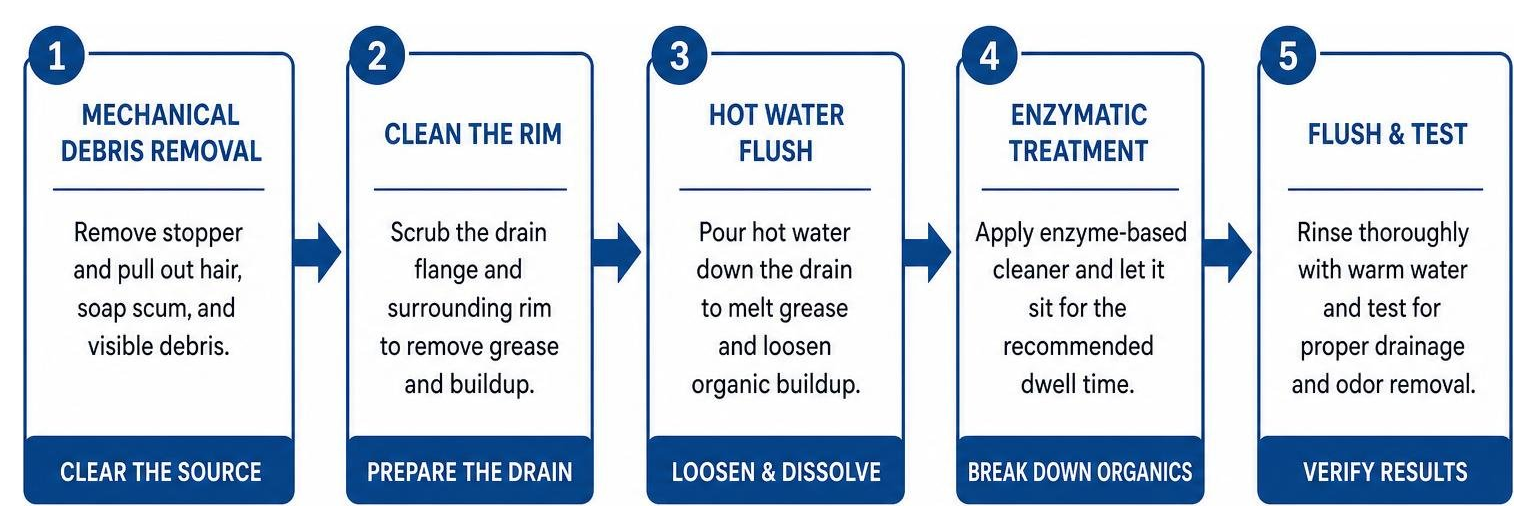
When tackling a smelly drain, it is best to take a systematic approach. Rather than dumping random chemicals down the pipe, follow this tested, step-by-step process to eliminate the odor safely without damaging your plumbing system.
- Safety First: Put on a pair of rubber or nitrile gloves to protect your hands from bacteria and grime. Ensure the area is well-ventilated, especially if you plan to use commercial cleaners.
- Clear the Surface: Remove the sink stopper or drain cover. Use a stiff drain brush or a barbed hair-snaking tool to manually pull out any hair, soap scum, or visible debris clinging to the upper portion of the drain.
- Clean the Rim: Wipe down the underside of the drain flange and the surrounding rim with an abrasive sponge and dish soap to eliminate surface-level grease.
- Perform a Hot Water Flush: Pour a large pot of hot water down the drain to melt grease and loosen soft organic buildup. (Note: If you have PVC pipes, use hot tap water instead of boiling water to prevent damage to the plastic joints.)
- Apply Your Deodorizing Treatment: Choose either a natural DIY remedy or a commercial enzyme-based cleaner (detailed in the sections below) and allow it to sit for the recommended dwell time.
- Flush and Test: Rinse the drain thoroughly with warm water. If the drain runs slowly or the smell returns immediately, you may need to address a deeper clog or manually clean the P-trap.
For severe buildup or stubborn blockages, professional drain cleaning is the most reliable way to restore your pipes to like-new condition.
To help you choose the best cleaning method for your home, we have compiled the results of real-world testing comparing the effectiveness of different drain deodorizing techniques:
| Cleaning Method | Dwell Time | Average Odor Reduction | Best For |
|---|---|---|---|
| Hot Water Flush Alone | 2 minutes | 18% | Minor daily maintenance |
| Baking Soda & Vinegar | 20 minutes | 35% | Light odor cases & routine freshening |
| Mechanical Removal Only | 15 minutes | 41% | Hair clogs and physical blockages |
| Enzymatic Cleaner Alone | 8 hours | 78% | Deep biofilm and grease removal |
| Enzymatic Cleaner + Hot Water Flush | 6–8 hours | 86% | Severe, persistent organic odors |
Natural Methods for Cleaning Smelly Drains
If you prefer to avoid harsh chemical cleaners, several highly effective natural remedies can be made using common kitchen ingredients.
The Baking Soda and Vinegar Method
This is a classic, budget-friendly hack that costs less than $0.40 per use. When alkaline baking soda (sodium bicarbonate) mixes with acidic white vinegar (acetic acid), it creates a bubbling chemical reaction that releases carbon dioxide gas. This fizzing action physically loosens sludge, grease, and biofilm from the pipe walls.
Here is how to do it safely:
- Pour 1/2 cup of baking soda directly down the dry drain.
- Slowly pour 1 cup of white vinegar over the baking soda.
- Immediately cover the drain opening with a stopper, rag, or small plate. This forces the fizzing reaction downward into the pipe rather than letting it escape into the sink.
- Let the mixture sit and work its magic for 15 to 30 minutes.
- Uncover the drain and flush it thoroughly with a large pot of hot water.
For more detailed natural tips, check out this guide on how to deodorize a smelly drain naturally by Budget101.
The Lemon Juice and Coarse Salt Scrub
For bathroom plugholes or kitchen drains with stubborn surface grime, you can create an abrasive deodorizing paste:
- Mix coarse sea salt with fresh lemon juice to form a thick paste.
- Use an old toothbrush to scrub this paste around the metal drain rim and just inside the opening. The salt acts as a safe abrasive to scour away soap scum, while the citric acid in the lemon juice cuts through grease and leaves a fresh citrus scent.
- Let it sit for 10 minutes, then rinse with hot water.
Commercial and Enzyme Cleaners for Cleaning Smelly Drains
While natural methods are fantastic for light maintenance, they are often too weak to dissolve heavy, stubborn grease rings or thick biofilm. In these cases, commercial enzyme cleaners are the superior choice.
Unlike caustic chemical drain openers—which generate extreme heat that can melt PVC pipes, corrode older metal plumbing, and harm septic systems—enzyme cleaners are entirely non-toxic and eco-friendly. They contain live, targeted bacteria and enzymes that physically digest organic matter, grease, hair, and soap scum, converting them into water and carbon dioxide.
To get the most out of an enzymatic cleaner, keep the following in mind:
- Give It Time: Enzyme cleaners do not work instantly. They require a long "dwell time" to allow the bacteria to actively eat through the buildup. For best results, apply the cleaner right before bed or before leaving for work, allowing it to sit undisturbed for 6 to 8 hours.
- Combine with Hot Water: As shown in our testing table, pairing an enzymatic treatment with a pre- and post-treatment hot water flush boosts odor reduction to an impressive 86%. The hot water softens grease, making it easier for the enzymes to break down.
- Avoid Mixing Products: Never mix enzyme cleaners with chemical bleach, vinegar, or commercial drain openers. Doing so will instantly kill the beneficial bacteria, rendering the cleaner completely useless.
For a deeper look at choosing safe commercial products, read through this resource on sink drain stinks: how to clean it - CleaningBro.
Kitchen vs. Bathroom: Tailoring Your Drain Cleaning Approach
Not all household drains are created equal. The master bathroom shower drain deals with vastly different organic materials than the kitchen sink, meaning you need to tailor your approach depending on the location of the smell.
Kitchen Sink Drains
Kitchen drains are dominated by food particles, cooking oils, animal fats, and starches.
- The Culprit: Hard water minerals (highly common across Utah) bind with grease to form a concrete-like scale inside the pipes.
- The Fix: Use hot vinegar flushes to melt grease, and avoid letting any cooking oils slide down the drain. Always use a mesh sink strainer to catch food debris.
Bathroom Sink and Shower Drains
Bathroom drains are primary targets for hair, shaving cream, toothpaste, and skin cells.
- The Culprit: Hair forms a net that traps soap scum and creates stagnant, musty puddles right below the drain grate. Furthermore, the overflow drain(the small hole near the top of the bathroom sink basin) can collect stagnant water and soap residue, emitting a sour smell that many homeowners mistake for the main drain.
- The Faucet Aerator: If you notice a bad smell only when the water is running, the issue might not be the drain at all. Unscrew the small aerator cap on the tip of your faucet spout. You will likely find a buildup of black slime and hard water scale. Soak the aerator in warm vinegar for 15 minutes, scrub it clean, and reattach it.
If your kitchen or bathroom sink continues to drain slowly or smell bad after cleaning, you are likely dealing with a physical obstruction. Learning how to handle a clogged drain fix safely will prevent you from accidentally damaging your home's piping.
How to Clean a Garbage Disposal to Remove Odors
A smelly garbage disposal is one of the most common kitchen complaints. Food waste frequently gets splattered onto the underside of the black rubber splash guard(baffle) and clings to the disposal chamber walls, where it rots out of sight.
To clean your garbage disposal safely and eliminate odors:
- Turn Off the Power: For safety, unplug the disposal under the sink or turn off its dedicated breaker before cleaning.
- Scrub the Splash Guard: Wear gloves and use an old toothbrush dipped in soapy water to scrub the top and underside of the rubber splash guard. You will likely find a thick layer of black slime here. Rinse thoroughly.
- The Ice and Dish Soap Trick: Plug the drain, fill the disposal chamber with 2 cups of ice cubes, and add a generous squirt of grease-fighting dish soap. Remove the plug, turn on the cold water, and run the disposal. The hard ice cubes physically scrape food residue off the spinning impellers and chamber walls, while the soap washes it away.
- Freshen with Citrus: Toss a few small pieces of fresh lemon, lime, or orange rinds into the disposal while running cold water. The natural citrus oils will leave your kitchen smelling fresh. (Never use coffee grounds, as they collect moisture and intensify decay inside the drain line.)
How to Clean or Replace a P-Trap to Eliminate Persistent Odors
If you have tried flushing and deodorizing your sink but a sour or sewage-like smell remains, the problem is likely sitting in the P-trap. Over time, heavy sediment, hair, and grease settle in the bottom of this U-shaped bend, creating a thick sludge that liquid cleaners cannot fully dissolve.
Fortunately, cleaning the P-trap manually is a highly effective DIY project.
Step-by-Step P-Trap Cleaning
- Prepare Your Workspace: Clear out everything under the sink. Place a medium-sized bucket directly beneath the P-trap to catch wastewater and sludge.
- Loosen the Slip Nuts: Locate the plastic slip-joint nuts on either side of the U-bend. Loosen them by hand by turning them counterclockwise. If they are too tight, use slip-joint pliers, but wrap a rag around the plastic nuts first to avoid cracking the threads.
- Remove the Trap: Gently pull the P-trap segment straight down. Be prepared for dirty, smelly water to spill into your bucket.
- Scrub the Pipe: Take the removed pipe to another sink or outdoors. Push a rolled-up paper towel or a flexible bottle brush through the pipe to push out the accumulated gunk. Scrub the inside thoroughly with hot, soapy water.
- Reassemble with Care: Check the rubber washers inside the joints to ensure they are not cracked or worn. Slide the P-trap back into place, ensuring the washers face the correct direction. Hand-tighten the slip nuts securely.
- Test for Leaks: Dry the exterior of the pipes completely. Fill the sink basin entirely with water, then release the stopper. Watch the joints closely for any drips or slow leaks.
For older metal pipes or complex plumbing configurations, attempting this DIY fix can lead to stripped threads or leaks. If you run into trouble, a professional plumbing repair will ensure your under-sink system is sealed tightly and up to code.
For additional visual guidance on this process, you can refer to how to clean a smelly drain | The Spruce.
Frequently Asked Questions About Smelly Drains
Why does my drain smell like sewage or rotten eggs?
A distinct rotten egg or sewage smell is caused by hydrogen sulfide gas. This typically occurs for three reasons:
- A Dry P-Trap: The water barrier has evaporated, allowing sewer gases to rise directly into your home. This is especially common in dry climates like Utah's. Simply running the faucet for 60 seconds will refill the trap and restore the seal.
- Bacterial Biofilm: Bacteria feeding on hair and soap scum in your bathroom drain are releasing hydrogen sulfide.
- Water Heater Issues: If the rotten egg smell occurs only when you run hot water, the culprit is likely a decaying magnesium anode rod inside your water heater reacting with sulfate-reducing bacteria. Replacing it with an aluminum anode rod will solve the issue.
Is it safe to use boiling water to clean my drains?
It depends on your pipes. If your home has older metal pipes (copper, cast iron, or galvanized steel), boiling water is perfectly safe and highly effective at melting grease. However, if your home has plastic PVC or ABS pipes, boiling water can soften the plastic, warp the joints, and cause slow, hidden leaks behind your walls. If you have plastic plumbing, stick to hot tap water. Additionally, never pour boiling water down a cold drain during freezing winter temperatures, as the extreme temperature shock can crack the pipe.
How often should I clean my household drains to prevent odors?
To keep foul odors from returning, we recommend establishing a regular maintenance routine:
- Weekly: Flush high-use drains (like the kitchen sink) with hot water and a quick baking soda rinse.
- Monthly: Clean your garbage disposal with ice and soap, and apply an eco-friendly enzyme cleaner overnight to prevent biofilm from taking hold.
- Bi-Annually: Check and clean bathroom pop-up stoppers to remove hair and soap scum buildup before it forms a dense clog.
When to Call a Professional Plumber for a Smelly Drain
While most drain odors can be resolved with a little elbow grease and simple household ingredients, some plumbing issues require professional expertise.
You should call a licensed plumber if you experience any of the following warning signs:
- Persistent Odors: The foul smell returns within 24 to 48 hours of a thorough cleaning, indicating a deep-line blockage or sewer line issue.
- Multiple Smelly Drains: If drains in different rooms of your house smell bad simultaneously, the issue is likely a blocked main sewer vent stack or a crack in your main sewer line.
- Gurgling Noises: If you hear gurgling or bubbling sounds coming from your sink or shower drain when you flush the toilet or run the washing machine, your system is struggling to vent air properly.
- Slow Drainage or Backups: Persistent standing water combined with a foul odor is a clear sign of an impending sewer backup.
At All Pro Service Group, our team of trained plumbing experts is fully equipped to handle even the toughest drain challenges. We are proud to be a "Gephardt Approved" home service provider, offering dependable plumbing repair, replacement, and inspection services across the Greater Salt Lake Area—including Salt Lake City, Ogden, Provo, Park City, South Jordan, West Jordan, and West Valley City.
When DIY fixes aren't enough, we utilize advanced diagnostic tools and professional hydro-jetting to wash your pipes clean from the inside out, removing 100% of the grease, scale, and smelly sludge clinging to your line.
If you are ready to say goodbye to unpleasant drain odors for good, schedule your professional drain cleaning in Salt Lake City with us today. Let us help you keep your home clean, safe, and smelling fresh!