
Most ice maker repair problems come down to a handful of common causes. Here's a quick look at the most frequent issues and what usually fixes them:
| Problem | Most Likely Cause | First Step |
|---|---|---|
| No ice at all | Shut-off arm raised, frozen water line, or failed inlet valve | Check arm position, confirm freezer is at 0°F |
| Small or hollow cubes | Water pressure below 20 PSI or freezer too cold (below -10°F) | Test water pressure, adjust temperature |
| Leaking water | Unlevel fridge, misaligned fill cup, or cracked drain hose | Level the refrigerator, inspect fill cup alignment |
| Bad taste or cloudy ice | Expired water filter or food odors in freezer | Replace filter every 6 months |
| Not dispensing | Ice clump in chute, jammed auger, or faulty door switch | Clear the chute, check door switch |
| Overflowing / too much ice | Broken control arm or mispositioned ice bin | Reposition bin, inspect control arm |
| Frozen solid | Slow fill-tube leak or frozen water supply line | Call a professional for a controlled thaw |
The frustrating truth is that ice makers quit at the worst times — right when you need a cold drink on a hot Salt Lake summer day. The good news is that most problems are fixable, and many don't require a new appliance.
An ice maker needs three things to work: 120 volts of power, water pressure between 20 and 120 PSI , and a freezer temperature between 0°F and 5°F. When any one of those is off, the whole system can fail. Understanding which one is causing the problem is the key to a fast, affordable fix.
At All Pro Service Group, our team has been diagnosing and handling ice maker repair across the Greater Salt Lake Valley since 2008 — from simple filter swaps to full inlet valve and control board replacements. In this guide, we'll walk you through every common ice maker problem, when you can fix it yourself, and when it's time to call in a pro.
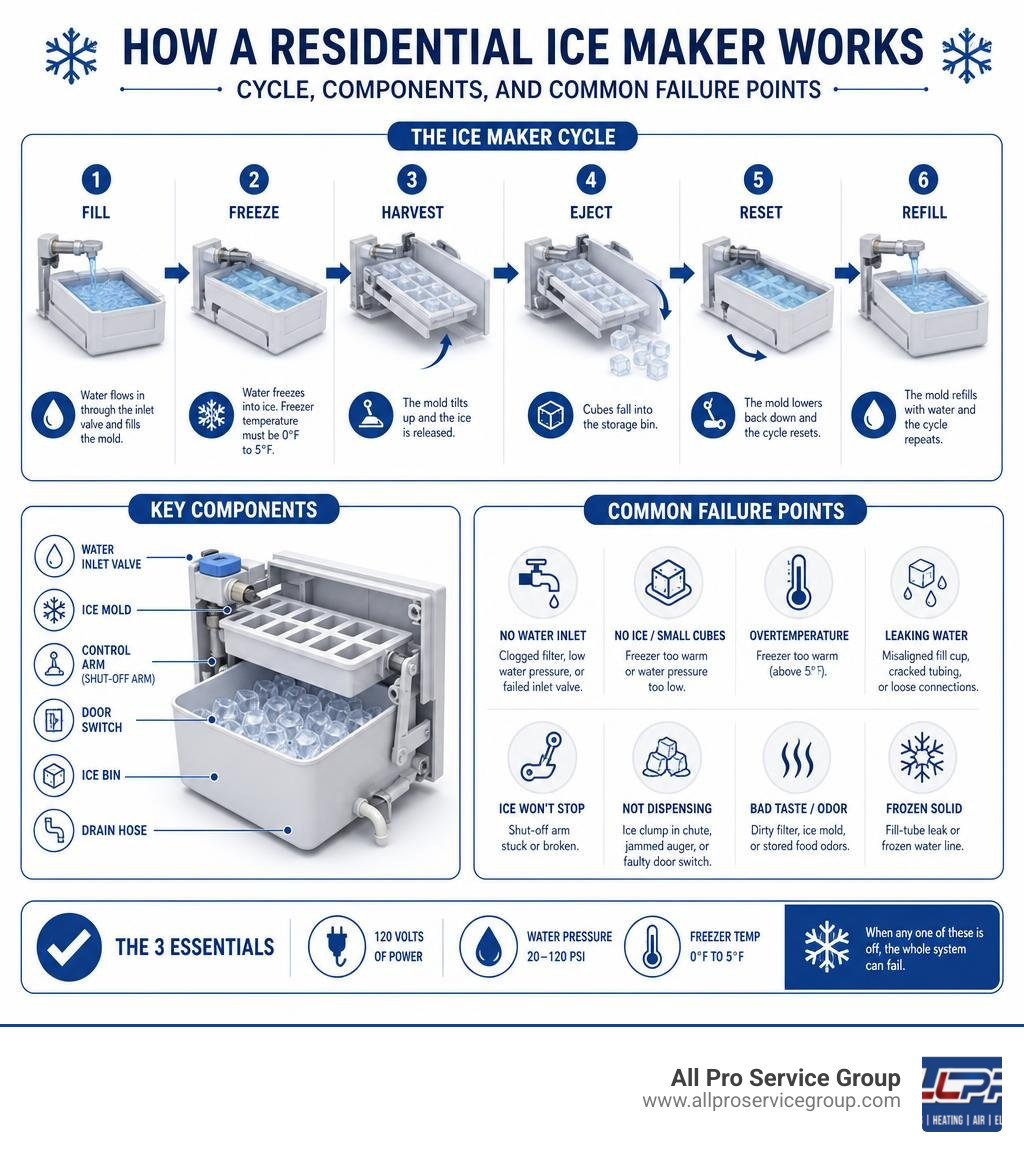
Troubleshooting Guide: When to DIY vs. Seek Professional Ice Maker Repair
When your appliance acts up, it is easy to assume the worst. However, many ice maker issues can be resolved with simple adjustments at home. Understanding how the harvest cycle behaves and checking basic settings can save you a service call. Let's look at how to safely diagnose these issues.
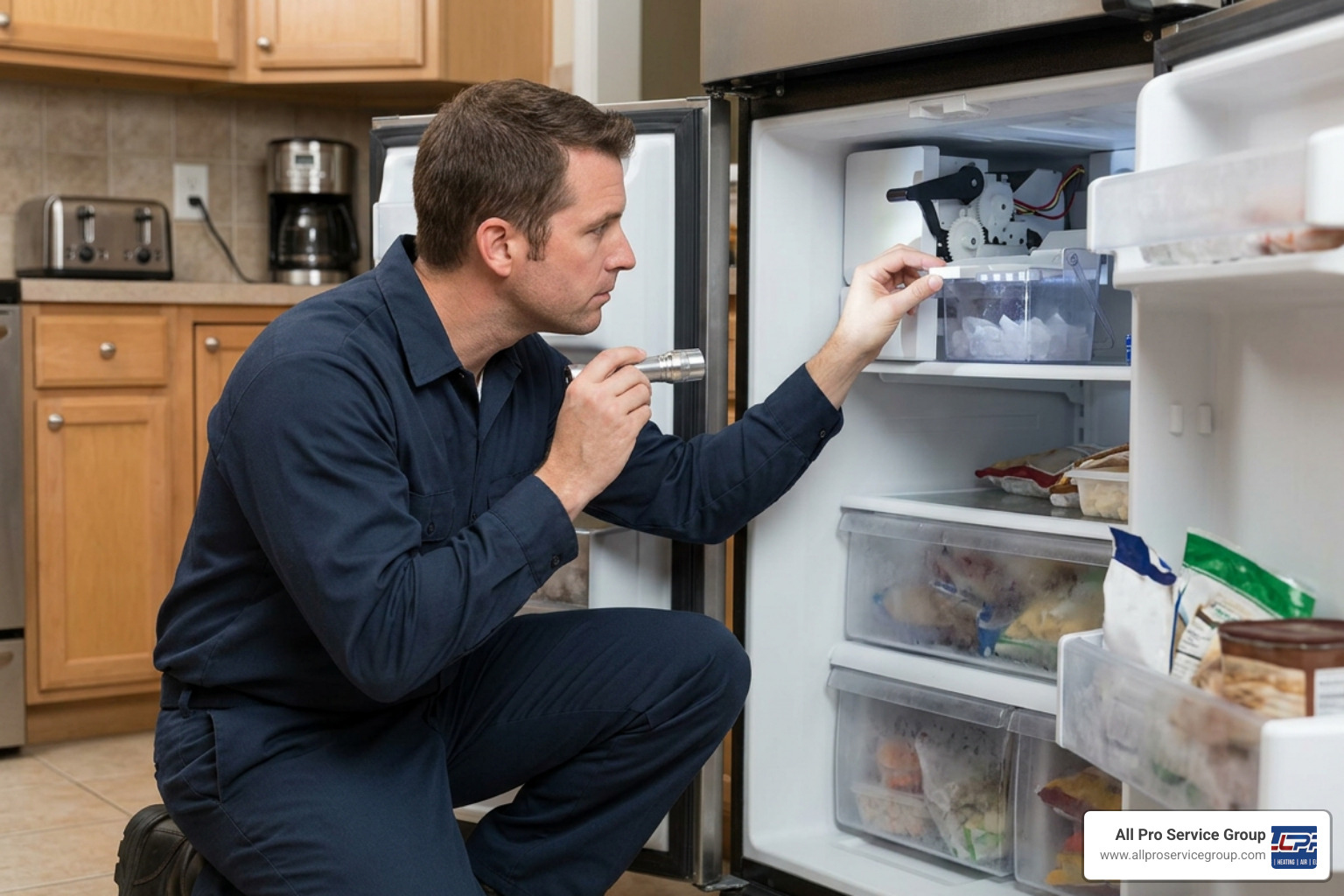
Why Is My Ice Maker Not Making Ice?
When an ice maker stops producing ice entirely, the issue typically points to a mechanical block, a temperature problem, or a water supply failure.
- Check the Shut-Off Arm: Most traditional ice makers use a physical metal bail arm or an optical sensor to detect ice levels. If the shut-off arm is pushed up into the "off" position, or if a tall box of frozen food is blocking the sensor, the unit will not harvest.
- Verify Freezer Temperature: For optimal ice production, your freezer must stay between 0°F and 5°F (-18°C to -15°C). If the freezer temperature rises above 15°F (-9°C), the ice maker's internal thermostat will not allow the harvest cycle to initiate. This is often a symptom of underlying cooling issues. If your freezer is struggling to maintain its temperature, you may need a professional Commercial Appliances/Refrigerator Repair to check your condenser coils or evaporator fan.
- Inspect the Water Inlet Valve: The water inlet valve requires 120 volts of alternating current to open and feed water into the mold. If the valve lacks power or has suffered an electrical failure, no water will enter the machine.
Why Are the Ice Cubes Small, Hollow, or Misshapen?
If your ice maker is producing cubes that look like hollow shells or are significantly smaller than usual, the culprit is almost always low water flow.
For the water inlet valve to function properly, the water supply line must maintain a pressure between 20 and 120 PSI. If the water pressure drops below 20 PSI, the inlet valve will not open fully or feed enough water into the mold.
Another surprising cause of hollow ice is an overly cold freezer. When freezer temperatures drop below -10°F (-23°C), the water freezes too quickly on the outside. This rapid freezing tricks the ice maker's internal thermostat into thinking the cube is fully frozen, triggering a premature ejection of the liquid-filled cube, which then shatters or spills in the bin.
Why Is the Ice Maker Leaking Water?
Water pooling inside your freezer or leaking onto your kitchen floor is an urgent issue that can quickly damage your cabinetry and subflooring.
- Unlevel Refrigerator: If your refrigerator is tilted even slightly, water overflowing from the fill cup can bypass the mold completely and run down into the freezer compartment.
- Misaligned Fill Cup: The fill cup must align perfectly with the water valve spigot. If it shifts, water will splash outside the mold during the fill cycle.
- Condensation Drain Issues: A blocked drain line can cause melted frost to back up and pool. If you notice persistent puddles around your appliance, you may need to look into Plumbing/Leak Detection Repair to protect your home from hidden water damage.
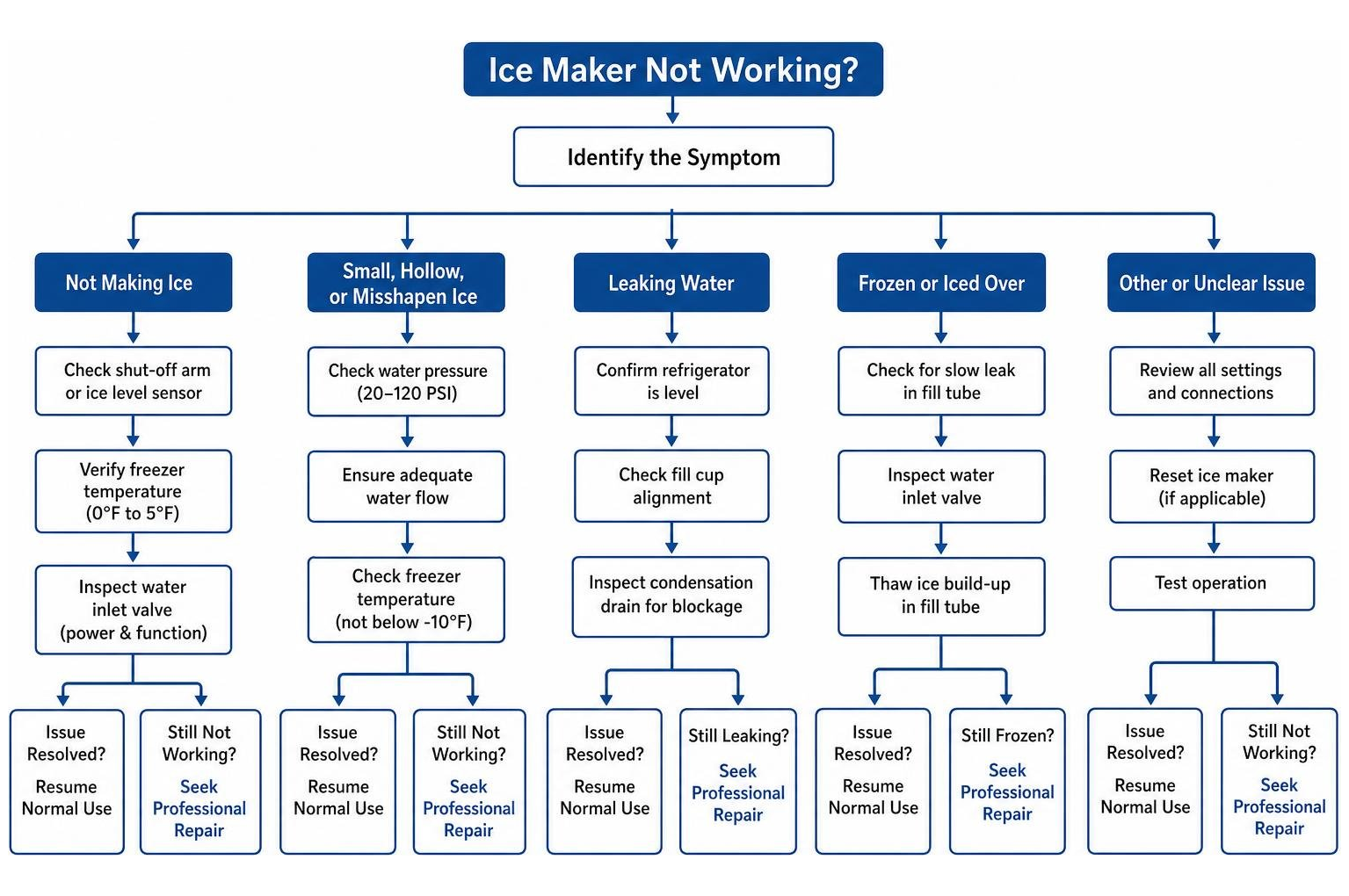
Why Is the Ice Maker Frozen or Iced Over?
An ice maker that is encased in a solid block of ice cannot cycle. This is usually caused by a slow, dripping leak from the water fill tube.
When a water inlet valve fails to close completely, water continuously weeps into the fill tube. Because the freezer is cold, this slow drip freezes inside the tube, creating a frozen waterline block.
To resolve this, you must perform a controlled thaw. You can safely melt the ice block using a hair dryer on a low heat setting, taking care not to melt the plastic components of the ice maker. However, if the water inlet valve is damaged or weeping due to mineral deposits, the freeze-up will return. In many cases, addressing the supply line issues requires expert Plumbing/Plumbing Repair to ensure a steady, leak-free connection.
Diagnosing Water Supply, Pressure, and Filtration Issues
Your ice maker is only as good as the water feeding it. In Utah, particularly in the Salt Lake Valley, hard water mineral scale can quickly clog delicate components.
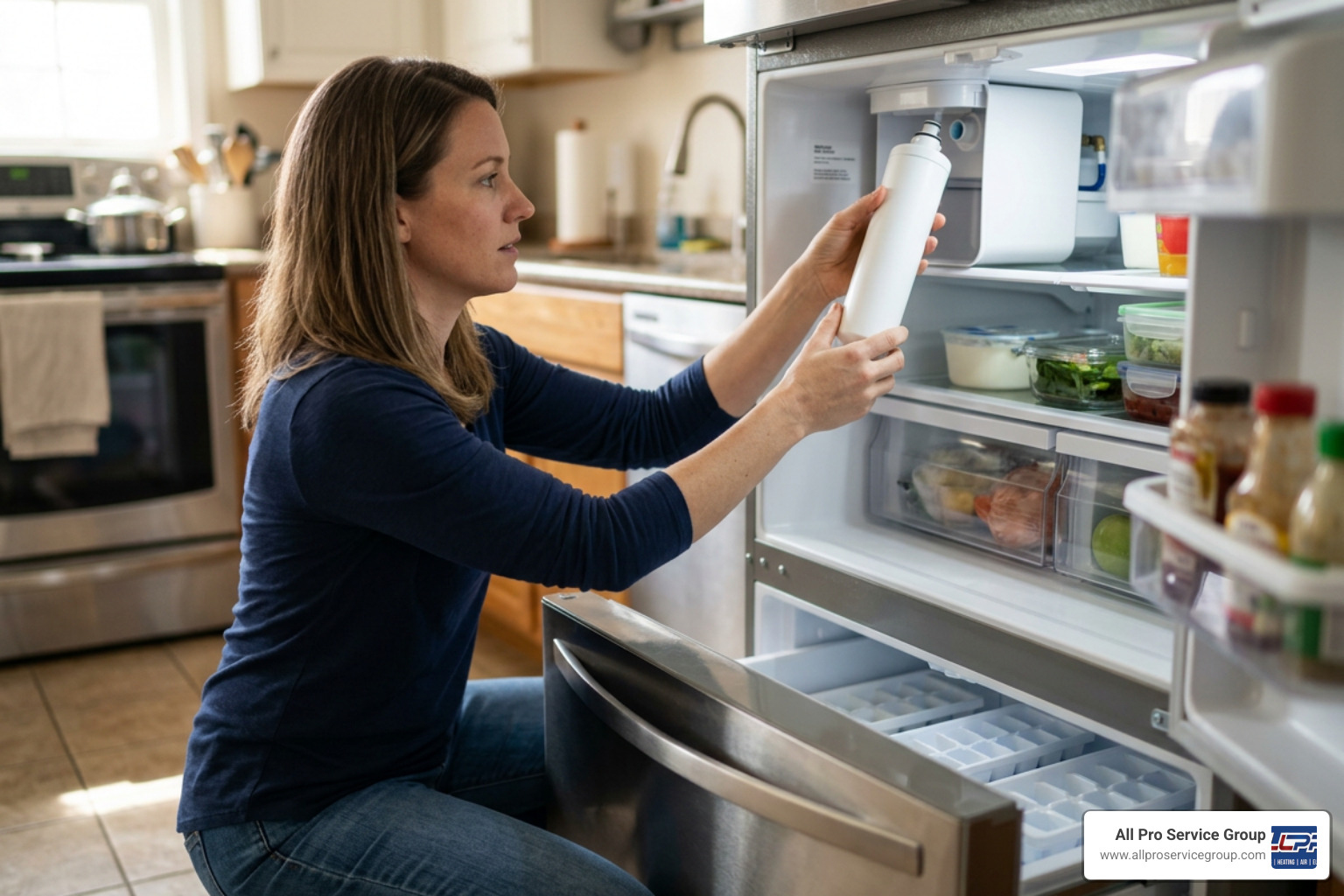
How to Fix a Clogged Water Filter or Low Water Pressure?
The most common cause of restricted water flow is a clogged water filter. Refrigerator water filters should be replaced every six months—or more frequently if you live in an area with high mineral content.
Over time, sediment and calcium build up inside the filter, dropping the water pressure below the required 20 PSI. To test if your filter is the problem:
- Turn off the water supply valve behind the refrigerator.
- Disconnect the water supply line from the back of the fridge.
- Hold the line over an empty bucket and turn the supply valve back on.
- If the stream of water is weak, the issue lies in your home's plumbing or the saddle valve. If the flow is strong, the restriction is inside the refrigerator (likely the filter or the inlet valve).
You can install a temporary bypass plug in place of the filter to see if water pressure immediately improves. If it does, a fresh filter will solve your problem.
Why Does My Ice Taste Bad or Look Cloudy?
Cloudy ice or a bad taste is rarely caused by a mechanical failure; instead, it points to water quality and maintenance issues.
- Expired Filter: An old filter can no longer trap chlorine, volatile organic compounds, or sediment, leaving your ice tasting stale or chemical-like.
- Food Odors: Ice is highly porous and acts like a sponge for airborne odors in your freezer. If you store poorly wrapped foods nearby, your ice will absorb those smells.
- Mineral Scale: High mineral concentrations in Utah's water supply lead to cloudy, opaque ice cubes. Regular descaling and sanitization of your ice maker mold will keep your ice looking crystal clear. For heavy-duty issues or commercial-grade setups, scheduling a professional Commercial Appliances/Icemaker Repair is the best way to deep-clean the internal lines and sanitize the entire system.
Mechanical and Dispenser Failures
Sometimes the ice maker successfully produces ice, but a failure in the dispensing system prevents it from reaching your glass.
Why Is the Ice Maker Not Dispensing Ice From a Full Bin?
If your ice bucket is full but nothing comes out when you press the lever, the issue is mechanical or electrical.
- Ice Clumping: If you go on vacation or do not use ice frequently, the cubes in the bin will naturally melt slightly and refreeze into a single, solid block. This block jams the rotating metal auger.
- Frozen Chute Door: If the dispenser chute door does not seal tightly, warm air enters the freezer, causing condensation to freeze around the chute and trap the ice.
- Faulty Door Switch: The refrigerator's door switch must communicate that the door is closed for the dispenser to operate. If the switch is broken, the dispenser will remain inactive.
- Failed Auger Motor: If you hear a loud grinding noise or nothing at all when pressing the dispenser lever, the auger motor may have failed or seized.
When these mechanical systems fail, it often impacts the entire refrigerator's electrical loop. If you are experiencing broader issues with your kitchen setup, our team specializes in comprehensive Commercial Appliances services to keep your refrigeration systems running smoothly.
Why Is the Ice Maker Overflowing or Making Too Much Ice?
An ice maker that does not know when to stop can fill your freezer with a mountain of loose ice.
This is almost always caused by a failing control arm or feeler paddle. As ice fills the bin, it is supposed to lift the control arm, which mechanically or electronically signals the control board to pause production. If the control arm is cracked, loose, or has slipped out of its housing, it will remain in the "down" position, causing the machine to continuously harvest ice. Verify that your ice bucket is properly aligned and sitting flat on its shelf so the feeler paddle can accurately measure the ice level.
Repair vs. Replace: Cost and Lifespan Analysis
When faced with a broken ice maker, you must decide whether it is smarter to invest in a repair or replace the unit entirely.
| Component / Service | Typical Repair Cost (Parts & Labor) | Expected Lifespan | Warranty |
|---|---|---|---|
| Water Inlet Valve Replacement | $180 – $320 | 5 – 10 Years | 90-Day Parts & Labor |
| Ice Maker Module Assembly | $200 – $400 | 5 – 8 Years | 90-Day Parts & Labor |
| Control Board / Thermistor | $220 – $450 | 7 – 12 Years | 90-Day Parts & Labor |
| Deep Cleaning & Sanitization | $130 – $250 | Maintenance (6-12 mos) | Workmanship Guarantee |
| Diagnostic Fee | $80 – $97 | Credited toward repair | N/A |
Refrigerator Age and Cost of Ice Maker Repair
A helpful rule of thumb is the seven-year rule:
- Under 7 Years: The refrigerator is in its prime. Repairing individual components like the water inlet valve or replacing the ice maker assembly is highly cost-effective.
- 7 to 12 Years: The decision depends on the overall health of the appliance. If the fridge is cooling perfectly and the seals are tight, a simple repair is worth it.
- 12+ Years: At this stage, multiple components (compressor, fan motors, defrost systems) are nearing the end of their lives. Investing several hundred dollars in an ice maker repair may not be the wisest financial choice.
When to Call a Professional for Ice Maker Repair
While replacing a water filter is a straightforward DIY task, other repairs require professional diagnostic equipment.
If the issue involves testing electrical circuits with a multimeter, diagnosing a failed control board, or performing sealed-system refrigerant repairs, you should call a certified technician. Modern ice makers rely on precise sensor calibration, and improper handling can lead to electrical shorts or costly water damage to your home.
Frequently Asked Questions
How often should I clean and sanitize my ice maker?
Residential ice makers should be sanitized every six months and deep-cleaned once a year to remove mineral scale and prevent mold growth. Commercial ice machines are subject to strict health codes and typically require quarterly professional cleaning.
What is the ideal temperature for ice production?
Your freezer should be set to exactly 0°F (-18°C). This temperature ensures efficient cooling, allows the ice maker's thermostat to cycle correctly, and prevents the premature harvesting of hollow cubes.
Can a faulty water inlet valve cause leaks?
Yes. If mineral deposits build up inside the valve or the internal solenoid fails mechanically, the valve may "weep" or fail to shut off completely. This causes water to overflow the mold, leading to ice buildup in the freezer or water leaking onto your kitchen floor.
Conclusion
A broken ice maker can disrupt your daily routine, but most issues can be resolved quickly with the right diagnostic steps. From checking your freezer's temperature to replacing a clogged water filter, keeping an eye on these simple requirements will keep the ice flowing.
For homeowners and businesses in Ogden, Provo, Park City, and across the Greater Salt Lake Area, All Pro Service Group is your "Gephardt Approved" partner for dependable appliance and plumbing solutions. Our trained experts are ready to provide fast, professional diagnostics and repairs backed by exceptional customer service.
If your ice maker is acting up, leaking, or refusing to harvest, do not let a minor problem turn into costly water damage. Schedule Ice Machine Repair Services with us today, and we will get your kitchen back to normal in no time!