
Why Sump Pump Repair Can Save Your Home From Serious Water Damage
Sump pump repair is something every homeowner with a basement or crawl space should understand before water starts rising. Here's a quick overview of the most common fixes:
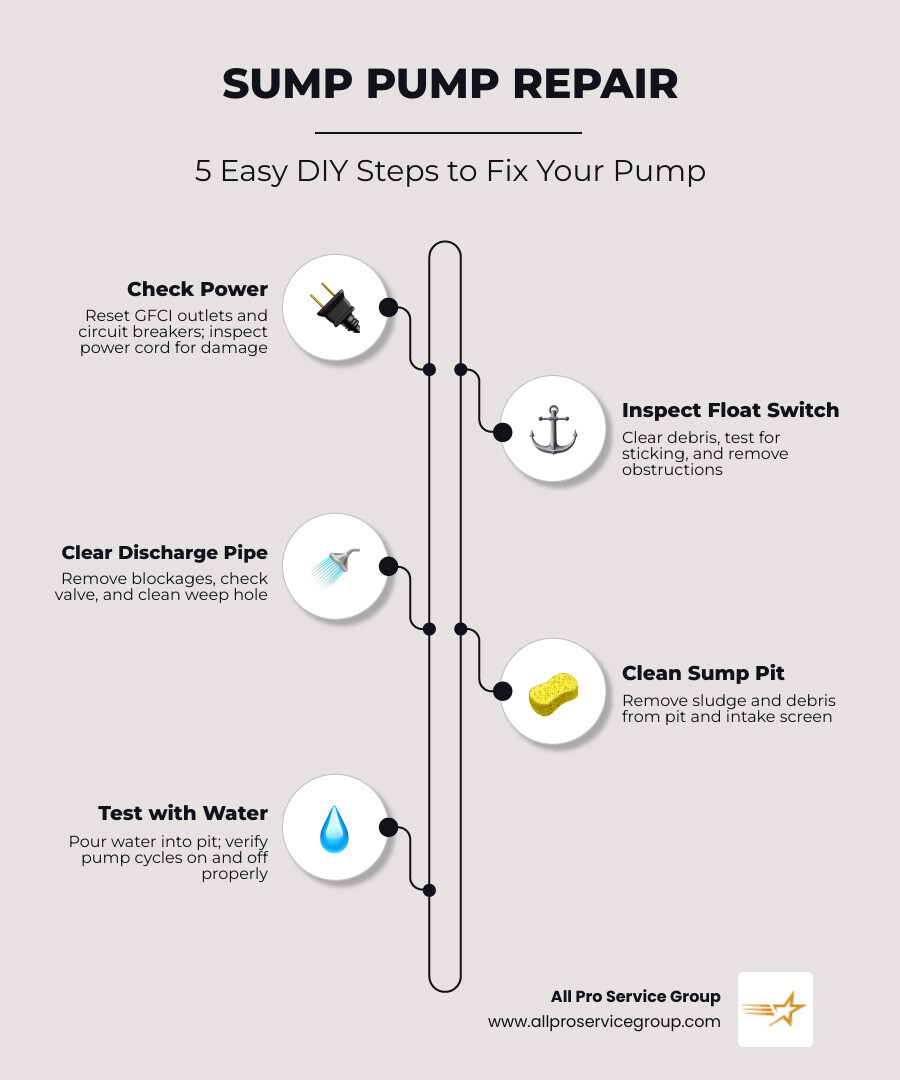
Quick-reference sump pump repair steps:
- Check power- Reset tripped breakers and GFCI outlets
- Inspect the float switch- Clear debris or manually test if stuck
- Clear the discharge pipe- Remove blockages and check the check valve
- Clean the sump pit and intake screen- Remove sludge and debris
- Test with water- Pour water into the pit and confirm the pump cycles on and off
Your sump pump is one of the most important systems in your home - and one of the most overlooked. It quietly sits in your basement, ready to push out groundwater before it can cause serious damage. But when it fails, the consequences are anything but quiet.
More than 142 million properties across the United States face real flood risk. A sump pump that won't turn on, runs nonstop, or makes grinding noises isn't just annoying - it's a warning that your home could be one heavy rainstorm away from a costly flood.
The good news? Many common sump pump problems are fixable without calling a pro. This guide walks you through exactly what to do.
I'm Gary, owner of All Pro Service Group, and I've helped countless homeowners across the Greater Salt Lake Valley diagnose and resolve sump pump repair issues before they turned into full-blown emergencies. With years of hands-on plumbing experience, I'll walk you through the most effective steps to get your system back up and running.
Recognizing the Warning Signs Your Sump Pump Needs Repair
Before we dive into the "how-to," we need to talk about the "uh-oh." Your sump pump usually tries to tell you it’s struggling long before your basement turns into an indoor swimming pool. Recognizing these signs early can be the difference between a $50 DIY fix and a $10,000 insurance claim.

Unusual Noises
A healthy pump should make a low, steady hum or a soft whirring sound. If you start hearing grinding, rattling, or thumping, something is wrong. Grinding often indicates a damaged impeller (the fan-like part that moves the water), while rattling could mean a component has shaken loose. Gurgling is common, but excessive banging often points to a failing check valve or a mounting issue.
Constant Running
If your pump is running even when it hasn't rained in a week, you have a problem. This is usually caused by a stuck float switch or a pump that is underpowered for the amount of groundwater entering the pit. Continuous running will eventually burn out the motor, leading to a total system failure.
Visible Rust and Iron Bacteria
Rust is a clear sign of age, but keep an eye out for a "slimy" orange or red substance. This is often "iron bacteria." According to First Street Foundation, over 142 million properties are at risk of flooding, and in areas like Salt Lake City or Ogden, soil minerals can lead to this bacterial growth. It creates a gel-like sludge that clogs the intake screen and discharge pipe, making sump pump repair a necessity to keep the water flowing.
The Age Factor
Even if it looks okay, age is the ultimate silent killer. Most experts agree that a well-maintained sump pump lasts between 7 and 10 years. If yours is celebrating its 11th birthday, it’s living on borrowed time.
| Sign of Trouble | Potential Cause | Recommended Action |
|---|---|---|
| Grinding/Loud Noise | Damaged Impeller | Repair or Replace Pump |
| Pump Won't Stop | Stuck Float Switch | Clean or Replace Switch |
| Visible Rust/Slime | Iron Bacteria | Professional Cleaning |
| 10+ Years Old | End of Lifespan | Full Replacement |
5 Steps for DIY Sump Pump Repair and Troubleshooting
If you’ve noticed one of the signs above, don't panic. Many issues can be resolved with a little elbow grease and basic tools. Before you start, remember the golden rule of home maintenance: Safety first.
Working on a sump pump involves two things that don't play well together: water and electricity. Always wear rubber gloves and waterproof boots. Ensure the area around the pit is as dry as possible before you begin. For more complex issues, you can always check out our plumbing repair services for expert assistance.
Step 1: Check Power and Electrical Connections
It sounds simple, but you’d be surprised how many "broken" pumps are just unplugged or have tripped a breaker.
- GFCI Outlets: Sump pumps should always be plugged into a Ground Fault Circuit Interrupter (GFCI) outlet. These are designed to shut off power if they detect a surge or moisture. Check the "Reset" button on the outlet.
- Circuit Breakers: Check your home's main electrical panel. If the breaker for the basement or the dedicated pump circuit has flipped to the "Off" position, flip it back.
- Switched Circuits: Ensure the pump isn't plugged into an outlet controlled by a wall switch. Someone might have accidentally flicked the switch off while leaving the basement.
- Power Cord Inspection: Look for signs of fraying or damage from pests. If the cord is damaged, the pump is unsafe to use.
If you find that your pump keeps tripping the breaker immediately after you reset it, you might have a short circuit in the motor. This is an emergency plumbing situation because it leaves your home unprotected during the next storm.
Step 2: Inspect and Clean the Float Switch for Sump Pump Repair
The float switch is the "brain" of the pump. As water rises in the pit, the float rises like a bobber on a fishing line. Once it reaches a certain height, it triggers the motor.
- Stuck Float: Often, the pump vibrates during operation and shifts slightly in the pit. This can cause the float to get pinned against the side of the basin, preventing it from rising or falling. Simply re-centering the pump can fix this.
- Debris Removal: Small pebbles, dirt, or even dehumidifier hoses can fall into the pit and jam the switch. Clear out any foreign objects.
- Switch Bypass Test: If you want to see if the motor still works, you can perform a "piggyback" test. Most pumps have two cords plugged into each other. Unplug them and plug the pump cord directly into the wall. If the pump turns on, the motor is fine, but the float switch is faulty.
For high-quality residential pumps like a Zoeller pump, maintaining the switch is the most common part of regular upkeep.
Step 3: Clear the Discharge Pipe for Effective Sump Pump Repair
The discharge pipe is the "highway" that carries water away from your foundation. If the highway is blocked, the water has nowhere to go but back into your basement.
- Common Obstructions: Mud, sticks, ice (in Utah winters), or even small rodents can block the exit point of the pipe. Ensure the pipe terminates at least 20 feet away from your home's foundation.
- The Check Valve: This is a one-way valve that prevents water from falling back into the pit once the pump shuts off. If you hear a loud "thud" when the pump stops, or if the pit refills immediately, the check valve might be stuck or installed backward. Look for the arrow on the valve; it should always point away from the pump.
- Air Lock: If the pump is running but no water is moving, you might have an air lock. Most manufacturers recommend drilling a small "weep hole" (about 1/8 inch) in the discharge pipe between the pump and the check valve to allow trapped air to escape.
Step 4: Clean the Sump Pit and Intake Screen
Over time, the bottom of your sump pit can become a graveyard for silt, sand, and sludge. This debris gets sucked into the intake screen at the bottom of the pump, choking the motor.
- Sludge Removal: Unplug the pump and remove it from the pit. Use a wet/dry vacuum or a scoop to remove the muck from the bottom of the basin.
- Cleaning Solution: You can clean the pump housing and the basin with a simple 1:1 mixture of vinegar and water. This helps break down calcium deposits and iron bacteria slime.
- Intake Screen: Check the small grate at the bottom of the pump. If it's clogged, the pump will work twice as hard to move half as much water. Use a stiff brush to clear it out.
Keeping the basin clean is just as important as drain cleaning for the rest of your home's plumbing.
Step 5: Test the System with Water
Now that you’ve cleaned and inspected everything, it’s time for the final exam. You don't want to wait for a thunderstorm to find out if your sump pump repair worked.
- The Bucket Test: Slowly pour about 5 to 10 gallons of water into the sump pit.
- Observe the Cycle: Watch the float rise. The pump should engage smoothly, evacuate the water quickly, and shut off once the level drops.
- Check the Exit: If possible, have someone stand outside to verify that water is actually exiting the discharge pipe and flowing away from the foundation.
When to Call a Professional for Sump Pump Repair
We love a good DIY project, but sometimes a wrench and a YouTube video aren't enough. There are specific scenarios where attempting a repair yourself can be dangerous or lead to more damage.
- Motor Burnout: If the pump is getting power but won't turn on (and you've checked the float), the internal motor windings have likely failed. These are sealed units and cannot be repaired by a homeowner.
- Electrical Hazards: If you see sparks, smell burning plastic, or notice the outlet is scorched, stop immediately. Call us for general plumbing services and electrical safety checks.
- Sewage Ejector Issues: Don't mistake a sewage ejector pump for a sump pump. If the pit has a sealed lid and two pipes coming out (one for waste and one for venting), that's a sewage pump. Dealing with raw sewage requires professional equipment and sanitation protocols.
- Frequent Cycling: If the pump turns on and off every 30 seconds, it might be improperly sized for your home's water table. We can help you calculate the necessary horsepower (usually 1/3 HP for standard homes or 1/2 HP for high-water areas) to ensure long-term reliability.
Frequently Asked Questions about Sump Pump Maintenance
How long does a sump pump typically last?
On average, a sump pump lasts between 7 and 10 years. However, this can vary. If your pump is in a high-water table area (like parts of West Valley City or South Jordan) and runs every day, it might only last 5 to 7 years. Conversely, if it rarely runs, the seals can dry out and fail prematurely. Regular annual maintenance—cleaning the pit and testing the float—can help you push closer to that 10-year mark.
Is it better to repair or replace an old pump?
This depends on the age and the part that failed. If a 3-year-old pump has a stuck float switch, a repair is a no-brainer. However, if the pump is 8 years old and the motor is making a grinding noise, replacement is the smarter investment. The average cost for a professional sump pump installation is around $1,011, which is a small price to pay compared to the cost of a flooded basement.
How often should I test my sump pump?
We recommend a "mini-test" every quarter and a full inspection once a year. In the Greater Salt Lake area, the best time for your annual maintenance is in early spring, right before the snowmelt starts to raise the groundwater levels. Expect to pay about $150 to $250 yearly if you choose to have a professional handle the maintenance and testing for you.
Conclusion
A functioning sump pump is your home's first line of defense against Mother Nature. While sump pump repair can often be handled with the five steps we've outlined—checking power, inspecting the float, clearing the discharge line, cleaning the pit, and testing with water—knowing your limits is key to protecting your property.
At All Pro Service Group, we’ve been the trusted experts in Salt Lake City, Provo, Ogden, and the surrounding areas since 2008. We are "Gephardt Approved" and committed to providing dependable, 24/7 service to keep your basement dry and your mind at ease. Whether you need a simple inspection or a full system replacement, our trained experts are ready to help.
Don't wait for the water to rise. If you're unsure about the health of your system, contact us today for professional sump pump repair and replacement. We’ll make sure your home stays high and dry, no matter what the Utah weather throws your way!