When Your Furnace Heat Exchanger Fails: What Salt Lake Homeowners Need to Know
A furnace repair heat exchanger issue is one of the most serious problems your home heating system can face — and one of the most urgent to address.
Quick answer: What should you do if you have a heat exchanger problem?
- Shut off your furnace immediately if you suspect a cracked heat exchanger
- Open windows and doors to ventilate your home
- Evacuate if your carbon monoxide detector is alarming
- Call a licensed HVAC technician for a professional inspection and diagnosis
- Do not run the furnace again until it has been cleared by a professional
Here is why this matters so much: the heat exchanger is the part of your furnace that keeps toxic combustion gases — including carbon monoxide — separated from the air you breathe. When it cracks or fails, those gases can leak directly into your living space. According to the CDC, accidental carbon monoxide poisoning causes at least 420 deaths and over 100,000 hospitalizations in the United States every year.
Most homeowners never think about their heat exchanger — until something goes wrong. By then, the stakes are high: a failed heat exchanger can mean costly repairs, a full furnace replacement, or a serious health risk for your family.
This guide walks you through everything you need to know — from spotting the warning signs early to deciding whether to repair or replace.
We're All Pro Service Group, and our team has handled furnace repair heat exchanger inspections and replacements across the Greater Salt Lake Valley since 2008. If your furnace is showing any of the symptoms described in this guide, keep reading — we'll help you figure out exactly what to do next.
What is a Furnace Heat Exchanger and How Does It Fail?

A furnace heat exchanger is the metal chamber or set of tubes inside a gas furnace that transfers heat from combustion to the air that circulates through your home.
Here is the simple version:
- Your furnace burns natural gas or propane.
- That combustion creates hot gases.
- Those gases move through the heat exchanger.
- The metal heat exchanger gets hot.
- Your blower pushes household air across the outside of the hot metal.
- Warm air flows through your ducts.
- Combustion gases exit safely through the venting system.
The key detail is that the air you breathe should never mix with the combustion gases inside the heat exchanger.
That is why this part is so important. It does two jobs at once: it heats your home, and it protects your indoor air. Trane offers a helpful technical overview here: What Is a Heat Exchanger in HVAC?
Most standard furnaces have one primary heat exchanger. High-efficiency condensing furnaces, often rated 90% AFUE or higher, may have both a primary and secondary heat exchanger. The secondary heat exchanger extracts additional heat from exhaust gases, which improves efficiency but also adds more components that must drain and vent correctly.
A heat exchanger usually fails when metal fatigue, overheating, corrosion, or poor airflow causes the metal to crack, split, rust through, or separate at a seam. It is a little like bending a paperclip back and forth: one bend is fine, but thousands of heating cycles over many winters eventually take a toll.
Understanding the Safety and Heating Functions
Your heat exchanger is not just a comfort part. It is a safety barrier.
On one side of the heat exchanger are combustion byproducts. These can include:
- Carbon monoxide
- Carbon dioxide
- Nitrogen oxides
- Water vapor
- Other flue gases
On the other side is the household air being blown through your ducts. In a healthy furnace, these two air streams stay separate.
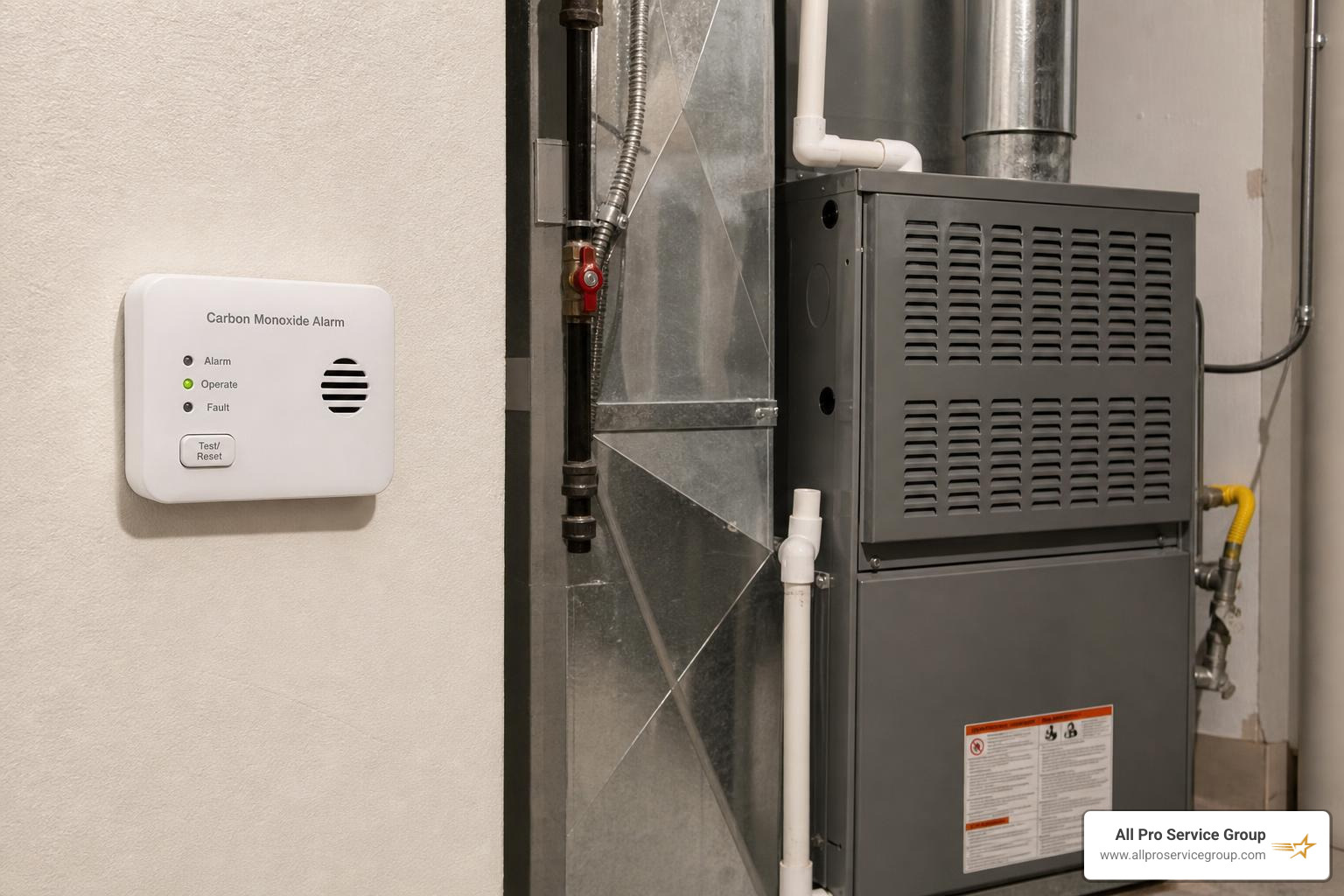
When a heat exchanger cracks, the pressure inside the furnace can allow combustion gases to enter the supply air. Carbon monoxide is the biggest concern because it is invisible, odorless, and potentially deadly. You cannot rely on smell to detect it. That is why every home with fuel-burning appliances should have working carbon monoxide detectors on each level and near sleeping areas.
A damaged heat exchanger can also reduce efficiency. If the furnace is not burning, venting, or transferring heat properly, it may run longer, cycle more often, or struggle to keep your home comfortable. You might notice colder rooms, higher utility bills, or a furnace that sounds like it is trying way too hard to do its job.
For more homeowner-friendly safety tips, see our guide: More info about gas furnace safety
Common Causes of a Cracked Heat Exchanger
Heat exchangers are built to handle heat, but they are not invincible. Most failures develop over time because of repeated stress.
Common causes include:
- Age and metal fatigue: Heat exchangers expand when hot and contract when cool. After years of cycles, the metal can weaken.
- Restricted airflow: Dirty filters, blocked return vents, closed registers, or duct problems can trap heat inside the furnace.
- Overheating: When airflow is poor, the heat exchanger gets hotter than it should. Repeated overheating is one of the fastest ways to shorten its life.
- Oversized furnace: A furnace that is too large may short cycle, turning on and off too often. That creates extra expansion and contraction stress.
- Rust and corrosion: Moisture from condensation, poor venting, or improper drainage can corrode metal over time.
- Poor installation: Incorrect gas pressure, duct sizing, venting, or furnace setup can create unsafe operating conditions.
- Lack of maintenance: Skipping annual inspections lets small issues become expensive surprises. Furnaces are not great at saying, "Excuse me, I am developing a tiny crack." They usually wait until it is inconvenient.
Most heat exchangers last 15 to 20 years with proper maintenance, though some may fail earlier if the furnace overheats, has poor airflow, or is installed incorrectly. For more details on causes and symptoms, see Cracked Heat Exchanger: What It Means.
Warning Signs You Need a Furnace Repair Heat Exchanger Inspection
A cracked heat exchanger is not always obvious. In many cases, homeowners notice secondary signs first: strange smells, soot, odd noises, headaches, or a carbon monoxide alarm.
If you are searching for furnace repair heat exchanger help, pay close attention to these warning signs:
- Carbon monoxide detector alarm
- Yellow, orange, or flickering burner flame instead of steady blue
- Soot buildup around the furnace
- Strong chemical, metallic, formaldehyde-like, or odd burning odors
- Furnace short cycling
- Loud rattling, banging, or popping sounds
- Visible rust, corrosion, or cracks
- Water near the furnace, especially on high-efficiency units
- Unexplained headaches, nausea, or flu-like symptoms at home
- Rising heating bills with no clear explanation
- Uneven heating or weak airflow
Some of these symptoms can come from other furnace problems too, such as dirty burners, a failing blower motor, a clogged filter, or venting issues. That is why a professional inspection matters. Guessing is fine for game night. It is not fine when combustion gases are involved.
If your system is older and showing multiple symptoms, this may also be a sign that replacement should be on your radar. Read more here: More info about furnace replacement signs
Physical Symptoms of Carbon Monoxide Exposure
Carbon monoxide exposure can feel like the flu, which makes it especially dangerous during heating season. People may blame a headache or nausea on stress, dehydration, or a winter bug, when the real issue is indoor air contamination.
Possible carbon monoxide symptoms include:
- Headache
- Dizziness
- Nausea
- Weakness
- Confusion
- Shortness of breath
- Chest discomfort
- Sleepiness
- Flu-like symptoms that improve when you leave the home
If multiple people in the house feel sick at the same time, or symptoms improve when you go outside, treat it as urgent.
Important: carbon monoxide poisoning can be fatal. Accidental carbon monoxide poisoning results in at least 420 deaths and more than 100,000 hospitalizations in the United States every year. A working CO detector is not optional; it is a must-have safety device.
If your CO alarm sounds:
- Do not ignore it.
- Leave the home immediately.
- Call emergency services or your gas utility from outside.
- Do not re-enter until the home has been cleared.
- Do not restart the furnace until a licensed HVAC professional has inspected it.
Visual and Auditory Signs of Heat Exchanger Damage
A cracked heat exchanger can create visible and audible clues. You may notice:
- Soot accumulation: Soot near burners, vents, or the furnace cabinet can indicate incomplete combustion.
- Rust or corrosion: Rust on or around the furnace may point to moisture or venting issues.
- Yellow flame: A healthy gas furnace flame is usually steady and blue. Yellow or flickering flames can signal poor combustion.
- Rattling or banging: Cracked metal may expand and contract differently, creating new noises.
- Popping sounds: Some noise at startup can be normal, but new or loud popping should be checked.
- Water around the furnace: On high-efficiency furnaces, water can indicate drainage or condensation problems that may contribute to corrosion.
- Visible cracks: Sometimes a technician can confirm cracking with visual inspection, mirrors, cameras, or other diagnostic tools.
A homeowner usually cannot fully inspect a heat exchanger safely or thoroughly. Many cracks are hidden inside the furnace assembly and only appear under certain operating conditions.
Professional diagnosis may include:
- Combustion analysis
- Visual inspection with mirrors or cameras
- Burner flame evaluation
- Static pressure testing
- Carbon monoxide testing
- Venting and airflow inspection
- Checking gas pressure and temperature rise
Immediate Steps to Take If You Suspect a Crack
If you suspect a cracked heat exchanger, do not "wait and see." This is one of those furnace problems where being cautious is the smart move.
Do this immediately:
- Turn off the furnace. Use the thermostat and furnace power switch if accessible.
- Open windows and doors if it is safe to do so.
- Leave the home if anyone feels sick or your CO detector is alarming.
- Do not restart the furnace. Even if the house gets chilly, do not take the risk.
- Call a licensed HVAC technician for a heat exchanger inspection.
- Use safe backup heat only. Avoid ovens, grills, or unvented fuel-burning heaters indoors.
If you smell gas, leave the home and contact your gas utility or emergency services. Do not flip switches, light matches, or use anything that could create a spark.
Repair vs. Replacement: Costs and Decision Factors
A cracked heat exchanger brings up the big question: should you replace the heat exchanger or replace the entire furnace?
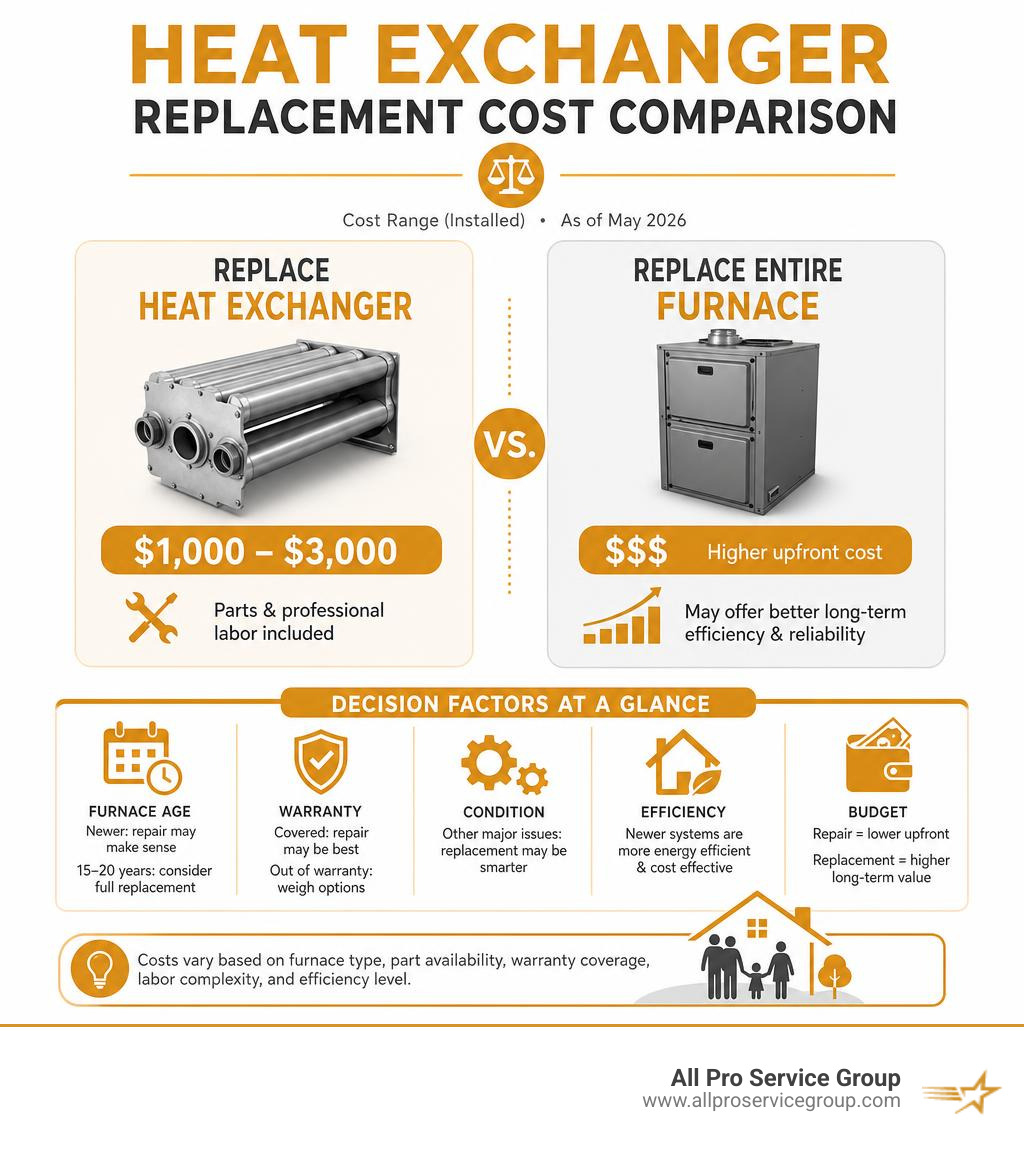
As of May 2026, heat exchanger replacement for many residential furnaces typically ranges from about $1,000 to $3,000 installed. Some common estimates fall around $1,200 to $2,800 for parts and professional labor. Costs vary based on furnace type, part availability, warranty coverage, labor complexity, and whether the furnace is standard or high efficiency.
Full furnace replacement often costs more upfront, but it may make better financial sense if the existing furnace is old, inefficient, out of warranty, or has other major problems.
For a broader cost breakdown, see this 2026 pricing resource: Heat Exchanger Replacement Cost: 2026 Price Guide by Furnace Type
| Decision Factor | Replace Heat Exchanger | Replace Entire Furnace |
|---|---|---|
| Furnace age | Often best if furnace is newer | Often best if furnace is 15-20 years old |
| Warranty | Makes sense if part is covered | Better if warranty is expired and other parts are aging |
| Cost | Typically $1,000-$3,000 installed | Higher upfront cost, but may offer better long-term value |
| Efficiency | Restores existing efficiency | Can improve efficiency with a newer system |
| Other repairs needed | Best if failure is isolated | Best if blower, board, burners, or venting also need work |
| Safety | Safe if professionally replaced and tested | Safe with proper installation and commissioning |
| Long-term value | Good for newer equipment | Better for older, unreliable equipment |
When to Choose a Furnace Repair Heat Exchanger Service
A furnace repair heat exchanger service may make sense when the furnace is still relatively new and the issue is isolated.
Consider heat exchanger replacement if:
- The furnace is under 10 years old
- The heat exchanger is still covered by manufacturer warranty
- The rest of the furnace is in good condition
- The blower motor, control board, gas valve, and burners are working well
- The furnace has been properly maintained
- Replacement cost is much lower than installing a new furnace
- The current system is correctly sized for your home
Warranty can make a big difference. Some heat exchangers carry long parts warranties, but labor may not be covered. That means the part could be free or discounted while the homeowner still pays for several hours of labor.
A professional should verify the failure, explain the options, and provide a clear estimate. If a technician says your heat exchanger is cracked, it is reasonable to ask to see the crack or the diagnostic evidence. A trustworthy HVAC company should be willing to explain what they found in plain language.
For repair help, visit: More info about furnace repair
When a Full Furnace Replacement is the Smarter Investment
Replacing the whole furnace is often the better choice when the furnace is near the end of its expected life.
Most furnaces last about 15 to 20 years with proper maintenance. If your system is already in that range, installing a new heat exchanger may be like putting brand-new tires on a car with a failing transmission. Technically possible? Yes. Best use of money? Maybe not.
Full furnace replacement may be smarter if:
- Your furnace is 15 years old or older
- Repair cost is close to half the cost of replacement
- The heat exchanger is out of warranty
- The furnace has had frequent repairs
- Your heating bills keep rising
- The system heats unevenly
- The furnace is oversized or short cycling
- Major parts are also aging or failing
- You want better efficiency and comfort
- You plan to stay in the home long term
Newer furnaces can offer better efficiency, quieter operation, improved airflow, and updated safety controls. For Utah homeowners in Ogden, Park City, Provo, South Jordan, West Jordan, West Valley City, Salt Lake City, South Salt Lake, and across the Greater Salt Lake Valley, that can make a real difference during cold winter months.
Learn more here: More info about furnace installation
How to Prevent Heat Exchanger Damage
You cannot make a heat exchanger last forever, but you can absolutely help it last longer.
The biggest prevention goal is simple: keep the furnace from overheating and make sure combustion is safe.
Start with these habits:
- Replace your furnace filter every 1 to 3 months, depending on filter type, pets, dust, and usage.
- Keep supply registers open and unblocked.
- Keep return air vents clear.
- Do not store items against the furnace.
- Schedule annual furnace maintenance before heating season.
- Make sure high-efficiency furnace drains stay clear.
- Address unusual noises, odors, or cycling early.
- Install and test carbon monoxide detectors.
- Use a properly sized furnace, not one that is too large for the home.
- Have ductwork issues corrected if airflow is poor.
Dirty filters are one of the most common preventable causes of furnace stress. When airflow drops, heat builds up inside the furnace. The limit switch may shut the system down, the furnace may short cycle, and the heat exchanger may experience more thermal stress than it was designed for.
Annual maintenance is the other big one. During a tune-up, a trained technician can inspect burners, flame quality, venting, blower operation, safeties, electrical connections, gas pressure, temperature rise, and signs of heat exchanger stress.
For preventive service, visit: More info about furnace maintenance
The Role of Regular Furnace Repair Heat Exchanger Inspections
A heat exchanger inspection is one of the most important parts of furnace maintenance, especially as the system gets older.
A professional inspection may include:
- Checking for visible cracks, rust, or corrosion
- Looking for soot or flame rollout
- Testing for carbon monoxide near the furnace and supply air
- Performing combustion analysis
- Inspecting venting and draft
- Measuring temperature rise
- Checking blower performance
- Confirming proper gas pressure
- Reviewing filter and duct airflow
- Inspecting condensate drainage on high-efficiency systems
Regular inspections help catch problems early. That does not just protect the heat exchanger; it protects your whole home.
We recommend scheduling furnace maintenance annually, ideally before the first serious cold snap. Waiting until your furnace fails on a freezing night is a bold strategy, but not one we recommend.
For more on seasonal tune-ups, see: More info about annual tune-ups
Frequently Asked Questions About Furnace Heat Exchangers
Can a cracked heat exchanger be repaired with welding?
In most residential furnace situations, no, welding or patching a cracked heat exchanger is not considered a safe long-term repair.
Here is why:
- The heat exchanger is a safety-critical component.
- Welding can change the metal structure and create new stress points.
- Cracks may continue beyond the visible damaged area.
- The furnace must meet manufacturer and safety standards.
- A patch may fail under repeated heating and cooling cycles.
- Many manufacturers do not approve welding repairs.
- A DIY repair can create carbon monoxide hazards and may void warranty coverage.
Some sources may mention temporary patching, welding, or heat-resistant compounds, but for home gas furnaces, the safe recommendation is almost always professional heat exchanger replacement or full furnace replacement. This is not a good place for "I watched a video, hand me the torch" energy.
If a heat exchanger is cracked, the furnace should remain off until a licensed HVAC professional determines the correct solution.
How long does a furnace heat exchanger typically last?
A furnace heat exchanger typically lasts 15 to 20 years with proper maintenance. Some may last longer, and some may fail earlier.
Factors that can shorten heat exchanger life include:
- Dirty filters
- Poor airflow
- Blocked vents
- Oversized furnace
- Short cycling
- Overheating
- Poor installation
- Improper gas pressure
- Condensate drainage problems
- Rust or corrosion
- Lack of annual maintenance
A well-maintained furnace has a better chance of reaching its expected lifespan. That means changing filters, keeping vents open, and scheduling professional maintenance each year.
If your furnace is over 10 to 15 years old and needs a heat exchanger, it is wise to compare repair and replacement costs before deciding.
Does homeowners insurance cover heat exchanger replacement?
Usually, homeowners insurance does not cover heat exchanger replacement when the failure is caused by normal wear and tear, age, corrosion, or lack of maintenance.
Insurance may be more likely to apply if the damage is connected to a covered event, such as a sudden accidental loss. However, every policy is different, so homeowners should contact their insurance provider for specific coverage details.
Other possible coverage sources include:
- Manufacturer parts warranty
- Extended labor warranty
- Home warranty plan, if applicable
- Installation warranty, if the furnace is newer
Before approving a major repair, check:
- Furnace brand and model number
- Installation date
- Warranty registration
- Maintenance records
- Labor warranty terms
- Whether the heat exchanger part is covered
Maintenance records matter. Some warranties require proof that the furnace was maintained properly.
Conclusion
A broken or cracked furnace heat exchanger is serious, but you do not have to panic. You just need to act quickly and safely.
Remember the key steps:
- Shut off the furnace.
- Ventilate the home if safe.
- Leave immediately if your CO alarm sounds or anyone feels sick.
- Call a licensed HVAC technician.
- Do not restart the furnace until it has been inspected and cleared.
At All Pro Service Group, we provide dependable heating, air, plumbing, and electrical services throughout the Greater Salt Lake Area, including Salt Lake City, South Salt Lake, West Valley City, West Jordan, South Jordan, Provo, Park City, Ogden, and surrounding Utah communities. Since 2008, we have helped homeowners with furnace repair, replacement, inspections, and safety-focused service. We are proud to be Gephardt Approved, and we bring trained experts, clear communication, financing options, and responsive service to every job.
If you suspect a cracked heat exchanger, do not take chances with your family’s safety. Schedule a professional furnace repair heat exchanger inspection today.