What Does a New Furnace Cost in 2026?
Furnace installation price typically falls between $3,000 and $8,500 for most Utah homeowners in 2026, with the average bill landing around $4,800 — but your total can shift significantly based on fuel type, efficiency, and what your home needs.
Here's a quick snapshot to answer the most common question right away:
| Scenario | Estimated Total Cost |
|---|---|
| Basic electric furnace swap | $1,600 – $3,500 |
| Standard gas furnace (80–89% AFUE) | $3,800 – $6,200 |
| High-efficiency gas furnace (90–95% AFUE) | $5,100 – $7,500 |
| Premium high-efficiency (96%+ AFUE) | $7,500 – $12,000+ |
| Oil or propane furnace | $4,500 – $10,000 |
Note: Costs include equipment and labor. Ductwork, permits, and other extras are not always included in contractor quotes — more on that below.
A few things are worth knowing upfront:
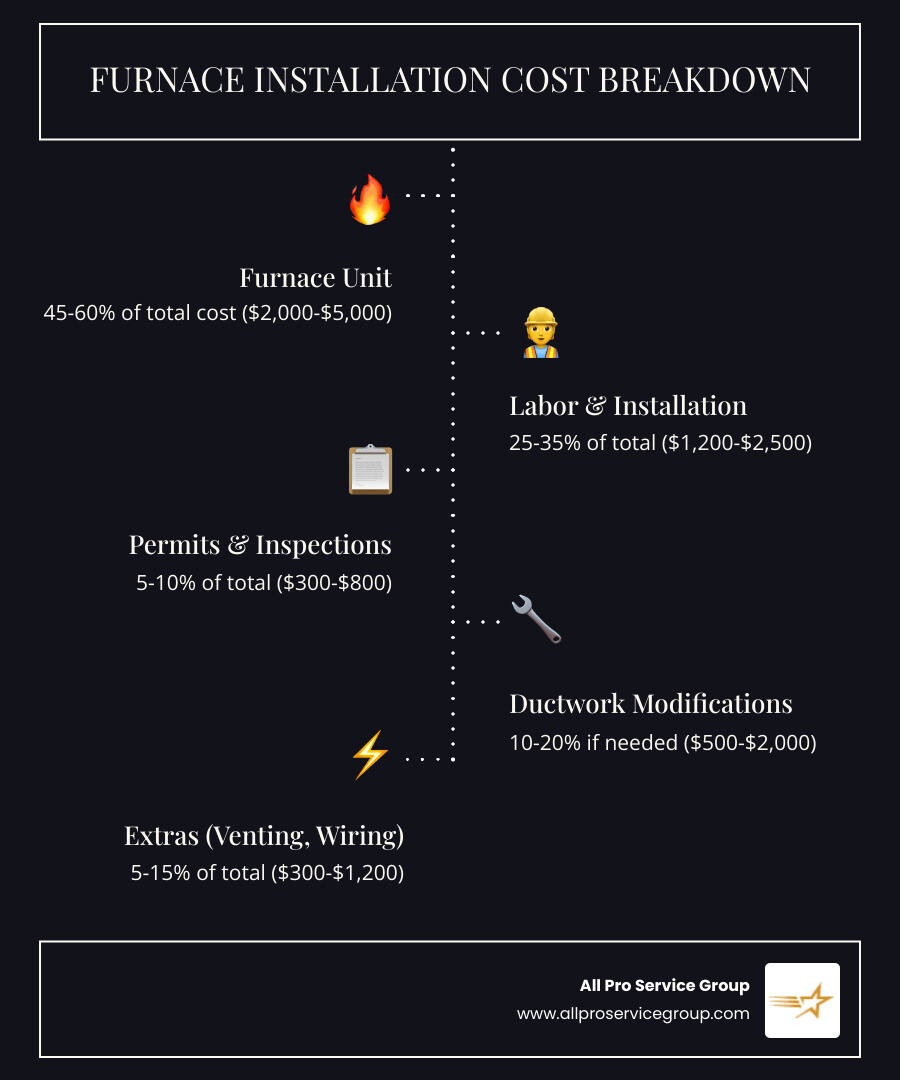
- The furnace unit itself is only part of the bill — labor, permits, and potential ductwork changes add up fast.
- Higher efficiency costs more upfront but cuts your monthly heating bills, often paying for itself over time.
- Installation complexity — tight spaces, new gas lines, or venting changes — can push costs toward the higher end.
I'm Gary, owner of All Pro Service Group, and our team has handled hundreds of furnace installations and replacements across the Greater Salt Lake Valley since 2008 — so we know exactly what goes into a fair furnace installation price in this region. Let's break down everything you need to budget confidently.
Key Factors Influencing Your Furnace Installation Price
When you receive a quote for a new heating system, you aren't just paying for a big metal box. Several variables dictate why one neighbor might pay $4,000 while another pays $9,000.
The Importance of Proper Sizing
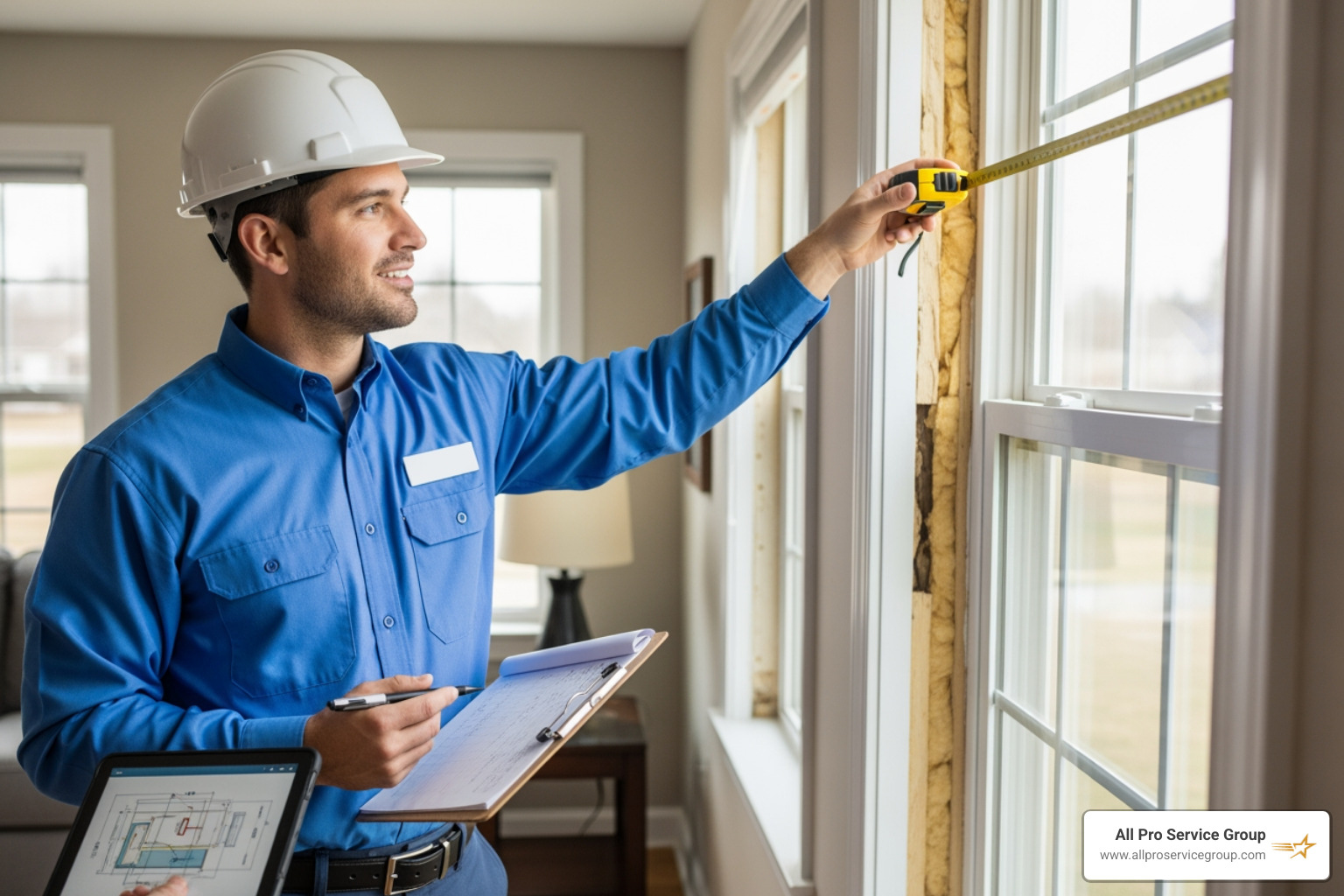
The most critical step in determining your price is the "Manual J Load Calculation." We don't just guess the size based on your home's square footage. According to Air Conditioning Contractors of America standards, a professional must evaluate several factors to determine the BTU (British Thermal Unit) capacity your home actually requires.
Factors that impact this calculation include:
- Total Square Footage: Larger homes require more BTUs to stay warm.
- Ceiling Height: Vaulted ceilings create more volume to heat, increasing the required capacity.
- Insulation Quality: A well-insulated home in Park City might require a smaller furnace than a drafty older home of the same size in Salt Lake City.
- Window Type and Placement: Large, south-facing windows provide natural heat, while old single-pane windows allow heat to escape.
If a furnace is oversized, it will "short cycle" (turn on and off too frequently), leading to premature wear and higher energy bills. If it's undersized, it will run constantly and still leave you shivering. Getting the size right is the first step in furnace installation and replacement that lasts.
Comparing Costs by Fuel Type and Efficiency Ratings
The type of fuel your home uses and how efficiently the furnace converts that fuel into heat are the two biggest drivers of the equipment cost.
Efficiency Ratings (AFUE) Explained
Efficiency is measured by Annual Fuel Utilization Efficiency (AFUE). Think of this as a percentage: an 80% AFUE furnace turns 80 cents of every dollar spent on fuel into heat, while the other 20 cents escapes through the chimney.
| Efficiency Tier | AFUE Rating | Typical Equipment Cost (Unit Only) |
|---|---|---|
| Standard Efficiency | 80% – 89% | $1,500 – $3,000 |
| High Efficiency | 90% – 95% | $2,500 – $5,000 |
| Ultra-High Efficiency | 96% – 99% | $3,500 – $6,500+ |
While high-efficiency models have a higher upfront furnace installation price, they often qualify for significant tax credits and save you 15% to 20% on your monthly heating bills. For Utah homeowners, especially in colder areas like Ogden or Provo, these savings add up quickly over the 15-20 year life of the unit.
Gas vs. Electric Furnaces
In the Greater Salt Lake Area, natural gas is the most popular choice because it is cost-effective for our cold winters.
- Gas Furnaces: Higher upfront cost due to venting and gas line requirements, but much lower monthly operating costs.
- Electric Furnaces: Cheaper to buy and install (often $1,000–$2,500 for the unit), but your electricity bill will likely skyrocket during a Utah January. These are best suited for smaller spaces or areas where natural gas isn't available.
Performance Tiers: Single-Stage vs. Modulating
- Single-Stage: It’s either 100% on or 100% off. It's the most affordable but can lead to temperature swings.
- Two-Stage: Has a "low" setting for milder days and a "high" setting for the dead of winter. It’s more efficient and comfortable.
- Modulating/Variable-Speed: These units adjust in tiny increments to maintain a perfectly steady temperature. They offer the highest comfort and lowest noise but come with the highest price tag.
Knowing which tier you need often depends on the signs your furnace needs replacement, such as uneven heating in different rooms.
Understanding the Gas Furnace Installation Price
If you are sticking with or switching to natural gas, there are specific logistical costs to consider. Modern high-efficiency furnaces (90%+ AFUE) are "condensing" units. This means they extract so much heat from the exhaust that the gases cool down and turn into water.
Because of this, they cannot use your old metal chimney flue. Instead, they require:
- PVC Venting: Specialized plastic pipes that run through a side wall or the roof.
- Condensate Drain Lines: A way to safely drain the water produced by the furnace.
- Combustion Safety: Ensuring the unit has proper fresh air intake to prevent carbon monoxide risks.
According to HomeGuide's average gas furnace cost data, these venting modifications can add $500 to $1,500 to the total project cost if you are upgrading from an older 80% efficient model.
Additional Expenses Impacting the Furnace Installation Price
Sometimes, the "hidden" items are what surprise homeowners the most.
- Electrical Panel Upgrades: If you are switching from gas to electric, or if your old panel is maxed out, you might need an upgrade ($1,500–$3,000).
- Gas Line Extensions: Moving a furnace or installing a new gas line typically costs $15–$50 per linear foot.
- Smart Thermostats: Integrating a modern Nest or Ecobee thermostat usually adds $250–$500 to the bill but offers better control and energy savings.
- Local Incentives: You can search the DSIRE database to find Utah-specific rebates that can lower your net cost.
Hidden Costs: Labor, Permits, and Ductwork Modifications
Labor typically accounts for 25% to 40% of your total furnace installation price. In the Utah market, professional labor rates generally range from $75 to $150 per hour. A standard swap-out takes about 4 to 10 hours, but complex jobs can take much longer.
Permits and Inspections
Never skip the permit. In cities like West Jordan or South Jordan, a permit ensures that a third-party inspector verifies the gas lines are leak-free and the venting is safe. Permits and inspection fees usually range from $100 to $500.
Ductwork and Modifications
Your new furnace needs to "breathe." If your existing ducts are too small for the powerful blower motor of a new high-efficiency unit, you may experience loud whistling or system strain.
- Plenum Modifications: The "transition" piece between your furnace and your ducts often needs to be custom-fabricated ($200–$500).
- Old Unit Removal: Most contractors include this, but some charge a disposal fee of $60 to $330.
- Ductwork Repairs: Sealing leaky ducts can cost $500 to $1,500 but significantly improves efficiency.
Choosing a professional HVAC provider ensures these details aren't overlooked, preventing expensive repairs down the road.
Maximizing Value: Rebates, Tax Credits, and Long-Term Savings
The "sticker price" of a furnace isn't the final word. There are several ways to drive that number down.
Federal Tax Credits (25C)
Under the Inflation Reduction Act, homeowners can claim a federal tax credit for ENERGY STAR-certified furnaces. For qualifying gas furnaces (typically 97% AFUE or higher), you can claim 30% of the project cost, up to $600.
Utility Rebates
Local Utah utility companies like Dominion Energy often offer rebates for upgrading to high-efficiency equipment. These can range from $200 to $500, often applied as a mail-in rebate or an instant discount from your contractor.
The ROI of Efficiency
While a 96% AFUE furnace might cost $2,000 more than an 80% model, the monthly savings on your gas bill—combined with tax credits—often results in a "payback period" of 5 to 7 years. Since the furnace should last 20 years, that’s 13+ years of pure profit. You can further maximize your efficiency with annual tune-ups to ensure the system stays in peak condition.
Frequently Asked Questions about Furnace Installation
How long does a new furnace typically last?
With proper care, a modern gas furnace should last 15 to 20 years. Electric furnaces can sometimes push toward 25 or 30 years because they have fewer moving parts and no combustion. The secret to longevity is following an essential furnace maintenance guide and changing your filters every 1 to 3 months.
Should I repair or replace my old unit?
We generally recommend the 50% Rule: If the cost of a single repair is more than 50% of the value of a new furnace, it’s time to replace it. Additionally, if your unit is over 15 years old and requires frequent service calls, the cumulative furnace repair costs will quickly exceed the cost of a new, warrantied system.
What optional add-ons provide the most value?
If you're already investing in a new system, adding these items can improve your home's air quality and comfort:
- Whole-Home Humidifiers: Essential for Utah's dry climate to prevent dry skin and cracked wood furniture.
- Air Purifiers/UV Lights: Kill bacteria and viruses in the air stream.
- Zoning Systems: Allow you to heat the upstairs and downstairs independently.
These heating and air solutions are much cheaper to install during a full furnace replacement than as standalone projects later.
Conclusion
Determining the right furnace installation price requires looking at the big picture—from the initial equipment cost to the long-term energy savings and safety of a professional install. At All Pro Service Group, we take pride in being the Greater Salt Lake Area's "Gephardt Approved" experts.
Whether you are in Salt Lake City, Ogden, or Provo, our team provides dependable inspections, upfront pricing, and 24/7 availability to ensure your family stays warm all winter long. Don't wait for a mid-winter breakdown— schedule your professional furnace installation and replacement today and enjoy the peace of mind that comes with a job done right.