Why Your Heat Pump is Giving You the Cold Shoulder
Common Signs You Need Heat Pump Repair in Salt Lake City, Utah
If you need
heat pump repair salt lake city utah homeowners can relate to, here are the most common signs your system needs attention:
| Warning Sign | What It Likely Means |
|---|---|
| Rising energy bills | System working harder than it should |
| Weak or warm airflow | Dirty coils, low refrigerant, or blower issue |
| Ice on the outdoor unit | Defrost cycle failure or airflow blockage |
| Strange grinding or hissing noises | Loose parts or refrigerant leak |
| Short cycling (turning on/off rapidly) | Thermostat or electrical issue |
| Inconsistent room temperatures | Reversing valve or airflow problem |
Quick answer: Most heat pump problems in Salt Lake City come down to six culprits - dirty filters, refrigerant leaks, ice buildup, electrical failures, thermostat issues, or a faulty reversing valve. Many can be caught early before they become expensive repairs.
Salt Lake City winters hit hard, and summers aren't exactly gentle either. Your heat pump runs year-round in this climate - more than almost anywhere else in the country. That kind of constant use means more wear, more stress on components, and a higher chance something eventually goes wrong. And like most homeowners know, it rarely breaks down on a mild spring day when you least need it.
A malfunctioning heat pump doesn't just mean discomfort. It can quietly drive up your electricity bill by 15% or more before you even notice something is wrong. The good news is that most problems give you warning signs early - if you know what to look for.
I'm Gary, owner of All Pro Service Group, and I've been diagnosing and repairing heat pumps across the Greater Salt Lake Valley since 2008 - handling everything from routine tune-ups to emergency heat pump repair salt lake city utah calls in the dead of winter. In this guide, I'll walk you through exactly what to look for, what you can check yourself, and when it's time to call in a pro.

Living in the shadow of the Wasatch Front means our HVAC systems have a big job. Unlike a furnace that sleeps all summer or an AC that hibernates all winter, Heat pumps are the ultimate multitaskers. They move heat out of your home in July and pull heat into your home in January. Because they transfer heat rather than generate it through combustion, they can be incredibly efficient - often reducing electricity use for heating by approximately 50 percent compared to a traditional gas furnace. If you want a simple overview of how this technology works, the U.S. Department of Energy heat pump guide is a helpful external resource.
However, that constant "switching of hats" can lead to mechanical fatigue. If you notice your home isn't reaching the set temperature, or if you hear a sound like a bag of marbles in a blender, it is time to look closer. Ignoring these signs can lead to a total system shutdown, often resulting in more expensive air conditioner repair or heating components failures.
When we talk about Salt Lake City Heat pumps, we have to consider the local dust and debris. We live in a dry, high-desert environment. Dust can coat your outdoor coils, acting like a thick wool sweater that prevents the unit from "breathing." This leads to weak airflow and inconsistent indoor temperatures. If you feel cold spots in the living room while the bedroom is sweltering, your system is likely struggling to distribute air effectively. This is a primary reason why comprehensive heating & air services are so vital for maintaining year-round comfort.
Identifying Refrigerant Leaks and Electrical Failures
One of the most concerning sounds a homeowner can hear is a distinct hissing or bubbling noise coming from the indoor or outdoor unit. This often indicates a refrigerant leak. Refrigerant is the lifeblood of your heat pump; it's the medium that actually carries the heat. When levels get low, the system has to run longer and harder to achieve the same results, which can lead to frozen evaporator coils - even in the middle of a Utah summer.
Professional repair services are essential here. You cannot simply "top off" a heat pump like you do with oil in a car. A technician must find the leak, seal it, and then recharge the system to the exact factory specifications. If your unit is struggling to switch between heating and cooling, the culprit might be the reversing valve. This is the component that tells the refrigerant which direction to flow. If it gets stuck, you might find yourself with an air conditioner that only blows hot air in July!
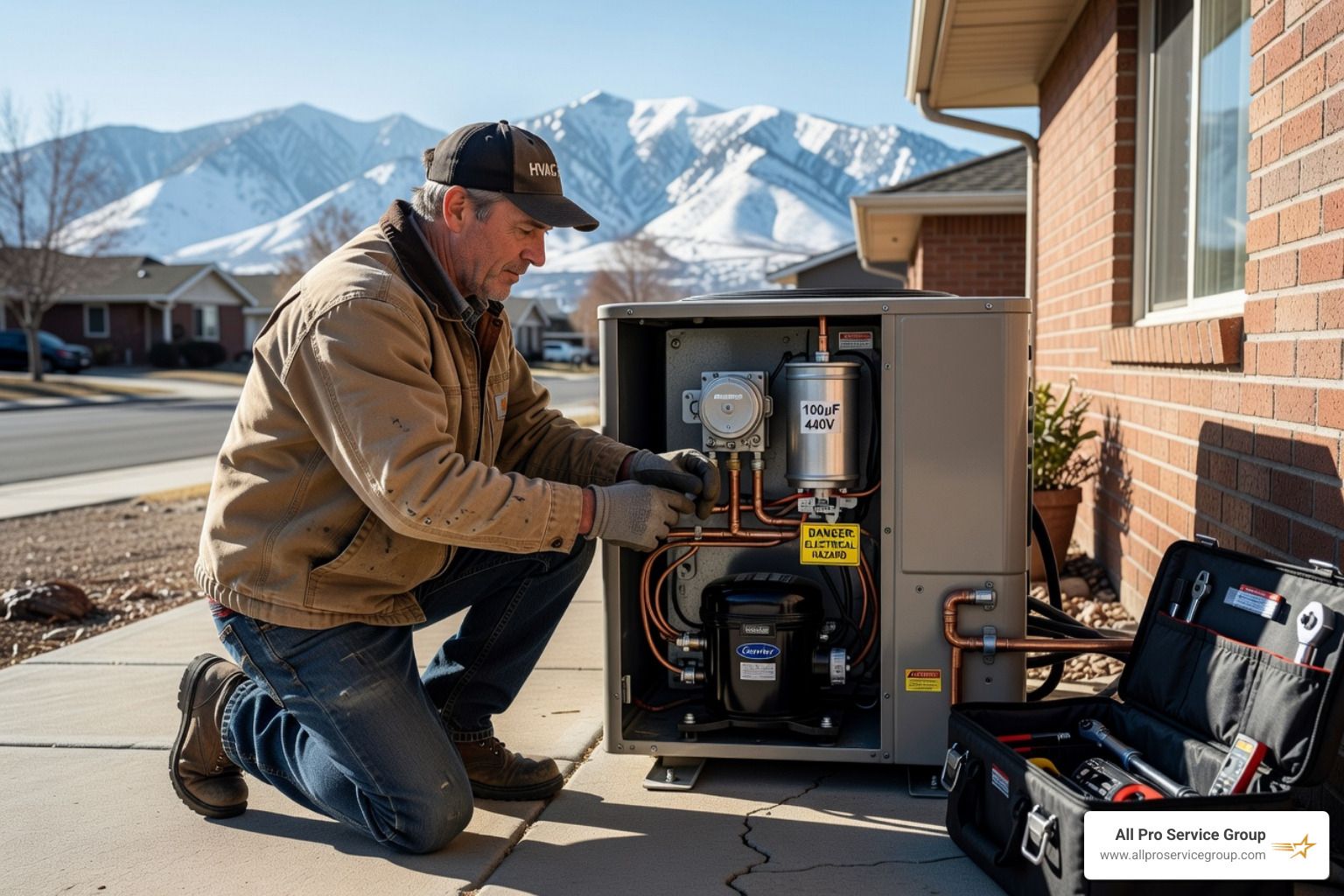
Electrical failures are another common headache. Salt Lake City's summer thunderstorms or winter power surges can wreak havoc on sensitive components. If you find yourself frequently dealing with furnace repair issues related to blown fuses or tripped circuit breakers, you may have a failing capacitor or a motor that is drawing too much "juice." A capacitor acts like a giant battery that gives the motor the "kick" it needs to start. When it fails, you'll often hear a humming sound, but the fan or compressor won't turn on.
Troubleshooting and Maintenance Strategies
Before you pick up the phone for heat pump repair salt lake city utah, there are a few "sanity checks" we always recommend. You'd be surprised how many service calls are resolved by simply flipping a switch or changing a battery.
DIY Checks vs. Professional Diagnostics
| Task | DIY Friendly? | Why It Matters |
|---|---|---|
| Change Air Filter | Yes | Prevents airflow restriction and system strain. |
| Check Thermostat Batteries | Yes | A dead screen often means a "broken" system that isn't actually broken. |
| Clear Debris from Outdoor Unit | Yes | Leaves and snow block heat transfer. |
| Inspect Electrical Wiring | No | Risk of high-voltage shock and fire. |
| Check Refrigerant Levels | No | Requires specialized gauges and EPA certification. |
| No | Involves complex mechanical and electrical testing. |
Start with your thermostat. Ensure it is set to the correct mode (Heat or Cool) and that the fan is set to "Auto" rather than "On." If the screen is blank, try fresh batteries. Next, check your home’s electrical panel. Heat pumps usually have two breakers—one for the indoor unit and one for the outdoor unit. If one has tripped, flip it all the way to "Off" and then back to "On."
Airflow is the next big thing. If your filter is clogged with dust, your heat pump can't move air. This is the #1 cause of air conditioner maintenance calls. We recommend checking your filter every 30 days, especially during the peak of winter and summer. Similarly, if you have a traditional furnace as part of a dual-fuel system, furnace maintenance ensures the blower motor is strong enough to push air through your vents.
DIY Steps Before Requesting Heat Pump Repair Salt Lake City Utah
If the basic checks don't work, try these steps to narrow down the problem:
- Check the Vents: Ensure all registers are open and not blocked by furniture or rugs. Even in ductless mini splits, ensuring the louvers are clear is essential.
- Clear the Perimeter: Go outside and look at your heat pump. Is it buried in snow? Are there autumn leaves sucked against the coils? Gently brush away snow and debris. You need at least two feet of clear space around the unit for it to work properly.
- Inspect the Condensate Line: This is the small PVC pipe that carries water away from your unit. If it’s clogged with algae or debris, a safety switch might shut down the whole system to prevent water damage.
- Reset the System: Sometimes, the computer board just needs a "reboot." Turn the system off at the thermostat, wait 60 seconds, and turn it back on.
Salt Lake City heat pumps require specific care for local weather. Our dry air can lead to static buildup, and our hard water can cause scale in some specialized systems. If these DIY steps don't restore your comfort, it’s time to call in the experts.
Utah Weather Challenges: Ice Buildup and Defrost Mode
In Utah, "ice" is usually something we want on the ski slopes, not on our HVAC equipment. However, seeing a light frost on your outdoor unit during a cold January morning is actually normal. Heat pumps work by absorbing heat from the outdoor air. As they do this, the outdoor coil becomes much colder than the surrounding air, causing moisture to freeze on the fins.
To handle this, your system has a "Defrost Mode." It essentially reverses itself for a few minutes, sending warm refrigerant to the outdoor coil to melt the ice. During this time, you might see steam rising from the unit or hear a loud "whoosh" sound. This is normal! However, if the unit is encased in a thick block of ice like a glacier, you have a problem.
Failures in the defrost cycle are often caused by faulty sensors, a bad defrost control board, or even a failing reversing valve. If the ice isn't melted, it acts as an insulator, preventing the unit from absorbing any heat. This forces your system to rely entirely on "Auxiliary Heat" (electric heat strips), which are much more expensive to run. If you live in areas with heavy snowfall, like our neighbors needing heating AC HVAC repair in West Valley City or heating AC HVAC repair in Ogden, keeping that outdoor unit clear of snow drifts is your first line of defense against ice-related breakdowns.
Repair vs. Replace: Making the Right Choice
The average lifespan of a heat pump is between 15 and 20 years with proper maintenance. However, in the demanding climate of the Salt Lake Valley, many systems start to show their age around the 12-to-15-year mark. Deciding whether to invest in a repair or opt for AC installation & replacement is a common dilemma.
We generally use the "Rule of 5,000." Multiply the age of the unit by the cost of the repair. If the total exceeds $5,000, a replacement is usually the smarter financial move. For example, a 12-year-old unit needing a $600 repair ($7,200) is a prime candidate for a new, high-efficiency model. New units offer significantly higher SEER (Seasonal Energy Efficiency Ratio) ratings, which can slash your monthly bills.
If you are also considering furnace installation & replacement as part of a dual-fuel upgrade, you might be eligible for significant federal tax credits or local utility rebates. For business owners, keeping an eye on commercial HVAC performance is even more critical, as a breakdown can mean lost revenue.
When to Call for Emergency Heat Pump Repair Salt Lake City Utah
While some issues can wait until Monday morning, others are true emergencies. You should call for repair services immediately if you experience:
- Burning Odors: This could indicate an electrical fire or a seized motor. Turn the power off at the breaker immediately.
- Total Loss of Heat: If the temperature is below freezing, your pipes could be at risk. We offer 24/7 emergency service to ensure your family stays safe.
- Electrical Sparking: Any visible sparks or loud electrical "pops" are a major safety hazard.
- Loud Screeching: This often means the compressor is under extreme stress. Shutting it down quickly might save you from needing a total heat pump installation.
Frequently Asked Questions about Heat Pump Services
How much does the average heat pump repair cost in Utah?
The cost varies based on the part needed. A simple capacitor or contactor replacement might range from $150 to $400. However, a reversing valve or a compressor replacement can cost significantly more. Most reputable companies charge a diagnostic fee (often between $49 and $99) to identify the problem, which is then applied toward the repair. For larger repairs, we offer various financing options to help fit the cost into your household budget.
Why is my outdoor unit covered in ice during winter?
As mentioned, a light frost is normal, but heavy icing isn't. This is usually caused by a failure in the defrost cycle, low refrigerant levels, or restricted airflow. If the bottom of the unit is sitting in a puddle that freezes, it can also cause ice to build up from the ground up. Ensure your unit is mounted on a proper pad or "snow feet" to allow for drainage.
How often should I schedule a professional tune-up?
Because heat pumps work year-round, they need more love than a standard AC. We recommend semi-annual service—once in the spring before the cooling season and once in the fall before the heating season. Regular maintenance can lower energy costs, extend the system's lifespan, and improve indoor air quality. Many manufacturers also require proof of annual maintenance to keep your warranty valid.
Conclusion
Your heat pump is a workhorse, but even the strongest horse needs a break and a check-up. Whether you are in Ogden, Provo, or right here in Salt Lake City, keeping your system running efficiently is the key to a comfortable home and a manageable power bill. Don't let a minor noise today turn into a major "cold shoulder" tomorrow.
At All Pro Service Group, we’ve built our reputation on being "Gephardt Approved" and providing dependable, honest service to our neighbors since 2008. From plumbing and ventilation to complex HVAC diagnostics, our trained experts are ready to help. We offer 24/7 emergency availability because we know that breakdowns don't follow a 9-to-5 schedule.
If your system is acting up, or if it’s just been a while since its last tune-up, Contact us online or Schedule your professional heating and air service today. Let us help you keep your home the comfortable sanctuary it's meant to be!