Is DIY Furnace Installation Worth the Risk?
Furnace installation is one of the most complex home improvement projects you can take on. Here's the short answer on whether you should do it yourself:
Can you install a furnace yourself?
- Legally: Most states and municipalities require a licensed HVAC technician and a permit
- Safely: Gas line connections, carbon monoxide risks, and electrical wiring make DIY dangerous
- Practically: Improper sizing or installation can raise utility bills by 10-30% and void your warranty
- Bottom line: In nearly all cases, professional installation is the safer and smarter choice
That said, understanding the process helps you ask the right questions, spot shortcuts, and make confident decisions — whether you hire out or not. That's exactly what this guide is for.
Furnace installation touches on gas lines, electrical systems, ductwork, local building codes, and safety testing. Get any one of those wrong, and you're looking at anything from higher energy bills to a serious safety hazard. It's not like swapping out a light fixture. Even experienced general contractors often leave this work to certified HVAC professionals.
I'm Gary from All Pro Service Group, and after years of furnace installation and replacement work across the Greater Salt Lake Valley, I've seen what happens when installations go wrong — and how much smoother things go when they're done right. Let me walk you through everything you need to know to make the best call for your home.
The Reality of DIY: Can You Really Install a Furnace Yourself?
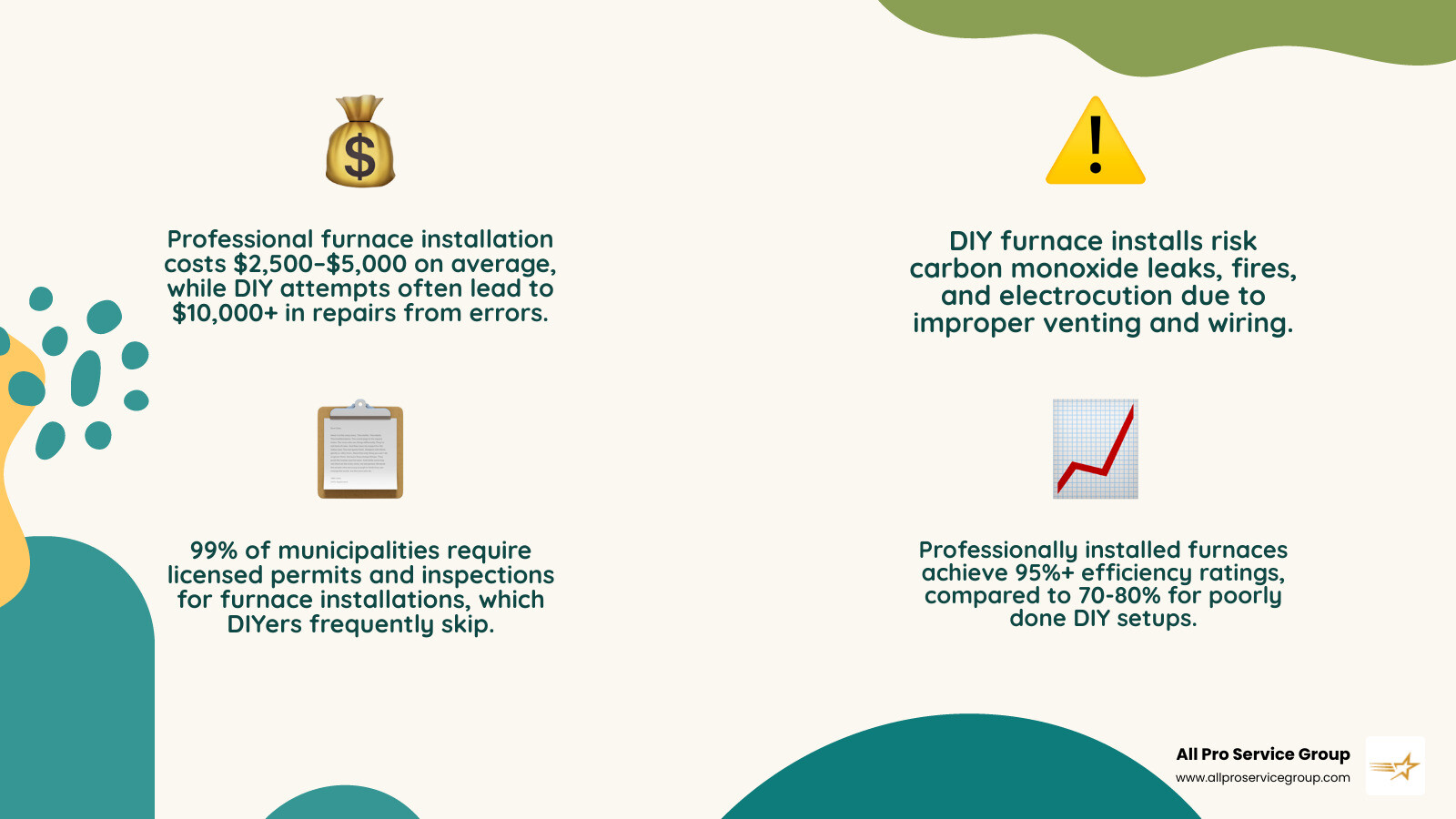
We get it. The "Do-It-Yourself" spirit is strong here in Utah. Whether you’re in Ogden or Provo, there’s a certain pride in handling home repairs. However, furnace installation isn't like painting a room or even laying tile. It is a high-stakes technical project that involves three of the most dangerous elements in a home: high-voltage electricity, combustible pressurized gas, and poisonous carbon monoxide.
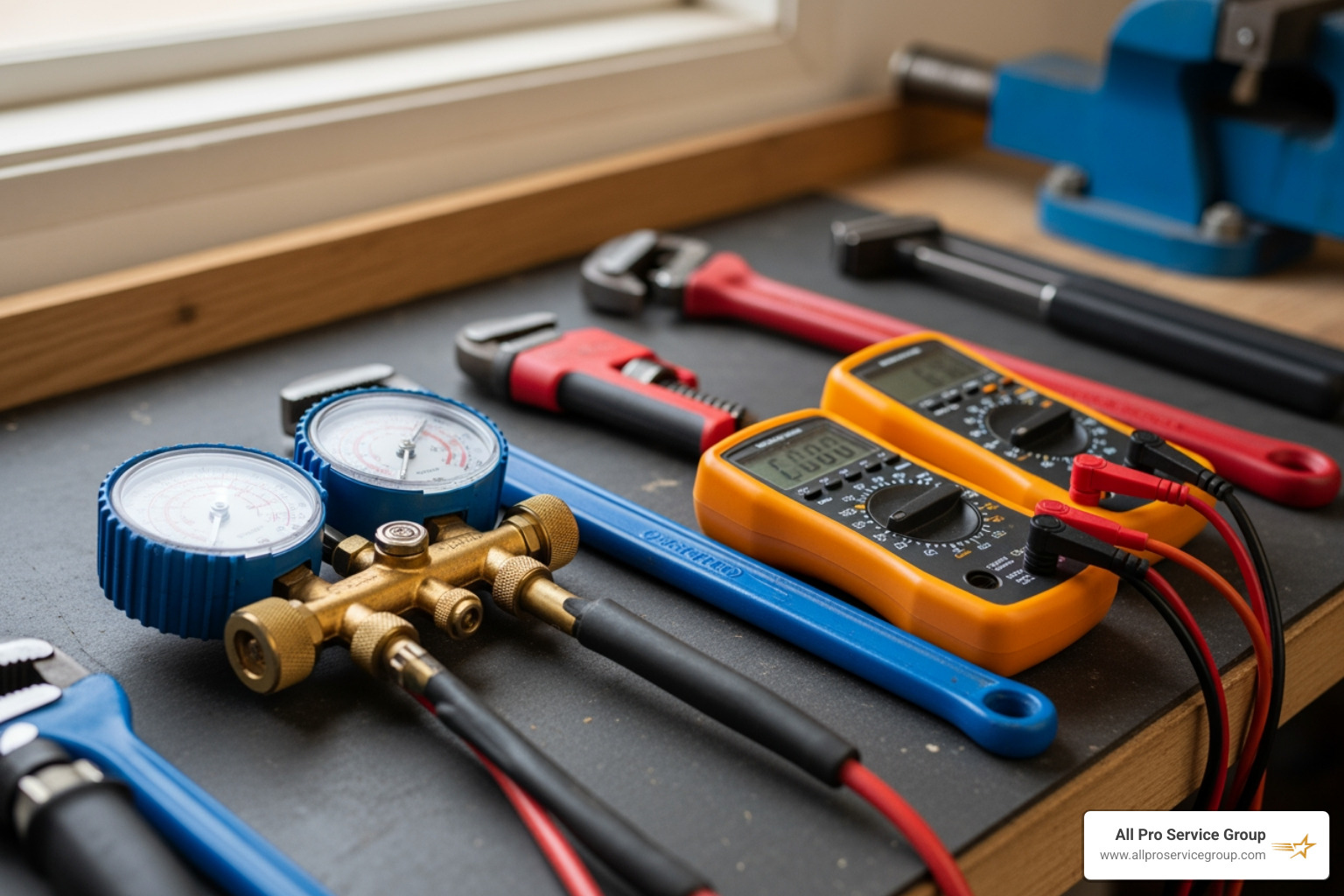
When you consider a DIY install, you aren't just grabbing a hammer and wrench. You are stepping into specialized HVAC tools and complex safety hazards.
- Gas Leaks: Connecting a gas line requires precision. A single loose fitting can lead to a slow leak that accumulates in your basement or utility closet, creating a massive explosion risk.
- Carbon Monoxide (CO): This "silent killer" is a byproduct of combustion. If your venting isn't pitched perfectly or sealed correctly, CO can backdraft into your living space.
- Electrical Wiring: Furnaces require dedicated circuits. Incorrect wiring can fry the expensive control board of your new unit or, worse, cause a house fire.
- Permit Requirements: In Salt Lake City and the surrounding valleys, local building codes require permits for HVAC replacements. These permits usually mandate that a licensed professional performs the work to ensure it meets safety standards. If you sell your home later and can't show a permitted installation, it could tank your home inspection.
Before you pick up the tools, read our guide on Choosing the Right Provider for Your Professional Furnace Installation to see what a qualified team brings to the table.
Why Professional furnace installation Matters for Your Warranty
One of the biggest "gotchas" of DIY furnace installation is the manufacturer’s warranty. Most major brands (like Lennox or Carrier) explicitly state in their fine print that the warranty is only valid if the unit is installed by a licensed HVAC professional.
If you install it yourself and the heat exchanger cracks two years later, you could be on the hook for a $2,000 to $3,000 repair because you saved a few hundred dollars on labor upfront. A professional install provides long-term protection and peace of mind that the manufacturer will actually honor their coverage.
The Hidden Dangers of Improper Sizing
"Bigger is better" doesn't apply to furnaces. If a furnace is too large for your home, it will "short cycle," turning on and off rapidly. This wears out components quickly and leaves your home with cold spots. If it's too small, it will run constantly, skyrocketing your utility bills while failing to keep you warm during a Park City blizzard.
Professionals use a "Manual J" load calculation. This isn't just looking at square footage; it accounts for your home’s insulation levels, the number of windows, and even the direction your house faces. If you're unsure if your current unit is even the right fit, check out these Signs Utah Homeowners Should Watch For regarding furnace replacement.
Step-by-Step: What a Professional Installation Actually Looks Like
If you decide to go pro, you might wonder what we’re actually doing down there in the basement for four to eight hours. It’s a meticulous process designed to maximize the life of your equipment.
- Site Assessment: We verify the gas line capacity and electrical service.
- Old Unit Removal: This involves safely disconnecting the gas, power, and venting, then hauling away the heavy old beast.
- Plenum Adjustment: Rarely does a new furnace fit the old ductwork perfectly. We often have to custom-fabricate a "plenum" (the metal box that connects the furnace to the ducts) to ensure airtight transitions.
- Venting and Drainage: For high-efficiency units, we install a PVC drain line to handle the condensation produced during the heating process.
- Gas Line Connection: We install new flex lines and shut-off valves, followed by a rigorous leak test using specialized solutions or electronic "sniffers."
- Commissioning Process: This is the most skipped step in DIY installs. We perform a static pressure test to ensure the blower motor isn't under too much strain and check the "temperature rise" to ensure the heat exchanger is operating within the manufacturer's safe limits.
You can learn more about our specific Furnace Installation & Replacement services to see how we handle these technical details.
Preparing Your Home for furnace installation Day
To make the day go smoothly, we recommend a few simple steps:
- Clear the workspace: Ensure there is at least a 3-foot radius around the furnace.
- Pet Safety: The door will be opening and closing frequently as we move equipment. It’s best to keep Fido in a secure room.
- Access Pathways: Clear snow or clutter from the path between our truck and your utility room.
For more tips on getting your home ready, see The Essential Guide to Maintaining Your Utah Home’s Furnace and Air Conditioner.
Post-Installation: Testing and Calibration
Once the unit is physically in place, we don't just flip the switch and leave. We perform a combustion analysis to ensure the fuel is burning cleanly and calibrate your thermostat to ensure the new system communicates perfectly with your home's controls. We finish with a homeowner walkthrough, showing you how to change your filters and how to operate any new features.
Counting the Costs: Professional vs. DIY furnace installation
Let's talk numbers. The average cost for a new furnace installation in the Greater Salt Lake area typically ranges between $3,000 and $8,000. While DIY might seem like it saves $1,500 to $2,500 in labor, the "hidden" costs of DIY (buying specialized tools, potential code fines, and lack of rebates) often close that gap quickly.
Average Installed Costs by Fuel Type
| Furnace Type | Average Installed Cost Range |
|---|---|
| Electric | $2,000 – $7,000 |
| Natural Gas | $3,800 – $10,000 |
| Propane | $3,700 – $14,200 |
| Oil | $6,750 – $10,000 |
Note: Prices vary based on efficiency (AFUE) and home size.
Savings and Incentives
Thanks to the Inflation Reduction Act, Utah homeowners can save significantly on high-efficiency systems. ENERGY STAR-certified furnaces with an AFUE of 97% or higher may qualify for a tax credit of 30% of the project cost, up to $600. Additionally, some local utility rebates can add up to $3,200 in total savings for eligible energy-efficient upgrades.
Understanding AFUE and Efficiency Ratings
AFUE stands for Annual Fuel Utilization Efficiency. Think of it like MPG for your car.
- 80% AFUE: 80 cents of every dollar spent on gas goes to heating your home; 20 cents goes up the chimney.
- 95%+ AFUE: Only 5 cents (or less) is wasted.
High-efficiency units often feature variable-speed blowers, which modulate the airflow to keep your home at a constant, comfortable temperature rather than blasting you with hot air and then shutting off. Learn more about Maximizing Efficiency to see how these ratings impact your long-term wallet.
How Improper Installation Increases Utility Bills
If the ductwork isn't sealed correctly during installation, you can lose 10-30% of your heated air into your attic or crawlspace. That is literally throwing money away. Furthermore, an improperly installed blower motor can lead to system strain and a premature breakdown, turning a "cheap" DIY job into a very expensive emergency replacement just a few years later.
When to Repair vs. Replace Your Heating System
How do you know if you even need a new furnace installation? Sometimes a simple Furnace Repair is all you need.
Consider Replacement if:
- Age: Your furnace is 15-20 years old.
- Frequent Repairs: You’ve had more than two significant repairs in the last two years.
- Rising Bills: Your gas or electric bills are climbing despite similar usage.
- The "Yellow Flame": A healthy burner flame is blue. A flickering yellow flame can indicate incomplete combustion and carbon monoxide production.
- Unusual Noises: Banging, screeching, or rattling often signals that the end is near.
Frequently Asked Questions about Furnace Installation
How long does a furnace installation typically take?
A standard furnace installation usually takes 4 to 8 hours. If we need to perform extensive ductwork modifications or if you are switching fuel types (e.g., from oil to gas), it can take a full day or two. At All Pro Service Group, we strive for same-day service to ensure you aren't left in the cold.
What is the average cost of a new furnace installation?
As noted in our Buying Guide, most homeowners pay between $3,000 and $8,000 for a full professional installation. The final price depends on the brand, the unit's efficiency rating, and the complexity of your home's existing infrastructure.
Can I save money by replacing my AC and furnace at the same time?
Yes! This is one of the best ways to save on labor. Since we are already disconnecting the system and potentially modifying the plenum, replacing both units together can save you $1,000 or more in combined labor costs compared to doing them separately. Plus, AC Installation & Replacement ensures your indoor and outdoor units are perfectly "matched" for peak efficiency.
Conclusion
At the end of the day, furnace installation is about more than just heat; it’s about the safety and comfort of your family. While the DIY route is tempting, the technical requirements and safety risks make professional installation the gold standard for Utah homeowners.
All Pro Service Group has been serving the Greater Salt Lake Area since 2008. From West Valley City to Park City, our "Gephardt Approved" team is ready to provide dependable, expert service. We offer 24/7 availability and flexible financing to ensure your home stays warm without breaking the bank.
Don't leave your home comfort to chance. Schedule your professional furnace maintenance or installation with All Pro Service Group today!